1970s Maps of Fayette County, Iowa
Explore 6 historic maps of Fayette County from the 1970s. These maps offer a rare glimpse into what life looked like during the 1970s — showing old roads, neighborhoods, homes, and landmarks that have changed or disappeared over time.
Whether you're researching your family's past, planning a metal detecting trip, or studying how Fayette County's landscape evolved across the 1970s, these high-resolution maps are a powerful tool for exploring the history of this region.
- Focus on a specific era: All maps on this page are from the 1970s, giving you a focused view of this time period.
- See what’s changed: Compare century-old streets, trails, and buildings to today's modern landscape using overlays and satellite layers.
- Research with precision: Use these maps for genealogy, historical research, land use analysis, or educational projects.
- View, download, or print: Maps are fully viewable online in high resolution, and can be downloaded or printed for your own records.
Start exploring Fayette County's history through authentic maps from the 1970s. This is your window into the past.
Fayette County, IA maps
(6)- 1971 Map of Postville, 1973 Print
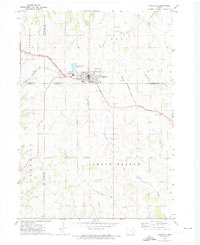 1971 Postville1973 Print · USGSPostville and the four-county border region of northeast Iowa are captured here during the early seventies as a thriving rail and agricultural center. Local historians can trace the Chicago Milwaukee St Paul and Pacific rail line and locate landmarks like Township Cem, the Fairground, and various Quarries.
 - 1971 Map of Sumner, 1973 Print
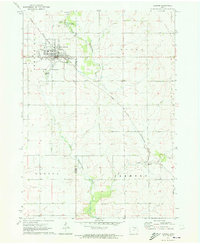 1971 Sumner1973 Print · USGSSumner and the surrounding Iowa farmlands are shown in the early seventies, centered on the Little Wapsipinicon River and the local rail network. Genealogists can trace family footprints at Union Mound Cemetery, Mt Calvary Cemetery, and the rural Murphy Church.
 - 1971 Map of Alpha, 1973 Print
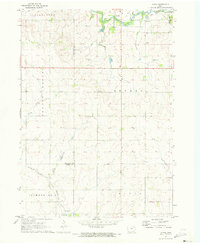 1971 Alpha1973 Print · USGSNortheast Iowa farmland is captured here in the early seventies, showcasing a landscape of section-line roads and creek-side settlements. Genealogists and historians can trace local family roots through Bethel Cem and Wilson Grove Cem or locate old industrial sites like the Quarry and Gravel Pits.
 - 1971 Map of Fairbank, 1973 Print
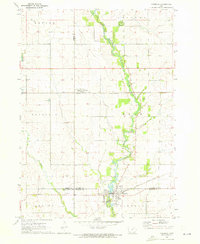 1971 Fairbank1973 Print · USGSNortheast Iowa farmland at the start of the 1970s is centered here on the crossing of the Little Wapsipinicon River and the Chicago and North Western railroad. Genealogists can trace family roots at Immaculate Conception Cem and St Peter Cem or explore the old layout of Fairbank.
 - 1976 Map of Dubuque
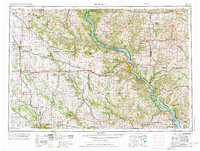 1976 Dubuque1976 Print · USGSThe tri-state borderlands of Iowa, Wisconsin, and Illinois come alive during the mid-seventies, showing a region built on river commerce and mining. Genealogists and historians can trace the paths of the Illinois Central railroad or locate heritage sites like the New Melleray Abbey Monastery and Backbone State Park.
 - 1976 Map of La Crosse
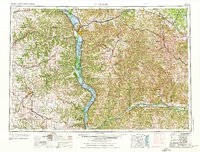 1976 La Crosse1976 Print · USGSThe Driftless Area and Mississippi River valley are captured here in the mid-seventies, showing a landscape of deep coulees and river commerce. Genealogists can trace family footprints from La Crosse to smaller hamlets like Newburg Corners and Witoka.
End of results
Showing maps 1-6 of 6
Top cities of Fayette County
- Oelwein historical maps
- West Union historical maps
- Fayette historical maps
- Elgin historical maps
- Clermont historical maps
- Maynard historical maps
See more
Frequently asked questions
- What are the different types of historical maps available for Fayette County?
- What is the oldest map of Fayette County?
- Where can I purchase historical maps of Fayette County for my home or office?
- Where can I download high-res historical maps of Fayette County?
- Are there historical topographic maps available for Fayette County?
- Is there historical aerial imagery available for Fayette County?
- Where are historical maps of Fayette County sourced from?