Old Maps of Fremont County, Iowa
Explore 131 old maps of Fremont County, spanning from 1907 to today. These high-resolution historic maps reveal how streets, neighborhoods, landmarks, and natural features evolved over time — perfect for genealogy, metal detecting, research, and local history exploration.
What you can do with these maps:
- See how Fremont County changed over time: Compare historical maps to modern-day views to trace roads, homesites, rail lines & more.
- View detailed metadata: Each map includes creators, publishers, year, scale, and archive source.
- Overlay maps with satellite & LiDAR: Visualize the past alongside modern tools to explore terrain & human change.
- Trusted historical sources: Maps sourced from the USGS, Library of Congress, and other archives.
- Access maps your way: View online, download high-res files, or order prints for personal or research use.
Start exploring old maps of Fremont County to uncover forgotten places, hidden landmarks, and the deep history beneath your feet.
Fremont County, IA maps
(131)- 1907 Map of Nebraska City
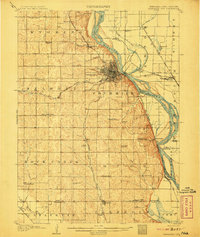 1907 Nebraska City1907 Print · USGSNebraska City and its surrounding Missouri River bluffs are captured here in the first decade of the 1900s during a period of significant rail expansion. Genealogists can locate numerous rural schoolhouses and small settlements like Minersville, Wyoming, and the historic St Lukes Church.3 unique versions available
 - 1935 Map of Nehawka
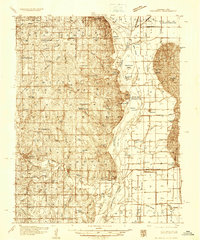 1935 Nehawka1935 Print · USGSThe Missouri River valley along the Nebraska-Iowa border appears here during the mid-1930s, showing a landscape defined by riverside bluffs and fertile bottomlands. Genealogists can trace family roots through numerous local landmarks, from Sargents Spur and Nehawka to rural schools like Ameck Sch and Eight Mile Grove Sch.2 unique versions available
 - 1939 Map of Farragut
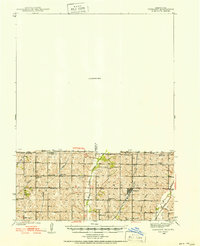 1939 Farragut1939 Print · USGSThe Iowa-Missouri borderlands come into focus in the late 1930s, showing a landscape of river-valley farms and rural schoolhouses. Genealogists can trace family roots through sites like Walden Grove Cem, Yale Sch, and the community at Westboro.
 - 1939 Map of Hamburg
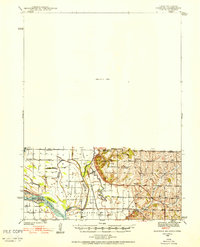 1939 Hamburg1939 Print · USGSThe Missouri River lowlands at the triple-state border are captured here just before the mid-century. Genealogists can trace family footprints across a dense network of rural schoolhouses like Miller Sch and Star Sch, or locate the Stoner Cem and Lone Chapel.2 unique versions available
 - 1940 Map of Farragut
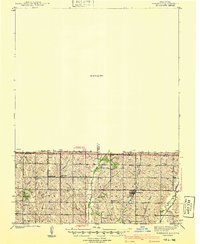 1940 Farragut1940 Print · USGSThe Iowa-Missouri state line serves as the anchor for this 1939 survey of Atchison, Fremont, and Page counties. Genealogists and local historians can trace the positions of vanished schoolhouses like Yale Sch and Emporia Sch, or locate family sites near Farmers City and Westboro.
 - 1940 Map of Nehawka
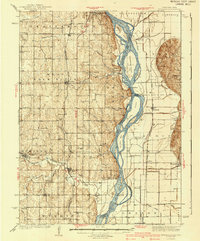 1940 Nehawka1940 Print · USGSThe Missouri River valley comes to life in this pre-war survey of Cass County and the Iowa border. Genealogists can locate family names at Youngs Cem or trace dozens of rural school sites like Cottonwood Sch and Eightmile Grove Sch.3 unique versions available
 - 1941 Map of Hamburg
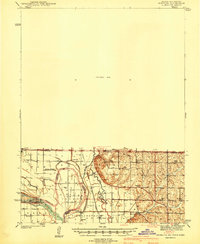 1941 Hamburg1941 Print · USGSThe Missouri-Iowa borderlands come alive in this pre-war survey of the river's winding oxbows and rural townships. Genealogists can trace family roots through a dense network of country schools and churches, from Mayflower Sch to the Stoner Cem.2 unique versions available
 - 1955 Map of Nebraska City, 1967 Print
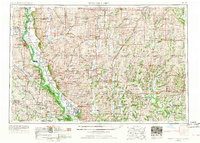 1955 Nebraska City1967 Print · USGSThe four-state region surrounding the Missouri River valley appears here in the mid-1950s, a landscape of rail-dependent market towns and rural school districts. Genealogists can locate family landmarks like the Rock Bluff School, St Oswald Church, and the Clarinda State Hospital.3 unique versions available
 - 1956 Map of Rock Bluff, 1957 Print
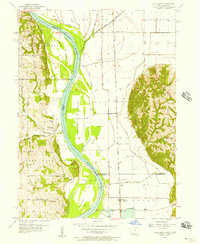 1956 Rock Bluff1957 Print · USGSThe Missouri River valley in the mid-fifties shows a landscape of river islands and bluff-side quarries. Genealogists can trace family sites at Rock Bluff and the Rock Bluff Cem, or locate rural schoolhouses like Kenosha Sch.3 unique versions available
 - 1957 Map of Nebraska City
 1957 Nebraska City1957 Print · USGSThe four-state junction of Nebraska, Iowa, Missouri, and Kansas comes alive in this mid-fifties survey of the Missouri River valley. Genealogists and historians can trace the rail-and-road networks connecting Nebraska City, Maryville, and the Squaw Creek National Wildlife Refuge.
 - 1957 Map of Randolph, 1958 Print
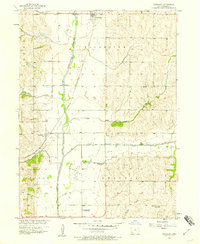 1957 Randolph1958 Print · USGSFremont County, Iowa, shows its agricultural heart and river valley infrastructure in the late fifties. Genealogists and local historians can trace the locations of the Chamber Cem and several closed country schools like Mayflower Sch (Abandoned).2 unique versions available
 - 1957 Map of Tabor, 1958 Print
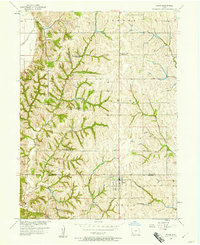 1957 Tabor1958 Print · USGSThe borderlands of Mills and Fremont counties are captured here in the late fifties as rural life shifted toward consolidation. Researchers can trace defunct schoolhouses like Elm Grove Sch and family-named burial sites including Mackey Cem.2 unique versions available
 - 1957 Map of Tabor NE, 1958 Print
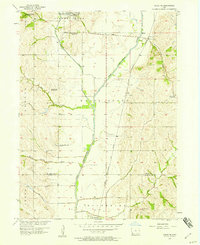 1957 Tabor NE1958 Print · USGSSouthwestern Iowa in the late 1950s was defined by its railroad arteries and shifting rural school system. Researchers can trace the WABASH rail line and identify vanished school sites like Mt Vernon Sch and Barrett Sch across the landscape.
 - 1957 Map of Tabor SW, 1958 Print
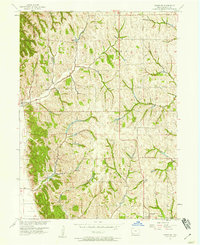 1957 Tabor SW1958 Print · USGSFremont County's rolling hills and river bottomlands are captured here in the mid-fifties, showing the rural character of Thurman and Sidney. Local researchers can locate historic burial grounds like Acord Cem and Lacy Cem or trace the path of Plum Creek.2 unique versions available
 - 1958 Map of Nebraska City
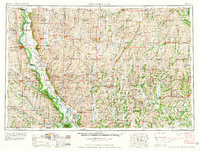 1958 Nebraska City1958 Print · USGSThe Missouri River Valley and its fertile four-state borderlands are captured here during the mid-century expansion of the regional highway and rail networks. Genealogists can trace family roots through numerous rural landmarks like Moulton School, Shady Grove Church, and the Clarinda State Hospital.
 - 1966 Map of Nebraska City NW, 1967 Print
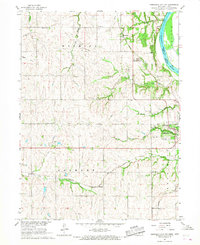 1966 Nebraska City NW1967 Print · USGSOtoe County at the height of the 1960s reveals a landscape shaped by historic transit and rural school districts. Genealogists and historians can trace the Steam Wagon Road, locate family-named sites like Cowles Cem, and see the early layout of Arbor Lodge State Park.
 - 1966 Map of Julian, 1968 Print
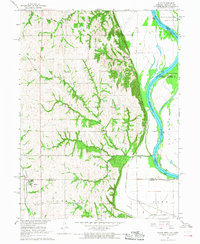 1966 Julian1968 Print · USGSThe Missouri River bottoms and Nebraska uplands are captured here in the mid-1960s as the river defines the borders of three states. Researchers can trace rural life through the locations of St Bernards Ch, Minersville, and several country schools like Hazel Dell Sch.2 unique versions available
 - 1966 Map of Nebraska City, 1968 Print
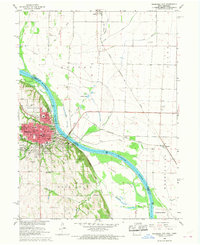 1966 Nebraska City1968 Print · USGSNebraska City and the Missouri River bottoms are captured here in the mid-sixties as the region's rail and agricultural networks remained in full swing. Researchers can trace family sites at Wyuka Cemetery, St Marys Cem, and local institutions like St Mary Hospital.2 unique versions available
 - 1966 Map of Nehawka, 1968 Print
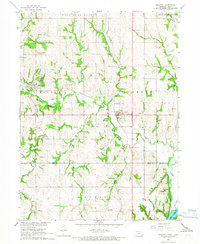 1966 Nehawka1968 Print · USGSSoutheast Nebraska in the mid-sixties reveals a landscape of limestone quarries and creek-side settlements along the Missouri Pacific line. Genealogists can trace family roots at Mt Pleasant Cem, Taylor Sch, and the riverside community of Union.
 - 1966 Map of Hamburg, 1968 Print
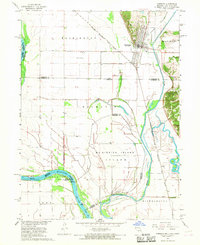 1966 Hamburg1968 Print · USGSSouthwest Fremont County is captured here in the late sixties at the three-state junction of Iowa, Missouri, and Nebraska. Genealogists and historians can trace the town of Hamburg, the Hamburg Cem, and the path of the Chicago Burlington and Quincy railroad.2 unique versions available
 - 1966 Map of Mc Paul, 1968 Print
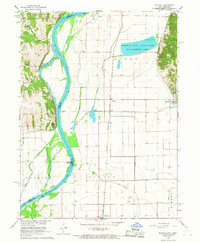 1966 Mc Paul1968 Print · USGSMissouri River bottomlands along the Iowa-Nebraska border were dominated by complex drainage works and rail corridors during the late sixties. Researchers can trace family sites at Kenosha Cem, locate the Ervine Sch, or follow the Chicago Burlington and Quincy tracks through McPaul.3 unique versions available
 - 1978 Map of Shenandoah West
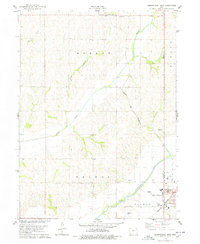 1978 Shenandoah West1978 Print · USGSShenandoah and the surrounding Iowa farmland are captured during the late seventies as the city expanded westward toward the river. Genealogists and local historians can locate the Mt Calvary Cem, Lowell Ave Sch, and the vintage Drive-in Theater.
 - 1978 Map of Imogene
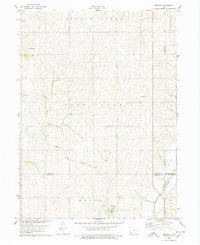 1978 Imogene1978 Print · USGSThe rural landscape of Fremont County is captured here in the late seventies, showing the rail-dependent settlement of Imogene and the surrounding farm country. Genealogists can trace family landmarks like Champion Hill Ch, the South Grove Cem, and the path of the Norfolk and Western railroad.
 - 1981 Map of Riverton
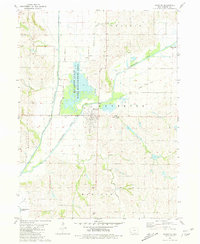 1981 Riverton1981 Print · USGSFremont County settlement and river management are captured here in the early 1980s. Genealogists and historians can locate family burial sites like Redd Cem and Utterback Cem or trace the Old Railroad Grade through Riverton.
 - 1981 Map of Bingham
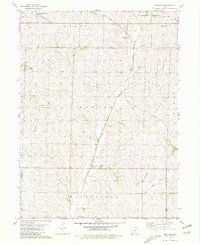 1981 Bingham1981 Print · USGSPage County farmland in the late 1970s is centered here on the Norfolk and Western line and the valley of West Tarkio Creek. Researchers can trace old shipping routes at Norwich or locate family sites near Bingham and the Cem.
Showing maps 1-25 of 131
Top cities of Fremont County
- Sidney historical maps
- Tabor historical maps
- Hamburg historical maps
- Farragut historical maps
- Riverton historical maps
- Randolph historical maps
See more
Frequently asked questions
- What are the different types of historical maps available for Fremont County?
- What is the oldest map of Fremont County?
- Where can I purchase historical maps of Fremont County for my home or office?
- Where can I download high-res historical maps of Fremont County?
- Are there historical topographic maps available for Fremont County?
- Is there historical aerial imagery available for Fremont County?
- Where are historical maps of Fremont County sourced from?