1960s Maps of Kansas City, Kansas
Explore 5 historic maps of Kansas City from the 1960s. These maps offer a rare glimpse into what life looked like during the 1960s — showing old roads, neighborhoods, homes, and landmarks that have changed or disappeared over time.
Whether you're researching your family's past, planning a metal detecting trip, or studying how Kansas City's landscape evolved across the 1960s, these high-resolution maps are a powerful tool for exploring the history of this region.
- Focus on a specific era: All maps on this page are from the 1960s, giving you a focused view of this time period.
- See what’s changed: Compare century-old streets, trails, and buildings to today's modern landscape using overlays and satellite layers.
- Research with precision: Use these maps for genealogy, historical research, land use analysis, or educational projects.
- View, download, or print: Maps are fully viewable online in high resolution, and can be downloaded or printed for your own records.
Start exploring Kansas City's history through authentic maps from the 1960s. This is your window into the past.
Kansas City, KS maps
(5)- 1960 Map of Kansas City
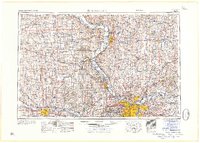 1960 Kansas City1960 Print · USGSMid-century Kansas and Missouri meet at the river forks, showing a sprawling rail-and-river economy during the 1950s growth era. Genealogists and researchers can trace tribal lands like the Kickapoo Indian Reservation or follow the early interstate corridors through Saint Joseph and Independence.3 unique versions available
 - 1964 Map of North Kansas City
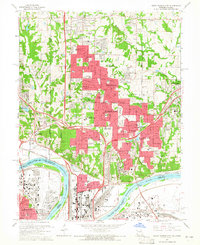 1964 North Kansas City1964 Print · USGSIn the mid-1960s, the northern outskirts of Kansas City were transforming into a suburban corridor along the Missouri River. Genealogists and researchers can trace the growth of Gladstone and Riverside alongside legacy sites like the Old Pike Country Club and White Chapel Memorial Gardens.5 unique versions available
 - 1964 Map of Parkville, 1965 Print
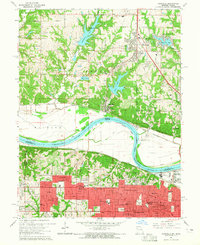 1964 Parkville1965 Print · USGSThe Missouri-Kansas borderlands come alive in the mid-sixties, showing the growth of Kansas City against the bluffs of Parkville. Researchers can trace old family sites at Nolan Cem and Sailor Cem or explore the early layout of Brenner Heights.8 unique versions available
 - 1964 Map of Kansas City, 1965 Print
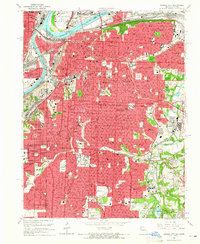 1964 Kansas City1965 Print · USGSKansas City in the mid-1960s reveals a bustling metropolitan hub where the Missouri and Kansas rivers meet. Researchers can trace the city's growth through its many neighborhood institutions and transit landmarks, including Union Station, Elmwood Cemetery, and the iconic Liberty Memorial.3 unique versions available
 - 1964 Map of Shawnee, 1966 Print
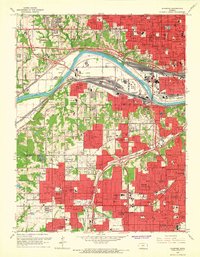 1964 Shawnee1966 Print · USGSThe Kansas River valley was a hub of rail and industrial activity in the mid-sixties, as suburban growth reshaped Wyandotte and Johnson counties. Genealogists and historians can trace neighborhood development and find local landmarks like Maple Hill Cemetery, Turner Memorial Bridge, and St Joseph High Sch Ch.4 unique versions available
End of results
Showing maps 1-5 of 5
Top cities near Kansas City
- Kansas City historical maps
- Overland Park historical maps
- Olathe historical maps
- Shawnee historical maps
- Lenexa historical maps
- Leavenworth historical maps
See more
Top neighborhoods of Kansas City
- Maywood historical maps
- Grays Park historical maps
- Vinewood historical maps
- Wallula historical maps
- Fairfax historical maps
- Village West historical maps
See more
Frequently asked questions
- What are the different types of historical maps available for Kansas City?
- What is the oldest map of Kansas City?
- Where can I purchase historical maps of Kansas City for my home or office?
- Where can I download high-res historical maps of Kansas City?
- Are there historical topographic maps available for Kansas City?
- Is there historical aerial imagery available for Kansas City?
- Where are historical maps of Kansas City sourced from?