1900s (20th Century) Maps of Evergreen Hills, Central
Explore 9 historic maps of Evergreen Hills from the 1900s (20th Century). These maps offer a rare glimpse into what life looked like during the 1900s — showing old roads, neighborhoods, homes, and landmarks that have changed or disappeared over time.
Whether you're researching your family's past, planning a metal detecting trip, or studying how Evergreen Hills's landscape evolved across the 1900s, these high-resolution maps are a powerful tool for exploring the history of this region.
- Focus on a specific era: All maps on this page are from the 1900s, giving you a focused view of this time period.
- See what’s changed: Compare century-old streets, trails, and buildings to today's modern landscape using overlays and satellite layers.
- Research with precision: Use these maps for genealogy, historical research, land use analysis, or educational projects.
- View, download, or print: Maps are fully viewable online in high resolution, and can be downloaded or printed for your own records.
Start exploring Evergreen Hills's history through authentic maps from the 1900s. This is your window into the past.
Evergreen Hills, Central maps
(9)- 1942 Map of Watson
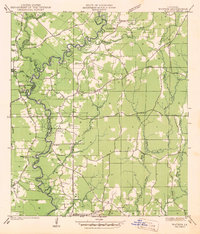 1942 Watson1942 Print · USGSLivingston and East Baton Rouge parishes are documented here during the early war years, centered on the community of Watson. Genealogists can locate family landmarks like Womack Cem and Odom Cem, or trace the grounds of the Greenwell Springs Sanatorium.
 - 1954 Map of Watson, 1955 Print
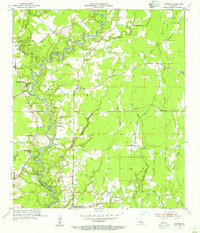 1954 Watson1955 Print · USGSThe Amite River floodplain comes to life in this mid-1950s survey of the border between East Baton Rouge and Livingston Parish. Researchers can locate family roots at Newsom Cem, trace the grounds of the Greenwell Springs Sanitarium, or find the historic Indian Mound.2 unique versions available
 - 1954 Map of Baton Rouge, 1974 Print
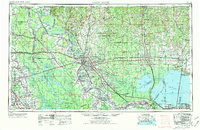 1954 Baton Rouge1974 Print · USGSSoutheast Louisiana in the mid-fifties is captured here during a period of transition for its river and rail economies. Researchers can trace the path of the Mississippi River and find landmarks like the Bonnet Carre Spillway and Bayou Plaquemine.2 unique versions available
 - 1956 Map of Baton Rouge
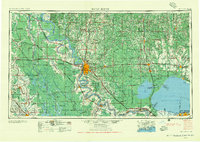 1956 Baton Rouge1956 Print · USGSSouth Louisiana at the height of the mid-century oil boom shows a landscape of river oxbows and rising industry. Researchers can trace family roots through river towns like Scotlandville or locate early industrial sites and Oil wells near Lake Maurepas.
 - 1958 Map of Pine Grove, 1959 Print
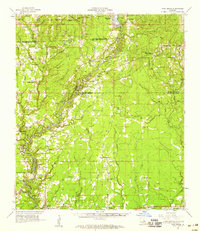 1958 Pine Grove1959 Print · USGSLouisiana's river-bottom parishes are shown here in the late fifties, when small timber and rail-stop communities still defined the rural landscape. Genealogists and researchers can trace lineage through dozens of local sites like Judson Ch Cem, Pride Chapel, and the vanished tracks of the Old Railroad Grade.3 unique versions available
 - 1961 Map of Baton Rouge, 1966 Print
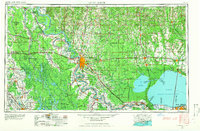 1961 Baton Rouge1966 Print · USGSSoutheastern Louisiana in the early sixties remains a landscape of deep river bends and sprawling coastal lakes. Genealogists and historians can trace the rail-and-river economy through landmarks like Free-Nigger Point, Donaldsonville, and the Illinois Central Railroad.
 - 1962 Map of Baton Rouge
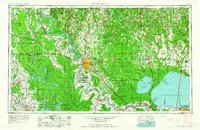 1962 Baton Rouge1962 Print · USGSSouth Louisiana in the early sixties reveals a landscape of river-bend parishes and emerging interstate corridors. Genealogists and historians can trace family roots through historic river towns like Donaldsonville and Plaquemine, or follow the path of the Illinois Central Railroad through the swamp basins.
 - 1980 Map of Watson, 1981 Print
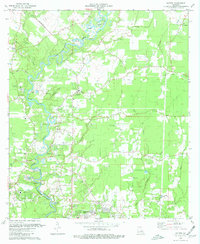 1980 Watson1981 Print · USGSSettlements along the Amite River corridor thrived in the late seventies as rural communities like Watson and Greenwell Springs expanded. Researchers can find old family cemeteries like Newsom Cem and significant local landmarks like the Indian Mound.
 - 1983 Map of Amite
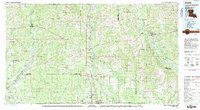 1983 Amite1983 Print · USGSThe Florida Parishes and southern Mississippi are captured here in the early 1980s, centered on the Illinois Central Gulf rail corridor. Genealogists and historians can trace family-named sites like the Camp Moore Confederate Cem, Magnolia Ch, and the Idlewild Plantation (State University).
End of results
Showing maps 1-9 of 9
Top cities near Evergreen Hills
- Baton Rouge historical maps
- Saint George historical maps
- St. George historical maps
- Prairieville historical maps
- Central historical maps
- Baker historical maps
See more
Frequently asked questions
- What are the different types of historical maps available for Evergreen Hills?
- What is the oldest map of Evergreen Hills?
- Where can I purchase historical maps of Evergreen Hills for my home or office?
- Where can I download high-res historical maps of Evergreen Hills?
- Are there historical topographic maps available for Evergreen Hills?
- Is there historical aerial imagery available for Evergreen Hills?
- Where are historical maps of Evergreen Hills sourced from?