Old Maps of Franklin Parish, Louisiana for Metal Detecting
Plan your next treasure hunt with 172 historic maps of Franklin Parish. Find old homesites, ghost towns, trails, and gathering spots that may be lost to time — perfect for identifying promising metal detecting locations.
- Locate forgotten sites: Uncover places like long-lost settlements, abandoned rail lines, or gathering spots.
- Plan better hunts: Use map overlays combined with LiDAR or satellite views to narrow in on historically rich areas.
- Made for detectorists: Thousands of hobbyists use these maps to discover relics, coins, and hidden history.
Use these historic maps to boost your research and find new opportunities beneath the surface of Franklin Parish.
Franklin Parish, LA maps
(172)- 1935 Map of Winnsboro, 1936 Print
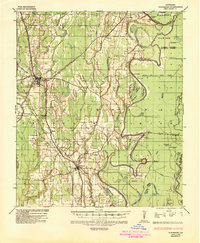 1935 Winnsboro1936 Print · USGSFranklin Parish in the mid-1930s is a landscape of railroad towns and timber landings defined by the winding Macon Bayou. Researchers can trace the Missouri Pacific line through Winnsboro or locate the many historic river crossings like Eureka Ferry and Killens Ferry.2 unique versions available
 - 1935 Map of Alto, 1936 Print
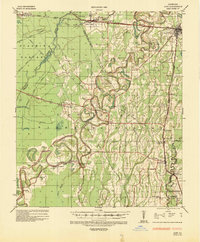 1935 Alto1936 Print · USGSRichland Parish in the mid-1930s shows a landscape of river-bottom agriculture and an early industrial energy boom. Researchers can trace the legacy of local river travel at Douciere Ferry and locate commercial sites like Rhymes Store or the Century Carbon Company.2 unique versions available
 - 1935 Map of Baskinton, 1936 Print
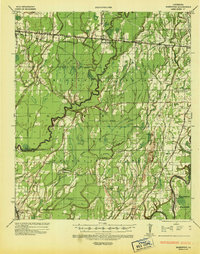 1935 Baskinton1936 Print · USGSNortheast Louisiana in the mid-1930s is defined by its drainage basins and river landings between the rail towns of Rayville and Delhi. Genealogists can locate rural landmarks such as Hill Ridge Ch & Sch, Baskinton, and landings like Sunrise Ldg.
 - 1935 Map of Waverly, 1938 Print
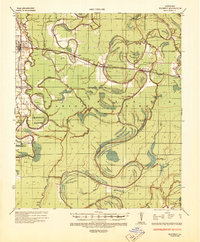 1935 Waverly1938 Print · USGSThe Louisiana delta in the mid-1930s shows a landscape defined by the winding Tensas River and early industrial expansion. Trace the remnants of a Logging Railroad Abandoned and the growth of trackside settlements like Delhi and Quebec.2 unique versions available
 - 1935 Map of Shackleford Lake, 1942 Print
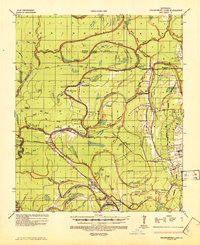 1935 Shackleford Lake1942 Print · USGSThe Tensas River basin in the 1930s shows a complex network of logging railroads and river landings essential to the local timber economy. Genealogists and local historians can trace family sites at Marydale Plantation, Stonewall Ch, and the settlement at Newlight.2 unique versions available
 - 1939 Map of Fort Necessity, 1941 Print
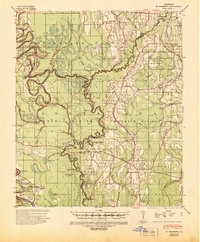 1939 Fort Necessity1941 Print · USGSThe Louisiana backcountry near the junction of Richland, Caldwell, and Franklin Parishes comes alive in the years leading up to the war. Researchers can trace rural lineages through local landmarks like Rosenwald Sch, the community at Fort Necessity, and active river crossings like Duchene Ferry.
 - 1939 Map of Locust Ridge, 1965 Print
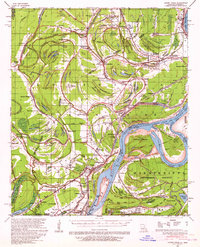 1939 Locust Ridge1965 Print · USGSThe Mississippi Delta in the late 1930s reveals a land of sprawling plantations and bayou settlements along the Louisiana border. Genealogists can trace family landmarks like the Mayflower Cem, Maryland Plantation Cem, and New St Mark Ch among the meanders of the river.
 - 1941 Map of Sicily Island, 1943 Print
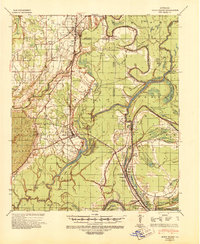 1941 Sicily Island1943 Print · USGSLouisiana's delta country comes alive in the 1940s as a complex network of bayous, landings, and rail lines. Genealogists and historians can trace the foundations of local life through rural landmarks like Sunnyside Sch & Ch, several Indian Mounds, and the Missouri Pacific rail corridor.2 unique versions available
 - 1941 Map of Harrisonburg, 1946 Print
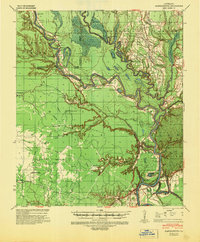 1941 Harrisonburg1946 Print · USGSThe Ouachita River valley in the early 1940s reveals a landscape of riverine commerce and upland settlements. Genealogists and researchers can locate historic community hubs like Harrisonburg, Siloam Ch, and the site of Fort Beauregard.
 - 1953 Map of Natchez, 1966 Print
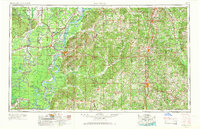 1953 Natchez1966 Print · USGSSouthwest Mississippi and the Louisiana border country come alive in this mid-century survey of the river valley and forest lands. Researchers can trace the rail lines of the Illinois Central RR and locate rural hubs like Gloster and Ferriday.3 unique versions available
 - 1955 Map of Jackson
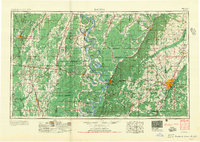 1955 Jackson1955 Print · USGSThe Lower Mississippi Valley at the middle of the century reveals a landscape of deep river meanders and growing rail hubs. Genealogists and historians can trace the mid-century footprints of Vicksburg National Military Park, old river landings at Port Gibson, and the rail corridors of the Illinois Central Railroad.3 unique versions available
 - 1956 Map of Natchez
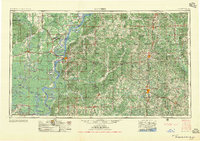 1956 Natchez1956 Print · USGSThe Mississippi River borderlands and the Pine Hills come alive in this mid-fifties study of the Natchez region. Genealogists and historians can trace rail-era towns along the Illinois Central RR and explore the oxbows of Lake Bruin and Lake Concordia.
 - 1957 Map of Sicily Island
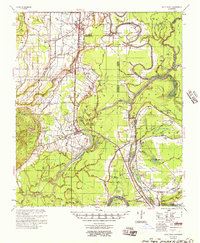 1957 Sicily Island1957 Print · USGSCatahoula Parish and the surrounding lowlands are captured in the late 1950s, showing a landscape shaped by the Tensas River and its many bayous. Genealogists can trace family roots at New Zion Ch & Cem 37, Loam Land Sch & Cem, or the old Lee Bayou School House.2 unique versions available
 - 1957 Map of Mangham, 1958 Print
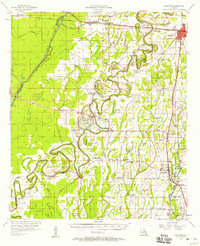 1957 Mangham1958 Print · USGSRichland and Franklin Parishes in the late fifties reveal a landscape of river-bottom agriculture and small rail towns. Genealogists can trace family roots through numerous local landmarks like Rhymes High Sch, St Luke Cem, and Mt Zion Ch.3 unique versions available
 - 1958 Map of Baskinton
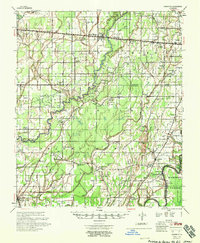 1958 Baskinton1958 Print · USGSRichland and Franklin Parishes in the late fifties show a landscape transitioning between traditional bayou life and the post-war energy boom. Researchers can locate vanished rural landmarks like Hunters Chapel, the Delhi Refining Co, and old river stops like Indian Ldg.2 unique versions available
 - 1958 Map of Shackleford Lake
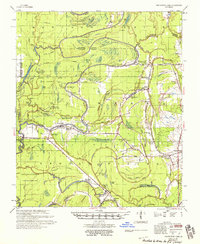 1958 Shackleford Lake1958 Print · USGSTensas Parish was a landscape of timber and river landings in the mid-1950s, where the logging industry and the river's flow dictated local life. Genealogists and historians can trace the foundations of communities at Marydale Plantation, Magnolia Sch & Ch, and ancient sites like the Indian Mounds.
 - 1958 Map of Winnsboro
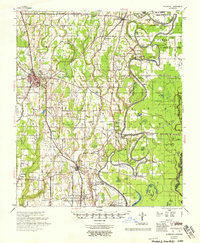 1958 Winnsboro1958 Print · USGSThe fertile landscape of Franklin Parish comes to life in the late 1950s, showing a region defined by the Missouri Pacific Railroad and the winding Macon Bayou. Genealogists and local historians can trace family locations near landmarks like True Light Cem & Ch, the Franklin Parish Training Sch, and Lorelein.
 - 1958 Map of Fort Necessity, 1959 Print
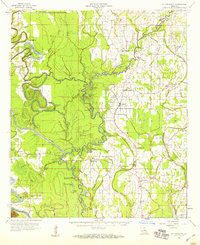 1958 Fort Necessity1959 Print · USGSThe Louisiana bottomlands of Franklin Parish are captured here in the late fifties, defined by the winding Boeuf River and dense bayou networks. Researchers can locate vanished landmarks and family cemeteries like Long Lake Cem, the Ft Necessity Sch, and Liddieville.3 unique versions available
 - 1959 Map of Natchez
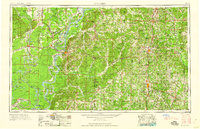 1959 Natchez1959 Print · USGSSouthwestern Mississippi and eastern Louisiana are captured in the late fifties, showing a landscape defined by the winding Mississippi River and the timbered Homochitto National Forest. Researchers can trace the sprawling Illinois Central RR and find rural landmarks like Union Church and Camp Van Dorn (Abandoned).
 - 1959 Map of Harrisonburg, 1960 Print
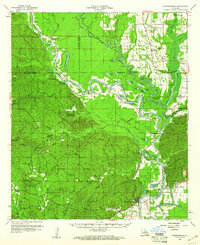 1959 Harrisonburg1960 Print · USGSThe Ouachita River valley comes to life in this late 1950s portrait of Catahoula Parish, showing a landscape of deep bayous and steep hills. Researchers can locate ancestral sites like Old Spring Ridge Cem, the community of Enterprise, and ancient Indian Mounds along the river bluffs.3 unique versions available
 - 1961 Map of Jackson
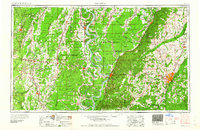 1961 Jackson1961 Print · USGSThe Lower Mississippi Delta and the state capital area are captured here during the post-war era of infrastructure expansion. Researchers can trace the complex river oxbows and rail lines connecting Vicksburg, Yazoo City, and the Illinois Central Railroad network.
 - 1961 Map of Waverly, 1963 Print
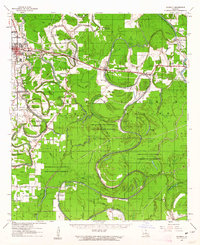 1961 Waverly1963 Print · USGSIn the early 1960s, these Northeast Louisiana parishes were defined by their winding bayous and the reach of the timber industry. Genealogists can trace family roots through several rural churches like Midway Church or Zion Pilgrim No 2 Church and the centrally located Waverly Cem.2 unique versions available
 - 1962 Map of Jackson
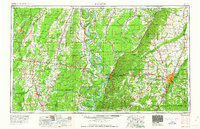 1962 Jackson1962 Print · USGSThe Mississippi Delta and the state capital region are mapped here in the early sixties, showing a landscape defined by the great river and the growing city of JACKSON. Genealogists can trace family roots through numerous landmarks like Cedar Hill Cem, rural stops on the Illinois Central RR, and historic sites like Champion Hill.2 unique versions available
 - 1963 Map of Gretna Green, 1964 Print
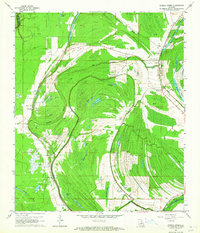 1963 Gretna Green1964 Print · USGSTensas Parish life in the early sixties is centered on the winding waters of Big Choctaw Bayou and its surrounding plantations. Researchers can trace local genealogy through community hubs like Gretna Green and Wavertree Plantation or find old family sites like New China Grove Ch and Mayflower Cem.2 unique versions available
 - 1965 Map of Locust Ridge, 1967 Print
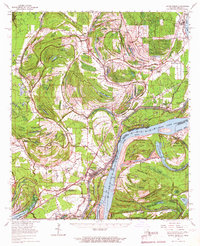 1965 Locust Ridge1967 Print · USGSThe Louisiana-Mississippi riverlands are captured here in the mid-1960s, showing the intricate oxbow lakes and rail-connected settlements along the river's edge. Researchers can locate family-named estates like Winona Plantation and rural landmarks like Choctaw Chapel and the Shiloh Ch.2 unique versions available
Showing maps 1-25 of 172
Top cities of Franklin Parish
Frequently asked questions
- What are the different types of historical maps available for Franklin Parish?
- What is the oldest map of Franklin Parish?
- Where can I purchase historical maps of Franklin Parish for my home or office?
- Where can I download high-res historical maps of Franklin Parish?
- Are there historical topographic maps available for Franklin Parish?
- Is there historical aerial imagery available for Franklin Parish?
- Where are historical maps of Franklin Parish sourced from?