Old Maps of D'Arbonne Hills, Louisiana for Academic Research
Study the evolution of D'Arbonne Hills with 15 high-resolution historic maps. Whether you're teaching, researching, or modeling changes in land use, these maps provide essential visual documentation of urban, environmental, and geographic change.
- Analyze long-term change: Track patterns in development, transportation, and natural features.
- Ideal for environmental or urban studies: Support academic projects with primary historical map data.
- Use in the classroom or lab: Educators and researchers rely on these maps to bring historical context to life.
These maps are a powerful tool for teaching, research, and visualizing how D'Arbonne Hills has changed over the decades.
D'Arbonne Hills, LA maps
(15)- 1935 Map of Drew, 1947 Print
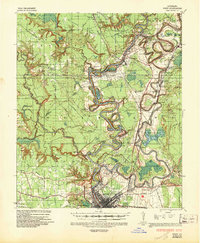 1935 Drew1947 Print · USGSNorthern Louisiana's river country was defined by winding waterways and emerging energy infrastructure in the 1930s. Genealogists can trace early crossings like Whites Ferry and family-named locales such as Guthrie or the Childrens Home in Monroe.
 - 1955 Map of Shreveport
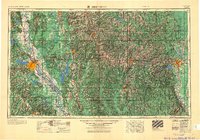 1955 Shreveport1955 Print · USGSNorthern Louisiana in the mid-fifties is captured here as a landscape of military bases, vast oil fields, and burgeoning college towns. Genealogists and historians can trace the rail-and-river economy through the Monroe Gas Field, Grambling College, and Barksdale Air Force Base.3 unique versions available
 - 1956 Map of Shreveport
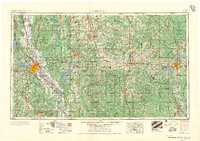 1956 Shreveport1956 Print · USGSNorthern Louisiana during the mid-fifties presents a complex landscape of booming oil fields and strategic military installations. Genealogists and historians can trace the infrastructure of the Monroe Gas Field and family-named locales from Cotton Valley to Jonesboro.
 - 1957 Map of Monroe North, 1958 Print
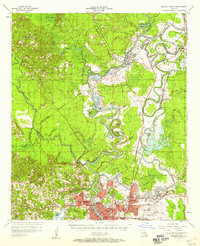 1957 Monroe North1958 Print · USGSNorth of the city center in the late fifties, the riverfront and bayous define a landscape of growing neighborhoods and industrial sites. Researchers can trace family roots through landmarks like Bean Chapel, Neville High Sch, and the grounds of Selman Airport.2 unique versions available
 - 1957 Map of West Monroe North, 1958 Print
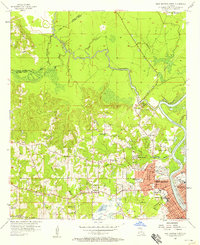 1957 West Monroe North1958 Print · USGSWest Monroe and its northern rural reaches are captured here during a period of steady mid-century development. Researchers can trace ancestral footprints at Hasley Cem, locate rural landmarks like Goodhope Ch, or follow the Illinois Central rail line through the bayou country.4 unique versions available
 - 1969 Map of Monroe North
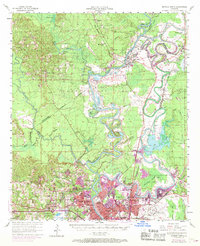 1969 Monroe North1969 Print · USGSMonroe and West Monroe enter a period of rapid growth during the late sixties as urban development pushes into the surrounding bayous. Genealogists can trace family names and local sites from Northeast Louisiana State College to the quiet grounds of Memorial Park Cem and rural Ouachita City.
 - 1984 Map of Shreveport
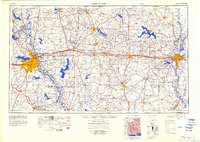 1984 Shreveport1984 Print · USGSNorthern Louisiana at the peak of the 1980s reveals a landscape of massive water management projects and Cold War military hubs. Trace the rail lines of the Kansas City Southern Ry past Barksdale Air Force Base and the high ground of Driskill Mountain.2 unique versions available
 - 1985 Map of Monroe North, 1986 Print
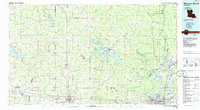 1985 Monroe North1986 Print · USGSNorth-central Louisiana in the mid-eighties was a landscape defined by the growth of university towns and the expansion of the natural gas industry. Researchers can trace rural family roots through landmarks like Lisbon Cem, New Hope Ch, and the many schools in Farmerville or Bernice.2 unique versions available
 - 1994 Map of West Monroe North, 1995 Print
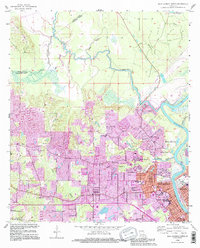 1994 West Monroe North1995 Print · USGSWest Monroe and the surrounding bayous are captured here in the mid-nineties during a period of suburban expansion and industrial activity. Genealogists and local historians can locate family landmarks like Hasley Cem, Goodhope Ch, and the vanished Drive-in Theater.
 - 1999 Map of West Monroe North, 2001 Print
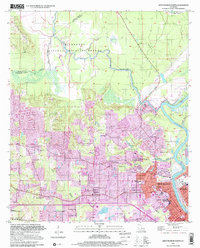 1999 West Monroe North2001 Print · USGSNorth Ouachita Parish at the end of the twentieth century shows a landscape where the D'Arbonne National Wildlife Refuge meets the expanding urban footprint of WEST MONROE. Researchers can trace local genealogy and civic history through sites like Hasley Cem, Boley High Sch, and Mt Horeb Ch.
 - 2012 Map of West Monroe North, 2012 Print
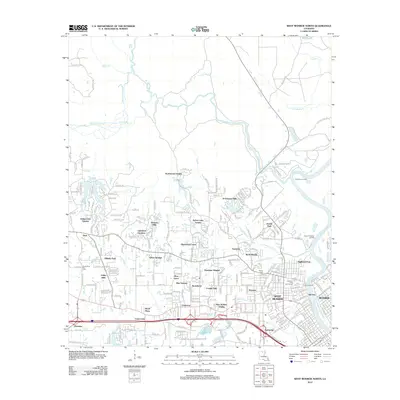 2012 West Monroe North2012 Print · USGSCovers D'Arbonne Hills, including Monroe, West Monroe, and other nearby areas
 - 2015 Map of West Monroe North, 2015 Print
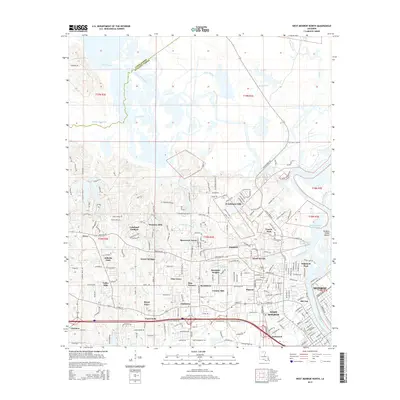 2015 West Monroe North2015 Print · USGSCovers D'Arbonne Hills, including Monroe, West Monroe, and other nearby areas
 - 2018 Map of West Monroe North, 2018 Print
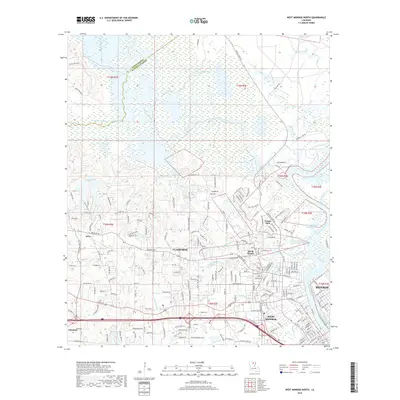 2018 West Monroe North2018 Print · USGSCovers D'Arbonne Hills, including Monroe, West Monroe, and other nearby areas
 - 2020 Map of West Monroe North, 2020 Print
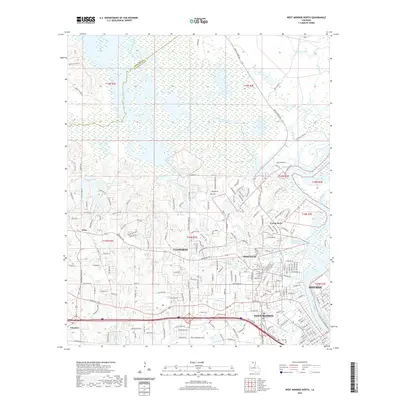 2020 West Monroe North2020 Print · USGSCovers D'Arbonne Hills, including Monroe, West Monroe, and other nearby areas
 - 2024 Map of West Monroe North, 2024 Print
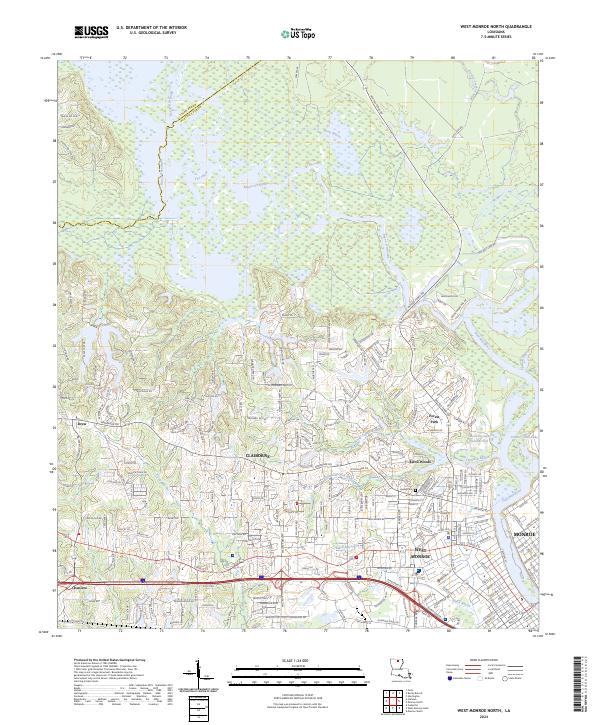 2024 West Monroe North2024 Print · USGSWest Monroe and its western suburbs are captured in high detail during a period of significant residential expansion along the Ouachita River. Genealogists and local historians can pinpoint the Hasley Cem or trace the early paths of Cheniere and Drew near the D'Arbonne National Wildlife Refuge.
End of results
Showing maps 1-15 of 15
Top cities near D'Arbonne Hills
- Monroe historical maps
- West Monroe historical maps
- Claiborne historical maps
- Swartz historical maps
- Farmerville historical maps
- Richwood historical maps
See more
Frequently asked questions
- What are the different types of historical maps available for D'Arbonne Hills?
- What is the oldest map of D'Arbonne Hills?
- Where can I purchase historical maps of D'Arbonne Hills for my home or office?
- Where can I download high-res historical maps of D'Arbonne Hills?
- Are there historical topographic maps available for D'Arbonne Hills?
- Is there historical aerial imagery available for D'Arbonne Hills?
- Where are historical maps of D'Arbonne Hills sourced from?