1900s (20th Century) Maps of Pecan Bayou, Louisiana
Explore 10 historic maps of Pecan Bayou from the 1900s (20th Century). These maps offer a rare glimpse into what life looked like during the 1900s — showing old roads, neighborhoods, homes, and landmarks that have changed or disappeared over time.
Whether you're researching your family's past, planning a metal detecting trip, or studying how Pecan Bayou's landscape evolved across the 1900s, these high-resolution maps are a powerful tool for exploring the history of this region.
- Focus on a specific era: All maps on this page are from the 1900s, giving you a focused view of this time period.
- See what’s changed: Compare century-old streets, trails, and buildings to today's modern landscape using overlays and satellite layers.
- Research with precision: Use these maps for genealogy, historical research, land use analysis, or educational projects.
- View, download, or print: Maps are fully viewable online in high resolution, and can be downloaded or printed for your own records.
Start exploring Pecan Bayou's history through authentic maps from the 1900s. This is your window into the past.
Pecan Bayou, LA maps
(10)- 1935 Map of Drew, 1947 Print
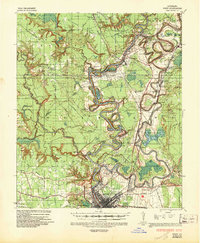 1935 Drew1947 Print · USGSNorthern Louisiana's river country was defined by winding waterways and emerging energy infrastructure in the 1930s. Genealogists can trace early crossings like Whites Ferry and family-named locales such as Guthrie or the Childrens Home in Monroe.
 - 1955 Map of Shreveport
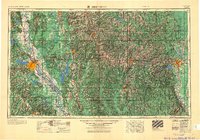 1955 Shreveport1955 Print · USGSNorthern Louisiana in the mid-fifties is captured here as a landscape of military bases, vast oil fields, and burgeoning college towns. Genealogists and historians can trace the rail-and-river economy through the Monroe Gas Field, Grambling College, and Barksdale Air Force Base.3 unique versions available
 - 1956 Map of Shreveport
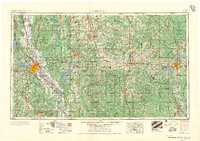 1956 Shreveport1956 Print · USGSNorthern Louisiana during the mid-fifties presents a complex landscape of booming oil fields and strategic military installations. Genealogists and historians can trace the infrastructure of the Monroe Gas Field and family-named locales from Cotton Valley to Jonesboro.
 - 1957 Map of Monroe North, 1958 Print
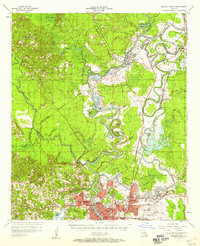 1957 Monroe North1958 Print · USGSNorth of the city center in the late fifties, the riverfront and bayous define a landscape of growing neighborhoods and industrial sites. Researchers can trace family roots through landmarks like Bean Chapel, Neville High Sch, and the grounds of Selman Airport.2 unique versions available
 - 1957 Map of Monroe North, 1958 Print
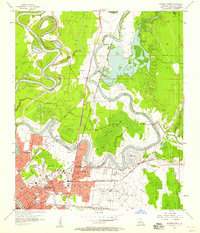 1957 Monroe North1958 Print · USGSMonroe and the Ouachita River valley are captured in the late fifties as the city expanded northward toward the gas fields. Researchers can trace local history through NE Louisiana State College, Selman Airport, and family landmarks like Cosper Cem.4 unique versions available
 - 1969 Map of Monroe North
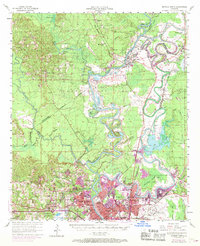 1969 Monroe North1969 Print · USGSMonroe and West Monroe enter a period of rapid growth during the late sixties as urban development pushes into the surrounding bayous. Genealogists can trace family names and local sites from Northeast Louisiana State College to the quiet grounds of Memorial Park Cem and rural Ouachita City.
 - 1984 Map of Shreveport
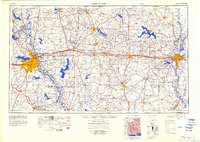 1984 Shreveport1984 Print · USGSNorthern Louisiana at the peak of the 1980s reveals a landscape of massive water management projects and Cold War military hubs. Trace the rail lines of the Kansas City Southern Ry past Barksdale Air Force Base and the high ground of Driskill Mountain.2 unique versions available
 - 1985 Map of Monroe North, 1986 Print
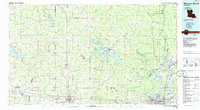 1985 Monroe North1986 Print · USGSNorth-central Louisiana in the mid-eighties was a landscape defined by the growth of university towns and the expansion of the natural gas industry. Researchers can trace rural family roots through landmarks like Lisbon Cem, New Hope Ch, and the many schools in Farmerville or Bernice.2 unique versions available
 - 1994 Map of Monroe North, 1995 Print
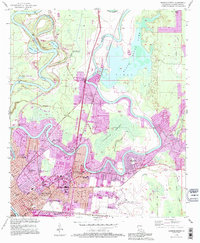 1994 Monroe North1995 Print · USGSMonroe and its northern bayous are captured here in the mid-1990s, showcasing a landscape of winding river loops and growing neighborhoods. Genealogists and local historians can trace landmarks like NE Louisiana State College, St Matthew Cem, and the old Selman Airport.
 - 1999 Map of Monroe North, 2001 Print
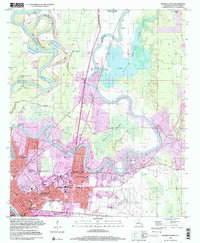 1999 Monroe North2001 Print · USGSMonroe and its surrounding wetlands are captured here at the close of the twentieth century. Researchers can trace the development of NE Louisiana State College and locate numerous family landmarks including St Matthew Cem and the Lakeshore Sch.
End of results
Showing maps 1-10 of 10
Top cities near Pecan Bayou
- Monroe historical maps
- West Monroe historical maps
- Claiborne historical maps
- Bastrop historical maps
- Swartz historical maps
- Richwood historical maps
See more
Frequently asked questions
- What are the different types of historical maps available for Pecan Bayou?
- What is the oldest map of Pecan Bayou?
- Where can I purchase historical maps of Pecan Bayou for my home or office?
- Where can I download high-res historical maps of Pecan Bayou?
- Are there historical topographic maps available for Pecan Bayou?
- Is there historical aerial imagery available for Pecan Bayou?
- Where are historical maps of Pecan Bayou sourced from?