Old Maps of West Feliciana Parish, Louisiana
Explore 130 old maps of West Feliciana Parish, spanning from 1906 to today. These high-resolution historic maps reveal how streets, neighborhoods, landmarks, and natural features evolved over time — perfect for genealogy, metal detecting, research, and local history exploration.
What you can do with these maps:
- See how West Feliciana Parish changed over time: Compare historical maps to modern-day views to trace roads, homesites, rail lines & more.
- View detailed metadata: Each map includes creators, publishers, year, scale, and archive source.
- Overlay maps with satellite & LiDAR: Visualize the past alongside modern tools to explore terrain & human change.
- Trusted historical sources: Maps sourced from the USGS, Library of Congress, and other archives.
- Access maps your way: View online, download high-res files, or order prints for personal or research use.
Start exploring old maps of West Feliciana Parish to uncover forgotten places, hidden landmarks, and the deep history beneath your feet.
West Feliciana Parish, LA maps
(130)- 1906 Map of Bayou Sara
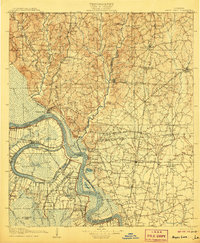 1906 Bayou Sara1906 Print · USGSThe Feliciana parishes and the Mississippi River bottomlands come to life in this early twentieth-century survey. Genealogists can trace family footprints through river-town settlements like St Francisville or find early rail stops such as Gayden Sta (Gurley P.O.) and Slaughter.3 unique versions available
 - 1939 Map of St. Francisville
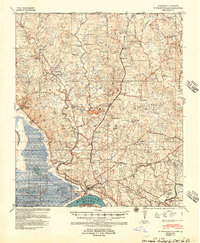 1939 St. Francisville1939 Print · USGSWest Feliciana Parish and the Mississippi River borderlands are captured here in the late 1930s. Genealogists and historians can trace the foundations of the plantation economy through landmarks like Magnolia Plantation and schools like Afton Villa Ch & Sch.3 unique versions available
 - 1939 Map of Artonish, 1945 Print
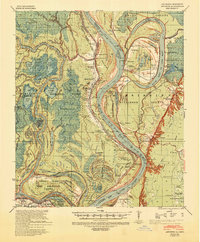 1939 Artonish1945 Print · USGSThe river-and-rail economy of the Louisiana-Mississippi border is frozen in time just before the mid-century, showing the dense settlement of the bottomlands. Genealogists can trace family roots through numerous local landmarks like Fort Adams, Singleton Chapel & Cem, and the Black Hawk Plantation.
 - 1939 Map of Fordoche, 1948 Print
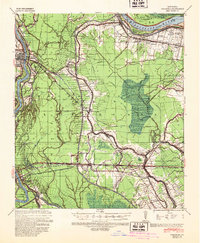 1939 Fordoche1948 Print · USGSThe rail-and-river corridor of Pointe Coupee Parish comes alive in this late 1930s survey, showing the land just as new flood controls were being established. Researchers can trace family history through rural community anchors like Sunlight Ch & Cem, Lottie, and Elliot City.2 unique versions available
 - 1941 Map of Lost Creek
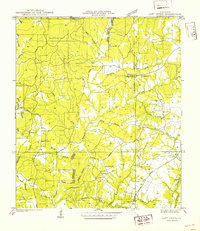 1941 Lost Creek1941 Print · USGSThe borderlands of East and West Feliciana Parish come alive in this early 1940s survey of rural Louisiana. Genealogists can trace family landmarks like Rogillioville, Hickory Grove Sch, and the Mc Queen Cem alongside the Illinois Central rail line.
 - 1941 Map of Voorhies, 1943 Print
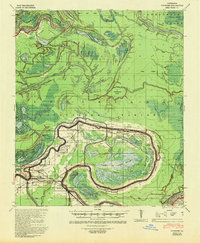 1941 Voorhies1943 Print · USGSAvoyelles Parish is captured here in the early 1940s, showcasing a river-bound landscape shaped by the Red River and its many oxbows. Genealogists can trace family roots through numerous landmarks like St James Ch & Cem, Voorhies School, and Moreauville.2 unique versions available
 - 1941 Map of Batchelor, 1944 Print
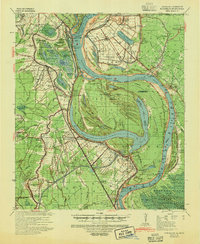 1941 Batchelor1944 Print · USGSThe Mississippi River's powerful shifts define this corner of Louisiana in the early 1940s, from the oxbows of the Raccourci Old River to the banks of Angola. Local researchers can locate family landmarks such as Mains Plantation, St Stevens Ch, and the Lower Latanache Sch.
 - 1945 Map of Jackson
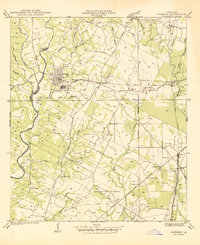 1945 Jackson1945 Print · USGSEast Feliciana Parish in the mid-1940s is shown here as a landscape of rural schoolhouses, family cemeteries, and institutional colonies. Researchers can trace the Illinois Central railroad and locate sites like Keller School, Evergreen Cemetery, and the Jackson town site.
 - 1945 Map of Lost Creek
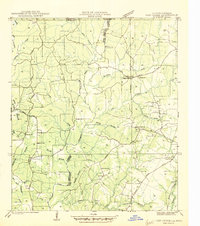 1945 Lost Creek1945 Print · USGSThe rural border of East and West Feliciana Parishes comes into focus in the mid-1940s, revealing a dense network of country schools and family cemeteries. Genealogists can trace the exact locations of Rogillio-ville, the Mc Queen Cem, and Hickory Grove Sch.
 - 1953 Map of New Roads, 1954 Print
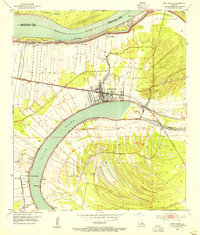 1953 New Roads1954 Print · USGSPointe Coupee Parish in the early fifties shows a landscape shaped by the massive curves of the False River and the active Mississippi River. Genealogists and local historians can trace family locations near NEW ROADS, St Catherine Chapel, and schools like Rosenwald Sch.
 - 1953 Map of Natchez, 1966 Print
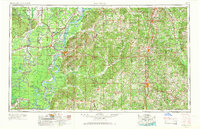 1953 Natchez1966 Print · USGSSouthwest Mississippi and the Louisiana border country come alive in this mid-century survey of the river valley and forest lands. Researchers can trace the rail lines of the Illinois Central RR and locate rural hubs like Gloster and Ferriday.3 unique versions available
 - 1954 Map of Port Hudson, 1955 Print
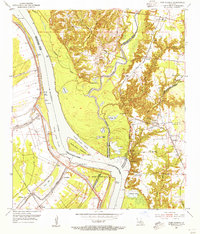 1954 Port Hudson1955 Print · USGSMid-century life along the Mississippi is captured here at the intersection of five Louisiana parishes. Genealogists and local researchers can trace family landmarks like Hermitage P.O., Beech Grove Ch No 2 Cem, and the historic Port Hudson riverfront.
 - 1954 Map of Elm Park, 1955 Print
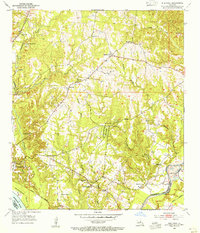 1954 Elm Park1955 Print · USGSWest Feliciana Parish in the mid-fifties remains a landscape of deep creek valleys and historic estates like Troy Plantation and Cottage Plantation. Genealogists and local historians can trace family locations through Starhill Cem and rural nodes like Beechwood or the Rosendwald Sch.
 - 1954 Map of Jackson, 1955 Print
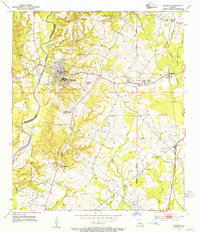 1954 Jackson1955 Print · USGSJackson and the surrounding Feliciana parishes are captured in the mid-1950s, a period defined by large institutional grounds and rural rail junctions. Genealogists can trace family names at Green Briar Cem or locate the various East Louisiana State Hospital colonies and the Illinois Central line.4 unique versions available
 - 1954 Map of Artonish, 1966 Print
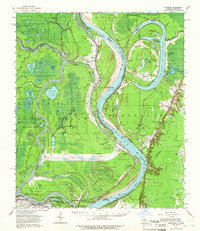 1954 Artonish1966 Print · USGSThe riverfronts of Concordia Parish and Wilkinson County are captured here in the mid-fifties, during a period of significant hydraulic engineering and transition. Genealogists and historians can trace family-named sites like Shaw Plantation, Singleton Cem, and the old military outpost at Fort Adams.
 - 1954 Map of Baton Rouge, 1974 Print
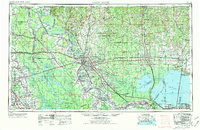 1954 Baton Rouge1974 Print · USGSSoutheast Louisiana in the mid-fifties is captured here during a period of transition for its river and rail economies. Researchers can trace the path of the Mississippi River and find landmarks like the Bonnet Carre Spillway and Bayou Plaquemine.2 unique versions available
 - 1955 Map of Artonish
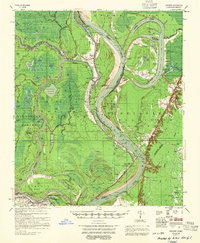 1955 Artonish1955 Print · USGSWilkinson County and Concordia Parish in the mid-fifties are defined here by the massive plantations and river landings along the winding Mississippi River. Genealogists can trace local roots through numerous sites like Royal Oak Ch & Cem, Fort Adams, and the Torras Community Sch.
 - 1955 Map of Fordoche
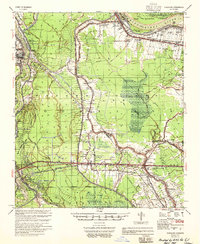 1955 Fordoche1955 Print · USGSMid-century Pointe Coupee Parish reveals a landscape of massive flood control projects and active bayou life during the 1950s. Genealogists and researchers can locate family landmarks like Argyle Plantation or the Zion Traveler Ch & Cem and trace the early development of the Fordoche Oil Field.
 - 1955 Map of Batchelor
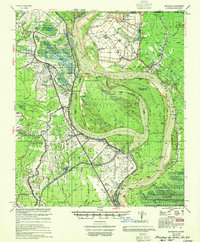 1955 Batchelor1955 Print · USGSLouisiana's river country is captured here in the mid-fifties, showing the massive impact of cutoffs and flood control projects on local parishes. Researchers can trace the sprawling Penitentiary Farm at Angola or locate family roots at St Marys Ch & Cem and Lacour Plantation.
 - 1956 Map of Natchez
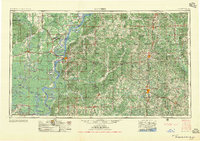 1956 Natchez1956 Print · USGSThe Mississippi River borderlands and the Pine Hills come alive in this mid-fifties study of the Natchez region. Genealogists and historians can trace rail-era towns along the Illinois Central RR and explore the oxbows of Lake Bruin and Lake Concordia.
 - 1956 Map of Baton Rouge
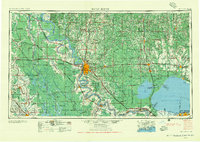 1956 Baton Rouge1956 Print · USGSSouth Louisiana at the height of the mid-century oil boom shows a landscape of river oxbows and rising industry. Researchers can trace family roots through river towns like Scotlandville or locate early industrial sites and Oil wells near Lake Maurepas.
 - 1958 Map of Artonish
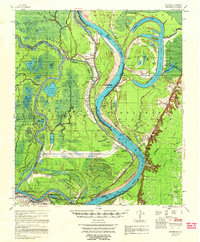 1958 Artonish1958 Print · USGSThe river bluffs of Mississippi and the bottomlands of Louisiana meet here in the late fifties as massive engineering projects began to reshape the landscape. Local historians can trace family-named sites like Stamps Plantation or locate rural landmarks such as Royal Oak Ch & Cem and the Texas and Pacific RR.
 - 1958 Map of Clinton, 1959 Print
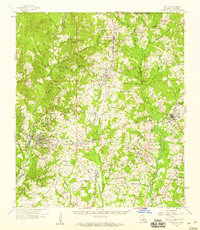 1958 Clinton1959 Print · USGSEast Feliciana Parish in the late fifties remains a landscape defined by its small towns, rail lines, and scattered family homesteads. Genealogists can trace roots at Richland Cem & Ch, find the Parish Industrial Training Sch, or follow the path of the old Plank Road.3 unique versions available
 - 1959 Map of Natchez
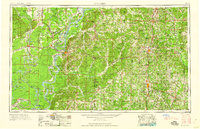 1959 Natchez1959 Print · USGSSouthwestern Mississippi and eastern Louisiana are captured in the late fifties, showing a landscape defined by the winding Mississippi River and the timbered Homochitto National Forest. Researchers can trace the sprawling Illinois Central RR and find rural landmarks like Union Church and Camp Van Dorn (Abandoned).
 - 1959 Map of Fordoche, 1962 Print
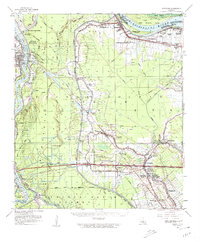 1959 Fordoche1962 Print · USGSLouisiana's river country is captured here in the late fifties, as the oil industry began to shape the landscape of Pointe Coupee Parish. Genealogists can locate family landmarks like Cottonwood Cem., Argyle Plantation, and the Sunlight Ch. near Blanks.2 unique versions available
Showing maps 1-25 of 130
Top cities of West Feliciana Parish
Frequently asked questions
- What are the different types of historical maps available for West Feliciana Parish?
- What is the oldest map of West Feliciana Parish?
- Where can I purchase historical maps of West Feliciana Parish for my home or office?
- Where can I download high-res historical maps of West Feliciana Parish?
- Are there historical topographic maps available for West Feliciana Parish?
- Is there historical aerial imagery available for West Feliciana Parish?
- Where are historical maps of West Feliciana Parish sourced from?