1960s Maps of Franklin County, Maine
Explore 24 historic maps of Franklin County from the 1960s. These maps offer a rare glimpse into what life looked like during the 1960s — showing old roads, neighborhoods, homes, and landmarks that have changed or disappeared over time.
Whether you're researching your family's past, planning a metal detecting trip, or studying how Franklin County's landscape evolved across the 1960s, these high-resolution maps are a powerful tool for exploring the history of this region.
- Focus on a specific era: All maps on this page are from the 1960s, giving you a focused view of this time period.
- See what’s changed: Compare century-old streets, trails, and buildings to today's modern landscape using overlays and satellite layers.
- Research with precision: Use these maps for genealogy, historical research, land use analysis, or educational projects.
- View, download, or print: Maps are fully viewable online in high resolution, and can be downloaded or printed for your own records.
Start exploring Franklin County's history through authentic maps from the 1960s. This is your window into the past.
Franklin County, ME maps
(24)- 1960 Map of Bangor
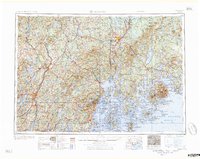 1960 Bangor1960 Print · USGSCentral Maine in the sixties reveals a landscape of river-powered industry and sprawling coastal island chains. Researchers can trace the rail corridors of the Maine Central or locate mid-century aviation landmarks like Dow Air Force Base.
 - 1961 Map of Bangor
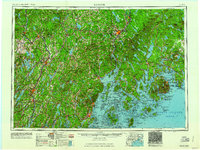 1961 Bangor1961 Print · USGSMid-century Maine comes alive through its busy river ports and rocky archipelagoes during a period of steady maritime and rail commerce. Researchers can trace the path of the Maine Central railroad and locate coastal landmarks from Acadia National Park to Vinalhaven Island.
 - 1961 Map of Lewiston
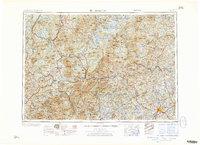 1961 Lewiston1961 Print · USGSWestern Maine and the White Mountains appear here during the early sixties, showing the industrial river towns and vast timberlands before the modern interstate era. Genealogists and historians can trace the Grand Trunk RR through Berlin or locate landmarks like Old Speck Mountain and Elephant Mountain.
 - 1962 Map of Lewiston
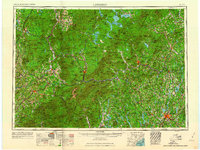 1962 Lewiston1962 Print · USGSThe industrial river valleys and high peaks of Maine and New Hampshire define the region in the early sixties. Trace the rail-and-river network from Lewiston to the White Mountains, passing through mill towns like Berlin and Rumford.
 - 1963 Map of Jackman
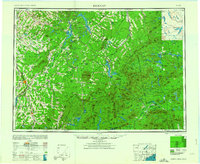 1963 Jackman1963 Print · USGSThe international borderlands of Maine and Quebec come alive in the mid-twentieth century, showing a landscape of timber towns and rail connections. Genealogists and historians can trace the paths of the Canadian Pacific Railway through Jackman or locate families in Sherbrooke and Megantic.
 - 1966 Map of Sherbrooke
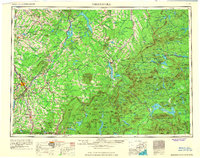 1966 Sherbrooke1966 Print · USGSThe borderlands of Quebec and Maine come alive in the mid-1960s, documenting the industrial towns and deep woods of the Northeast. Genealogists can trace family lines through Sherbrooke and Coaticook, or locate remote logging outposts along the Moose River and Flagstaff Lake.
 - 1966 Map of Fayette, 1968 Print
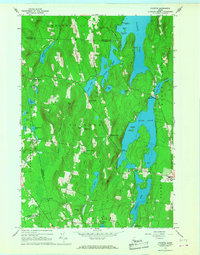 1966 Fayette1968 Print · USGSThe Kennebec County lake country is captured here in the mid-sixties, showing a landscape defined by seasonal camps and traditional crossroads settlements. Genealogists and local historians can locate Kent Cem, the old works at Richmond Mill, and Twelve Corners.2 unique versions available
 - 1967 Map of Livermore Falls, 1970 Print
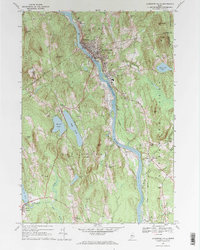 1967 Livermore Falls1970 Print · USGSIn the late sixties, the industrial activity along the Androscoggin River and the Maine Central rail line defined this corner of Maine. Researchers can trace ancestral roots at Lakeside Cem or locate old landmarks like Bowman Field and Chisholm.2 unique versions available
 - 1968 Map of Mount Blue, 1970 Print
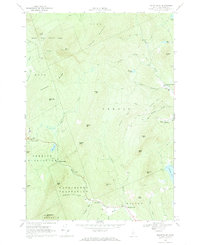 1968 Mount Blue1970 Print · USGSFranklin County's high country and wooded plantations are captured here in the late sixties, showcasing the high-elevation terrain of Mount Blue State Park. Genealogists and local historians can trace family-named sites like Hildreths Mill, Staples Cem, and the small settlement at Temple Intervale.2 unique versions available
 - 1968 Map of East Dixfield, 1970 Print
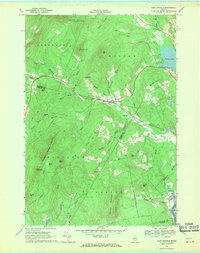 1968 East Dixfield1970 Print · USGSWestern Maine highlands meet the river valleys in the late sixties, showcasing the rural landscapes of Franklin and Oxford Counties. Genealogists can locate family landmarks like Science Hill Cemetery, Walker Hill, and the community of East Dixfield.2 unique versions available
 - 1968 Map of Weld, 1970 Print
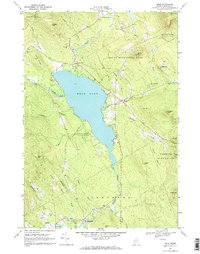 1968 Weld1970 Print · USGSIn the late sixties, the Highlands of Franklin County remained a landscape of mountain ridges and secluded lakefronts. Researchers can trace family sites at Mountain View Cemetery or follow the small-town roots of Berry Mills and Carthage along the Webb River.3 unique versions available
 - 1968 Map of Farmington Falls, 1971 Print
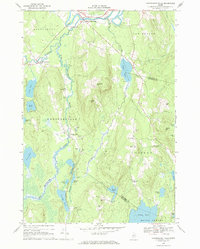 1968 Farmington Falls1971 Print · USGSThe Farmington Falls area in the late sixties reveals a landscape of high hills and interconnected waterways at the Franklin and Kennebec county line. Genealogists can trace local roots through sites like Chesterville Sch, North Vienna Ch, and the many family-named cemeteries like Webster Cem.
 - 1968 Map of New Sharon, 1971 Print
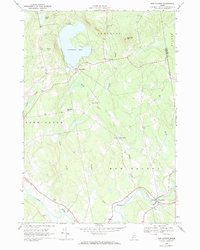 1968 New Sharon1971 Print · USGSFranklin County in the late sixties shows a landscape defined by riverside settlements and upland farms. Researchers can trace historic burial sites like Village Cem or locate the old mill sites at Allens Mills and Weeks Mills along the Sandy River.
 - 1968 Map of Dixfield, 1971 Print
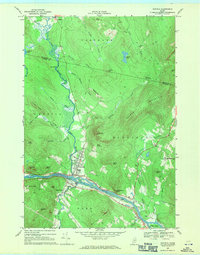 1968 Dixfield1971 Print · USGSOxford County communities like Dixfield and Peru are shown at their industrial and agricultural peak in the late sixties. Researchers can trace the Maine Central rail line or locate family plots at Riverside Cem and Waite Cem.2 unique versions available
 - 1968 Map of Wilton, 1971 Print
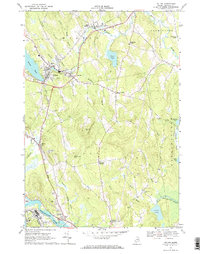 1968 Wilton1971 Print · USGSFranklin County's transition from rural crossroads to an industrial corridor is captured here in the late sixties. Researchers can trace family sites near Lakeview Cem or locate historic industrial sites such as the quarries near North Jay and the Central Maine Railroad.
 - 1968 Map of Farmington, 1971 Print
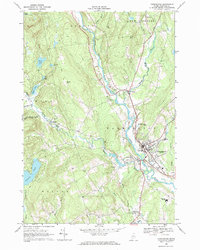 1968 Farmington1971 Print · USGSFarmington and the Sandy River valley are captured here in the late sixties, showing the town's expansion and educational institutions. Genealogists can locate numerous burial sites like Riverside Cem and Red Schoolhouse Cem, or trace the grounds of Farmington State College.
 - 1968 Map of Ellis Pond, 1972 Print
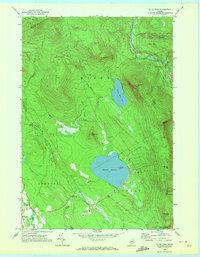 1968 Ellis Pond1972 Print · USGSOxford County in the late sixties reveals a landscape of high peaks and historic mountain settlements. Genealogists and historians can trace family roots at Stockbridge Cem, find the early Telstar Radio Facility, and follow the Old Railroad Grade.2 unique versions available
 - 1969 Map of Lewiston
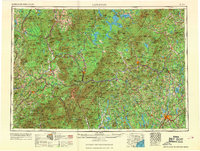 1969 Lewiston1969 Print · USGSThe northern New England highlands come into focus during the mid-fifties, showing the vital rail and river networks connecting industrial centers to the deep woods. Researchers can trace the path of the Grand Trunk RR or locate landmarks like Mt Washington and Rangeley Lake.
 - 1969 Map of Roxbury, 1972 Print
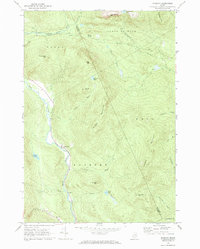 1969 Roxbury1972 Print · USGSRoxbury and the Swift River valley are shown in detail during the late sixties as they transition between the peaks of Oxford and Franklin Counties. Researchers can locate Pineview Cem, trace the historic WALKER TRAIL, and identify old family farm landmarks like Thomas Farm Brook.
 - 1969 Map of Rumford, 1972 Print
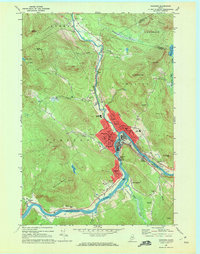 1969 Rumford1972 Print · USGSOxford County industrial life and rural landscapes meet in the late sixties at the junction of the Androscoggin River and Swift River. Researchers can trace the town layout of Rumford and Mexico, finding family cemeteries like Bisbee Cem and historic sites such as the Rumford Falls Powerplant.2 unique versions available
 - 1969 Map of Chain Of Ponds, 1973 Print
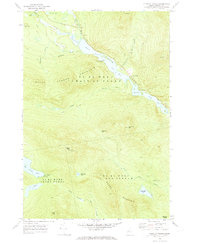 1969 Chain Of Ponds1973 Print · USGSThe northern Maine woods near the border were a landscape of deep timber and historic travel routes in the late sixties. Researchers can trace the path of the Arnold Trail past remote sites like the Chain of Ponds Camp, Upper Farm, and the Snow Mtn Lookout Tower.2 unique versions available
 - 1969 Map of Black Mountain, 1973 Print
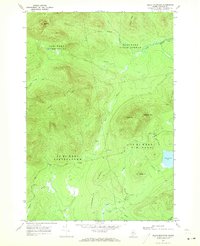 1969 Black Mountain1973 Print · USGSFranklin County's remote northern townships are documented here during the late sixties, showing a landscape defined by timber and high peaks. Genealogists and researchers can trace the remote logging roads and waterways around Tim Pond, Black Mtn, and the various branches of Alder Stream.2 unique versions available
 - 1969 Map of Jim Pond, 1973 Print
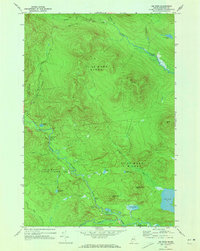 1969 Jim Pond1973 Print · USGSNorthwestern Maine's timberlands and watercourses are meticulously mapped here in the late sixties, showing a wilderness defined by its ponds and township lines. Trace the route of the North Branch Dead River past Sarampus Falls Roadside Park and the isolated Hurricane Pond.2 unique versions available
 - 1969 Map of Quill Hill, 1973 Print
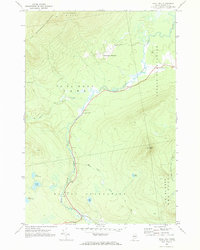 1969 Quill Hill1973 Print · USGSFranklin County's mountain wilderness is captured in the late sixties, showing a landscape defined by timber and remote outposts. Trace the isolated Kennebago Settlement, the historic Langtown Mill, and family sites like Green Farm.
End of results
Showing maps 1-24 of 24
Top cities of Franklin County
- Farmington historical maps
- Jay historical maps
- Wilton historical maps
- New Sharon historical maps
- Chesterville historical maps
- Rangeley historical maps
See more
Frequently asked questions
- What are the different types of historical maps available for Franklin County?
- What is the oldest map of Franklin County?
- Where can I purchase historical maps of Franklin County for my home or office?
- Where can I download high-res historical maps of Franklin County?
- Are there historical topographic maps available for Franklin County?
- Is there historical aerial imagery available for Franklin County?
- Where are historical maps of Franklin County sourced from?