1960s Maps of Jay, Maine
Explore 6 historic maps of Jay from the 1960s. These maps offer a rare glimpse into what life looked like during the 1960s — showing old roads, neighborhoods, homes, and landmarks that have changed or disappeared over time.
Whether you're researching your family's past, planning a metal detecting trip, or studying how Jay's landscape evolved across the 1960s, these high-resolution maps are a powerful tool for exploring the history of this region.
- Focus on a specific era: All maps on this page are from the 1960s, giving you a focused view of this time period.
- See what’s changed: Compare century-old streets, trails, and buildings to today's modern landscape using overlays and satellite layers.
- Research with precision: Use these maps for genealogy, historical research, land use analysis, or educational projects.
- View, download, or print: Maps are fully viewable online in high resolution, and can be downloaded or printed for your own records.
Start exploring Jay's history through authentic maps from the 1960s. This is your window into the past.
Jay, ME maps
(6)- 1961 Map of Lewiston
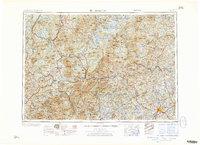 1961 Lewiston1961 Print · USGSWestern Maine and the White Mountains appear here during the early sixties, showing the industrial river towns and vast timberlands before the modern interstate era. Genealogists and historians can trace the Grand Trunk RR through Berlin or locate landmarks like Old Speck Mountain and Elephant Mountain.
 - 1962 Map of Lewiston
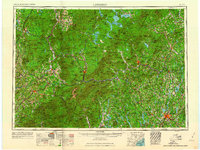 1962 Lewiston1962 Print · USGSThe industrial river valleys and high peaks of Maine and New Hampshire define the region in the early sixties. Trace the rail-and-river network from Lewiston to the White Mountains, passing through mill towns like Berlin and Rumford.
 - 1967 Map of Livermore Falls, 1970 Print
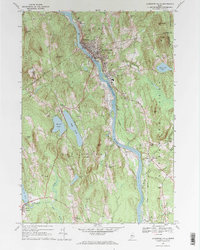 1967 Livermore Falls1970 Print · USGSIn the late sixties, the industrial activity along the Androscoggin River and the Maine Central rail line defined this corner of Maine. Researchers can trace ancestral roots at Lakeside Cem or locate old landmarks like Bowman Field and Chisholm.2 unique versions available
 - 1968 Map of East Dixfield, 1970 Print
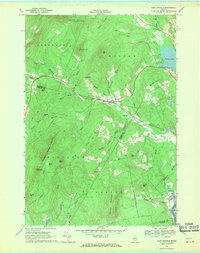 1968 East Dixfield1970 Print · USGSWestern Maine highlands meet the river valleys in the late sixties, showcasing the rural landscapes of Franklin and Oxford Counties. Genealogists can locate family landmarks like Science Hill Cemetery, Walker Hill, and the community of East Dixfield.2 unique versions available
 - 1968 Map of Wilton, 1971 Print
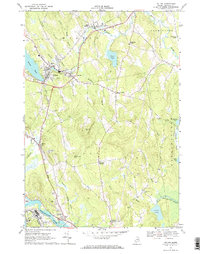 1968 Wilton1971 Print · USGSFranklin County's transition from rural crossroads to an industrial corridor is captured here in the late sixties. Researchers can trace family sites near Lakeview Cem or locate historic industrial sites such as the quarries near North Jay and the Central Maine Railroad.
 - 1969 Map of Lewiston
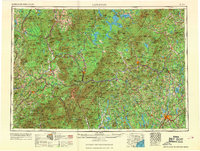 1969 Lewiston1969 Print · USGSThe northern New England highlands come into focus during the mid-fifties, showing the vital rail and river networks connecting industrial centers to the deep woods. Researchers can trace the path of the Grand Trunk RR or locate landmarks like Mt Washington and Rangeley Lake.
End of results
Showing maps 1-6 of 6
Top cities near Jay
- Farmington historical maps
- Winthrop historical maps
- Turner historical maps
- Paris historical maps
- Wilton historical maps
- Livermore Falls historical maps
See more
Top neighborhoods of Jay
- North Jay historical maps
- Chisholm historical maps
- Stones Corner historical maps
- Riley historical maps
- Beans Corner historical maps
Frequently asked questions
- What are the different types of historical maps available for Jay?
- What is the oldest map of Jay?
- Where can I purchase historical maps of Jay for my home or office?
- Where can I download high-res historical maps of Jay?
- Are there historical topographic maps available for Jay?
- Is there historical aerial imagery available for Jay?
- Where are historical maps of Jay sourced from?