Old Maps of Orland, Maine for Hiking & Exploration
Hike through history with 57 historic maps of Orland. Explore old trails, ghost towns, and forgotten backroads — perfect for outdoor adventurers and local explorers.
- Rediscover forgotten places: Map out old mining camps, roads, and footpaths that no longer exist on modern maps.
- Layer with modern tools: Combine with LiDAR or satellite views to plan hikes through historical terrain.
- Made for exploration: Popular among hikers, overlanders, and local history lovers.
Use these maps to find adventure and explore the hidden past of Orland.
Orland, ME maps
(57)- 1900 Map of Orland
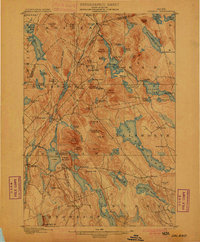 1900 Orland1900 Print · USGSMaine's interior hills and glacial lakes are shown in detail at the turn of the century as the rail lines reached into Hancock County. Trace the development of small settlements like East Orland and Dedham, or locate the early U.S. Fish Hatchery near Green Lake.6 unique versions available
 - 1900 Map of Bucksport
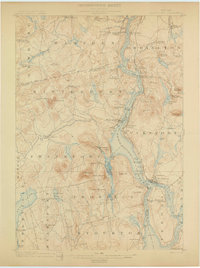 1900 Bucksport1900 Print · USGSThe Penobscot River corridor is captured here at the turn of the century as a vital artery for rail, river, and granite industries. Genealogists and historians can trace family-named corners and landmarks like Fort Knox, the Quarry at Mt Waldo, and Prospect Ferry.
 - 1902 Map of Bucksport
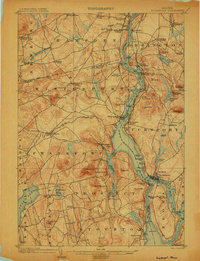 1902 Bucksport1902 Print · USGSCoastal Maine at the turn of the century centered on the maritime and rail traffic of the Penobscot River valley. Genealogists and historians can trace old family settlements from Newburg Village to Orrington, alongside industrial landmarks like the Quarry and the historic fortifications at Fort Knox.6 unique versions available
 - 1902 Map of Castine
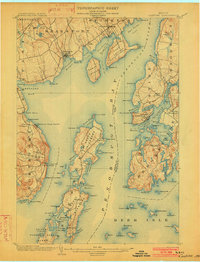 1902 Castine1902 Print · USGSPenobscot Bay at the dawn of the 1900s shows a thriving maritime landscape of island settlements and harbor towns. Genealogists and historians can trace old homesteads and coastal landmarks near Ft. George, Northport Camp Ground, and the various landings of Islesboro.
 - 1904 Map of Castine
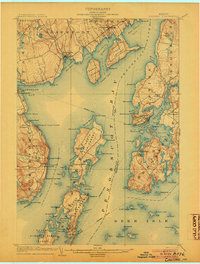 1904 Castine1904 Print · USGSPenobscot Bay at the turn of the century shows a maritime landscape of bustling ports and emerging summer colonies. Genealogists and historians can trace old coastal settlements like Castine, locate the grounds of Ft. George, and follow the Steamboat Routes that linked the mainland to Dark Harbor.7 unique versions available
 - 1905 Map of Penobscot Bay
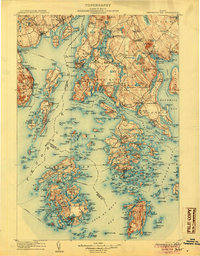 1905 Penobscot Bay1905 Print · USGSThe Maine coastline at the dawn of the twentieth century was a bustling network of maritime trade and summer retreats. Genealogists and historians can trace the foundations of coastal life through the STEAMBOAT ROUTE, the Northport Camp Ground, and settlements like Sargentville.3 unique versions available
 - 1941 Map of Castine, 1959 Print
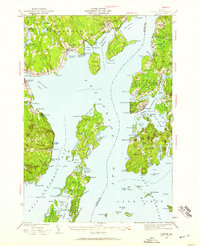 1941 Castine1959 Print · USGSPenobscot Bay and its storied coastal villages appear here in the early 1940s, showing the intersection of maritime trade and rural Maine life. Genealogists and historians can trace the rail terminals at Mack Pt, local schools like Park Sch, and the historical site of Fort George.4 unique versions available
 - 1942 Map of Orland
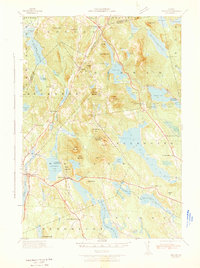 1942 Orland1942 Print · USGSIn the early 1940s, the rugged interior between the Penobscot River and Ellsworth was a landscape of high summits and conservation-focused industry. Genealogists and historians can trace old homesteads and landmarks like Bucks Mills, the U S Fish Hatchery, and the scattered settlements of East Orland and North Ellsworth.
 - 1942 Map of Bucksport
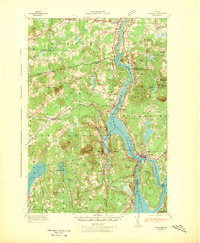 1942 Bucksport1942 Print · USGSThe mid-century Penobscot River valley is captured here just as the river-and-rail economy defined local life. Genealogists and historians can trace family-named crossroads like Nealeys Corner and Ellingwoods Corner or locate the landmark Fort Knox and Prospect Ferry.
 - 1943 Map of Castine
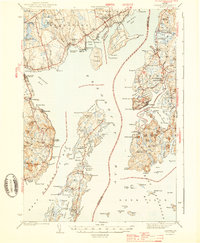 1943 Castine1943 Print · USGSMid-century Penobscot Bay life is charted here during the early 1940s, from the historic streets of the mainland to the isolated island harbors. Genealogists can trace family connections at Bethany Chapel or locate the old Farnham Sch and the rail depot at Searsport Sta.3 unique versions available
 - 1948 Map of Bangor
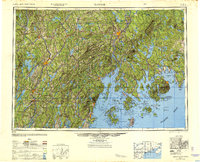 1948 Bangor1948 Print · USGSThe Maine coast and its industrial river valleys are captured here shortly after the war, showing the vital shipping and rail hubs of the late 1940s. Genealogists and historians can trace the tracks of the Maine Central RR connecting Bangor, Augusta, and Old Town.
 - 1948 Map of Bucksport
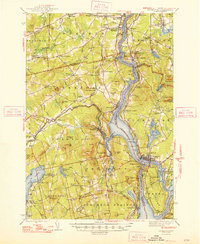 1948 Bucksport1948 Print · USGSMid-coast Maine at the end of the 1940s reveals a bustling corridor of river commerce and rail transport along the Penobscot River. Researchers can trace old family lines at Wiswell Cem, locate the historic Fort Knox State Park, and follow the tracks of the Bangor and Aroostook through towns like Winterport.2 unique versions available
 - 1948 Map of Orland
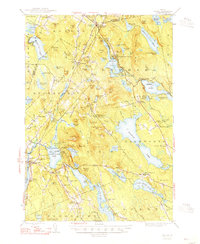 1948 Orland1948 Print · USGSHancock and Penobscot counties are shown here just after the war, when rural hamlets and lakeside retreats defined the landscape. Researchers can locate the Annear Copper Mine, the US Fish Hatchery, and numerous family burial grounds like Evergreen Cemetery.2 unique versions available
 - 1955 Map of Orland, 1956 Print
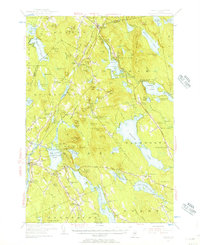 1955 Orland1956 Print · USGSCoastal Maine in the mid-fifties is captured here as a landscape of interconnected ponds and granite ridges. Genealogists and historians can trace family-named landmarks like Condon Hill, locate the U S Fish Hatchery, and find the Annear Copper Mine.4 unique versions available
 - 1955 Map of Bucksport, 1957 Print
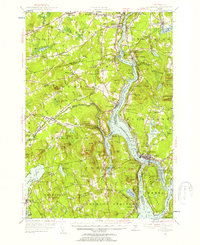 1955 Bucksport1957 Print · USGSThe Penobscot River valley thrives as a rail and maritime corridor during the mid-fifties, anchored by the industrial activities at Mt Waldo. Genealogists and historians can locate legacy family sites including Wiswell Cem, Nealys Corner, and the historic Fort Knox State Park.4 unique versions available
 - 1956 Map of Bangor, 1966 Print
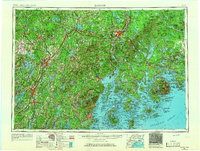 1956 Bangor1966 Print · USGSMid-century Maine comes alive in this survey of the rugged coast and river valleys during the 1950s. Genealogists and historians can trace the vital rail corridors of the Maine Central RR connecting timber towns like Old Town to the coast at Bar Harbor.3 unique versions available
 - 1960 Map of Bangor
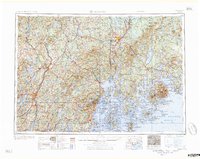 1960 Bangor1960 Print · USGSCentral Maine in the sixties reveals a landscape of river-powered industry and sprawling coastal island chains. Researchers can trace the rail corridors of the Maine Central or locate mid-century aviation landmarks like Dow Air Force Base.
 - 1961 Map of Bangor
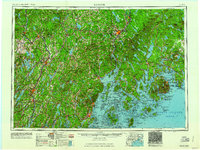 1961 Bangor1961 Print · USGSMid-century Maine comes alive through its busy river ports and rocky archipelagoes during a period of steady maritime and rail commerce. Researchers can trace the path of the Maine Central railroad and locate coastal landmarks from Acadia National Park to Vinalhaven Island.
 - 1973 Map of Castine, 1977 Print
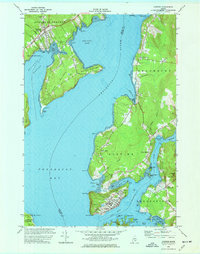 1973 Castine1977 Print · USGSThe Maine coast near the confluence of the Penobscot and Bagaduce Rivers is captured here in the early 1970s. Local historians can trace the foundations of Ft George, the route of the British Canal, and the grounds of the Maritime Academy in Castine.3 unique versions available
 - 1981 Map of Branch Lake, 1982 Print
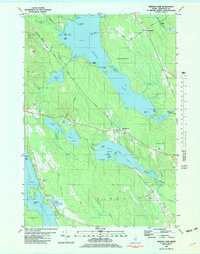 1981 Branch Lake1982 Print · USGSHancock County’s lakelands are captured here in the early 1980s, documenting the rural communities of North Ellsworth and West Surry. Researchers can trace the Maine Central rail line, locate small family plots like Gott Cem, and explore the shoreline of Branch Lake.2 unique versions available
 - 1982 Map of Brewer Lake
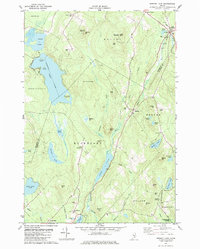 1982 Brewer Lake1982 Print · USGSHancock County's landscape of ridges and ponds is captured here in the early eighties as rural life centered around towns like Dedham and East Holden. Genealogists can locate several local burial grounds, including Union Cem and Copeland Hill Cem, and trace the path of the Maine Central railroad.
 - 1982 Map of Green Lake
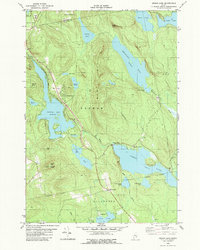 1982 Green Lake1982 Print · USGSHancock County’s lakelands are shown here in the early eighties, centered on the vacation community of Lucerne-In-Maine. Genealogists and researchers can trace family landmarks like Wilson Corner, Eastern Cem, and Our Lady of the Lake Chapel set against the granite heights of Eagle Bluff.2 unique versions available
 - 1982 Map of Bucksport
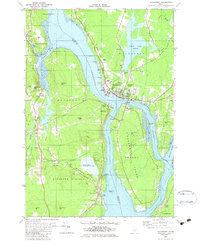 1982 Bucksport1982 Print · USGSThe Penobscot River narrows into a vital maritime corridor at Bucksport in the early eighties. Researchers can trace the layout of Verona Island, the historic batteries of Fort Knox, and family sites at Silver Lake Cem or South Orland.2 unique versions available
 - 1982 Map of Orland, 1983 Print
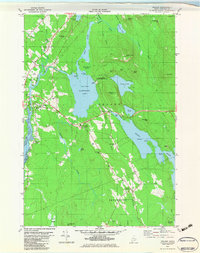 1982 Orland1983 Print · USGSHancock County’s coastal interior is captured here in the early eighties, showing the transition from riverfront settlements to inland lakes. Researchers can trace ancestral sites at Back Ridge Cem, visit East Orland, or locate the Craig Brook National Fish Hatchery.
 - 1985 Map of Bangor
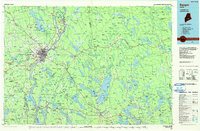 1985 Bangor1985 Print · USGSMid-Maine during the mid-eighties centers on the industrial pulse of the Penobscot River and its critical rail connections. Genealogists and historians can trace the development of river towns from Old Town to Ellsworth and locate regional landmarks like Fort Knox State Park.
Showing maps 1-25 of 57
Top cities near Orland
- Bangor historical maps
- Brewer historical maps
- Ellsworth historical maps
- Hampden historical maps
- Hermon historical maps
- Bucksport historical maps
See more
Top neighborhoods of Orland
- East Orland historical maps
- Winkumpaugh Corners historical maps
- Cranes Corners historical maps
- North Orland historical maps
- South Orland historical maps
- Five Mile Corners historical maps
Frequently asked questions
- What are the different types of historical maps available for Orland?
- What is the oldest map of Orland?
- Where can I purchase historical maps of Orland for my home or office?
- Where can I download high-res historical maps of Orland?
- Are there historical topographic maps available for Orland?
- Is there historical aerial imagery available for Orland?
- Where are historical maps of Orland sourced from?