Old Maps of Talmadge, Maine for Hiking & Exploration
Hike through history with 33 historic maps of Talmadge. Explore old trails, ghost towns, and forgotten backroads — perfect for outdoor adventurers and local explorers.
- Rediscover forgotten places: Map out old mining camps, roads, and footpaths that no longer exist on modern maps.
- Layer with modern tools: Combine with LiDAR or satellite views to plan hikes through historical terrain.
- Made for exploration: Popular among hikers, overlanders, and local history lovers.
Use these maps to find adventure and explore the hidden past of Talmadge.
Talmadge, ME maps
(33)- 1940 Map of Waite, 1959 Print
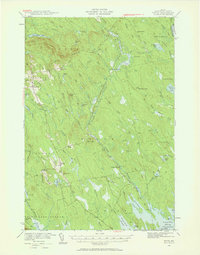 1940 Waite1959 Print · USGSThe Maine-Canada borderlands near the St. Croix River were a patchwork of timber camps and family farms just before the war. Researchers can trace the heritage of remote sites like Keeley Farm, the Lamb Place, and camps such as Hamilton Camp.3 unique versions available
 - 1941 Map of Scraggly Lake
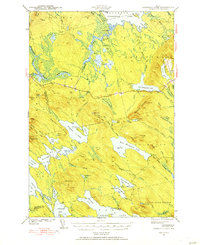 1941 Scraggly Lake1941 Print · USGSBaskahegan Lake and the surrounding Maine timberlands are captured here in the early 1940s, showing a landscape defined by water and woods. Genealogists and researchers can trace remote landmarks like the FIRETOWER on Musquash Mountain or the old route of Gentner Road.6 unique versions available
 - 1942 Map of Waite
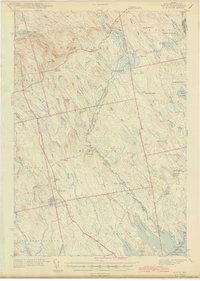 1942 Waite1942 Print · USGSWashington County during the early 1940s reveals a Maine landscape of logging camps and remote farmsteads. Genealogists and local historians can trace family locations at the Lamb Place and Keeley Farm or locate the site of the Kennebec Dam.2 unique versions available
 - 1944 Map of Scraggly Lake
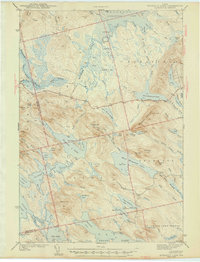 1944 Scraggly Lake1944 Print · USGSThe timberlands and interconnected waterways of eastern Maine are captured here in the early 1940s. Genealogists and historians can trace the remote township boundaries of Topsfield and Talmadge or locate landmarks like Black Cat Rips and Musquash Mountain.
 - 1957 Map of Fredericton, 1981 Print
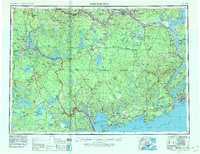 1957 Fredericton1981 Print · USGSThe New Brunswick and Maine borderlands come into focus in the mid-fifties, dominated by the Saint John River and massive military tracts. Genealogists can locate riverfront hamlets like Maugerville or inland sites like Scotch Settlement along the Canadian Pacific rail line.
 - 1963 Map of Fredericton
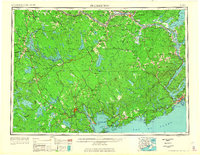 1963 Fredericton1963 Print · USGSThe Saint John River valley and the Maine-New Brunswick border are captured here during the early sixties. Researchers can trace the Canadian Pacific rail lines through rural settlements like Jewetts Mills, Mckeens Corner, and Scotch Settlement.
 - 1975 Map of Scraggly Lake NE, 1980 Print
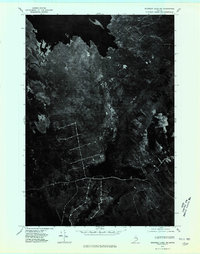 1975 Scraggly Lake NE1980 Print · USGSThe Maine timberlands and the southern reaches of Baskahegan Lake are captured here in the mid-1970s. Researchers can trace the era's logging roads and the winding course of Baskahegan Stream through the dense forest canopy.
 - 1986 Map of Calais
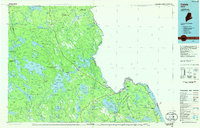 1986 Calais1986 Print · USGSCoastal and interior Washington County are captured here in the mid-1980s, where the international border follows the winding St Croix River. Genealogists and historians can trace the rail lines of the Maine Central and find landmarks like Red Beach and Princeton Airport.
 - 1988 Map of Farrow Mountain
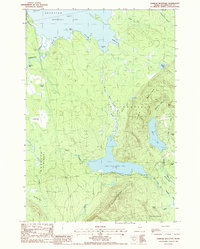 1988 Farrow Mountain1988 Print · USGSThe Maine wilderness near the end of the century is defined here by the waters of East Musquash Lake and the peaks of Farrow Mountain. Historians and outdoorsmen can trace the local drainage through Black Cat Rips and the wetlands of Caribou Bog.
 - 1988 Map of Oxbrook Lakes
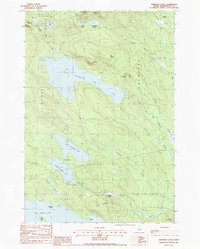 1988 Oxbrook Lakes1988 Print · USGSMaine's forested interior in the 1980s is captured here, showcasing a landscape of interconnected waters and timbered peaks. Researchers can locate remote landmarks like The Thoroughfare, the slopes of Mount Delight, and Amazon Lake.
 - 1988 Map of Tomah Mountain
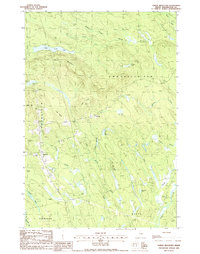 1988 Tomah Mountain1988 Print · USGSIn the Maine woods during the late eighties, the townships of Codyville and Topsfield were hubs for timber and transport. Genealogists and historians can trace local landmarks like the Cem, Microwave Tower, and the drainage of Tomah Stream.
 - 1988 Map of Waite
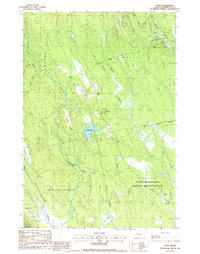 1988 Waite1988 Print · USGSWashington County’s wooded interior in the late eighties reveals a landscape of timber-land boundaries and indigenous heritage. Genealogists and historians can locate the Waite settlement, the local Cem, and landmarks like Roy Bailey Camp or the Indian Passamaquoddy Indian Reservation.
 - 1994 Map of Calais
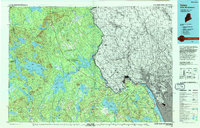 1994 Calais1994 Print · USGSEastern Maine's river and lake country comes into focus in the 1990s, centered on the international border at Calais and the vast Passamaquoddy Indian Reservation. Researchers can trace the water-linked settlements of Grand Lake Stream, the airfield at Princeton Airport, and the industrial heritage of Woodland.
 - 2011 Map of Waite, 2011 Print
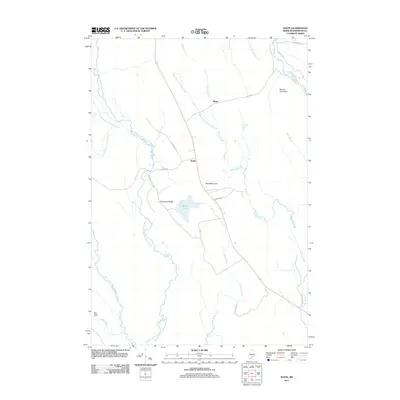 2011 Waite2011 Print · USGSMaine's interior woodlands near the New Brunswick border are captured here in the early twenty-first century. Genealogists and outdoor historians can trace old routes like Bingo Rd, find Roy Bailey Camp, and locate camps around Patten Pond and Waite.
 - 2011 Map of Oxbrook Lakes, 2011 Print
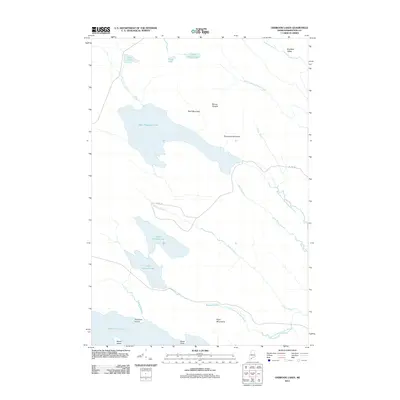 2011 Oxbrook Lakes2011 Print · USGSMaine's Washington County interior is captured in this recent survey, showcasing a vast network of glacial lakes and timberlands. You can trace the remote waterways connecting West Musquash Lake, Amazon Lake, and the shoreline of West Grand Lake.
 - 2011 Map of Farrow Mountain, 2011 Print
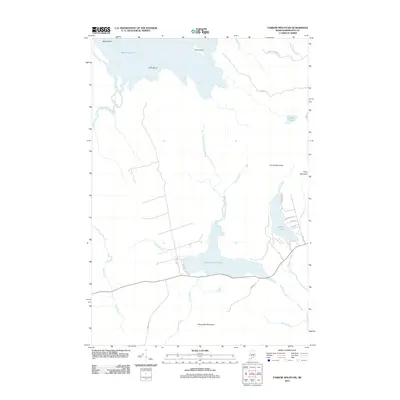 2011 Farrow Mountain2011 Print · USGSBaskahegan Lake and the surrounding Maine timberlands are documented here at the start of the 2010s. Researchers can locate remote access points like Wardens Camp Rd and trace the shores of East Musquash Lake or Farrow Lake.
 - 2011 Map of Tomah Mountain, 2011 Print
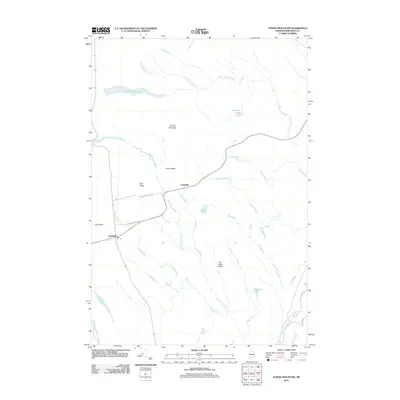 2011 Tomah Mountain2011 Print · USGSTopsfield and Codyville are captured here in the early twenty-first century, showing the small settlements surrounded by the dense woods and waterways of Washington County. Researchers can trace local landmarks like The High Bluffs, Little Tomah Lake, and the remote Unknown Pond.
 - 2014 Map of Farrow Mountain, 2014 Print
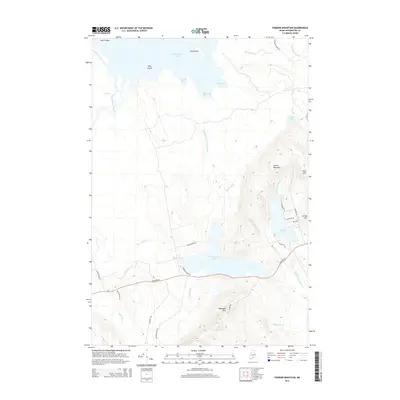 2014 Farrow Mountain2014 Print · USGSWashington County at the start of the twenty-first century remains a landscape of prominent peaks and sprawling water bodies. Researchers can trace land use through naming patterns at Farrow Mountain, Loring Hill, and the shoreline of E Musquash Lake.
 - 2014 Map of Oxbrook Lakes, 2014 Print
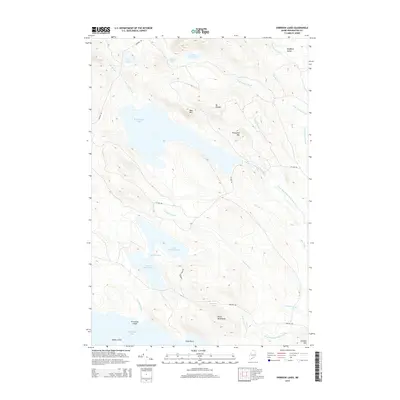 2014 Oxbrook Lakes2014 Print · USGSThe interconnected waterways of Washington County are shown here in the early twenty-first century, featuring the expansive W Musquash Lake. Researchers can trace the drainage of the Pineo Mountains through Amazon Brook and The Thorofare.
 - 2014 Map of Waite, 2014 Print
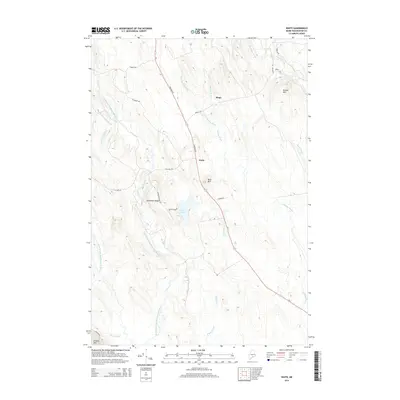 2014 Waite2014 Print · USGSWashington County in the mid-2010s shows a landscape of interior timberlands and quiet settlements centered on the Waite crossroads. Researchers can trace the drainage of East Branch Big Musquash Stream and locate family landmarks like Neal Mtn or Democrat Ridge.
 - 2014 Map of Tomah Mountain, 2014 Print
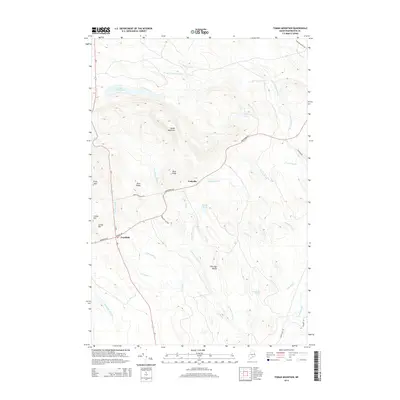 2014 Tomah Mountain2014 Print · USGSWashington County at the start of the 2010s reveals a landscape of timberlands and interconnected waterways near Codyville and Topsfield. Researchers can trace the elevation changes from Tomah Mountain down to the shores of Little Tomah Lake and Simon Pond.
 - 2018 Map of Farrow Mountain, 2018 Print
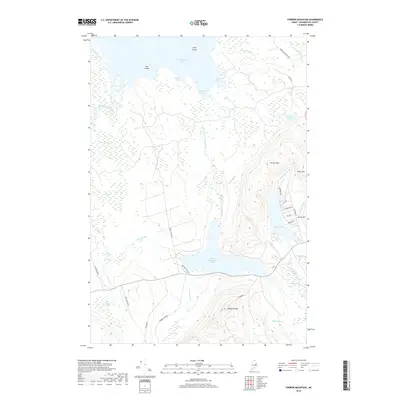 2018 Farrow Mountain2018 Print · USGSWashington County’s interior lakes and timberlands are shown here in the late twenty-teens, a landscape of extensive bogs and isolated peaks. Researchers can trace remote routes like Wardens Camp Rd and locate landmarks such as Farrow Mtn and East Musquash Lake.
 - 2018 Map of Oxbrook Lakes, 2018 Print
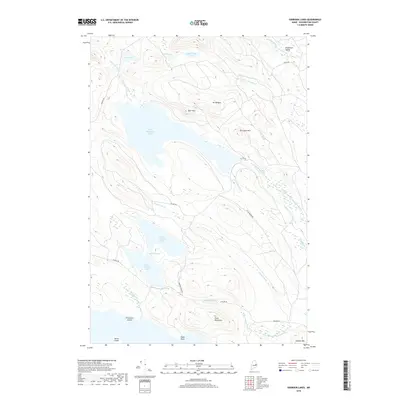 2018 Oxbrook Lakes2018 Print · USGSThis remote stretch of Washington County is captured in the late twenty-teens, showcasing a landscape of interconnected waterways and timberlands. Researchers can trace the drainage patterns of West Musquash Lake and find remote camps along Amazon Rd and Otter Brook Rd.
 - 2018 Map of Tomah Mountain, 2018 Print
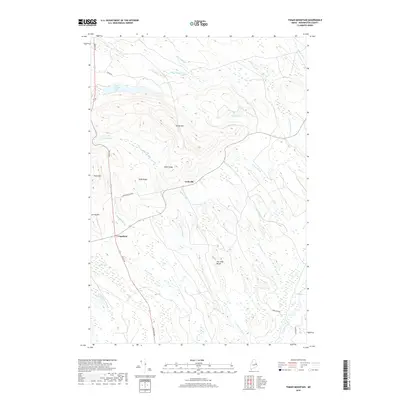 2018 Tomah Mountain2018 Print · USGSWashington County, Maine, is shown here in the late 2010s as a landscape of dense woods, remote ridges, and complex wetlands. Researchers can trace the layout of Codyville and Topsfield or locate landmarks like Tomah Mtn, The High Bluffs, and Little Tomah Lake.
 - 2018 Map of Waite, 2018 Print
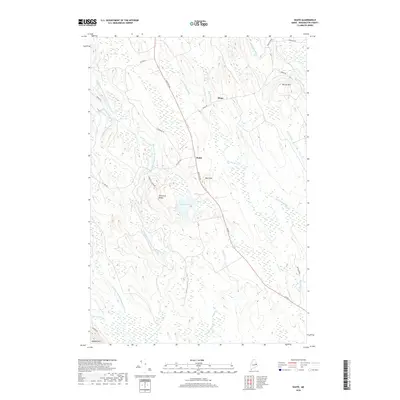 2018 Waite2018 Print · USGSThe Maine woods around Waite and Bingo are captured here in the early twenty-first century, showing a landscape defined by timber ridges and winding streams. Genealogists and historians can trace family-named landmarks like Neal Mtn and Democrat Ridge or follow the path of Tomah Stream.
Showing maps 1-25 of 33
Top cities near Talmadge
- Princeton historical maps
- Indian Township / Motahkomikuk historical maps
- Alexander historical maps
- Topsfield historical maps
- Carroll Plantation historical maps
- Grand Lake Stream historical maps
See more
Frequently asked questions
- What are the different types of historical maps available for Talmadge?
- What is the oldest map of Talmadge?
- Where can I purchase historical maps of Talmadge for my home or office?
- Where can I download high-res historical maps of Talmadge?
- Are there historical topographic maps available for Talmadge?
- Is there historical aerial imagery available for Talmadge?
- Where are historical maps of Talmadge sourced from?