1940s Maps of Kent County, Maryland
Explore 31 historic maps of Kent County from the 1940s. These maps offer a rare glimpse into what life looked like during the 1940s — showing old roads, neighborhoods, homes, and landmarks that have changed or disappeared over time.
Whether you're researching your family's past, planning a metal detecting trip, or studying how Kent County's landscape evolved across the 1940s, these high-resolution maps are a powerful tool for exploring the history of this region.
- Focus on a specific era: All maps on this page are from the 1940s, giving you a focused view of this time period.
- See what’s changed: Compare century-old streets, trails, and buildings to today's modern landscape using overlays and satellite layers.
- Research with precision: Use these maps for genealogy, historical research, land use analysis, or educational projects.
- View, download, or print: Maps are fully viewable online in high resolution, and can be downloaded or printed for your own records.
Start exploring Kent County's history through authentic maps from the 1940s. This is your window into the past.
Kent County, MD maps
(31)- 1941 Map of Gunpowder
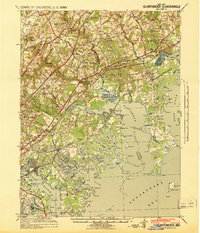 1941 Gunpowder1941 Print · USGSThe Chesapeake tidewater and the Gunpowder River valley are caught in their pre-war rural state in this early 1940s survey. Researchers can trace the paths of the P.R.R. System and locate historic sites like Harford Furnace and Osbornes Ruins.
 - 1942 Map of Love Point
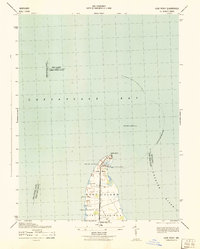 1942 Love Point1942 Print · USGSNorthern Kent Island served as a vital Chesapeake transit hub during the early forties. Trace the rail-to-ferry connection at Love Point Landing and locate landmarks like the Love Point Lighthouse and Cupola Barn.
 - 1942 Map of Swan Point
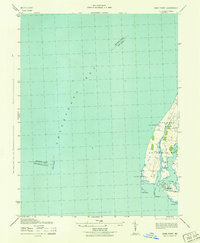 1942 Swan Point1942 Print · USGSKent County's shoreline and the waters of the Chesapeake are captured here in the early 1940s. Genealogists and maritime historians can trace the settlements of Gratitude and Edesville No 5 alongside landmarks like Swan Point and The Haven.
 - 1942 Map of Queenstown, 1961 Print
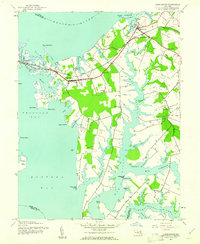 1942 Queenstown1961 Print · USGSMaryland's Eastern Shore at the start of the 1940s reveals a landscape shaped by tidal creeks and the rail-and-water economy. Genealogists can trace family footprints near St Peters Ch, Grasonville Cem, and the historic waterfront of Queenstown.3 unique versions available
 - 1943 Map of Rock Hall
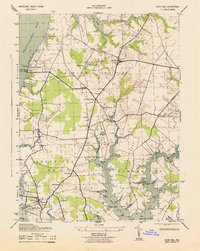 1943 Rock Hall1943 Print · USGSChesapeake Bay maritime life is captured here during the early 1940s, from the bustling docks of Rock Hall to the summer crowds at Tolchester Beach. Genealogists can trace family roots through rural landmarks like Asbury Church, Wesley Chapel, and the small settlement of Edesville.
 - 1943 Map of Chestertown
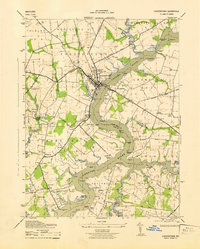 1943 Chestertown1943 Print · USGSMid-century Kent County life centers on the bustling docks and campuses of the Chestertown waterfront during the early years of the war. Researchers can trace the legacy of rural communities through sites like Bond Chapel, the Pennsylvania railroad line, and numerous landings like Riverside Wharf.
 - 1943 Map of North Point
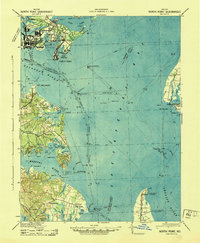 1943 North Point1943 Print · USGSThe Chesapeake Bay's maritime approaches are captured here during the 1940s, highlighting the industrial strength of Sparrows Point and the coastal defenses at Fort Howard. Researchers can trace the rail connections at Love Point Landing or explore the mid-century waterfronts of Gibson Island and Bay Shore.
 - 1943 Map of Queenstown
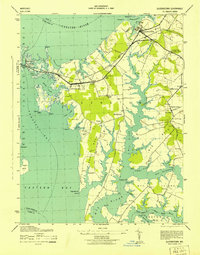 1943 Queenstown1943 Print · USGSThe Eastern Shore comes into focus during the early war years, showing a maritime landscape of tidal rivers and rail lines. Genealogists can trace family connections at St Peters Cem and locate vanished landmarks like the Landing Field or Garnett Church.
 - 1943 Map of Langford Creek
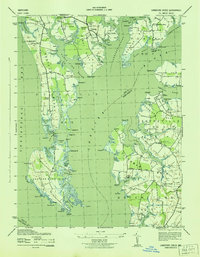 1943 Langford Creek1943 Print · USGSThe tidewater necks of Kent and Queen Anne's counties are shown in the early 1940s, revealing a landscape of remote farmsteads and waterfront landings. Genealogists can trace early rural communities through landmarks like Mowbray Chapel, Hickory Thicket, and the Prussian Cem.
 - 1943 Map of Centerville
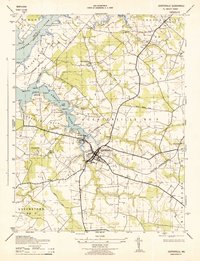 1943 Centerville1943 Print · USGSThis wartime survey of the Maryland Eastern Shore captures the rural character of Queen Anne's County just before mid-century. Genealogists can trace the footprint of family-named landmarks like Ashland Indian Town and rural junctions such as Starkey Corner and Brownsville.
 - 1944 Map of Earleville
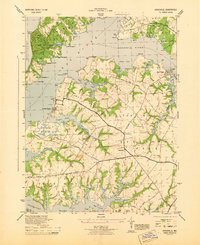 1944 Earleville1944 Print · USGSCoastal Maryland during the mid-forties reveals a world of agricultural necks and deep-water creeks along the Elk River. Researchers can trace old family landing sites and rural congregations at St Stephens Ch, Cassidy Wharf, and Town Point.
 - 1944 Map of Betterton
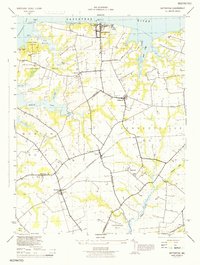 1944 Betterton1944 Print · USGSKent County's shoreline and agricultural interior are captured here during the mid-1940s, showing a landscape of tidal marshes and rail-linked hamlets. Genealogists can trace family footprints through sites like Butlertown, Mt Zion Ch, and Harris Wharf.
 - 1944 Map of Church Hill
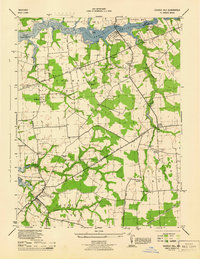 1944 Church Hill1944 Print · USGSQueen Anne's County was a landscape of river landings and country parishes during the mid-1940s. Genealogists and historians can trace family roots through numerous local landmarks, from Boyer Chapel and Jeffers Chapel to the riverside settlement of Crumpton.
 - 1944 Map of Cecilton
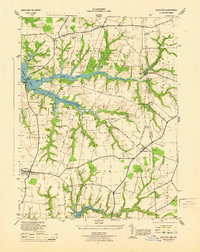 1944 Cecilton1944 Print · USGSThe rural borderlands of Cecil County and New Castle County are captured here during the 1940s, showing a landscape defined by tidal creeks and historic necks of land. Researchers can locate early boundary markers like MD-Del Boundary Mon No 1 and old community hubs including Bohemia Mills and St Francis Xavier Church.
 - 1944 Map of Galena
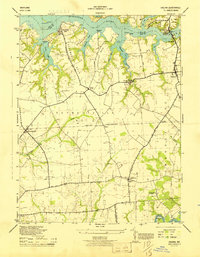 1944 Galena1944 Print · USGSMaryland's Eastern Shore in the mid-1940s remains a landscape of river wharves and rural parishes tied together by rail. Genealogists can trace historic congregations at Shrewsbury Church and Asbury Ch, or locate old landings like Raisins Wharf and Shellcross Wharf.
 - 1944 Map of Millington
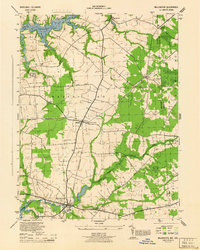 1944 Millington1944 Print · USGSUpper Kent County and the Delaware borderlands come alive in the mid-1940s, highlighting a landscape defined by rail junctions and river systems. You can trace family roots through small communities like Golts, Massey, and Crumpton, or locate historic sites like St Clements Church.
 - 1944 Map of Hanesville
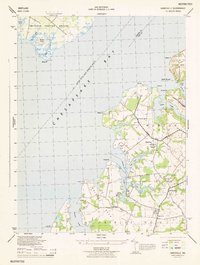 1944 Hanesville1944 Print · USGSCoastal Kent County appears in the mid-1940s as a landscape of rural crossroads and tidal creeks along the Chesapeake. Genealogists and local historians can trace family land across Fairlee Neck or locate community landmarks like St Georges Ch and Melitota.
 - 1944 Map of Perryman
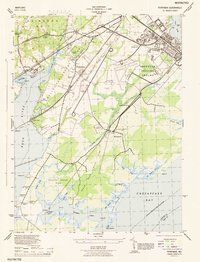 1944 Perryman1944 Print · USGSHarford County's coastal and military landscape is captured here during the height of the Second World War. Genealogists and historians can trace the intersection of family homesteads and military expansion near Perryman, the Harford Furnace School, and Spesutie Church.
 - 1944 Map of Sudlersville
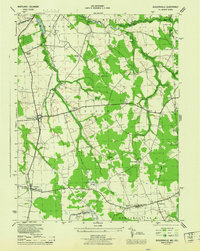 1944 Sudlersville1944 Print · USGSThe rural borderlands of Maryland and Delaware are captured here in the mid-1940s, centered on the rail corridor at Sudlersville. Researchers can trace old family crossroads like Schenk Corners or locate country sites such as Prices Chapel and Busicks Ch.
 - 1944 Map of Spesutie
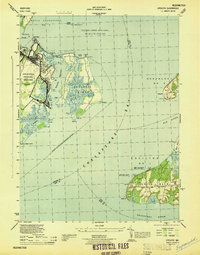 1944 Spesutie1944 Print · USGSCoastal Harford and Cecil Counties are seen here during the mid-forties, balanced between military expansion and traditional maritime life. Researchers can trace the boundaries of Aberdeen Proving Ground or locate family landmarks like Turkey Point LH and Woodcrest.
 - 1946 Map of Wilmington, 1948 Print
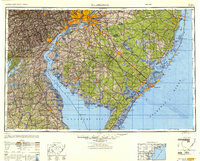 1946 Wilmington1948 Print · USGSThe Delaware Valley and Jersey Shore emerge in this mid-century portrait of a region defined by river commerce and seaside growth. Genealogists and historians can trace the rail networks of the Pennsylvania Railroad, locate early airfields like Dover Airpark, and find river defenses at Fort Delaware.2 unique versions available
 - 1947 Map of North Point, 1955 Print
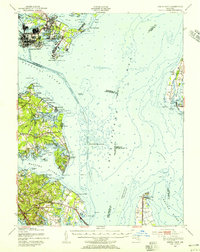 1947 North Point1955 Print · USGSCoastal Maryland at the close of the 1940s reveals a sharp contrast between the industrial might of Sparrows Point and the quiet summer communities of the western shore. Trace maritime history through dredging records and landmarks like Fort Howard, Gibson Island, and Sevenfoot Knoll Light.
 - 1948 Map of Baltimore
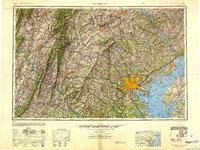 1948 Baltimore1948 Print · USGSMaryland and Pennsylvania crossroads are captured in the late 1940s, showing a landscape defined by historic rail lines and major military installations. Genealogists can trace family connections in Gettysburg, Westminster, and near the U.S. Naval Academy in Annapolis.2 unique versions available
 - 1948 Map of Washington
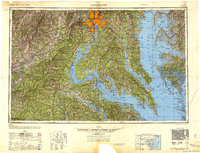 1948 Washington1948 Print · USGSThe Potomac and Chesapeake regions in the late 1940s reveal a landscape of expanding military reach and deep-rooted Tidewater settlements. Trace old rail corridors like the Richmond Fredericksburg & Potomac RR or locate landmarks like the Wakefield Washington Monument and St. Marys College.2 unique versions available
 - 1948 Map of Betterton
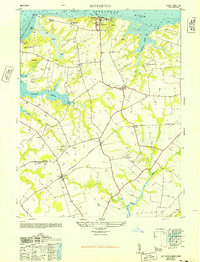 1948 Betterton1948 Print · USGSCoastal Maryland life meets the rails in the late 1940s, where the Sassafras River joins the Chesapeake. Genealogists can trace family names and local sites from Harris Wharf and Betterton to inland depots at Stillpond Station and Worton.4 unique versions available
Showing maps 1-25 of 31
Top cities of Kent County
Frequently asked questions
- What are the different types of historical maps available for Kent County?
- What is the oldest map of Kent County?
- Where can I purchase historical maps of Kent County for my home or office?
- Where can I download high-res historical maps of Kent County?
- Are there historical topographic maps available for Kent County?
- Is there historical aerial imagery available for Kent County?
- Where are historical maps of Kent County sourced from?