1950s Maps of Prince George's County, Maryland
Explore 34 historic maps of Prince George's County from the 1950s. These maps offer a rare glimpse into what life looked like during the 1950s — showing old roads, neighborhoods, homes, and landmarks that have changed or disappeared over time.
Whether you're researching your family's past, planning a metal detecting trip, or studying how Prince George's County's landscape evolved across the 1950s, these high-resolution maps are a powerful tool for exploring the history of this region.
- Focus on a specific era: All maps on this page are from the 1950s, giving you a focused view of this time period.
- See what’s changed: Compare century-old streets, trails, and buildings to today's modern landscape using overlays and satellite layers.
- Research with precision: Use these maps for genealogy, historical research, land use analysis, or educational projects.
- View, download, or print: Maps are fully viewable online in high resolution, and can be downloaded or printed for your own records.
Start exploring Prince George's County's history through authentic maps from the 1950s. This is your window into the past.
Prince George's County, MD maps
(34)- 1951 Map of Washington East
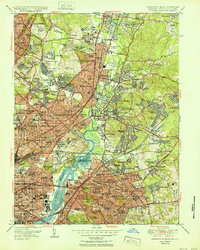 1951 Washington East1951 Print · USGSThe Maryland and District of Columbia borderlands are caught in a period of intense post-war development. Local historians can trace the foundations of the University of Maryland, find the Franciscan Monastery, and locate vanished landmarks like Riggs Mill.
 - 1951 Map of Clarksville
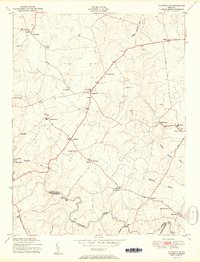 1951 Clarksville1951 Print · USGSHoward County just after the war was a land of rural crossroads and river valleys. Genealogists and local historians can trace family ties through Linthicum Cemetery, Atholton High School, and the scattered Ruins along the Patuxent River.2 unique versions available
 - 1951 Map of Washington West
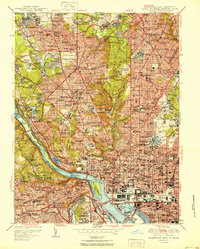 1951 Washington West1951 Print · USGSWashington D.C. and its Maryland and Virginia suburbs appear here in the early fifties, just as the metropolitan area was beginning its massive post-war growth. Researchers can locate vanished streetscapes and institutional landmarks like the U S Soldiers Home, Glenwood Cem, and the historic Washington Cathedral.
 - 1951 Map of Alexandria
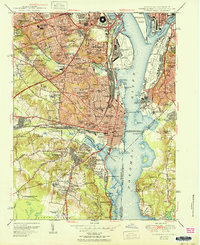 1951 Alexandria1951 Print · USGSGreater Alexandria and Arlington are shown here in the early fifties during a period of massive suburban and military expansion. Researchers can trace the mid-century footprints of the Pentagon Building, the extensive rail lines of Potomac Yard, and local landmarks like Beacon Field.
 - 1951 Map of Laurel
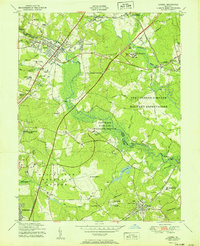 1951 Laurel1951 Print · USGSThe mid-century Maryland corridor between D.C. and Baltimore shows a region in transition as major parkways and research centers emerge. Researchers can trace the development of Fort Meade or find family history at Perkins Chapel and the Laurel Race Track.
 - 1951 Map of Anacostia
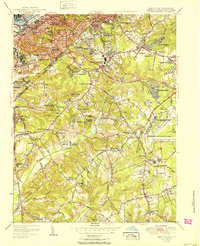 1951 Anacostia1951 Print · USGSPrince George's County and Southeast D.C. are seen here during their mid-century expansion, blending federal nerve centers with emerging suburban neighborhoods. Genealogists and local historians can trace family roots through the numerous legacy Hebrew Cems, St Johns Ch, and the grounds of St Elizabeths Hospital.
 - 1951 Map of Beltsville
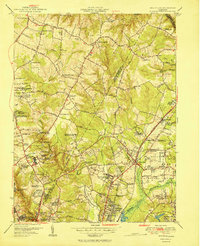 1951 Beltsville1951 Print · USGSMaryland's interior research corridor is captured here at mid-century, showcasing the early growth of Prince George's and Montgomery counties. Genealogists and historians can trace family locations near Union Cem, Colesville Sch, and the grounds of the Naval Ordnance Laboratory.2 unique versions available
 - 1951 Map of Port Tobacco, 1953 Print
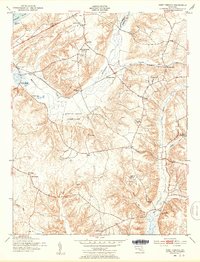 1951 Port Tobacco1953 Print · USGSSouthern Maryland's rural landscape is captured here in the early fifties, documenting the crossroads and creek-side settlements of Charles County. Genealogists and historians can trace family landmarks like the Thomas Stone Cem, Haber de Venture, and the St Joseph Ch Cem near Port Tobacco.2 unique versions available
 - 1951 Map of Mt Vernon, 1953 Print
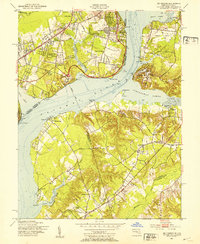 1951 Mt Vernon1953 Print · USGSThe Potomac River shoreline near Mount Vernon and Accokeek is captured here just as the suburban corridor began to take shape in the early fifties. Researchers can trace historic sites like Fort Washington, the riverside Marshall Hall Park, and family-named churches like Macedonia Ch.2 unique versions available
 - 1953 Map of Benedict, 1956 Print
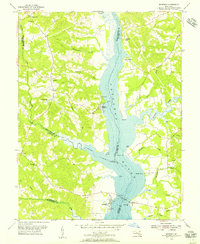 1953 Benedict1956 Print · USGSThe Patuxent River valley in the early 1950s shows a landscape of tidal creeks and riverside landings across four Maryland counties. Genealogists and local historians can trace family-named sites like Holland Cliff, Leitch Wharf, and the settlement at Aquasco.5 unique versions available
 - 1953 Map of Lower Marlboro, 1956 Print
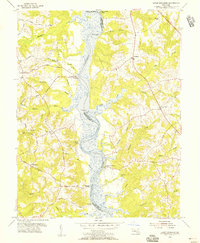 1953 Lower Marlboro1956 Print · USGSThe Patuxent River corridor remains the focus of rural life in the 1950s, bridging the Prince George's and Calvert county lines. You can trace historic waterfront landmarks like Lyons Creek Wharf, Magruder Landing, and old country sites like St Johns Ch.6 unique versions available
 - 1954 Map of Baltimore
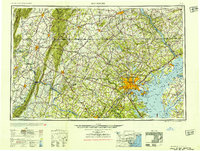 1954 Baltimore1954 Print · USGSThe Mid-Atlantic region in the early fifties shows a landscape of growing suburban centers and heavy rail corridors. Trace mid-century transit networks and military landmarks from the Aberdeen Proving Ground to the Gettysburg National Military Park.
 - 1956 Map of Anacostia
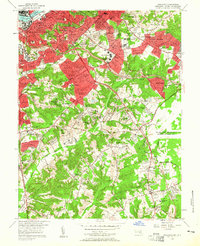 1956 Anacostia1956 Print · USGSSoutheast Washington and Prince George's County are captured during a period of massive mid-century suburban and federal expansion. Genealogists and historians can trace the development of Fairfax Village, locate the Rosecroft Raceway, and find family sites at Cedar Hill Cem.2 unique versions available
 - 1956 Map of Baltimore
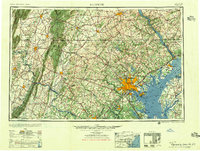 1956 Baltimore1956 Print · USGSMid-century Maryland and Pennsylvania are captured here during a period of massive suburban and military growth across the Chesapeake region. Genealogists and historians can trace the rail corridors of the Baltimore & Ohio RR and locate landmarks like Fort McHenry or the Aberdeen Proving Ground.
 - 1956 Map of Hughesville, 1958 Print
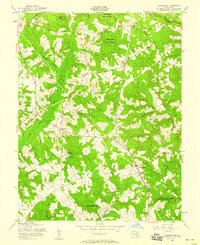 1956 Hughesville1958 Print · USGSSouthern Maryland in the mid-fifties is defined by rural crossroads and the expansive Cedarville State Forest. Genealogists and historians can trace community roots through landmarks like Old Field Cem, Burnt Store, and the cluster of schools near Bryantown.4 unique versions available
 - 1956 Map of Alexandria, 1958 Print
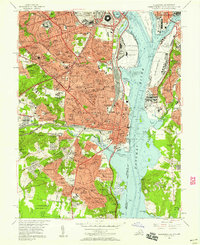 1956 Alexandria1958 Print · USGSNorthern Virginia and D.C. are captured here in the mid-fifties during a period of rapid suburban and military growth. Genealogists and historians can trace family roots through neighborhood schools like Hoffman Boston High Sch or locate ancestors at Ivy Hill Cem and Alexandria National Cem.
 - 1956 Map of Washington West, 1958 Print
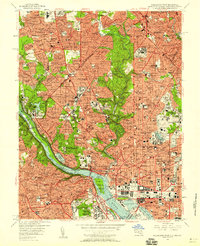 1956 Washington West1958 Print · USGSMid-century Washington and its Maryland and Virginia suburbs appear here during a transformative era of growth. Genealogists and historians can trace neighborhood development and find landmarks like Arlington National Cemetery, the U S Capitol, and Georgetown University.
 - 1956 Map of Beltsville, 1958 Print
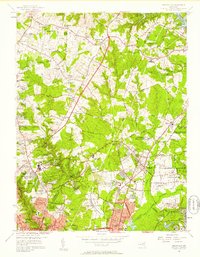 1956 Beltsville1958 Print · USGSMaryland's suburban boundary regions are documented here during a mid-century era of rapid institutional and residential growth. Researchers can find many vanished landmarks, from the Drive-in Theater to legacy sites like Xaverian College and Carver Memorial Cemetery.
 - 1956 Map of Brandywine, 1958 Print
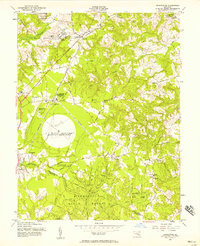 1956 Brandywine1958 Print · USGSSouthern Maryland in the mid-1950s shows a landscape of small crossroads communities and growing federal installations. Genealogists and historians can trace family roots through the network of local sites like St Thomas Church, Cheltenham, and the Boys Village of Maryland.4 unique versions available
 - 1956 Map of Port Tobacco, 1959 Print
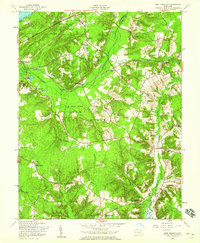 1956 Port Tobacco1959 Print · USGSMid-century Charles County is shown here during a period of rural stability and emerging infrastructure along the Potomac River. Genealogists and historians can trace family estates like Haber de Venture, visit the Mt Carmel Monastery, or follow the path of the Government Railroad.
 - 1956 Map of Mount Vernon, 1959 Print
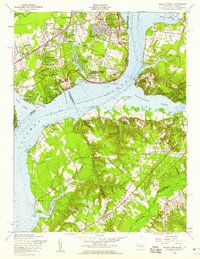 1956 Mount Vernon1959 Print · USGSThe Potomac riverfront near Mount Vernon appears in the mid-fifties as suburban growth begins to touch both the Virginia and Maryland shores. Trace the development of communities like Gum Springs and Marshall Hall alongside historic sites like Harmony Hall.2 unique versions available
 - 1956 Map of Washington East, 1959 Print
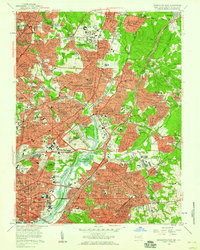 1956 Washington East1959 Print · USGSThe northern reaches of the capital and its Maryland suburbs come into focus during the mid-fifties, showing a landscape defined by institutional campuses and rail lines. Genealogists and historians can trace significant burial grounds like Mt Olivet Cemetery or locate historic landmarks such as Bird Stadium and the National Training School for Boys.
 - 1956 Map of Indian Head, 1961 Print
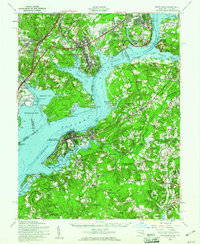 1956 Indian Head1961 Print · USGSThe Potomac shoreline in the mid-fifties is a landscape of federal reservations and tobacco-country heritage. Researchers can trace historic river landings like Proctors Wharf and significant sites such as the Indian Head Powder Factory or the Habre de Venture estate.2 unique versions available
 - 1957 Map of Bristol
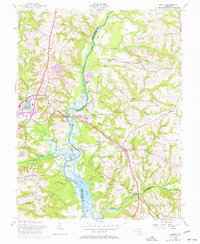 1957 Bristol1957 Print · USGSThe riverfront landings and rail corridors of Prince George's and Anne Arundel counties are well-defined in this mid-century survey. Genealogists and local historians can trace the foundations of Upper Marlboro and identify rural landmarks like Wesley Chapel, Waysons Corner, and the Marlboro Sta depot.5 unique versions available
 - 1957 Map of Davidsonville, 1958 Print
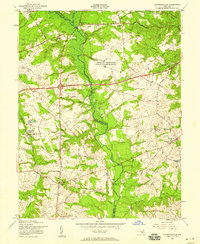 1957 Davidsonville1958 Print · USGSMaryland's interior transition between Anne Arundel and Prince Georges counties is captured here in the late fifties. Genealogists and local historians can trace family-named crossroads like Pigeon House Corner and Staples Corners, alongside rural landmarks like All Hallows Chapel.5 unique versions available
Showing maps 1-25 of 34
Top cities of Prince George's County
- Bowie historical maps
- Clinton historical maps
- College Park historical maps
- Chillum historical maps
- South Laurel historical maps
- Suitland historical maps
See more
Frequently asked questions
- What are the different types of historical maps available for Prince George's County?
- What is the oldest map of Prince George's County?
- Where can I purchase historical maps of Prince George's County for my home or office?
- Where can I download high-res historical maps of Prince George's County?
- Are there historical topographic maps available for Prince George's County?
- Is there historical aerial imagery available for Prince George's County?
- Where are historical maps of Prince George's County sourced from?