Old Maps of East Chop, Oak Bluffs for Academic Research
Study the evolution of East Chop with 17 high-resolution historic maps. Whether you're teaching, researching, or modeling changes in land use, these maps provide essential visual documentation of urban, environmental, and geographic change.
- Analyze long-term change: Track patterns in development, transportation, and natural features.
- Ideal for environmental or urban studies: Support academic projects with primary historical map data.
- Use in the classroom or lab: Educators and researchers rely on these maps to bring historical context to life.
These maps are a powerful tool for teaching, research, and visualizing how East Chop has changed over the decades.
East Chop, Oak Bluffs maps
(17)- 1887 Map of Marthas Vineyard
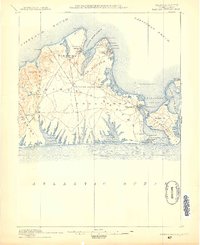 1887 Marthas Vineyard1887 Print · USGSMartha's Vineyard in the late nineteenth century remains a landscape of maritime commerce and quiet island life. Genealogists can trace family names and early settlements from Cottage City and Edgartown to the rural roads of West Tisbury.
 - 1889 Map of Marthas Vineyard
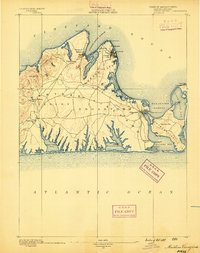 1889 Marthas Vineyard1889 Print · USGSThe eastern shores of the Vineyard come alive in the late Victorian era, showcasing the early growth of Cottage City and Edgartown. Genealogists and historians can trace old road networks connecting West Tisbury to the coast and locate historic beacons like West Chop Light.
 - 1894 Map of Marthas Vineyard, 1898 Print
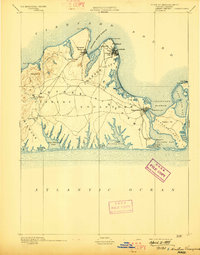 1894 Marthas Vineyard1898 Print · USGSMartha's Vineyard in the 1890s appears as a land of maritime necessity and early coastal villages. Genealogists can trace family settlements in Vineyard Haven and Edgartown or locate lighthouses like West Chop Light and Cape Poge Light.7 unique versions available
 - 1942 Map of Marthas Vineyard
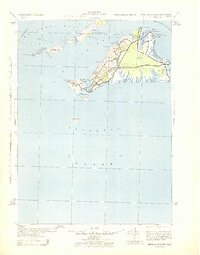 1942 Marthas Vineyard1942 Print · USGSMartha's Vineyard and the Elizabeth Islands appear here during the early years of the second World War. Researchers can trace historical lighthouse locations like Gay Head LH and Tarpaulin Cove LH, and explore the 1940s boundaries of Edgartown and Vineyard Haven.
 - 1947 Map of Providence, 1948 Print
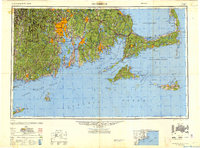 1947 Providence1948 Print · USGSSouthern New England is captured in the mid-1940s, showing a landscape defined by busy industrial ports and expanding military installations. Researchers can trace the rail lines of the N.Y. N.H. & H. RR or locate coastal defenses like Fort Adams and Quonset Point.5 unique versions available
 - 1948 Map of Providence, 1951 Print
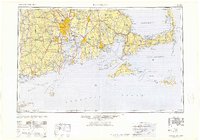 1948 Providence1951 Print · USGSSouthern New England’s coastal reaches are captured here in the late 1940s, from the industrial heart of Providence to the tip of Provincetown. Genealogists and historians can trace rail lines like the Central Vermont Railway and locate active military sites such as Otis Air Force Base and Fort Rodman.
 - 1957 Map of Providence
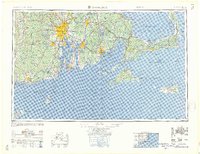 1957 Providence1957 Print · USGSCoastal New England at the height of the mid-century era shows a landscape shaped by maritime industry and Cold War defense. Genealogists and historians can trace the reach of the New York, New Haven & Hartford RR and locate legacy sites like Fort Adams and Quonset Point Naval Air Station.
 - 1958 Map of Providence
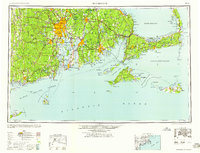 1958 Providence1958 Print · USGSThe Rhode Island and Massachusetts coastlines are shown in detail during the late 1950s, from the urban cores to the tips of the islands. Researchers can trace the mid-century footprint of Quonset Point Naval Air Station, the defense works at Fort Adams, and the rail network of the New York, New Haven and Hartford RR.
 - 1963 Map of Providence
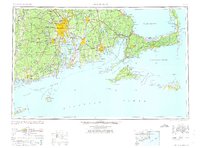 1963 Providence1963 Print · USGSSouthern New England's coastal and industrial heartland is captured here in the early sixties, from the Rhode Island mainland to the far reaches of the Cape. Researchers can trace mid-century growth in Providence or locate landmarks on Marthas Vineyard and Nantucket Island.
 - 1986 Map of Martha's Vineyard
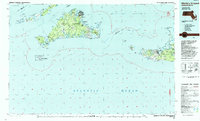 1986 Martha's Vineyard1986 Print · USGSThe Massachusetts islands of the mid-eighties appear in detail, showing the settled towns and wild coastlines before modern development shifts. Researchers can trace land use through the Martha's Vineyard State Forest or find old roads in Siasconset and Clevelandtown.
 - 1994 Map of Martha's Vineyard
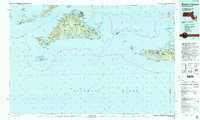 1994 Martha's Vineyard1994 Print · USGSThe islands of Martha's Vineyard and Nantucket are captured here in the mid-nineties, showing the established coastal villages and extensive conservation lands. Researchers can trace the boundaries of Manuel F Correllus State Forest or locate landmarks like the Lighthouse at Gay Head and Chappaquiddick Island.
 - 2012 Map of Edgartown, 2012 Print
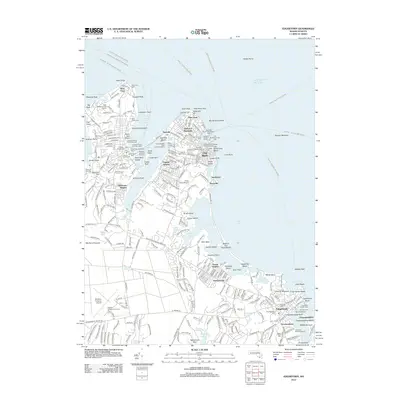 2012 Edgartown2012 Print · USGSMartha's Vineyard at the start of the 2010s shows a landscape defined by historic seaside colonies and maritime trade. Researchers can trace ancestral connections at Tisbury Village Cem or locate cultural landmarks like the Gingerbread Cottages and Tabernacle.
 - 2015 Map of Edgartown, 2015 Print
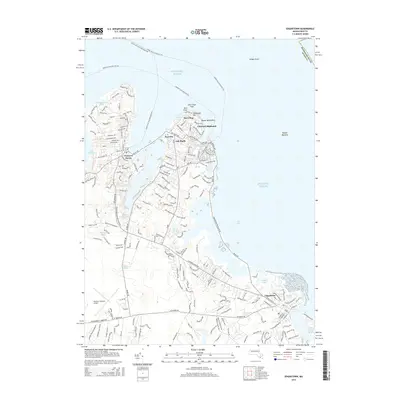 2015 Edgartown2015 Print · USGSMartha's Vineyard in the mid-2010s shows a sophisticated coastal landscape where historic harbors meet modern infrastructure. Genealogists and historians can trace the evolution of Edgartown, Oak Bluffs, and Vineyard Haven, while locating landmarks like Telegraph Hill and the Martha's Vineyard Airport.
 - 2018 Map of Edgartown, 2018 Print
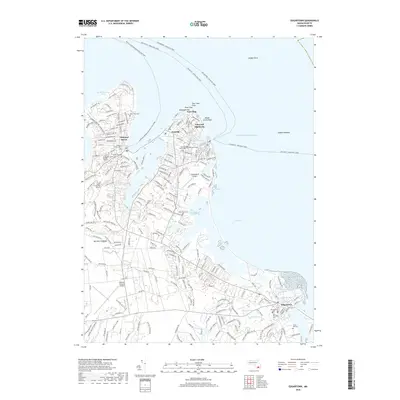 2018 Edgartown2018 Print · USGSMartha's Vineyard in the late 2010s shows a landscape deeply tied to its maritime roots and coastal ecology. Researchers can trace family history through several burial grounds like Sailors Burying Ground and Westside Cem while following old ferry routes across Cow Bay.
 - 2021 Map of Edgartown, 2021 Print
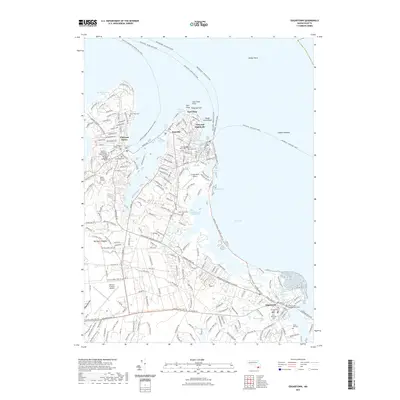 2021 Edgartown2021 Print · USGSThe eastern shores of Martha's Vineyard are captured in this modern survey, showing the busy maritime corridors and historic harbor towns. Genealogists can trace family landmarks like the Sailors Burying Ground, Tower Hill Cem, and the Dukes County Superior Courthouse.
 - 2023 Map of Edgartown, 2023 Print
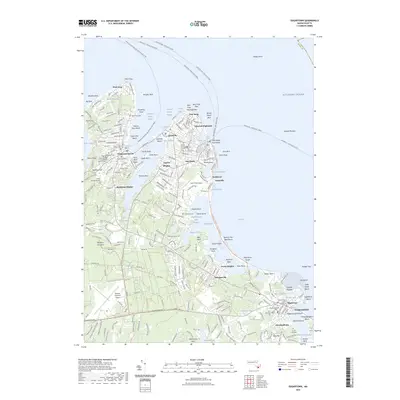 2023 Edgartown2023 Print · USGSMartha’s Vineyard is captured here in modern detail, from the busy harbors of Vineyard Haven to the quiet reaches of Chappaquiddick. Genealogists and historians can locate historic burial sites like Sailors Burying Ground and landmarks like the Dukes County Superior Courthouse.
 - 2024 Map of Edgartown, 2024 Print
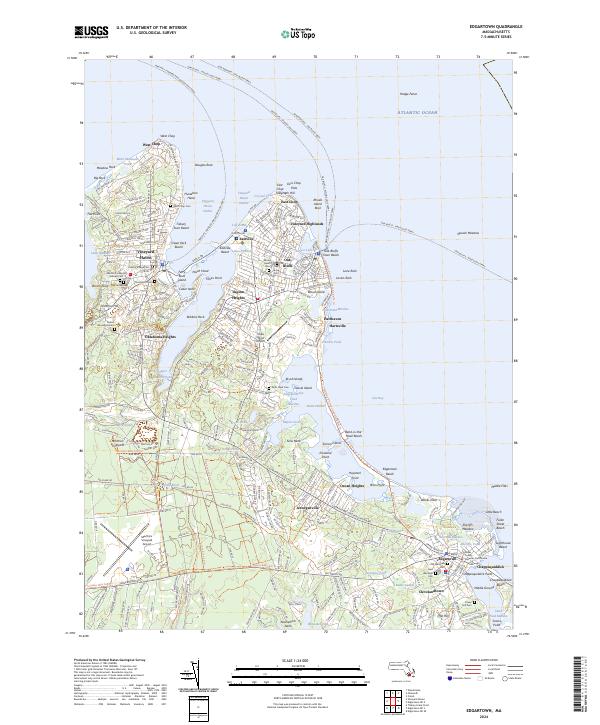 2024 Edgartown2024 Print · USGSMartha's Vineyard's eastern shores are captured here in the late twenty-teens, from the ferries of Vineyard Haven to the lanes of Edgartown. Genealogists can trace family plots at Sailors Burying Ground or Hebrew Cem, while aviation buffs will find both Trade Wind Airport and the larger island airfield.
End of results
Showing maps 1-17 of 17
Top cities near East Chop
- Falmouth historical maps
- Wareham historical maps
- Sandwich historical maps
- Bourne historical maps
- Mashpee historical maps
- Mattapoisett historical maps
See more
Frequently asked questions
- What are the different types of historical maps available for East Chop?
- What is the oldest map of East Chop?
- Where can I purchase historical maps of East Chop for my home or office?
- Where can I download high-res historical maps of East Chop?
- Are there historical topographic maps available for East Chop?
- Is there historical aerial imagery available for East Chop?
- Where are historical maps of East Chop sourced from?