1900s (20th Century) Maps of Norfolk County, Massachusetts
Explore 143 historic maps of Norfolk County from the 1900s (20th Century). These maps offer a rare glimpse into what life looked like during the 1900s — showing old roads, neighborhoods, homes, and landmarks that have changed or disappeared over time.
Whether you're researching your family's past, planning a metal detecting trip, or studying how Norfolk County's landscape evolved across the 1900s, these high-resolution maps are a powerful tool for exploring the history of this region.
- Focus on a specific era: All maps on this page are from the 1900s, giving you a focused view of this time period.
- See what’s changed: Compare century-old streets, trails, and buildings to today's modern landscape using overlays and satellite layers.
- Research with precision: Use these maps for genealogy, historical research, land use analysis, or educational projects.
- View, download, or print: Maps are fully viewable online in high resolution, and can be downloaded or printed for your own records.
Start exploring Norfolk County's history through authentic maps from the 1900s. This is your window into the past.
Norfolk County, MA maps
(143)- 1900 Map of Blackstone
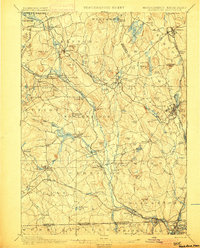 1900 Blackstone1900 Print · USGSThe Blackstone Valley was a bustling manufacturing corridor when this late Victorian-era survey was published. Genealogists and historians can trace the industrial mill villages along the Blackstone River, including Whitinsville, Manchaug, and Millville.7 unique versions available
 - 1903 Map of Boston
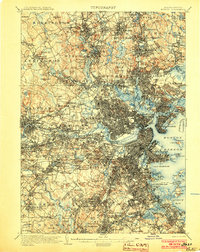 1903 Boston1903 Print · USGSThe Greater Boston area and its sprawling rail-and-river network are captured here at the turn of the century. Genealogists and historians can trace neighborhood blocks, the grounds of Tufts College, and military landmarks like Ft. Winthrop and Ft. Independence.13 unique versions available
 - 1903 Map of Boston Bay
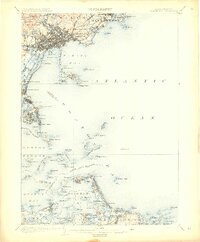 1903 Boston Bay1903 Print · USGSThe Massachusetts North and South Shores are seen here at the turn of the century as a hub of rail-connected maritime life. You can trace the path of old rail divisions to historic coastal landings at Point of Pines, Marblehead, and the naval defenses at Ft. Warren.9 unique versions available
 - 1908 Map of Quinsigamond
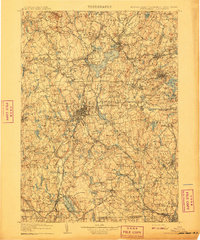 1908 Quinsigamond1908 Print · USGSCentral Massachusetts and its bordering states are seen here in the early twentieth century as industry and transit reshaped the Blackstone Valley. Genealogists and historians can trace the early footprints of Worcester, the expansion of the Wachusett Reservoir, and rail lines like the Boston and Albany Railroad.3 unique versions available
 - 1918 Map of Framingham
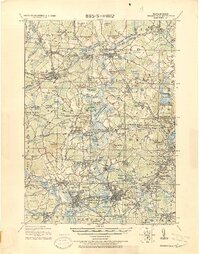 1918 Framingham1918 Print · USGSEastern Massachusetts is seen here as a bustling rail-and-river corridor during the early twentieth century. Genealogists and historians can trace old property lines and landmarks like the Wayside Inn, the State Prison, and Nine Acre Corner.2 unique versions available
 - 1919 Map of Dedham
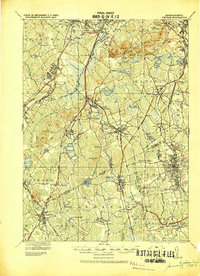 1919 Dedham1919 Print · USGSNorfolk County at the close of the Great War reveals a landscape defined by the Blue Hills Reservation and a dense network of industrial rail lines. Genealogists and historians can trace old neighborhood boundaries in Readville and Islington or locate lost trackside stops along the Old Colony RR.
 - 1919 Map of Franklin
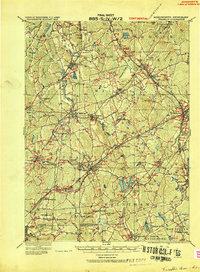 1919 Franklin1919 Print · USGSEastern Massachusetts at the end of the Great War was a landscape defined by its river-powered mill towns and expanding rail corridors. Genealogists and local historians can trace family roots through industrial hamlets like City Mills, Unionville, and Sheldonville.2 unique versions available
 - 1919 Map of Blackstone
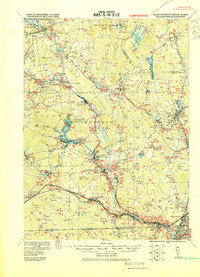 1919 Blackstone1919 Print · USGSThe Blackstone Valley at the end of the Great War was a dense network of industrial villages and crucial rail junctions. Genealogists and historians can trace the family-named landmarks of the era, from Saundersville and Linwood to the heights of Dorothy Hill.2 unique versions available
 - 1920 Map of Abington
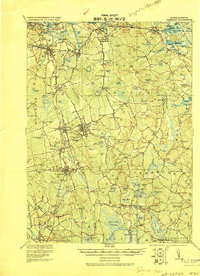 1920 Abington1920 Print · USGSThe South Shore was a bustling network of rail and industry at the end of the Great War. You can trace the path of the Hanover Branch and Old Colony RR, or find historic sites like the Old Oaken Bucket Homestead and Weymouth Landing.
 - 1921 Map of Providence
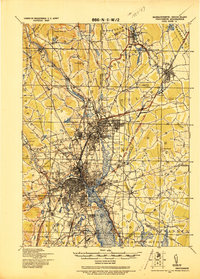 1921 Providence1921 Print · USGSProvidence and its industrial satellites are captured here at the height of the rail-and-mill era. Genealogists and historians can trace old neighborhoods and worksites like Sayles Bleachery, the Dexter Asylum, and Lonsdale Station.
 - 1921 Map of Franklin, 1942 Print
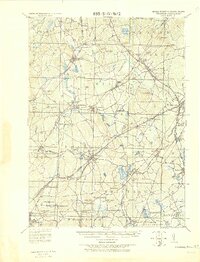 1921 Franklin1942 Print · USGSThe Charles River valley was a network of bustling rail junctions and mill villages in the years following the Great War. You can trace the development of towns like Franklin and Medway or locate smaller centers such as City Mills and Unionville.
 - 1936 Map of Mansfield
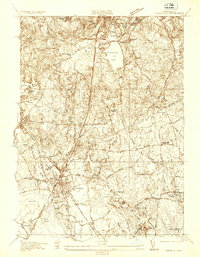 1936 Mansfield1936 Print · USGSMansfield and its neighboring villages are shown during the mid-1930s, when the region functioned as a vital railway hub for the New York New Haven and Hartford RR. Researchers can locate family sites and old landmarks like Furnace Village, St Marys Cem, and the Hartwell Sch.
 - 1936 Map of Weymouth
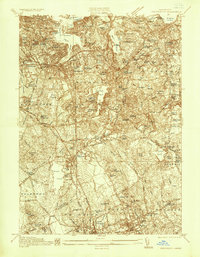 1936 Weymouth1936 Print · USGSThe South Shore's maritime and industrial landscape is on full display in the mid-1930s as the massive Fore River Shipyard dominates the waterfront. Genealogists can trace family roots through several local burial grounds like Highland Cem and landmark institutions including the Derby Academy.
 - 1936 Map of Brockton
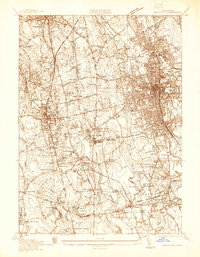 1936 Brockton1936 Print · USGSBrockton and Stoughton are captured here during the mid-1930s, showing a landscape of burgeoning industrial centers and rural family corners. Researchers can trace ancestral roots through dozens of named cemeteries like Washington Cem or locate old industrial sites like Oconnors Cider Mill and the Brockton Filter Beds.
 - 1936 Map of Cohasset
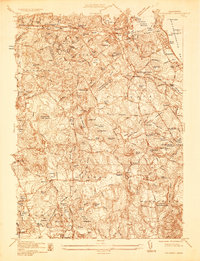 1936 Cohasset1936 Print · USGSThe South Shore's coastal towns and rail connections are captured here in the mid-1930s. Genealogists and historians can trace family-named sites like the Old Oaken Bucket Homestead or locate the Union Mission Chapel and the Curtis School during the railway era.
 - 1936 Map of Blue Hills
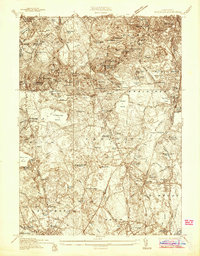 1936 Blue Hills1936 Print · USGSNorfolk County at the height of the Depression reveals a landscape of established academies, hilltop observatories, and early industrial sites. Genealogists and historians can trace family roots through the Blue Hills Cem, Milton Academy, and the American Fireworks Co of Mass.
 - 1936 Map of Norwood
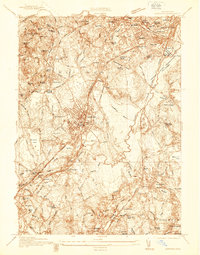 1936 Norwood1936 Print · USGSNorfolk County in the mid-1930s shows a landscape of busy rail corridors and river-powered industry centered on the Neponset River. Genealogists and historians can trace neighborhood growth through local landmarks like Plumptonville, the Colburn Sch, and the Norwood Central Sta.
 - 1936 Map of Nantasket
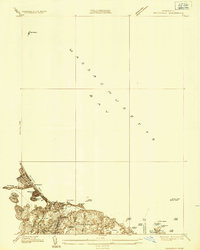 1936 Nantasket1936 Print · USGSThe Massachusetts coastline near Cohasset and Hingham shows a detailed view of beach resorts and rocky harbors in the mid-1930s. Genealogists can trace family footprints around Atlantic, the Damon Sch, and the offshore Minots Ledge Lighthouse.
 - 1938 Map of Pawtucket, 1941 Print
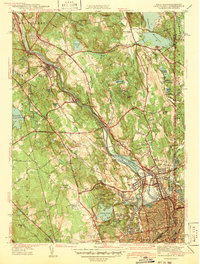 1938 Pawtucket1941 Print · USGSIndustrial Rhode Island at the end of the Depression era is defined here by the river towns of the Blackstone Valley. Genealogists can locate several historic burial sites, including Polish Cem and Clarks Cem, or trace early industrial landmarks like Arnolds Mills.
 - 1939 Map of Franklin, 1942 Print
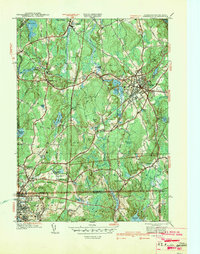 1939 Franklin1942 Print · USGSThe Massachusetts and Rhode Island borderlands are captured here just before the war, showing the industrial nodes of Franklin and Woonsocket. Genealogists can trace family roots at Ballow Meetinghouse, St Marys Cem, and the old campus of Dean Academy.
 - 1940 Map of Franklin
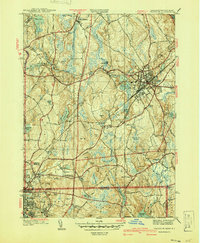 1940 Franklin1940 Print · USGSFranklin and the surrounding border towns of Norfolk County are shown here just before the mid-century. Genealogists can locate specific sites like Dean Academy, St Johns Cem, and the old rail corridors of the New York New Haven and Hartford.2 unique versions available
 - 1940 Map of Wrentham
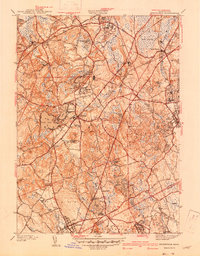 1940 Wrentham1940 Print · USGSNorfolk County in the late 1930s shows a landscape of busy mill villages and expanding state institutions. Genealogists can trace family roots through the Bacon Cem, Quaker Cem, and local schools like Vogel Sch and Everett Sch.2 unique versions available
 - 1940 Map of Medfield
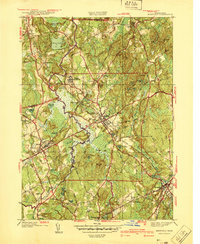 1940 Medfield1940 Print · USGSMedfield and the surrounding Charles River valley appear here just before the Second World War, showing a landscape of small villages and large institutional grounds. Researchers can trace the old rail beds of the New York New Haven and Hartford and find local landmarks like Schoolhouse No 14 and the Medfield State Hospital.2 unique versions available
 - 1941 Map of Holliston
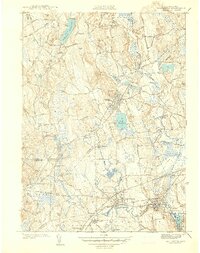 1941 Holliston1941 Print · USGSThe town of Holliston and the surrounding river valleys are captured here just before the mid-century suburban expansion. Genealogists and historians can trace rail-era landmarks like Braggville Sta, local institutions like the Wilder Sch, and old burial grounds including Lake Grove Cem.
 - 1941 Map of Mansfield
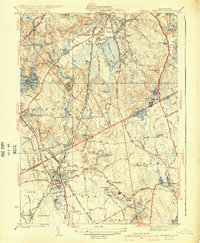 1941 Mansfield1941 Print · USGSThe Norfolk and Bristol county borderlands are shown here just before the mid-century suburban boom, centered on the New York New Haven and Hartford rail corridor. Genealogists and historians can locate old rural corners like Ginty Corner and school sites such as the Poquanticut Sch.3 unique versions available
Showing maps 1-25 of 143
Top cities of Norfolk County
- Quincy historical maps
- Brookline historical maps
- Weymouth historical maps
- Braintree historical maps
- Randolph historical maps
- Franklin historical maps
See more
Frequently asked questions
- What are the different types of historical maps available for Norfolk County?
- What is the oldest map of Norfolk County?
- Where can I purchase historical maps of Norfolk County for my home or office?
- Where can I download high-res historical maps of Norfolk County?
- Are there historical topographic maps available for Norfolk County?
- Is there historical aerial imagery available for Norfolk County?
- Where are historical maps of Norfolk County sourced from?