1900s (20th Century) Maps of Orange Township, Michigan
Explore 13 historic maps of Orange Township from the 1900s (20th Century). These maps offer a rare glimpse into what life looked like during the 1900s — showing old roads, neighborhoods, homes, and landmarks that have changed or disappeared over time.
Whether you're researching your family's past, planning a metal detecting trip, or studying how Orange Township's landscape evolved across the 1900s, these high-resolution maps are a powerful tool for exploring the history of this region.
- Focus on a specific era: All maps on this page are from the 1900s, giving you a focused view of this time period.
- See what’s changed: Compare century-old streets, trails, and buildings to today's modern landscape using overlays and satellite layers.
- Research with precision: Use these maps for genealogy, historical research, land use analysis, or educational projects.
- View, download, or print: Maps are fully viewable online in high resolution, and can be downloaded or printed for your own records.
Start exploring Orange Township's history through authentic maps from the 1900s. This is your window into the past.
Orange Township, MI maps
(13)- 1916 Map of Ionia, 1958 Print
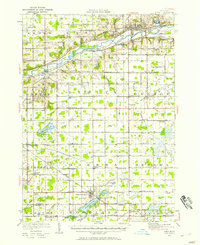 1916 Ionia1958 Print · USGSIonia and the surrounding rural townships are shown during a period of transition in the early twentieth century. Genealogists can locate numerous rural schoolhouses like Welch School and Limerick School, or trace the tracks of the Pere Marquette railroad through Saranac.2 unique versions available
 - 1918 Map of Ionia
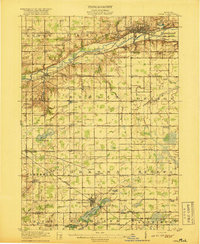 1918 Ionia1918 Print · USGSIonia County and northern Barry County appear here at the end of the Great War, as the river-and-rail economy peaked. Genealogists can trace family footprints across dozens of country school sites like Bushnell School and named corners such as Tremaine Corners.2 unique versions available
 - 1943 Map of Ionia, 1944 Print
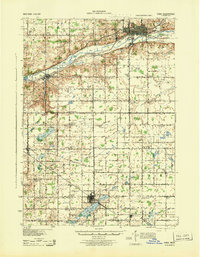 1943 Ionia1944 Print · USGSCentral Michigan’s rural landscape during the wartime era shows a dense network of country schoolhouses and river-valley institutions. Genealogists and local historians can trace family-named landmarks like Henderleider Sch and Saranac along the Pere Marquette rail line.
 - 1945 Map of Portland, 1946 Print
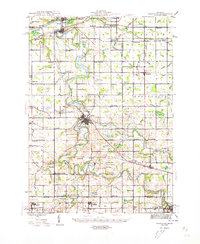 1945 Portland1946 Print · USGSCentral Michigan river valleys thrive in the 1940s as agricultural and transit hubs. Genealogists can locate dozens of family-named schoolhouses and cemeteries like Eagle Cem, while tracing the Pere Marquette rail line and Wagar Dam.3 unique versions available
 - 1958 Map of Grand Rapids, 1973 Print
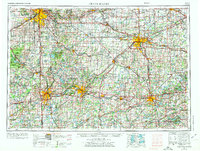 1958 Grand Rapids1973 Print · USGSSouthern Michigan at the peak of the postwar era shows a landscape of burgeoning cities and new interstate highways. Trace family roots and regional growth in Grand Rapids, Battle Creek, and the glacial lake country around Gun Lake or Gull Lake.2 unique versions available
 - 1961 Map of Grand Rapids
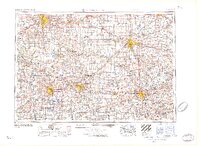 1961 Grand Rapids1961 Print · USGSSouthern Michigan at the dawn of the 1960s reveals a region shaped by major river systems and a robust rail network. Trace mid-century industrial growth and land use from Grand Rapids to the Fort Custer Military Reservation and Gun Lake.
 - 1962 Map of Grand Rapids
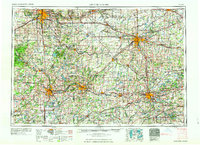 1962 Grand Rapids1962 Print · USGSMid-century Southern Michigan is mapped here at a time of massive growth, showing the expanding urban footprints of Grand Rapids and Lansing. Researchers can trace the legacy of the Grand Trunk Western RR, find historic boundaries of the Fort Custer Military Reservation, or locate sporting camps around Gun Lake.2 unique versions available
 - 1978 Map of Ionia, 1979 Print
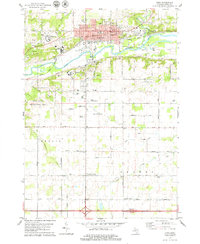 1978 Ionia1979 Print · USGSIonia and its surrounding townships are shown here in the late seventies, centered on the strategic confluence of the Grand River and Prairie Creek. Genealogists and local researchers can trace the locations of the Ionia State Reformatory, the Little White Ch, and several family cemeteries like Tuttle Cem.
 - 1978 Map of Portland North, 1979 Print
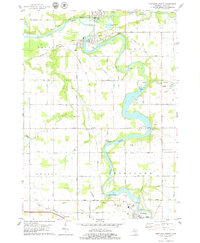 1978 Portland North1979 Print · USGSIonia County at the height of the 1970s shows a landscape defined by the convergence of the Grand River and Maple River. You can trace the industrial footprint of Muir, Lyons, and Portland through old rail grades, the Webber Dam, and the Keefer Cem.
 - 1978 Map of Portland South, 1979 Print
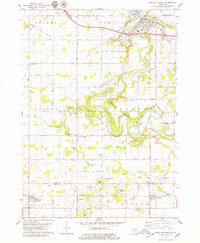 1978 Portland South1979 Print · USGSThe Grand River valley in the late seventies reveals a landscape of river-town growth and rural persistence near the Ionia and Eaton county line. Researchers can locate family landmarks like Knox Sch, East Sebewa Cem, and the old Grange Hall.
 - 1978 Map of Woodbury, 1979 Print
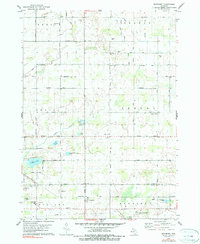 1978 Woodbury1979 Print · USGSThe rural intersection of Ionia, Barry, and Eaton counties comes into focus during the late seventies, showing a landscape of family farms and glacial lakes. Trace local roots through sites like Woodbury, Alderman Cem, and the Lakewood High Sch.2 unique versions available
 - 1983 Map of Lansing, 1984 Print
 1983 Lansing1984 Print · USGSThe Lansing area and its surrounding river valleys are captured here in the early eighties. Genealogists and historians can trace the rail corridors of the Conrail or locate local landmarks like St Johns Ch and Greenwood Cem.
 - 1984 Map of Grand Rapids
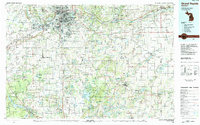 1984 Grand Rapids1984 Print · USGSWest Michigan in the mid-eighties shows a thriving metropolitan core surrounded by expansive state recreation areas and river valleys. Genealogists and local historians can trace developments around Grand Rapids, institutional landmarks like Grand Rapids Bible College, and the quiet reaches of Jordan Lake.
End of results
Showing maps 1-13 of 13
Top cities near Orange Township
- Ionia historical maps
- Belding historical maps
- Portland historical maps
- Orleans historical maps
- Lake Odessa historical maps
- Saranac historical maps
See more
Top neighborhoods of Orange Township
Frequently asked questions
- What are the different types of historical maps available for Orange Township?
- What is the oldest map of Orange Township?
- Where can I purchase historical maps of Orange Township for my home or office?
- Where can I download high-res historical maps of Orange Township?
- Are there historical topographic maps available for Orange Township?
- Is there historical aerial imagery available for Orange Township?
- Where are historical maps of Orange Township sourced from?