Old Maps of Plymouth, Minnesota for Hiking & Exploration
Hike through history with 47 historic maps of Plymouth. Explore old trails, ghost towns, and forgotten backroads — perfect for outdoor adventurers and local explorers.
- Rediscover forgotten places: Map out old mining camps, roads, and footpaths that no longer exist on modern maps.
- Layer with modern tools: Combine with LiDAR or satellite views to plan hikes through historical terrain.
- Made for exploration: Popular among hikers, overlanders, and local history lovers.
Use these maps to find adventure and explore the hidden past of Plymouth.
Plymouth, MN maps
(47)- 1896 Map of Minneapolis
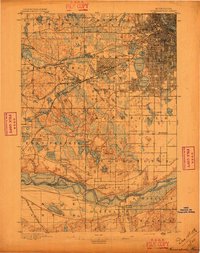 1896 Minneapolis1896 Print · USGSHennepin County and the Minnesota River valley appear here in the mid-1890s, when the region was a mix of lakeside retreats and rail-side settlements. Genealogists and local historians can locate early landmarks like Edina Mills, the Washburn Home, and the Bloomington Ferry crossing.
 - 1901 Map of Minneapolis
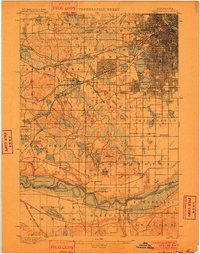 1901 Minneapolis1901 Print · USGSThe Twin Cities suburbs begin to take shape in the late nineteenth century as rail lines weave through lake-studded prairies. Trace the origins of local industry and transit at Edina Mills, the Bloomington Ferry, and the St. Louis Park rail junction.8 unique versions available
 - 1902 Map of Anoka
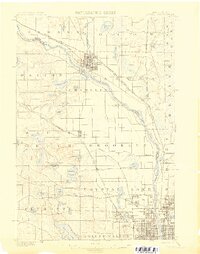 1902 Anoka1902 Print · USGSNorth of Minneapolis at the turn of the century, this area shows a landscape of glacial lakes and growing rail towns. Genealogists can trace family roots in early settlements like Osseo, Champlin, and Robbinsdale or locate long-standing landmarks near Medicine Lake.4 unique versions available
 - 1905 Map of Minnetonka, 1957 Print
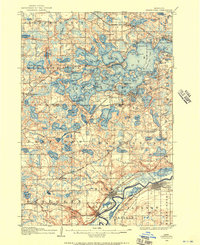 1905 Minnetonka1957 Print · USGSLake Minnetonka and the Minnesota River valley are seen here during the early twentieth century as the region's resort and rail economy reached its height. Genealogists and historians can trace rail stops like Mound Sta, the summer colonies of Deephaven, and the riverfront streets of Chaska.
 - 1907 Map of Minnetonka
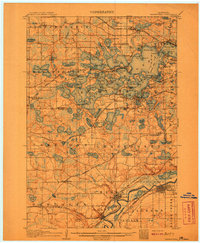 1907 Minnetonka1907 Print · USGSLake Minnetonka was a premier summer destination at the turn of the century, crisscrossed by a Steamboat Route and multiple railroads. Genealogists and historians can trace old lakeside landings and early rail stops like Spring Park Sta, Mound Sta, and Zumbra Heights Sta.3 unique versions available
 - 1909 Map of Rockford
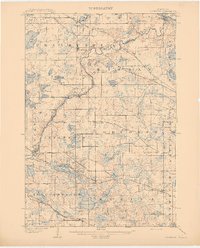 1909 Rockford1909 Print · USGSWright and Hennepin counties are shown here in the first decade of the twentieth century as the railroads transformed rural Minnesota. Genealogists can locate family-named features like Berning Mill, Salem Church, and early schools in Burschville or Hassan.2 unique versions available
 - 1953 Map of Saint Paul, 1964 Print
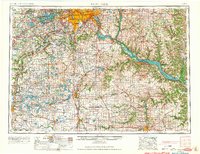 1953 Saint Paul1964 Print · USGSThe Twin Cities and the Mississippi River valley are captured here at a mid-century turning point. Trace the early growth of Minneapolis and Saint Paul alongside landmarks like Lake Minnetonka and the St Croix River.4 unique versions available
 - 1953 Map of Stillwater, 1980 Print
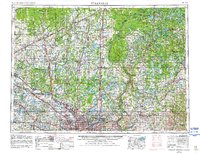 1953 Stillwater1980 Print · USGSThe Twin Cities and the St. Croix Valley are captured in this mid-century survey as the interstate era began to transform the Upper Midwest. Genealogists and historians can trace the rail-and-river geography of Stillwater, locate landmarks in Anoka, or explore the sprawling St Croix State Park.
 - 1954 Map of Hopkins, 1956 Print
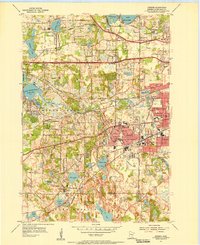 1954 Hopkins1956 Print · USGSThe Western Minneapolis suburbs are shown here in the mid-1950s as they transitioned from rural outposts to established communities. Genealogists and historians can trace institutional sites like the Glen Lake Sanatorium, the Minneapolis Penal Institution, and the Shady Oak Sch (Abandoned).2 unique versions available
 - 1954 Map of Minneapolis, 1959 Print
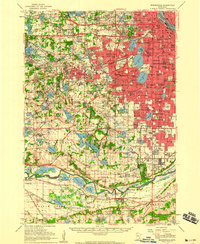 1954 Minneapolis1959 Print · USGSThe Twin Cities suburbs were in the midst of a post-war transformation during the early fifties as the urban grid expanded into the surrounding lake country. Researchers can find many lost local landmarks, from the Glen Lake Sanatorium and Flying Cloud Airport to the rural Eden Prairie Ch and Bloomington Cem.
 - 1955 Map of Osseo, 1956 Print
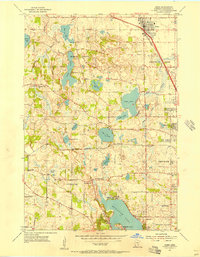 1955 Osseo1956 Print · USGSHennepin County during the mid-fifties shows the early suburban transformation of Osseo and Plymouth among their many lakes. Genealogists and local historians can trace rural roots through the St Marys Cem, Mission Farms, and the Hennessy Hill Sch.2 unique versions available
 - 1955 Map of Anoka, 1959 Print
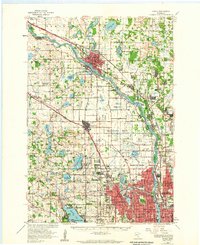 1955 Anoka1959 Print · USGSNorth of Minneapolis in the mid-fifties, the suburban frontier was rapidly advancing through the lake-dotted landscapes of Hennepin and Anoka counties. Local historians can trace the early development of Coon Rapids, Brooklyn Park, and New Hope alongside legacy sites like the State Hospital and St Vincent Cem.
 - 1955 Map of Stillwater, 1965 Print
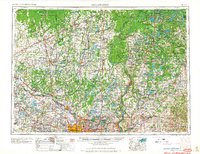 1955 Stillwater1965 Print · USGSThe Upper St. Croix Valley and the growing Twin Cities area are shown here during the mid-fifties, before the interstate era transformed the regional commute. You can trace the lines of the Northern Pacific RR through towns like Rush City or locate the Saint Croix Indian Reservation.
 - 1958 Map of Stillwater
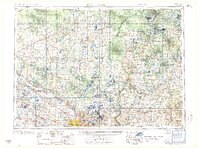 1958 Stillwater1958 Print · USGSThe Upper Mississippi and St. Croix River valleys appear in the mid-fifties as the Twin Cities expanded north. Genealogists can locate family landmarks like Oak Park Cem, Saint Michael Church, and the Soo Line RR rail corridors.2 unique versions available
 - 1958 Map of Rockford, 1959 Print
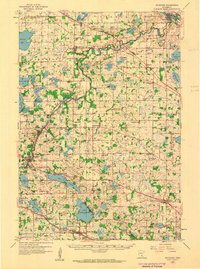 1958 Rockford1959 Print · USGSWright and Hennepin counties are shown here in the late fifties, during a period of steady rural growth and agricultural stability. Researchers can trace ancestral roots at Berning Mill, find small country schoolhouses like Oakdale School, or locate parish centers such as St Michael Church.2 unique versions available
 - 1958 Map of Lake Minnetonka, 1959 Print
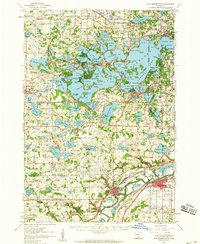 1958 Lake Minnetonka1959 Print · USGSThe western suburbs of Minneapolis appear in a period of transition during the late fifties, centered on the complex shores of Lake Minnetonka. Genealogists and historians can trace the foundations of Wayzata, Deephaven, and Shakopee, or locate family landmarks like Calvin Ch and the Jesuit Seminary.2 unique versions available
 - 1958 Map of Excelsior, 1959 Print
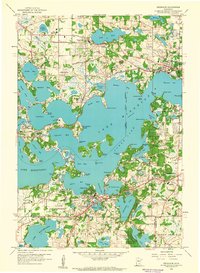 1958 Excelsior1959 Print · USGSThe Lake Minnetonka region flourished in the late fifties as a suburban and recreational hub west of Minneapolis. Genealogists and historians can trace family roots through Resurrection Cem, old school sites like Minnewashta Sch, and the rail lines of the Great Northern.5 unique versions available
 - 1959 Map of Saint Paul
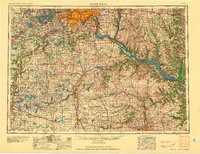 1959 Saint Paul1959 Print · USGSThe Twin Cities and southeastern Minnesota appear here in the late fifties, showing the peak of the rail era and post-war suburban growth. Genealogists can trace family footprints near Lake Minnetonka, the Univ Of Minn Rosemount Research Center, or the growing neighborhoods of Richfield.2 unique versions available
 - 1965 Map of Stillwater
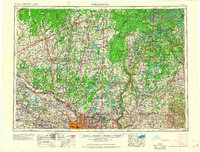 1965 Stillwater1965 Print · USGSThe Twin Cities and the St. Croix Valley are mapped here during a period of significant post-war growth and industrial transit. Genealogists and historians can trace rail lines like the Northern Pacific RR through towns such as Rush City, Amery, and Balsam Lake.
 - 1967 Map of Hopkins, 1969 Print
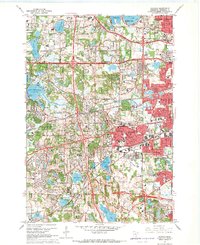 1967 Hopkins1969 Print · USGSSuburban expansion and civic institutions define this Hennepin County landscape during the late sixties. Genealogists and local historians can trace legacy sites like the Glen Lake State Sanatorium, Minnetonka Mills, and the Grand View Park Cemetery.5 unique versions available
 - 1967 Map of Osseo, 1969 Print
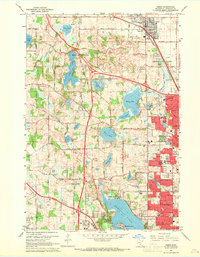 1967 Osseo1969 Print · USGSHennepin County suburbs were rapidly transforming in the late sixties as residential developments met industrial expansion. Researchers can trace family sites and local landmarks like Gethsemane Cemetery, Mission Farms, and North Hennepin State College.5 unique versions available
 - 1975 Map of Stillwater
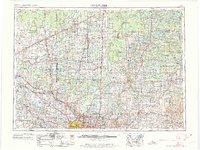 1975 Stillwater1975 Print · USGSThe Twin Cities and the St. Croix Valley are captured in the mid-seventies, showing the urban growth of Minneapolis and St Paul. Researchers can trace old rail corridors of the Northern Pacific RR and locate tribal lands at the Mille Lacs Indian Reservation.2 unique versions available
 - 1981 Map of Hamel
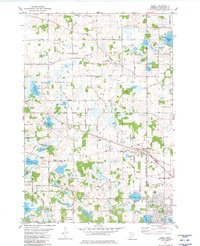 1981 Hamel1981 Print · USGSHennepin County was undergoing significant suburban growth in the early eighties as residential developments moved into the lake country. Genealogists and local researchers can trace early family sites like St James Cem and Old St Thomas Cem near the Soo Line tracks.2 unique versions available
 - 1985 Map of Saint Paul
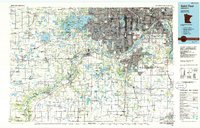 1985 Saint Paul1985 Print · USGSThe Twin Cities metropolitan area and its southern suburbs are captured here in the mid-eighties as the urban landscape expanded toward the Minnesota River. Researchers can trace the layout of the Fort Snelling Military Reservation, find local landmarks like St Benedict Church, and study the rail routes of the Soo Line.2 unique versions available
 - 1985 Map of Anoka
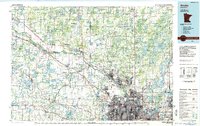 1985 Anoka1985 Print · USGSThe northern Twin Cities suburbs and the Mississippi River valley are captured here in the mid-eighties as suburban growth began to meet rural conservation lands. Trace the expansion of Anoka and Blaine, or locate family landmarks near the Rum River and Buffalo Lake.
Showing maps 1-25 of 47
Top cities near Plymouth
- Minneapolis historical maps
- Bloomington historical maps
- Brooklyn Park historical maps
- Maple Grove historical maps
- Coon Rapids historical maps
- Eden Prairie historical maps
See more
Top neighborhoods of Plymouth
- Mission Farms historical maps
- Harvest Hills historical maps
- Lake Camelot Estates historical maps
- Camelot Overlook historical maps
- Camelot Villas historical maps
- Taylor Creek historical maps
See more
Frequently asked questions
- What are the different types of historical maps available for Plymouth?
- What is the oldest map of Plymouth?
- Where can I purchase historical maps of Plymouth for my home or office?
- Where can I download high-res historical maps of Plymouth?
- Are there historical topographic maps available for Plymouth?
- Is there historical aerial imagery available for Plymouth?
- Where are historical maps of Plymouth sourced from?