1960s Maps of Kanabec County, Minnesota
Explore 21 historic maps of Kanabec County from the 1960s. These maps offer a rare glimpse into what life looked like during the 1960s — showing old roads, neighborhoods, homes, and landmarks that have changed or disappeared over time.
Whether you're researching your family's past, planning a metal detecting trip, or studying how Kanabec County's landscape evolved across the 1960s, these high-resolution maps are a powerful tool for exploring the history of this region.
- Focus on a specific era: All maps on this page are from the 1960s, giving you a focused view of this time period.
- See what’s changed: Compare century-old streets, trails, and buildings to today's modern landscape using overlays and satellite layers.
- Research with precision: Use these maps for genealogy, historical research, land use analysis, or educational projects.
- View, download, or print: Maps are fully viewable online in high resolution, and can be downloaded or printed for your own records.
Start exploring Kanabec County's history through authentic maps from the 1960s. This is your window into the past.
Kanabec County, MN maps
(21)- 1961 Map of Cambridge, 1963 Print
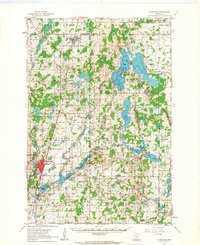 1961 Cambridge1963 Print · USGSThe lake country of Isanti and Chisago Counties is shown here in the early sixties as it balanced agricultural roots with new institutional growth. Researchers can trace the Great Northern rail line connecting Braham and Cambridge, or locate vanished landmarks like Minnesota Boys Town and the Oak Leaf Grange Hall.
 - 1961 Map of Brook Park, 1963 Print
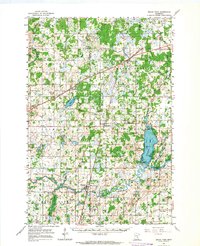 1961 Brook Park1963 Print · USGSSettlements along the Great Northern railroad thrived in the early sixties as they served this stretch of Pine and Kanabec counties. Genealogists and historians can trace family locations near the Brook Park Cem, Grasston, and the St Gerard Mission House.2 unique versions available
 - 1961 Map of Springvale, 1963 Print
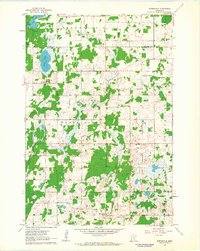 1961 Springvale1963 Print · USGSIsanti County farmland and scattered rural communities appear in detail during the early sixties, as the area maintained its traditional agricultural character. Genealogists can locate family landmarks like Siloa Church, Elm Park, and the various cemeteries that served these central Minnesota townships.2 unique versions available
 - 1961 Map of Dalbo, 1963 Print
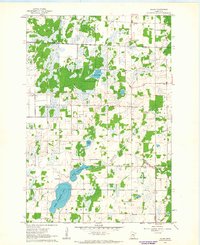 1961 Dalbo1963 Print · USGSCentral Minnesota farm country and wetlands are captured here in the early sixties. Genealogists can locate family-named landmarks like Krone Lake and trace community roots at the Salem Cem, North Star Sch, or the Grange Hall.2 unique versions available
 - 1961 Map of Dalbo, 1965 Print
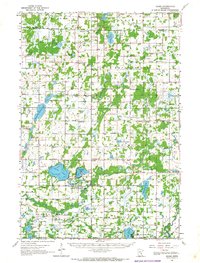 1961 Dalbo1965 Print · USGSIsanti County in the early 1960s was a landscape of township halls and country schoolhouses centered on the winding Rum River. Genealogists can locate family sites at the Old Wyanett Free Cem, King Cem, and the rural Siloa Ch.
 - 1965 Map of Stillwater
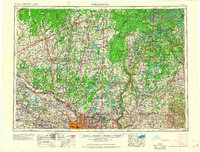 1965 Stillwater1965 Print · USGSThe Twin Cities and the St. Croix Valley are mapped here during a period of significant post-war growth and industrial transit. Genealogists and historians can trace rail lines like the Northern Pacific RR through towns such as Rush City, Amery, and Balsam Lake.
 - 1968 Map of Milaca NE, 1970 Print
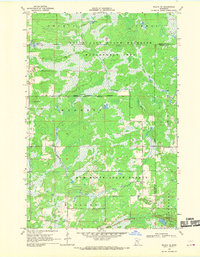 1968 Milaca NE1970 Print · USGSMille Lacs and Kanabec counties are shown in the late sixties as a network of conservation lands and rural outposts. Researchers can trace the locations of the North Fork Sch, the Mille Lacs Lookout Tower, and a local Townhall.
 - 1968 Map of Ann Lake, 1970 Print
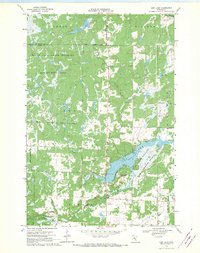 1968 Ann Lake1970 Print · USGSKanabec County conservation lands are mapped here in the late sixties, highlighting the extensive wetlands and forests of central Minnesota. Researchers can trace the boundaries of the Rum River State Forest or locate early access points like the Boat Ramp at Ann Lake.
 - 1968 Map of Kroschel NW, 1970 Print
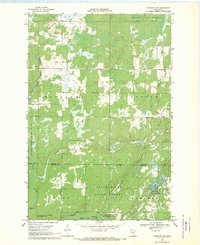 1968 Kroschel NW1970 Print · USGSThe Snake River corridor at the Aitkin and Kanabec county line is captured here in the late sixties, showing a landscape transitioning into protected state forests. Researchers can trace the bounds of Solana State Forest and locate fishing spots at Lake Five and Long Lake.2 unique versions available
 - 1968 Map of Isle SW, 1970 Print
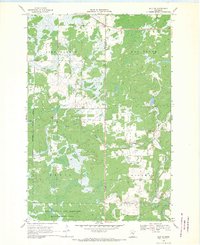 1968 Isle SW1970 Print · USGSMille Lacs and Kanabec counties are captured in the late sixties as conservation and local industry shaped the land. Researchers can find old resource landmarks like the Isle Harbor Lookout Tower, small-scale extraction sites such as the Quarry, and the winding Knife River.2 unique versions available
 - 1968 Map of Mora North, 1970 Print
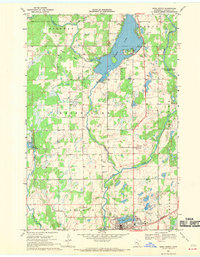 1968 Mora North1970 Print · USGSKanabec County's lake country is captured here in the late sixties as the city of Mora expanded near the shores of Mora Lake. Researchers can locate family landmarks like Hillman Ch, the Knife Lake Cem, and the historic Indian Mounds Park along the water.2 unique versions available
 - 1968 Map of Isle, 1970 Print
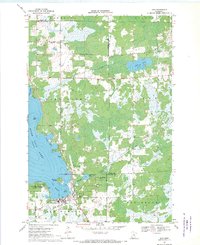 1968 Isle1970 Print · USGSThe southeast corner of Mille Lacs Lake thrived in the late sixties as a crossroads of rail travel and lakeside recreation. Genealogists and local historians can trace the foundations of Isle, find remote country stops like Opstead, and locate family burial sites at Holden Cem and Redtop Cem.
 - 1968 Map of Pomroy Lake, 1970 Print
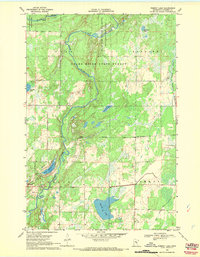 1968 Pomroy Lake1970 Print · USGSKanabec County conservation lands and river systems are well-documented in this late 1960s survey. Researchers can locate the Pomroy Union Chapel and trace the winding Snake River past McMullen Lake and Lake Full of Fish.2 unique versions available
 - 1968 Map of Warman, 1970 Print
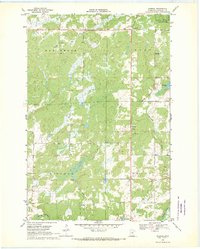 1968 Warman1970 Print · USGSCentral Minnesota at the end of the sixties shows a landscape defined by its timbered wetlands and growing stone industry. Local researchers can trace the industrial footprint of Warman through its several Quarries and explore the riparian borders of the Snake River.2 unique versions available
 - 1968 Map of Giese, 1970 Print
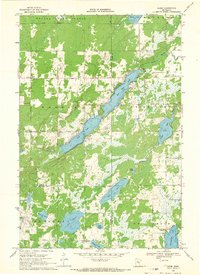 1968 Giese1970 Print · USGSThe tri-county border of Aitkin, Pine, and Kanabec counties in the late sixties reveals a landscape of deep woods and interconnected glacial lakes. Genealogists and local historians can trace the rural infrastructure of Giese, including the Lakeview Sch, Township Cem, and the winding Pine River.
 - 1968 Map of Princeton NE, 1970 Print
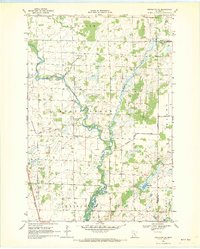 1968 Princeton NE1970 Print · USGSMille Lacs County in the late sixties reveals a landscape of river bends and reclaimed wetlands shaped by early twentieth-century drainage projects. Genealogists can trace family connections at Wendell Hill Cem or Zion Ch and locate the historic School No 1172.
 - 1968 Map of Kroschel, 1970 Print
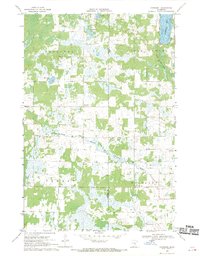 1968 Kroschel1970 Print · USGSThe Kanabec and Pine county line in the late sixties reveals a landscape of wooded wetlands and isolated farmsteads. Genealogists and researchers can locate family sites near Kroschel, St John Ch, and the Trinity Cem along the Grindstone River branches.
 - 1968 Map of Bock, 1970 Print
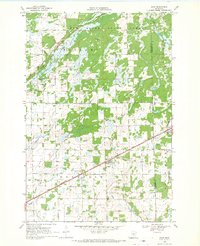 1968 Bock1970 Print · USGSIn the late sixties, the rural landscape of Borgholm was anchored by the village of Bock and the Great Northern railway. Researchers can trace historical footprints through landmarks like Borgholm Cem, School No 1156, and several local Townhalls near Bogus Brook.2 unique versions available
 - 1968 Map of Ogilvie, 1970 Print
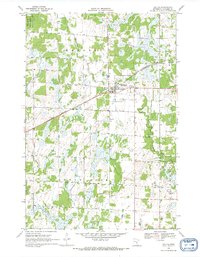 1968 Ogilvie1970 Print · USGSIn the late 1960s, the village of Ogilvie was a central rail stop for the Great Northern line. Genealogists and historians can trace local family landmarks like St Kathryn Cem, Graceland Cem, and the community Townhall.
 - 1968 Map of Mora South, 1970 Print
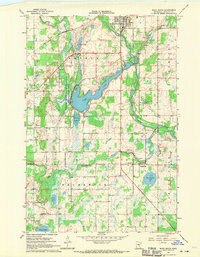 1968 Mora South1970 Print · USGSThe Snake River valley in Kanabec County comes into focus in this late 1960s record of rural Minnesota life and industry. Genealogists and local historians can trace the foundations of Mora and Brunswick, locating family landmarks like St Marys Cem, Monroe Sch, and the Great Northern railroad tracks.2 unique versions available
 - 1968 Map of Mc Grath, 1970 Print
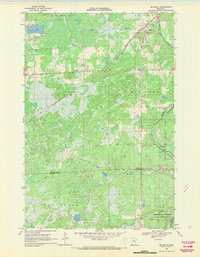 1968 Mc Grath1970 Print · USGSAitkin and Kanabec County in the late 1960s reveal a quiet landscape of wetlands and river bends centered on the SOO LINE railroad. Local researchers can trace family landmarks at Grace Cem or explore the early footprints of McGrath and Bergman.2 unique versions available
End of results
Showing maps 1-21 of 21
Top cities of Kanabec County
Frequently asked questions
- What are the different types of historical maps available for Kanabec County?
- What is the oldest map of Kanabec County?
- Where can I purchase historical maps of Kanabec County for my home or office?
- Where can I download high-res historical maps of Kanabec County?
- Are there historical topographic maps available for Kanabec County?
- Is there historical aerial imagery available for Kanabec County?
- Where are historical maps of Kanabec County sourced from?