1960s Maps of Murray County, Minnesota
Explore 19 historic maps of Murray County from the 1960s. These maps offer a rare glimpse into what life looked like during the 1960s — showing old roads, neighborhoods, homes, and landmarks that have changed or disappeared over time.
Whether you're researching your family's past, planning a metal detecting trip, or studying how Murray County's landscape evolved across the 1960s, these high-resolution maps are a powerful tool for exploring the history of this region.
- Focus on a specific era: All maps on this page are from the 1960s, giving you a focused view of this time period.
- See what’s changed: Compare century-old streets, trails, and buildings to today's modern landscape using overlays and satellite layers.
- Research with precision: Use these maps for genealogy, historical research, land use analysis, or educational projects.
- View, download, or print: Maps are fully viewable online in high resolution, and can be downloaded or printed for your own records.
Start exploring Murray County's history through authentic maps from the 1960s. This is your window into the past.
Murray County, MN maps
(19)- 1967 Map of New Ulm
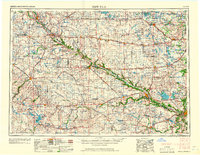 1967 New Ulm1967 Print · USGSSouthern Minnesota in the mid-fifties is captured here as a landscape of river-valley missions and busy prairie rail towns. Researchers can trace the Yellow Medicine Trail and locate historic sites like the Morton Indian Mission and Milford State Monument.
 - 1967 Map of Slayton SW, 1968 Print
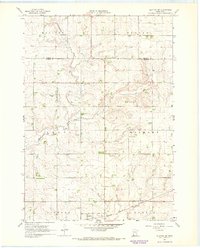 1967 Slayton SW1968 Print · USGSThe rural prairie of Nobles County is captured in the late sixties, showing the vital rail corridor of the Chicago Rock Island and Pacific as it served Lismore. Researchers can trace the drainage patterns of Champepadan Creek and locate several early Gravel Pits and the local Gaging Station.
 - 1967 Map of Balaton, 1968 Print
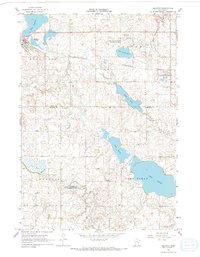 1967 Balaton1968 Print · USGSSouthwestern Minnesota prairie and glacial lakes define this landscape in the late sixties, where the railroad connects small rural hubs. Trace the historical footprints of Balaton and Garvin along the Chicago and North Western line near the shores of Lake Sarah.2 unique versions available
 - 1967 Map of Edgerton NE, 1968 Print
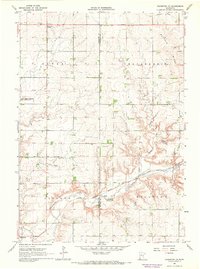 1967 Edgerton NE1968 Print · USGSSouthwestern Minnesota's prairie highlands come to life in the late sixties as agricultural townships and rail lines define the rural landscape. Researchers can locate the Woodstock Cemetery, trace the Milwaukee Road tracks, and find early landmarks like Diamond Corner.
 - 1967 Map of Ruthton, 1968 Print
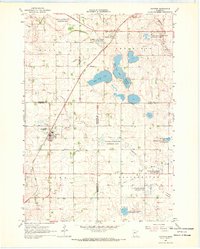 1967 Ruthton1968 Print · USGSThe rail-and-river landscape of the Minnesota prairie comes into focus in the mid-1960s, centered on the settlements of Ruthton and Florence. Researchers can trace old family burial sites at Opdal Cem and Peace Cem or follow the path of the Great Northern railroad.
 - 1967 Map of Slayton, 1968 Print
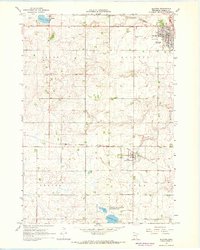 1967 Slayton1968 Print · USGSMurray County at the height of the 1960s shows a landscape defined by the intersection of the Chicago and North Western and the Milwaukee Road. Genealogists can locate family landmarks like St Columba Cem, West Sch, and the village of Hadley.
 - 1967 Map of Balaton SW, 1968 Print
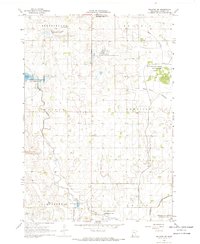 1967 Balaton SW1968 Print · USGSMurray County prairie lands are shown here in the late sixties, highlighting a landscape of managed wildlife areas and intensive drainage systems. Genealogists and local historians can locate Ellsborough Ch, the C & N W rail line, and the expansive Great Oasis Lakebed.
 - 1967 Map of Walnut Grove, 1968 Print
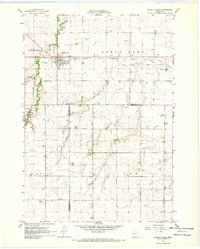 1967 Walnut Grove1968 Print · USGSWalnut Grove and the surrounding prairie townships are documented here in the late sixties as the local rail and agricultural systems remained central to the community. Genealogists and researchers can trace local family landmarks such as St Olaf Ch, Calvary Cem, and the path of the famed Plum Creek.
 - 1967 Map of Tracy East, 1968 Print
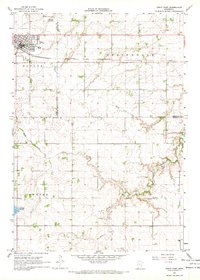 1967 Tracy East1968 Print · USGSMurray and Redwood Counties are shown in detail during the late sixties as agricultural development shaped the Minnesota prairie. Researchers can locate family landmarks like Tracy Cemetery, follow the Plum Creek drainage, and find rural hubs such as Holly Ch.
 - 1967 Map of Kenneth, 1968 Print
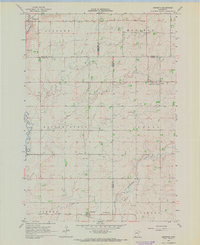 1967 Kenneth1968 Print · USGSAcross the prairie townships of southwest Minnesota in the 1960s, this survey shows the rail-and-road network connecting Kenneth and Leota. Genealogists and researchers can trace the Chicago Rock Island and Pacific rail line and locate the Leota Cem.
 - 1967 Map of Wilmont, 1968 Print
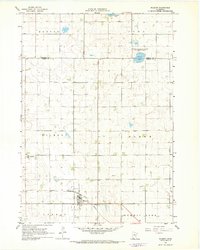 1967 Wilmont1968 Print · USGSThe agricultural heart of Nobles County is captured here in the late sixties as the Chicago Rock Island and Pacific railroad still serves Wilmont. Researchers can trace old property lines across Bloom and Larkin townships or locate the St Kilian settlement and Wilmont Cem.
 - 1967 Map of Woodstock, 1968 Print
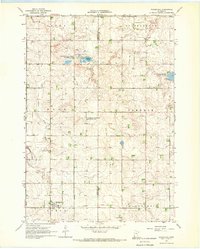 1967 Woodstock1968 Print · USGSPipestone County's agricultural and conservation lands are captured here in the late sixties, centered on the village of Woodstock. Researchers can trace the path of the Old Railroad Grade and locate rural landmarks like School No 126 and the local Townhall.2 unique versions available
 - 1967 Map of Hadley, 1968 Print
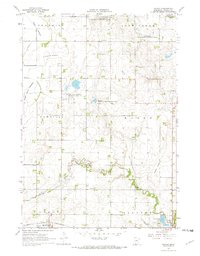 1967 Hadley1968 Print · USGSMurray County prairie life in the late sixties is centered on the rail village of Hadley and the surrounding townships. Researchers can trace family roots at Highland Home Cem, locate the local Townhall, or follow the old Chicago and North Western rail line.3 unique versions available
 - 1967 Map of Current Lake, 1968 Print
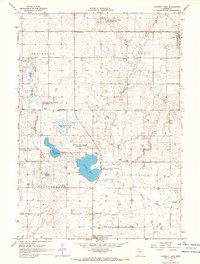 1967 Current Lake1968 Print · USGSThe rural borderlands of Lyon and Murray Counties are shown here during the late 1960s, centered on the diverse wetlands of the western prairie. Genealogists and local historians can trace the foundations of these farming townships through sites like Stillerud Ch, the C & N W rail line in Balaton, and several named lakebeds.
 - 1967 Map of Tracy West, 1968 Print
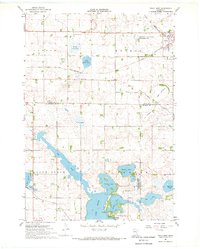 1967 Tracy West1968 Print · USGSSouthwestern Minnesota's prairie and lake country is captured here in the late sixties as the city of Tracy thrives along the railroad. Researchers can locate rural landmarks like Holland Cem, the Rialson Cem, and various shoreline features around Lake Sarah.2 unique versions available
 - 1967 Map of Dovray, 1969 Print
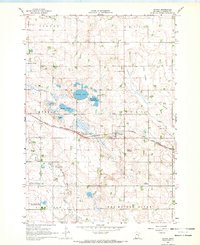 1967 Dovray1969 Print · USGSMurray County prairie life in the late sixties centers on the rail siding at Dovray and the winding Des Moines River. Trace family history and rural infrastructure through School No 1204, Willow Lake Ch, and the Old German Cem.
 - 1967 Map of Currie, 1969 Print
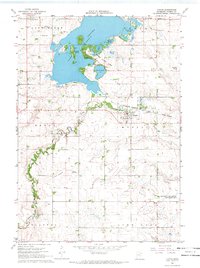 1967 Currie1969 Print · USGSThe headwaters of the Des Moines River and the bustling shores of Lake Shetek are captured here in the late sixties. Genealogists and historians can trace the early layout of Currie, locate Bethany Cem, and explore the development of Lake Shetek State Park.2 unique versions available
 - 1967 Map of Westbrook, 1969 Print
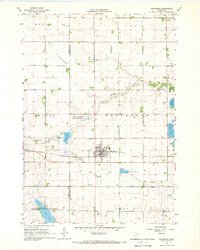 1967 Westbrook1969 Print · USGSWestbrook and the surrounding Cottonwood County prairie are captured here in the late sixties, showing a landscape defined by the Chicago and North Western rail line and the Des Moines River. Local historians can trace the town's original footprint including the Cemetery, the municipal Park, and the nearby Landing Strip.2 unique versions available
 - 1967 Map of Chandler, 1969 Print
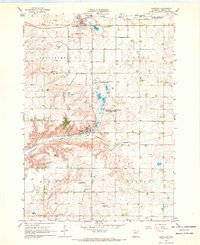 1967 Chandler1969 Print · USGSMurray County's agricultural heartland is documented here during the late sixties, showing the rail-centric growth of Lake Wilson and Chandler. Researchers can trace old property lines, find secluded burial sites like Hillside Cem, and follow the path of the Chicago and North Western railroad.
End of results
Showing maps 1-19 of 19
Top cities of Murray County
- Slayton historical maps
- Fulda historical maps
- Chandler historical maps
- Lake Wilson historical maps
- Currie historical maps
- Iona historical maps
See more
Frequently asked questions
- What are the different types of historical maps available for Murray County?
- What is the oldest map of Murray County?
- Where can I purchase historical maps of Murray County for my home or office?
- Where can I download high-res historical maps of Murray County?
- Are there historical topographic maps available for Murray County?
- Is there historical aerial imagery available for Murray County?
- Where are historical maps of Murray County sourced from?