1900s (20th Century) Maps of Fossum, Minnesota
Explore 6 historic maps of Fossum from the 1900s (20th Century). These maps offer a rare glimpse into what life looked like during the 1900s — showing old roads, neighborhoods, homes, and landmarks that have changed or disappeared over time.
Whether you're researching your family's past, planning a metal detecting trip, or studying how Fossum's landscape evolved across the 1900s, these high-resolution maps are a powerful tool for exploring the history of this region.
- Focus on a specific era: All maps on this page are from the 1900s, giving you a focused view of this time period.
- See what’s changed: Compare century-old streets, trails, and buildings to today's modern landscape using overlays and satellite layers.
- Research with precision: Use these maps for genealogy, historical research, land use analysis, or educational projects.
- View, download, or print: Maps are fully viewable online in high resolution, and can be downloaded or printed for your own records.
Start exploring Fossum's history through authentic maps from the 1900s. This is your window into the past.
Fossum, MN maps
(6)- 1918 Map of Flom
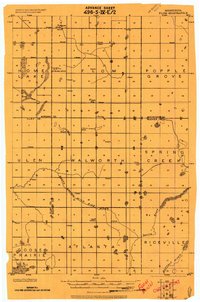 1918 Flom1918 Print · USGSNorthwestern Minnesota's farming townships are captured here at the close of the First World War. Researchers can trace rural school districts and family church sites near Fossum, Flom P.O., and along the South Branch Wild Rice River.
 - 1952 Map of Grand Forks, 1967 Print
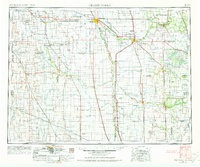 1952 Grand Forks1967 Print · USGSThe Red River Valley in the early fifties is shown here at the height of its rail-and-river agricultural economy. Researchers can locate small-town landmarks like the Pleasant View School, the Immanuel Lutheran Church, and trace the path of the Soo Line Railroad.3 unique versions available
 - 1956 Map of Grand Forks
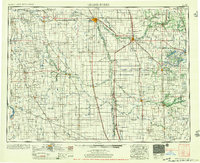 1956 Grand Forks1956 Print · USGSThe Red River Valley in the mid-fifties is captured here as a thriving corridor of grain elevators and rail-linked towns along the North Dakota and Minnesota border. Researchers can trace historic church sites like Immanuel Lutheran Church, vanished rail stops at Tilde Junction, and the boundaries of the White Earth Indian Reservation.
 - 1966 Map of Flom, 1963 Print
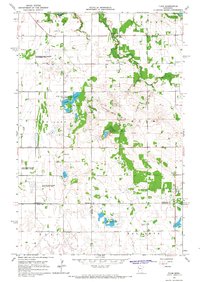 1966 Flom1963 Print · USGSThe rural borderlands of Norman, Clay, and Becker counties are captured here in the mid-1960s. Genealogists and local historians can trace family roots through sites like Wild Rice Ch, Bethlehem Cem, and the old Townhall.2 unique versions available
 - 1966 Map of Grand Forks
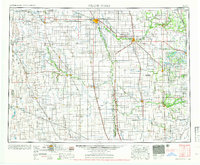 1966 Grand Forks1966 Print · USGSThe Red River Valley in the mid-sixties shows a landscape shaped by rail-line commerce and complex water management. Genealogists and historians can trace rail-side towns like Emerado and Hunter or locate rural landmarks like the Pleasant View Church.
 - 1984 Map of Ada, 1985 Print
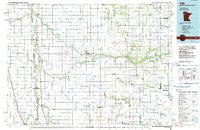 1984 Ada1985 Print · USGSThe Red River Valley's agricultural heartland is documented here in the mid-1980s, showcasing the extensive network of drainage ditches and rail lines that powered the region. Genealogists and local historians can trace family locations near Ada, Fertile, and along the Burlington Northern line.2 unique versions available
End of results
Showing maps 1-6 of 6
Top cities near Fossum
- Mahnomen historical maps
- Twin Valley historical maps
- Ulen historical maps
- Gary historical maps
- Flom historical maps
- Waukon historical maps
See more
Frequently asked questions
- What are the different types of historical maps available for Fossum?
- What is the oldest map of Fossum?
- Where can I purchase historical maps of Fossum for my home or office?
- Where can I download high-res historical maps of Fossum?
- Are there historical topographic maps available for Fossum?
- Is there historical aerial imagery available for Fossum?
- Where are historical maps of Fossum sourced from?