Old Maps of Pine County, Minnesota
Explore 294 old maps of Pine County, spanning from 1949 to today. These high-resolution historic maps reveal how streets, neighborhoods, landmarks, and natural features evolved over time — perfect for genealogy, metal detecting, research, and local history exploration.
What you can do with these maps:
- See how Pine County changed over time: Compare historical maps to modern-day views to trace roads, homesites, rail lines & more.
- View detailed metadata: Each map includes creators, publishers, year, scale, and archive source.
- Overlay maps with satellite & LiDAR: Visualize the past alongside modern tools to explore terrain & human change.
- Trusted historical sources: Maps sourced from the USGS, Library of Congress, and other archives.
- Access maps your way: View online, download high-res files, or order prints for personal or research use.
Start exploring old maps of Pine County to uncover forgotten places, hidden landmarks, and the deep history beneath your feet.
Pine County, MN maps
(294)- 1949 Map of Danbury
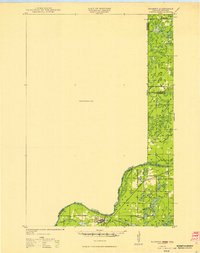 1949 Danbury1949 Print · USGSDanbury and the surrounding river country are captured here just after the war, showing the boundary lands of Burnett and Pine Counties. Genealogists can trace early rural schooling at Atkinson Sch or locate the Emergency Landing Field and Minerva Dam along the St Croix River.
 - 1949 Map of Holyoke
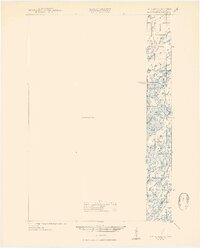 1949 Holyoke1949 Print · USGSThe borderlands of Minnesota and Wisconsin are captured in the late 1940s, highlighting the transition from rail settlements to wild interior wetlands. Genealogists and historians can trace the Minneapolis St Paul and Sault Ste Marie RR through Foxboro and locate the rural Nelson Sch.2 unique versions available
 - 1950 Map of Webster
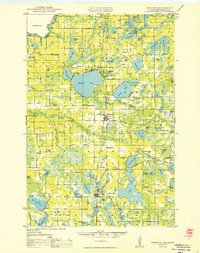 1950 Webster1950 Print · USGSNorthern Wisconsin lake country is captured here at mid-century, centered on the growing village of Webster. Genealogists can locate rural landmarks like Karlsborg Cem, Yellow Lake Ch, and the Siren Landing Field.
 - 1950 Map of Rush City
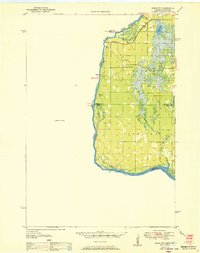 1950 Rush City1950 Print · USGSThe St. Croix River valley in the late 1940s reveals a quiet borderland where timber and rail infrastructure meet rural crossroads. Genealogists and historians can trace the foundations of local life at Indian Cem, the Rush City Ferry, and the Logging RR.
 - 1950 Map of Grantsburg
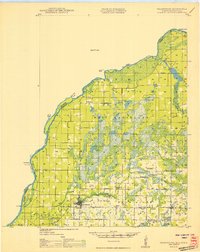 1950 Grantsburg1950 Print · USGSBurnett County was a landscape of river crossings and rural outposts at mid-century, bounded by the winding St Croix River. Genealogists and historians can locate legacy sites like Ekdall Sch, Wood Lake Ch, and the village of Grantsburg.
 - 1953 Map of Duluth, 1964 Print
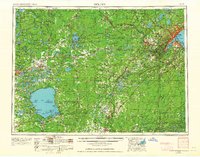 1953 Duluth1964 Print · USGSNortheastern Minnesota and northwestern Wisconsin are shown here during a period of industrial maturity and expanding conservation. Genealogists and historians can trace rail-connected towns like McGrath and Wahkon, or locate heritage sites within the Fond du Lac Indian Reservation.2 unique versions available
 - 1953 Map of Stillwater, 1980 Print
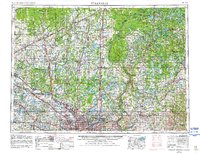 1953 Stillwater1980 Print · USGSThe Twin Cities and the St. Croix Valley are captured in this mid-century survey as the interstate era began to transform the Upper Midwest. Genealogists and historians can trace the rail-and-river geography of Stillwater, locate landmarks in Anoka, or explore the sprawling St Croix State Park.
 - 1954 Map of Foxboro, 1955 Print
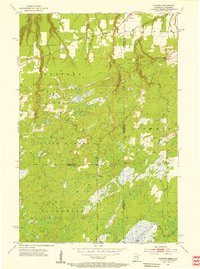 1954 Foxboro1955 Print · USGSThe borderlands of Minnesota and Wisconsin are depicted here in the mid-fifties, dominated by dense state forests and critical rail corridors. Researchers can locate the settlement of Foxboro, the Summit Cem, and various Gravel Pits along the Great Northern tracks.4 unique versions available
 - 1955 Map of Webster, 1957 Print
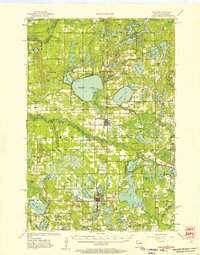 1955 Webster1957 Print · USGSBurnett County in the mid-fifties is a landscape of glacial lakes and growing lakeside communities like Webster and Siren. Researchers can trace old rural school districts and landmarks such as the Burnett County Airport, Karlsborg Sch, and the Orange Cem.3 unique versions available
 - 1955 Map of Rush City, 1957 Print
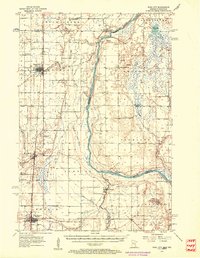 1955 Rush City1957 Print · USGSThe St. Croix River valley in the mid-1950s reveals a landscape of railroad towns and riverside settlements. Genealogists can trace family landmarks like the Swedish Cem, Pleasant Prairie Ch, and the Indian Cem.5 unique versions available
 - 1955 Map of Stillwater, 1965 Print
 1955 Stillwater1965 Print · USGSThe Upper St. Croix Valley and the growing Twin Cities area are shown here during the mid-fifties, before the interstate era transformed the regional commute. You can trace the lines of the Northern Pacific RR through towns like Rush City or locate the Saint Croix Indian Reservation.
 - 1958 Map of Stillwater
 1958 Stillwater1958 Print · USGSThe Upper Mississippi and St. Croix River valleys appear in the mid-fifties as the Twin Cities expanded north. Genealogists can locate family landmarks like Oak Park Cem, Saint Michael Church, and the Soo Line RR rail corridors.2 unique versions available
 - 1958 Map of Duluth
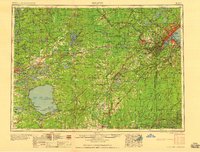 1958 Duluth1958 Print · USGSNortheastern Minnesota and the Wisconsin borderlands are shown in detail during the late 1950s, centered on the bustling rail yards and ports of Duluth. You can trace the historic routes of the Soo Line and Duluth Missabe & Iron Range through small towns like McGrath, Bruno, and Wrenshall.
 - 1961 Map of Sandstone, 1963 Print
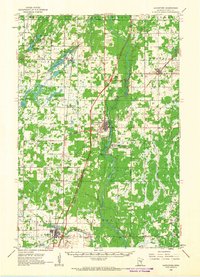 1961 Sandstone1963 Print · USGSPine County in the early sixties centers on the river-and-rail corridor through Sandstone and Hinckley. Researchers can trace rural lineages through the Dell Grove Cem, Rose Hill Cem, and local schoolhouses like Cloverdale Sch.2 unique versions available
 - 1961 Map of Moose Lake, 1963 Print
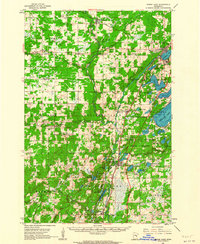 1961 Moose Lake1963 Print · USGSNortheastern Minnesota lakeside communities and the Kettle River valley are captured in the early sixties as they balanced forestry and small-town industry. Genealogists and local historians can trace family-named landmarks and rural hubs like Nordland Cem, the State Hospital, and the rail stops at Willow River and Rutledge.2 unique versions available
 - 1961 Map of Cambridge, 1963 Print
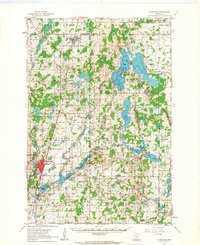 1961 Cambridge1963 Print · USGSThe lake country of Isanti and Chisago Counties is shown here in the early sixties as it balanced agricultural roots with new institutional growth. Researchers can trace the Great Northern rail line connecting Braham and Cambridge, or locate vanished landmarks like Minnesota Boys Town and the Oak Leaf Grange Hall.
 - 1961 Map of Brook Park, 1963 Print
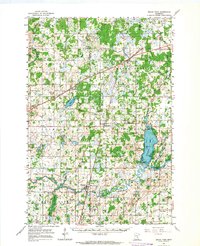 1961 Brook Park1963 Print · USGSSettlements along the Great Northern railroad thrived in the early sixties as they served this stretch of Pine and Kanabec counties. Genealogists and historians can trace family locations near the Brook Park Cem, Grasston, and the St Gerard Mission House.2 unique versions available
 - 1961 Map of Pine City, 1963 Print
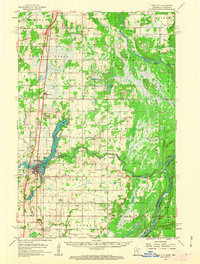 1961 Pine City1963 Print · USGSPine City and the surrounding river valleys are captured here in the early 1960s as Interstate 35 began to reshape the region. Genealogists can trace family footprints across numerous sites like the Bohemian Cem, Milburn Ch, and over ten numbered schoolhouses.2 unique versions available
 - 1962 Map of Holyoke, 1964 Print
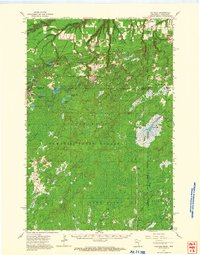 1962 Holyoke1964 Print · USGSCrossing the Minnesota and Wisconsin border in the early sixties, this survey shows the remote timberlands and rail-dependent hamlets of Pine and Carlton counties. Genealogists and historians can trace the Great Northern Grade through Holyoke, Foxboro, and the Summit Cemetery.2 unique versions available
 - 1962 Map of Bruno, 1964 Print
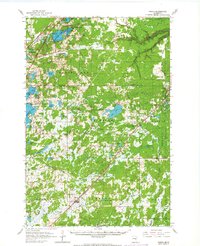 1962 Bruno1964 Print · USGSNortheastern Minnesota at the dawn of the sixties shows a network of rail-towns and timberlands centered on the Great Northern line. Genealogists and historians can trace family locations through Moose Lake Cem, Blomskog Ch, and the many small settlements like Kerrick and Duquette.2 unique versions available
 - 1962 Map of Cloverdale, 1964 Print
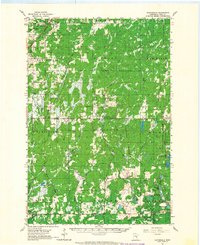 1962 Cloverdale1964 Print · USGSPine County's forested eastern reaches are captured here in the early 1960s, showing the quiet townships before modern developments. Local researchers can locate rural landmarks like the Danforth Sch, the Sand Creek Chapel, and the Great Northern rail line.2 unique versions available
 - 1962 Map of Grantsburg, 1964 Print
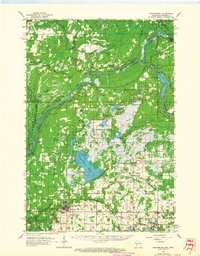 1962 Grantsburg1964 Print · USGSThe St. Croix River valley in the early 1960s reveals a unique landscape of wetlands and wildlife conservation. Genealogists and historians can trace rural landmarks like Ekdall Ch Cem, Midway Tabernacle, and the Old Railroad Grade.
 - 1962 Map of Danbury, 1964 Print
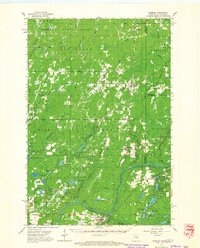 1962 Danbury1964 Print · USGSThe border country of the Saint Croix River is captured here in the early sixties as recreational forests grew around old rail stops. Tracing the Soo Line reveals the small settlements of Kingsdale and Cloverton tucked between Nemadji State Forest and the river.2 unique versions available
 - 1965 Map of Stillwater
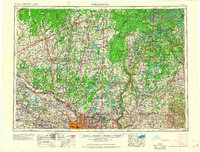 1965 Stillwater1965 Print · USGSThe Twin Cities and the St. Croix Valley are mapped here during a period of significant post-war growth and industrial transit. Genealogists and historians can trace rail lines like the Northern Pacific RR through towns such as Rush City, Amery, and Balsam Lake.
 - 1968 Map of Giese, 1970 Print
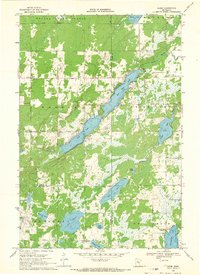 1968 Giese1970 Print · USGSThe tri-county border of Aitkin, Pine, and Kanabec counties in the late sixties reveals a landscape of deep woods and interconnected glacial lakes. Genealogists and local historians can trace the rural infrastructure of Giese, including the Lakeview Sch, Township Cem, and the winding Pine River.
Showing maps 1-25 of 294
Top cities of Pine County
- Pine City historical maps
- Sandstone historical maps
- Hinckley historical maps
- Rock Creek historical maps
- Willow River historical maps
- Sturgeon Lake historical maps
See more
Frequently asked questions
- What are the different types of historical maps available for Pine County?
- What is the oldest map of Pine County?
- Where can I purchase historical maps of Pine County for my home or office?
- Where can I download high-res historical maps of Pine County?
- Are there historical topographic maps available for Pine County?
- Is there historical aerial imagery available for Pine County?
- Where are historical maps of Pine County sourced from?