1950s Maps of White Township, Minnesota
Explore 12 historic maps of White Township from the 1950s. These maps offer a rare glimpse into what life looked like during the 1950s — showing old roads, neighborhoods, homes, and landmarks that have changed or disappeared over time.
Whether you're researching your family's past, planning a metal detecting trip, or studying how White Township's landscape evolved across the 1950s, these high-resolution maps are a powerful tool for exploring the history of this region.
- Focus on a specific era: All maps on this page are from the 1950s, giving you a focused view of this time period.
- See what’s changed: Compare century-old streets, trails, and buildings to today's modern landscape using overlays and satellite layers.
- Research with precision: Use these maps for genealogy, historical research, land use analysis, or educational projects.
- View, download, or print: Maps are fully viewable online in high resolution, and can be downloaded or printed for your own records.
Start exploring White Township's history through authentic maps from the 1950s. This is your window into the past.
White Township, MN maps
(12)- 1950 Map of Embarrass
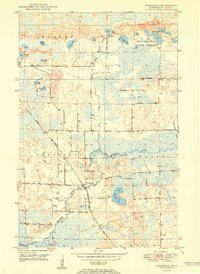 1950 Embarrass1950 Print · USGSSt. Louis County in the post-war era reveals a landscape of Iron Range rail lines and northern forests. Genealogists and local historians can trace the early layout of Embarrass, the location of School No 70, and dozens of named water bodies like Heikkilla Lake.
 - 1950 Map of Aurora
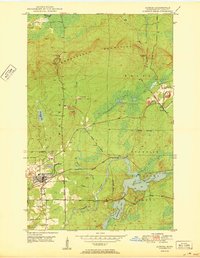 1950 Aurora1950 Print · USGSThe Mesaba Iron Range was at a peak of industrial activity in the mid-twentieth century when this survey was conducted. Historians can trace the massive excavations of the St James Pit and Miller Pit alongside the rail-dependent settlements of Aurora and Old Mesaba.2 unique versions available
 - 1950 Map of Biwabik, 1959 Print
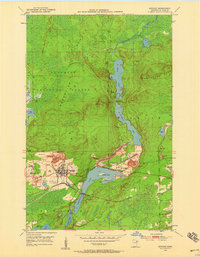 1950 Biwabik1959 Print · USGSIn the heart of the Mesabi Range during the mid-century mining boom, this map shows a landscape transformed by massive pits and rail lines. Genealogists and industrial historians can locate old company towns like Pineville and Belgrade or trace the early operations of the Canton Mine and Erie Mine.5 unique versions available
 - 1950 Map of Biwabik NE, 1963 Print
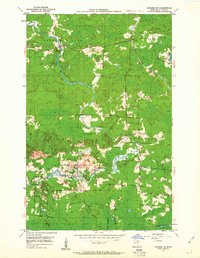 1950 Biwabik NE1963 Print · USGSSt. Louis County's Iron Range is captured here in the early postwar era as the region's rail and river networks supported a mix of forest industry and rural life. Researchers can trace the paths of the Duluth Missabe and Iron Range and locate landmarks like Wahlsten, Salo Corner, and the Pike River Ch.4 unique versions available
 - 1951 Map of Biwabik
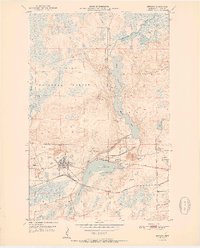 1951 Biwabik1951 Print · USGSMid-century mining on the Mesabi Range is captured here during a period of intense industrial activity and growth. Local historians can trace the footprints of the Biwabik Mine, the Duluth Missabe and Iron Range rail lines, and the Erie Mine works.2 unique versions available
 - 1951 Map of Biwabik NE
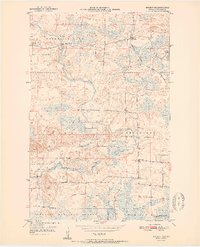 1951 Biwabik NE1951 Print · USGSSt. Louis County was a landscape of winding rivers and timbered iron country in the early fifties. Genealogists and historians can trace pioneer roots through family-named landmarks and local sites like Salo Corner, Pike River Ch, and the Old Vermilion Lake Cem.2 unique versions available
 - 1951 Map of Palo, 1952 Print
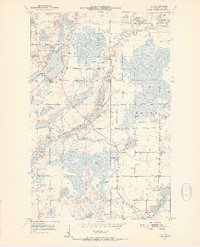 1951 Palo1952 Print · USGSMid-century St. Louis County is captured here as a landscape of iron-related industry and lakeside retreats. Genealogists and researchers can trace local family landmarks like Palo, Rauha Cem, and the old Loon Lake Sch.6 unique versions available
 - 1951 Map of Makinen, 1953 Print
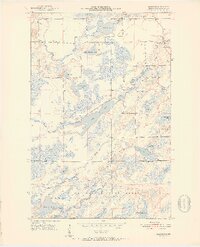 1951 Makinen1953 Print · USGSThe Iron Range region comes into focus during the early fifties, showing a landscape defined by timber and water. Genealogists and local historians can locate early structures like the Town Hall or trace the waterways of the Paleface River and Long Lake.5 unique versions available
 - 1954 Map of Hibbing, 1966 Print
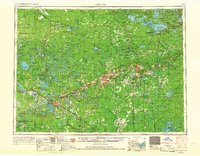 1954 Hibbing1966 Print · USGSNorthern Minnesota's Iron Range thrives during the mid-1960s, showing the industrial landscape between the Mesabi Range and the Mississippi River. Genealogists and historians can trace the rail lines of the Great Northern RR through mining hubs like Hibbing and Virginia.3 unique versions available
 - 1957 Map of Hibbing
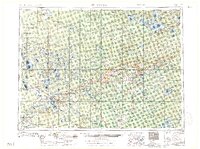 1957 Hibbing1957 Print · USGSNorthern Minnesota's Iron Range is shown at its industrial peak in the mid-fifties, dominated by the massive iron pits and rail corridors of the Mesabi Range. Researchers can trace the rail networks of the Duluth Missabe and Iron Range and locate mining hubs like Hibbing, Virginia, and Bovey.
 - 1957 Map of Markham, 1958 Print
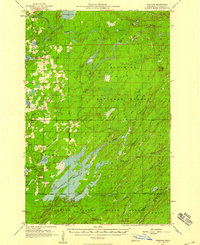 1957 Markham1958 Print · USGSSt. Louis County in the late fifties was a landscape of dense state forests and critical waterways supporting the regional Iron Range. Researchers can locate the settlement of Markham and trace the paths of the Duluth Missabe and Iron Range railroad and the sprawling Whiteface Reservoir.2 unique versions available
 - 1958 Map of Hibbing
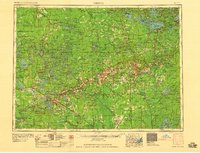 1958 Hibbing1958 Print · USGSThe Mesabi Iron Range reached its mid-century height during this era, defining the landscape between Grand Rapids and Virginia. Genealogists and historians can trace the mining-town networks of Hibbing and Chisholm or locate numerous iron mines and rail spurs.
End of results
Showing maps 1-12 of 12
Top cities near White Township
- Virginia historical maps
- Hoyt Lakes historical maps
- Gilbert historical maps
- Aurora historical maps
- Babbitt historical maps
- Biwabik historical maps
See more
Top neighborhoods of White Township
Frequently asked questions
- What are the different types of historical maps available for White Township?
- What is the oldest map of White Township?
- Where can I purchase historical maps of White Township for my home or office?
- Where can I download high-res historical maps of White Township?
- Are there historical topographic maps available for White Township?
- Is there historical aerial imagery available for White Township?
- Where are historical maps of White Township sourced from?