1900s (20th Century) Maps of Alberta, Minnesota
Explore 6 historic maps of Alberta from the 1900s (20th Century). These maps offer a rare glimpse into what life looked like during the 1900s — showing old roads, neighborhoods, homes, and landmarks that have changed or disappeared over time.
Whether you're researching your family's past, planning a metal detecting trip, or studying how Alberta's landscape evolved across the 1900s, these high-resolution maps are a powerful tool for exploring the history of this region.
- Focus on a specific era: All maps on this page are from the 1900s, giving you a focused view of this time period.
- See what’s changed: Compare century-old streets, trails, and buildings to today's modern landscape using overlays and satellite layers.
- Research with precision: Use these maps for genealogy, historical research, land use analysis, or educational projects.
- View, download, or print: Maps are fully viewable online in high resolution, and can be downloaded or printed for your own records.
Start exploring Alberta's history through authentic maps from the 1900s. This is your window into the past.
Alberta, MN maps
(6)- 1910 Map of Chokio, 1968 Print
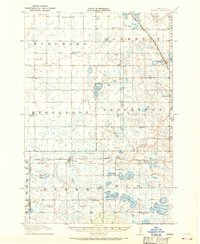 1910 Chokio1968 Print · USGSStevens County is shown here at the height of its rail-and-schoolhouse era in the early twentieth century. Genealogists can locate specific rural properties near landmarks like Harstad Slough, Town Hall, and over twenty numbered school sites including School No 35.
 - 1912 Map of Chokio
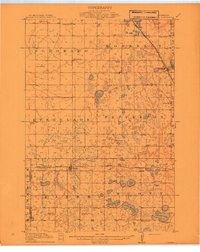 1912 Chokio1912 Print · USGSWestern Minnesota prairie life is centered on the rail lines of Donnelly and Chokio during the early twentieth century. Genealogists and researchers can trace local school districts from School No 56 to School No 42 and locate landmarks like the Town Hall and Harstad Slough.
 - 1953 Map of Milbank, 1958 Print
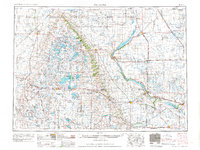 1953 Milbank1958 Print · USGSThe tri-state border region of South Dakota, North Dakota, and Minnesota is shown here during the early fifties, a landscape defined by glacial lakes and the Sisseton Indian Reservation. Researchers can trace the legacy of the western railroads, locating old stops along the Great Northern and settlements like Milbank, Webster, and Sisseton.3 unique versions available
 - 1958 Map of Milbank
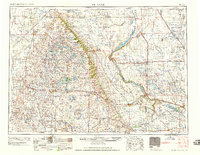 1958 Milbank1958 Print · USGSThe northern Great Plains in the late fifties show a landscape of glacial lakes and reservation lands shaped by the Great Northern railroad. Genealogists and local historians can trace the grid of settlements from Britton to Milbank and locate landmarks like Enemy Swim Lake and the Sisseton Indian Reservation.
 - 1973 Map of Alberta, 1975 Print
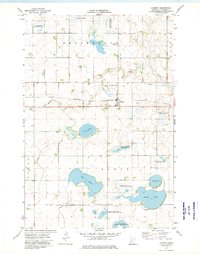 1973 Alberta1975 Print · USGSStevens County agriculture and conservation meet in the early seventies near the small rail town of Alberta. Genealogists and local researchers can trace the rural layout of Scott Twp, locating landmarks like the Townhall, Pepperton Ch Cem, and the Burlington Northern tracks.
 - 1985 Map of Wheaton
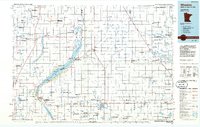 1985 Wheaton1985 Print · USGSThe tri-state border region of Minnesota and the Dakotas is captured in the mid-1980s, defined by its prairie wetlands and rail-fed farming towns. Researchers can trace the Burlington Northern line through Wheaton and Graceville or locate family-named landmarks like Carlson Island.2 unique versions available
End of results
Showing maps 1-6 of 6
Top cities near Alberta
- Morris historical maps
- Chokio historical maps
- Donnelly historical maps
- Fairfield historical maps
- Artichoke historical maps
Frequently asked questions
- What are the different types of historical maps available for Alberta?
- What is the oldest map of Alberta?
- Where can I purchase historical maps of Alberta for my home or office?
- Where can I download high-res historical maps of Alberta?
- Are there historical topographic maps available for Alberta?
- Is there historical aerial imagery available for Alberta?
- Where are historical maps of Alberta sourced from?