1960s Maps of Forrest County, Mississippi
Explore 11 historic maps of Forrest County from the 1960s. These maps offer a rare glimpse into what life looked like during the 1960s — showing old roads, neighborhoods, homes, and landmarks that have changed or disappeared over time.
Whether you're researching your family's past, planning a metal detecting trip, or studying how Forrest County's landscape evolved across the 1960s, these high-resolution maps are a powerful tool for exploring the history of this region.
- Focus on a specific era: All maps on this page are from the 1960s, giving you a focused view of this time period.
- See what’s changed: Compare century-old streets, trails, and buildings to today's modern landscape using overlays and satellite layers.
- Research with precision: Use these maps for genealogy, historical research, land use analysis, or educational projects.
- View, download, or print: Maps are fully viewable online in high resolution, and can be downloaded or printed for your own records.
Start exploring Forrest County's history through authentic maps from the 1960s. This is your window into the past.
Forrest County, MS maps
(11)- 1960 Map of Mobile
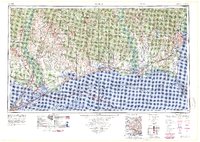 1960 Mobile1960 Print · USGSThe Gulf Coast at the dawn of the sixties shows a landscape of busy ports, military airbases, and barrier islands. Trace the rail lines of the Louisville & Nashville through BILOXI and Pascagoula or find family history in towns like Bayou La Batre and Poplarville.
 - 1963 Map of Mobile
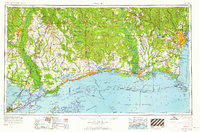 1963 Mobile1963 Print · USGSThe Gulf Coast at the dawn of the sixties shows a thriving maritime and military corridor from Louisiana to Alabama. Genealogists and historians can trace rail lines like the Louisville & Nashville RR and find landmarks from Brookley AFB to Fort Morgan.
 - 1963 Map of Barrontown, 1964 Print
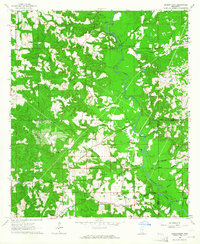 1963 Barrontown1964 Print · USGSThe rural piney woods at the junction of Jones, Forrest, and Perry Counties are documented here in the early 1960s. Genealogists and local historians can locate many family landmarks, from Macedonia Ch and Morriston to isolated burial sites like Barlow Cem.4 unique versions available
 - 1963 Map of Rock Hill, 1965 Print
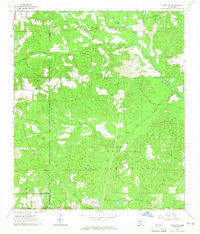 1963 Rock Hill1965 Print · USGSDeep in the Mississippi piney woods during the early sixties, this area shows a landscape defined by timber and rural faith. Researchers can trace family names and local landmarks like Rock Hill, Anderson Cem, and the Rock Hill Lookout Tower.3 unique versions available
 - 1964 Map of Carterville
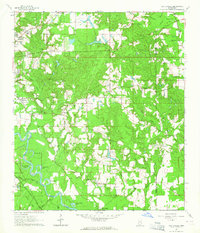 1964 Carterville1964 Print · USGSForrest County and the winding Leaf River basin are captured in the mid-1960s as rural settlements and river-valley industry coexisted. Genealogists can trace family landmarks like Sunrise Sch, Pine Grove Cem, and the tracks of the Bonhomie and Hattiesburg Southern Railroad.5 unique versions available
 - 1964 Map of Hattiesburg, 1965 Print
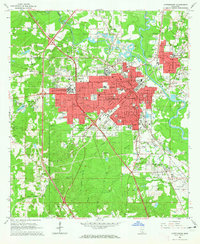 1964 Hattiesburg1965 Print · USGSHattiesburg flourished as a vital railway and educational crossroads in the mid-1960s. Genealogists and historians can trace the development of the University of Southern Mississippi and find vanished sites like Dixie Pine and Bonhomie.4 unique versions available
 - 1965 Map of Mobile
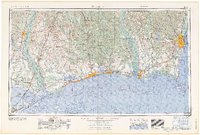 1965 Mobile1965 Print · USGSThe Gulf Coast at mid-century reveals a landscape of expanding ports and vital military installations from Louisiana to Alabama. Genealogists and historians can trace the growth of Biloxi, Pascagoula, and Mobile, alongside the sprawling De Soto National Forest.
 - 1965 Map of Hattiesburg SW, 1966 Print
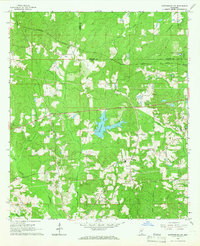 1965 Hattiesburg SW1966 Print · USGSLamar County in the mid-sixties shows the transition from rural timberland to growing communities along the MISSISSIPPI CENTRAL railroad. Researchers can trace family sites at Grantham Cem or explore early developments around Hennington Lake and Oak Grove.4 unique versions available
 - 1965 Map of Dixie, 1966 Print
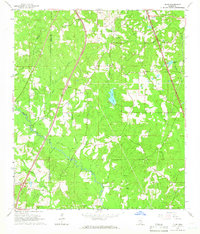 1965 Dixie1966 Print · USGSForrest and Lamar Counties are captured here in the mid-sixties, a time of transition between traditional rail routes and new interstate interchanges. Local historians can trace family roots through sites like Dixie Cem, Whites Chapel, and the Mineral Springs Church.3 unique versions available
 - 1965 Map of Eastabuchie, 1966 Print
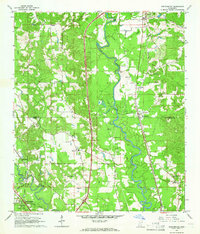 1965 Eastabuchie1966 Print · USGSThe Leaf River valley in the mid-sixties reveals a landscape of rural settlements and growing broadcast infrastructure along the Forrest and Jones county line. Genealogists can trace family names at Heidelberg Cem or Old Leeville Cem and locate community hubs like New Zion Ch and Eastabuchie.4 unique versions available
 - 1965 Map of Sanford, 1966 Print
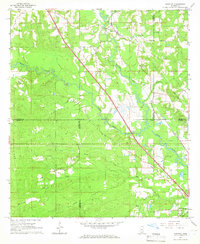 1965 Sanford1966 Print · USGSIn the mid-sixties, the confluence of Bowie Creek and Okatoma Creek anchored a rural landscape of dispersed settlements and rail-side hamlets. Genealogists can trace family landmarks like Byrd Cem and Lott Cem near the Illinois Central line.3 unique versions available
End of results
Showing maps 1-11 of 11
Top cities of Forrest County
Frequently asked questions
- What are the different types of historical maps available for Forrest County?
- What is the oldest map of Forrest County?
- Where can I purchase historical maps of Forrest County for my home or office?
- Where can I download high-res historical maps of Forrest County?
- Are there historical topographic maps available for Forrest County?
- Is there historical aerial imagery available for Forrest County?
- Where are historical maps of Forrest County sourced from?