Old Maps of Perry County, Mississippi
Explore 158 old maps of Perry County, spanning from 1947 to today. These high-resolution historic maps reveal how streets, neighborhoods, landmarks, and natural features evolved over time — perfect for genealogy, metal detecting, research, and local history exploration.
What you can do with these maps:
- See how Perry County changed over time: Compare historical maps to modern-day views to trace roads, homesites, rail lines & more.
- View detailed metadata: Each map includes creators, publishers, year, scale, and archive source.
- Overlay maps with satellite & LiDAR: Visualize the past alongside modern tools to explore terrain & human change.
- Trusted historical sources: Maps sourced from the USGS, Library of Congress, and other archives.
- Access maps your way: View online, download high-res files, or order prints for personal or research use.
Start exploring old maps of Perry County to uncover forgotten places, hidden landmarks, and the deep history beneath your feet.
Perry County, MS maps
(158)- 1947 Map of Beaumont, 1963 Print
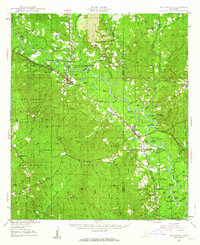 1947 Beaumont1963 Print · USGSPerry and Greene Counties are shown in the late 1940s, where the winding Leaf River and timber lands meet the De Soto National Forest. Trace family history through landmarks like McSwain Sch, Lott Cem, and the railroad junctions at Beaumont.2 unique versions available
 - 1947 Map of Wiggins, 1965 Print
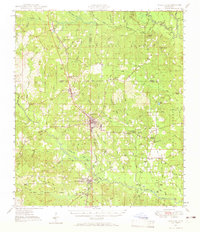 1947 Wiggins1965 Print · USGSSouthern Mississippi's timberlands and railroad towns are captured here in the late 1940s as the regional economy centers on the rails. Genealogists can locate family landmarks like Rosenwall Sch, New York Cem, and the small settlement of Perkinston.2 unique versions available
 - 1947 Map of New Augusta, 1965 Print
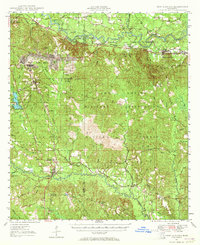 1947 New Augusta1965 Print · USGSThe mid-century landscape of Perry and Forrest Counties is defined here by the growth of Camp Shelby and the vast De Soto National Forest. Genealogists and historians can trace old family sites like Granny Bounds Cem and vanished landmarks like the abandoned CCC Camp.3 unique versions available
 - 1947 Map of Benndale, 1966 Print
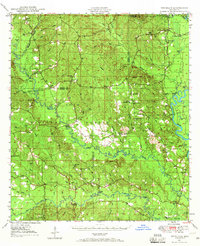 1947 Benndale1966 Print · USGSSoutheast Mississippi's piney woods and river bottoms are documented here just after the war. Researchers can locate family landmarks like Alexander Bridge, Indian Cem, and the community of Benndale amidst the Pascagoula River wetlands.2 unique versions available
 - 1949 Map of Wiggins
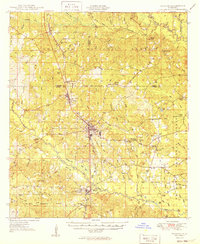 1949 Wiggins1949 Print · USGSStone and Forrest Counties are documented here in the late Forties, showing the rail-dependent timber and farming communities of the Pine Belt. Researchers can locate numerous country landmarks including St Paul Ch, Rosenwall Sch, and the Maxie Fire Tower.2 unique versions available
 - 1949 Map of Beaumont
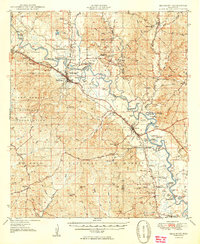 1949 Beaumont1949 Print · USGSSoutheastern Mississippi timber and rail networks thrive mid-century at the junction of the Leaf River and Gulf Mobile and Ohio railroad. Researchers can locate the Camp Shelby Military Reservation and historic sites like Avent Station and the Lott Cem.2 unique versions available
 - 1949 Map of New Augusta
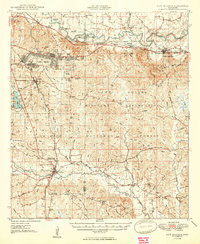 1949 New Augusta1949 Print · USGSIn the late 1940s, this area of southern Mississippi was defined by the intersection of military training at Camp Shelby and the lush De Soto National Forest. Researchers can trace rural life through landmarks like Old Augusta, McLaurin Landing Field, and the Barett Fire Tower.2 unique versions available
 - 1949 Map of Benndale
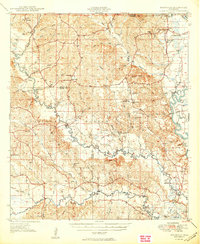 1949 Benndale1949 Print · USGSSoutheast Mississippi's piney woods and river bottoms come into focus in the late 1940s as the De Soto National Forest reaches across four counties. Researchers can trace the heritage of local settlements through Benndale, St Luke Ch, and several family cemeteries.2 unique versions available
 - 1953 Map of Hattiesburg, 1965 Print
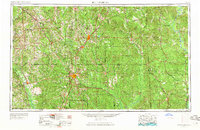 1953 Hattiesburg1965 Print · USGSSouth Mississippi and western Alabama are shown here during the mid-twentieth century as the timber and rail industries shaped the region. Genealogists and historians can trace rail lines like the Mississippi Central and locate rural centers such as Magee, Richton, and Mount Vernon.4 unique versions available
 - 1953 Map of Mobile, 1968 Print
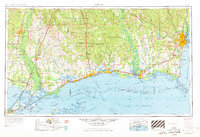 1953 Mobile1968 Print · USGSThe Gulf Coast comes alive in this mid-century survey, from the streets of Mobile to the marshes of New Orleans. Trace family roots in coastal towns like Pass Christian and Bayou La Batre or locate military landmarks including Keesler AFB.3 unique versions available
 - 1957 Map of Mobile
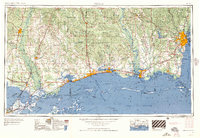 1957 Mobile1957 Print · USGSThe Gulf Coast in the mid-1950s reveals a bustling corridor of rail-and-river commerce connecting Alabama to Louisiana. Genealogists and historians can trace old settlements and military hubs from Keesler Afb to the coastal reaches of Ship Island and Bogalusa.3 unique versions available
 - 1958 Map of Hattiesburg
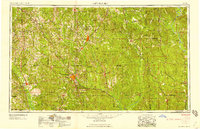 1958 Hattiesburg1958 Print · USGSSoutheastern Mississippi's timber and rail networks are at their peak during the late fifties, centered on the growing hubs of Hattiesburg and Laurel. Researchers can trace old family landmarks like Sims Chapel, the Busbey Game Refuge, and the vanished stops along the Mississippi Central railroad.2 unique versions available
 - 1960 Map of Mobile
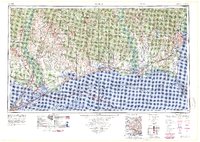 1960 Mobile1960 Print · USGSThe Gulf Coast at the dawn of the sixties shows a landscape of busy ports, military airbases, and barrier islands. Trace the rail lines of the Louisville & Nashville through BILOXI and Pascagoula or find family history in towns like Bayou La Batre and Poplarville.
 - 1963 Map of Mobile
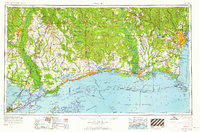 1963 Mobile1963 Print · USGSThe Gulf Coast at the dawn of the sixties shows a thriving maritime and military corridor from Louisiana to Alabama. Genealogists and historians can trace rail lines like the Louisville & Nashville RR and find landmarks from Brookley AFB to Fort Morgan.
 - 1963 Map of Barrontown, 1964 Print
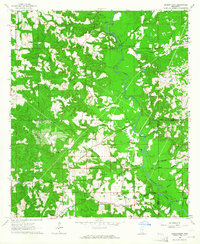 1963 Barrontown1964 Print · USGSThe rural piney woods at the junction of Jones, Forrest, and Perry Counties are documented here in the early 1960s. Genealogists and local historians can locate many family landmarks, from Macedonia Ch and Morriston to isolated burial sites like Barlow Cem.4 unique versions available
 - 1963 Map of Brewer, 1965 Print
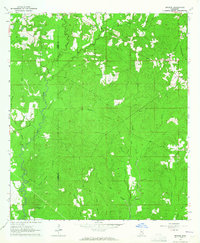 1963 Brewer1965 Print · USGSSoutheast Mississippi's piney woods and creek bottoms are meticulously detailed in this early 1960s survey of the Perry and Greene county border. Genealogists and local historians can trace family ties through Sand Hill Cem, Nazareth Ch, and the small settlement of Brewer.4 unique versions available
 - 1964 Map of Carterville
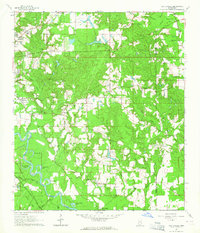 1964 Carterville1964 Print · USGSForrest County and the winding Leaf River basin are captured in the mid-1960s as rural settlements and river-valley industry coexisted. Genealogists can trace family landmarks like Sunrise Sch, Pine Grove Cem, and the tracks of the Bonhomie and Hattiesburg Southern Railroad.5 unique versions available
 - 1964 Map of Rhodes, 1965 Print
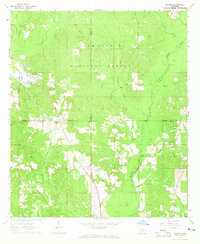 1964 Rhodes1965 Print · USGSSoutheast Mississippi's piney woods come into focus in the mid-1960s, showing the intersection of three counties and the timber-heavy landscape of the De Soto National Forest. Researchers can locate rural communities like Rhodes and Blodgett or trace family roots at Dykes Chapel and Brown Cem.3 unique versions available
 - 1964 Map of Ovett SE, 1965 Print
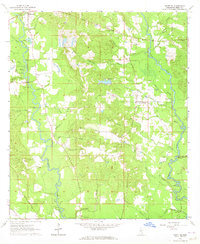 1964 Ovett SE1965 Print · USGSPerry County's rural landscape comes into focus during the mid-1960s, showing a region shaped by timber-rich creek bottoms and extractive gravel mining. Genealogists can trace family names at McGivary Cem or locate community centers like Runnelstown and Hickory Grove Ch.3 unique versions available
 - 1964 Map of Ovett, 1965 Print
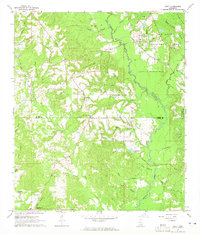 1964 Ovett1965 Print · USGSSoutheast Mississippi's piney woods and creek bottoms are documented here in the mid-1960s at the border of Jones and Perry Counties. Genealogists can locate family landmarks like Beech Cem and Lancaster Cem, or trace the Mobile and Ohio rail line through Ovett.3 unique versions available
 - 1964 Map of Richton, 1965 Print
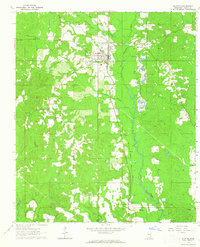 1964 Richton1965 Print · USGSPerry County in the early 1960s shows a landscape of rail-centered towns and family-named homesteads. Genealogists can trace local heritage through Isaiah Hinton Cem, McSwain, and country churches like Bethlehem Ch or New Zion Ch.3 unique versions available
 - 1964 Map of Mulberry, 1965 Print
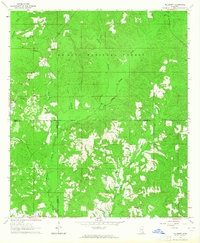 1964 Mulberry1965 Print · USGSSoutheast Mississippi's pine forests and county corners are captured in detail here during the mid-1960s. Genealogists and local historians can locate rural landmarks like Mulberry, Union Grove Ch, and the Hickory Grove Cem tucked within the De Soto National Forest.3 unique versions available
 - 1965 Map of Mobile
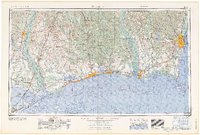 1965 Mobile1965 Print · USGSThe Gulf Coast at mid-century reveals a landscape of expanding ports and vital military installations from Louisiana to Alabama. Genealogists and historians can trace the growth of Biloxi, Pascagoula, and Mobile, alongside the sprawling De Soto National Forest.
 - 1982 Map of Barbara
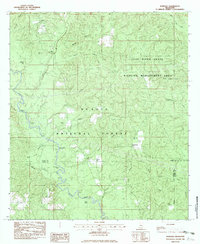 1982 Barbara1982 Print · USGSPerry and Stone Counties are shown in the early eighties as a region of managed timberland and river bottoms. Family historians can locate several rural burials including Fairley Cem and Cooper Cem, or trace the path of Black Creek past Fairley Bridge Landing.
 - 1982 Map of Neely
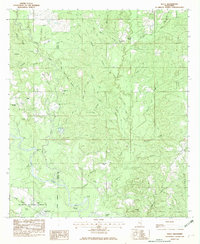 1982 Neely1982 Print · USGSGreene and Perry Counties are shown in the early eighties as the ILLINOIS CENTRAL GULF line moved through the DE SOTO NATIONAL FOREST. Researchers can trace rural lineages at Sylvester Cem or locate community hubs like Buffalo Ch and the settlement of Neely.
Showing maps 1-25 of 158
Top cities of Perry County
Frequently asked questions
- What are the different types of historical maps available for Perry County?
- What is the oldest map of Perry County?
- Where can I purchase historical maps of Perry County for my home or office?
- Where can I download high-res historical maps of Perry County?
- Are there historical topographic maps available for Perry County?
- Is there historical aerial imagery available for Perry County?
- Where are historical maps of Perry County sourced from?