Old Maps of Pontotoc County, Mississippi for Academic Research
Study the evolution of Pontotoc County with 103 high-resolution historic maps. Whether you're teaching, researching, or modeling changes in land use, these maps provide essential visual documentation of urban, environmental, and geographic change.
- Analyze long-term change: Track patterns in development, transportation, and natural features.
- Ideal for environmental or urban studies: Support academic projects with primary historical map data.
- Use in the classroom or lab: Educators and researchers rely on these maps to bring historical context to life.
These maps are a powerful tool for teaching, research, and visualizing how Pontotoc County has changed over the decades.
Pontotoc County, MS maps
(103)- 1949 Map of New Albany, 1964 Print
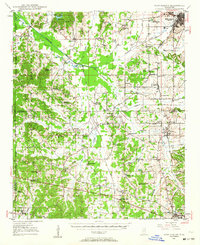 1949 New Albany1964 Print · USGSNorth Mississippi's rural landscape comes to life in the late 1940s as rail lines and river bottoms connect scattered farming communities. Researchers can trace the heritage of local crossroads and schools like Ingomar, Possum Trot, and Beulah Grove Sch.
 - 1951 Map of New Albany
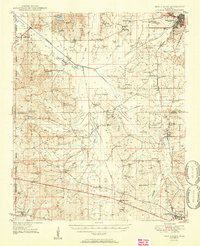 1951 New Albany1951 Print · USGSMississippi's hill country comes into focus in the early fifties, showing a landscape defined by the GULF MOBILE AND OHIO railroad and the Tallahatchie River. Researchers can trace rural lineages through numerous local sites like Possum Trot, Turnpike Ch, and Ingomar.2 unique versions available
 - 1955 Map of Sherman, 1956 Print
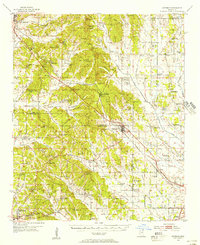 1955 Sherman1956 Print · USGSNortheast Mississippi in the mid-fifties is captured here as a landscape of small railway towns and rural crossroads along the St Louis San Francisco line. Genealogists can trace family landmarks like Cherry Creek Cem, Wallerville, and Rakestraw Mountain.2 unique versions available
 - 1956 Map of Tupelo, 1967 Print
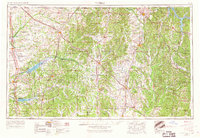 1956 Tupelo1967 Print · USGSNortheast Mississippi and parts of Tennessee and Alabama are shown here during the mid-fifties, a time of major reservoir construction and forestry management. Researchers can trace the St Louis-San Francisco RR through Tupelo or locate historic sites like Tishomingo State Park and the University.2 unique versions available
 - 1958 Map of Tupelo
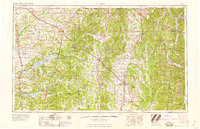 1958 Tupelo1958 Print · USGSNortheast Mississippi and neighboring Alabama and Tennessee appear here during the late fifties as a region defined by new reservoirs and historic rail lines. Genealogists can trace family locations near Sardis Lake, Woodall Mountain, and the St Louis-San Francisco Ry.
 - 1966 Map of Troy NW, 1967 Print
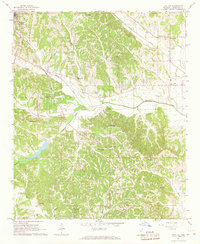 1966 Troy NW1967 Print · USGSPontotoc and its rural surroundings are captured in the mid-sixties, showing a landscape of deep creek valleys and ridge-top settlements. Genealogists can locate numerous country landmarks like College Hill Cem, Campground Ch, and the Friendship Cem.3 unique versions available
 - 1966 Map of Troy SE, 1967 Print
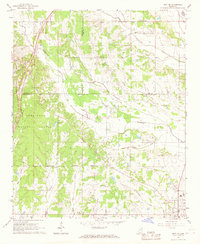 1966 Troy SE1967 Print · USGSThe outskirts of Okolona and the wooded expanses of the Tombigbee National Forest appear in the mid-1960s. Genealogists can locate rural landmarks like Union Chapel, Snow Town Ch, and the small settlement of Bethany.3 unique versions available
 - 1966 Map of Bissell, 1967 Print
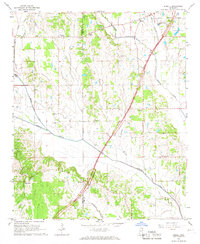 1966 Bissell1967 Print · USGSLee County rural life and the fringes of Tupelo come into focus in the mid-1960s. Genealogists can trace family names at Bass Cem and Pontocola Cem or locate rural landmarks like Woodland School and Valley Grove Ch.3 unique versions available
 - 1966 Map of Troy, 1967 Print
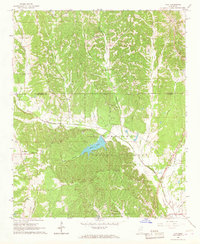 1966 Troy1967 Print · USGSChickasaw and Pontotoc counties appear here in the mid-1960s, a landscape shaped by the Tombigbee National Forest and the Natchez Trace Parkway. Genealogists and historians can trace local roots through sites like Old Houlka, the ancient Indian Mounds, and rural congregations at Shiloh Ch.3 unique versions available
 - 1972 Map of Houlka, 1974 Print
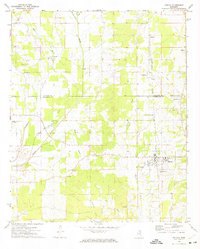 1972 Houlka1974 Print · USGSThe crossroads at Houlka and the neighboring hamlets of Wallfield and Gershorm are captured here during the early seventies. Genealogists can trace family footprints across several historic sites, including the Cooke Cem, Beckham Sch, and Schooner Valley Ch.
 - 1972 Map of Robbs, 1974 Print
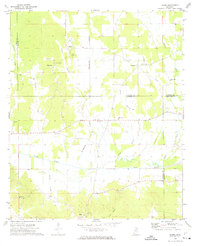 1972 Robbs1974 Print · USGSThis rural Mississippi landscape at the junction of three counties features the scattered communities and church-centered social life of the early 1970s. Researchers can locate family landmarks such as Robbs Chapel, Indian Creek Cem, and the settlement of Reid.
 - 1972 Map of Randolph, 1974 Print
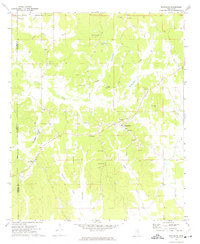 1972 Randolph1974 Print · USGSRandolph and the surrounding Pontotoc County countryside are shown here in the early 1970s as a network of small family farms and rural churches. Genealogists can trace family names through numerous local burial grounds including Salmon Cem and Harrison-Tutor Cem, or locate landmarks like Camp Yocona.
 - 1972 Map of Southwest Pontotoc, 1974 Print
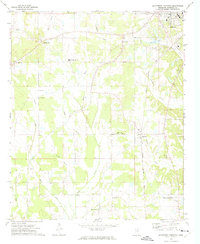 1972 Southwest Pontotoc1974 Print · USGSPontotoc County in the early seventies shows a landscape defined by the Gulf Central Illinois railroad and a deep network of rural congregations. Genealogists can locate family landmarks like Reynolds Chapel, Old Monroe Ch, and the settlement of Algoma.
 - 1980 Map of Northwest Pontotoc, 1981 Print
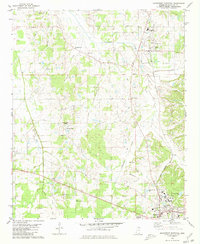 1980 Northwest Pontotoc1981 Print · USGSPontotoc and Ecru are captured here in the mid-1970s as agricultural traditions met modernizing infrastructure. Local researchers can trace family roots through sites like Weatherall Cem, Wardlow Cem, and the town center of Ecru.
 - 1980 Map of Thaxton, 1981 Print
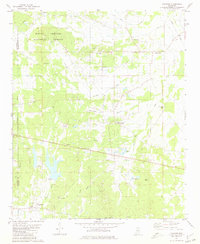 1980 Thaxton1981 Print · USGSNortheast Mississippi during the late seventies reveals a landscape of small agricultural hubs and national forest land. Researchers can pinpoint rural congregations and family cemeteries like Sand Spring Ch, Bellvue Ch, and Laodicea Cem.
 - 1980 Map of New Albany West, 1981 Print
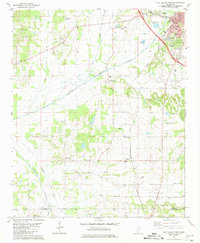 1980 New Albany West1981 Print · USGSUnion County during the early eighties showcases a landscape defined by the intersection of three major railroads and the waters of the Little Tallahatchie River. Trace family history through rural sites like Ingomar, the Union Hill Cem, and numerous country churches including Zion Chapel.
 - 1980 Map of New Albany East, 1981 Print
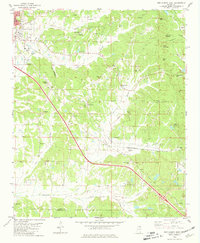 1980 New Albany East1981 Print · USGSNortheast Mississippi in the early eighties shows a landscape of rail-connected towns and rural hill country. You can trace the St Louis-San Francisco rail line through Wallerville or locate family markers at Oak Grove Ch Cem and Adair Cem.
 - 1980 Map of Northeast Pontotoc, 1981 Print
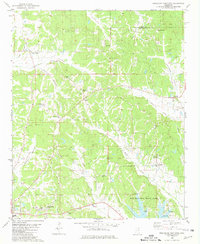 1980 Northeast Pontotoc1981 Print · USGSNortheast Mississippi in the 1980s reveals a rural landscape defined by historic creek bottoms and dispersed settlements. Genealogists and historians can trace family locations near Poplar Springs, Cherry Creek, and Spring Hill Cem while locating the route of the Old Natchez Trace Park.
 - 1980 Map of Etta, 1981 Print
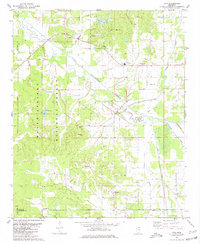 1980 Etta1981 Print · USGSNortheast Mississippi’s river bottoms and timberlands are well-preserved here in the early eighties, just as modern infrastructure began to weave through the forest. Genealogists can trace family footprints through numerous rural landmarks like West Union Sch, Salem Ch, and Friendship Cem.
 - 1980 Map of Sherman, 1981 Print
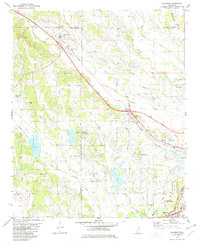 1980 Sherman1981 Print · USGSAs the Tupelo area expanded in the early eighties, this survey captures the rural character of the Lee, Union, and Pontotoc county lines. Genealogists and local historians can trace family plots at Union Cem or follow the old St Louis-San Francisco rail line through Sherman and Belden.
 - 1984 Map of Tupelo
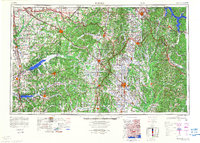 1984 Tupelo1984 Print · USGSNorth Mississippi in the 1980s is defined by its massive river basin reservoirs and the growing regional hubs of Tupelo and Oxford. Researchers can trace the legacy of the Pontotoc Ridge, find the University of Mississippi, and map early Interstate corridors near Sardis Lake.3 unique versions available
 - 1984 Map of Tupelo, 1985 Print
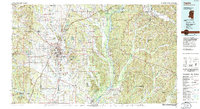 1984 Tupelo1985 Print · USGSNortheast Mississippi and the Alabama borderlands are shown in the mid-1980s as timber and river networks shaped the region. Trace local history through the Illinois Central Gulf rail line and sites like the Old Natchez Trace Parkway.
 - 1984 Map of Oxford, 1985 Print
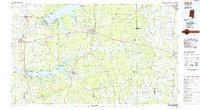 1984 Oxford1985 Print · USGSOxford and its surrounding hill country are captured in the mid-eighties as university life and rural industry intersected. Genealogists and historians can trace rail lines like the ST LOUIS-SAN FRANCISCO RY and locate old rural centers such as College Hill Sta and Lafayette Springs.
 - 1990 Map of Oxford, 1991 Print
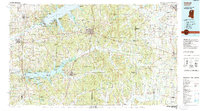 1990 Oxford1991 Print · USGSNorth Mississippi at the start of the nineties centers on the university town of Oxford and the large reservoirs of the Tallahatchie River valley. Researchers can trace the Illinois Central Gulf RR through towns like Water Valley and locate landmarks such as College Hill Sta.
 - 2000 Map of Troy, 2002 Print
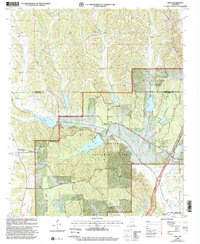 2000 Troy2002 Print · USGSThe hill country of Chickasaw and Pontotoc counties is shown here at the turn of the millennium, centered on the protected lands of the Tombigbee National Forest. Researchers can locate historic rural congregations and sites like the Owl Creek Indian Mounds, Old Houlka, and Toxish Ch.
Showing maps 1-25 of 103
Top cities of Pontotoc County
- Pontotoc historical maps
- Ecru historical maps
- Algoma historical maps
- Thaxton historical maps
- Toccopola historical maps
Frequently asked questions
- What are the different types of historical maps available for Pontotoc County?
- What is the oldest map of Pontotoc County?
- Where can I purchase historical maps of Pontotoc County for my home or office?
- Where can I download high-res historical maps of Pontotoc County?
- Are there historical topographic maps available for Pontotoc County?
- Is there historical aerial imagery available for Pontotoc County?
- Where are historical maps of Pontotoc County sourced from?