Old Maps of Cedar County, Missouri
Explore 114 old maps of Cedar County, spanning from 1886 to today. These high-resolution historic maps reveal how streets, neighborhoods, landmarks, and natural features evolved over time — perfect for genealogy, metal detecting, research, and local history exploration.
What you can do with these maps:
- See how Cedar County changed over time: Compare historical maps to modern-day views to trace roads, homesites, rail lines & more.
- View detailed metadata: Each map includes creators, publishers, year, scale, and archive source.
- Overlay maps with satellite & LiDAR: Visualize the past alongside modern tools to explore terrain & human change.
- Trusted historical sources: Maps sourced from the USGS, Library of Congress, and other archives.
- Access maps your way: View online, download high-res files, or order prints for personal or research use.
Start exploring old maps of Cedar County to uncover forgotten places, hidden landmarks, and the deep history beneath your feet.
Cedar County, MO maps
(114)- 1886 Map of Nevada
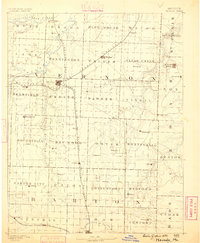 1886 Nevada1886 Print · USGSRailroads and river valleys define southwestern Missouri in the late nineteenth century, as the landscape transitions into a series of organized townships and trade centers. Genealogists and local historians can trace early settlements like Moundville, Montevallo, and El Dorado Springs along the Missouri Pacific Railroad.
 - 1886 Map of Stockton
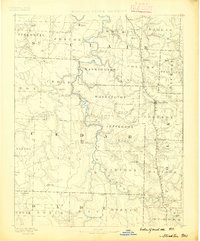 1886 Stockton1886 Print · USGSSouthwest Missouri in the mid-1880s was a landscape of river-bottom farms and emerging rail towns along the Kansas City Clinton and Springfield R. R. Trace vanished post offices and local landmarks like Johnson's Mill, Dunnegan Springs, and the early streets of Stockton.3 unique versions available
 - 1894 Map of Nevada
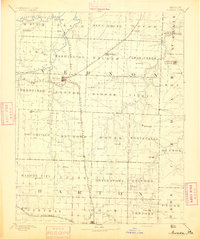 1894 Nevada1894 Print · USGSWestern Missouri at the end of the nineteenth century is defined here by its emerging rail towns and expansive prairie townships. Genealogists and local historians can trace the early development of Nevada and Lamar alongside smaller settlements like Montevallo and El Dorado Springs.5 unique versions available
 - 1937 Map of Tiffin
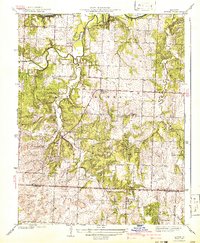 1937 Tiffin1937 Print · USGSSt. Clair County in the 1930s is a landscape of scattered family farms and quiet crossroads. Genealogists can trace rural life through numerous landmarks like Tiffin, Union Point Ch, and family burial sites including Landers Cem and Preston Cem.2 unique versions available
 - 1938 Map of Roscoe, 1952 Print
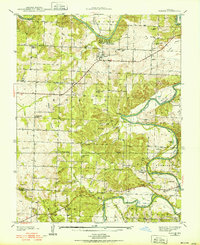 1938 Roscoe1952 Print · USGSThe confluence of the Osage River and Sac River dominates this Missouri landscape in the late 1930s. Genealogists can trace early family sites across dozens of local landmarks, from the Mt. Olive Ch to the Fraley Cem and Green Valley Sch.
 - 1939 Map of Caplinger Mills, 1941 Print
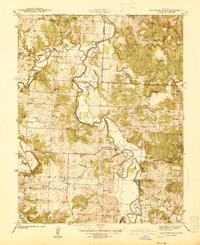 1939 Caplinger Mills1941 Print · USGSThe Sac River valley in Cedar County was a landscape of small schools and family cemeteries just before the Second World War. Researchers can locate family landmarks like Leila Store, the Old Union Ch, and the many rural schools including Spring Valley Sch.4 unique versions available
 - 1939 Map of Eldorado Springs North, 1959 Print
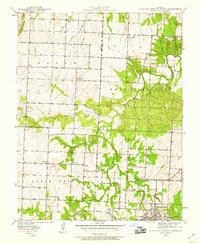 1939 Eldorado Springs North1959 Print · USGSMissouri's western borderlands come to life in the late 1930s, showing a landscape of small school districts and creekside farms. Genealogists can trace family roots at Lefler Cem, Oak Grove Ch, and schools like Jackson Sch or Union Sch.2 unique versions available
 - 1939 Map of Arnica, 1965 Print
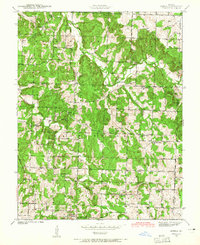 1939 Arnica1965 Print · USGSCedar County at the end of the 1930s shows a landscape filled with small school districts and rural crossroads. Local historians can trace early community hubs like Williams Store, the hamlet of Arnica, and numerous country schools such as Shady Hill Sch.2 unique versions available
 - 1939 Map of Filley, 1966 Print
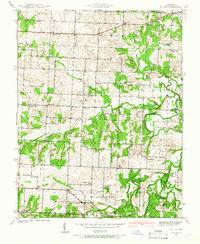 1939 Filley1966 Print · USGSCedar County rural life is captured here in the late 1930s, showing a landscape of small settlements and family farms. Genealogists can trace local roots through numerous landmarks like Vandenburg Cem, Hazel Dell Sch, and the crossroads at Filley.2 unique versions available
 - 1939 Map of Eldorado Springs South, 1966 Print
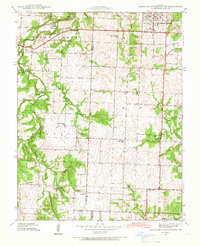 1939 Eldorado Springs South1966 Print · USGSMissouri's southwestern borderlands are captured here in the late thirties, showing a landscape defined by small-town life and rural school districts. Genealogists can locate Mt Pleasant Cem and local landmarks like Nine Wonders Sch or White Hall Ch.2 unique versions available
 - 1940 Map of Roscoe
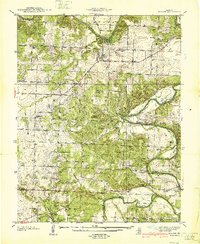 1940 Roscoe1940 Print · USGSThe Osage and Sac rivers meet in this late 1930s Missouri survey, capturing the rural riverfront settlements of St. Clair and Cedar counties. Genealogists can trace family footprints at Roscoe Cem, Hardyville, and country schools like Motley Sch.2 unique versions available
 - 1940 Map of Filley
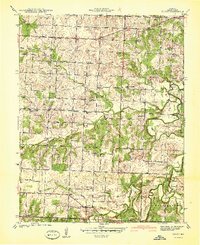 1940 Filley1940 Print · USGSCedar County was a landscape of remote farmsteads and scattered rural schools at the end of the Depression. Genealogists can trace family footprints across dozens of local landmarks, from the Wright Cem and Tennessee Cem to the crossing at Ivy Bridge.2 unique versions available
 - 1941 Map of Caplinger Mills
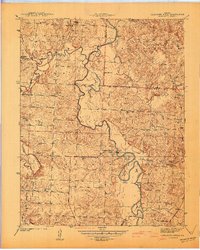 1941 Caplinger Mills1941 Print · USGSThe rural landscape of Cedar County and St. Clair County is meticulously detailed in the early 1940s, centered on the winding Sac River. Researchers can trace the heritage of local families through landmarks like Caplinger Mills, Old Union Ch, and numerous country schools such as Flatrock Sch.
 - 1941 Map of Tiffin
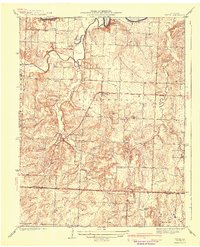 1941 Tiffin1941 Print · USGSThe rural borderlands of St. Clair and Cedar County come into focus in the years before World War II. Local researchers can trace the locations of numerous vanished schoolhouses like Arrarat Sch and early cemeteries including Union Point Cem and Preston Cem.2 unique versions available
 - 1941 Map of Eldorado Springs North
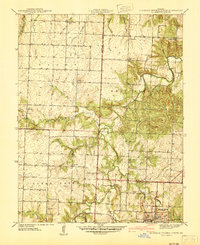 1941 Eldorado Springs North1941 Print · USGSSouthwestern Missouri is captured here in the late thirties and early forties, showing the rural landscapes of St. Clair and Cedar Counties. Researchers can trace the rail-era footprint of Eldorado Springs and locate local landmarks like Lefler Cem and Forest Grove Sch.
 - 1941 Map of Arnica
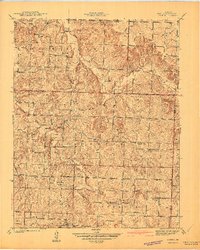 1941 Arnica1941 Print · USGSRural Cedar and St. Clair counties are mapped here just before the Second World War, showing a landscape defined by small farmsteads and creek valleys. Researchers can trace family history through a high density of rural schools and churches like Harvard Sch, Sheek Cem, and Hickory Grove Ch.2 unique versions available
 - 1942 Map of Eldorado Springs South
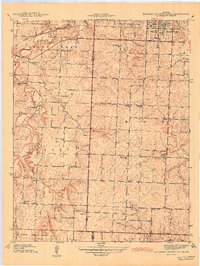 1942 Eldorado Springs South1942 Print · USGSCedar County and Vernon County are captured here just before the war, when small rural schools and churches still anchored every few miles. Trace family roots at Clintonville, Virgil City, or local landmarks like Nine Wonders Sch and Sulphur Springs Ch.
 - 1947 Map of Joplin, 1954 Print
 1947 Joplin1954 Print · USGSThe borderlands of Missouri, Kansas, and Oklahoma are shown here during the late 1940s, a period of heavy industrial and military activity. Researchers can trace the extensive Tri-State Mining District, the layout of Camp Crowder, and local landmarks like Mount Hope Cem.
 - 1949 Map of Joplin
 1949 Joplin1949 Print · USGSThe Kansas-Missouri borderlands thrive in the late 1940s, showing a robust network of railroad towns and river valleys. Researchers can trace historic rail lines like the Missouri Pacific RR and locate rural centers such as Chanute, Iola, and Fort Scott.
 - 1949 Map of Tiffin, 1955 Print
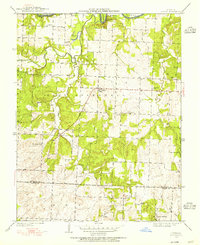 1949 Tiffin1955 Print · USGSThe Osage River country in the late 1940s reveals a landscape of isolated farmsteads and rural school districts across the St. Clair and Cedar county line. Genealogists can trace family roots through several landmarks like Landers Cem, Pape Ch, and Arrarat Sch.2 unique versions available
 - 1954 Map of Springfield
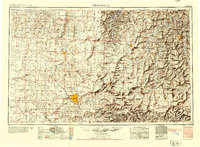 1954 Springfield1954 Print · USGSThe Missouri Ozarks are captured here during the post-war era, showing the expansion of Springfield and the surrounding river valleys. Genealogists and historians can trace local landmarks like Mount Comfort Cemetery and the Fort Leonard Wood military grounds.6 unique versions available
 - 1954 Map of Joplin, 1967 Print
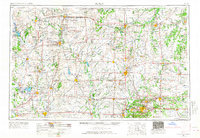 1954 Joplin1967 Print · USGSThe tri-state border region of Kansas, Missouri, and Oklahoma is captured here during a peak era of mid-century industrial and agricultural activity. Researchers can trace family history through dozens of rural cemeteries or locate landmarks like the Kansas Army Ammunition Plant and Pittsburg State University.3 unique versions available
 - 1956 Map of Fair Play, 1957 Print
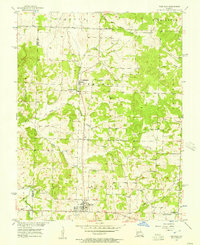 1956 Fair Play1957 Print · USGSThe Polk County countryside near Fair Play is captured here in the mid-1950s. Genealogists can locate several family landmarks including Pickel Cem, Dunnegan Cem, and the Woodlawn Sch.2 unique versions available
 - 1956 Map of Stockton, 1957 Print
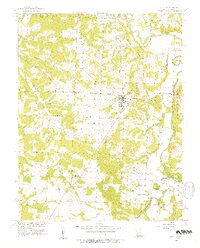 1956 Stockton1957 Print · USGSMid-century Cedar County is captured here just before major landscape changes, centered on the courthouse town of Stockton. Researchers can trace old family roots at Pankey Cem, visit the settlement of Umber, or locate rural congregations like Gum Springs Ch.3 unique versions available
 - 1956 Map of Bearcreek, 1957 Print
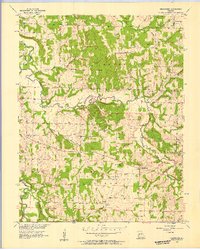 1956 Bearcreek1957 Print · USGSThe rural borderlands of Cedar and Polk counties are captured here in the mid-1950s, showing a landscape of scattered farmsteads and creek-side settlements. Local historians can trace family roots through landmarks like Friendship Community Hall, Bearcreek, and the Lindley Prairie Ch.3 unique versions available
Showing maps 1-25 of 114
Top cities of Cedar County
- El Dorado Springs historical maps
- Stockton historical maps
- Jerico Springs historical maps
- Umber View Heights historical maps
Frequently asked questions
- What are the different types of historical maps available for Cedar County?
- What is the oldest map of Cedar County?
- Where can I purchase historical maps of Cedar County for my home or office?
- Where can I download high-res historical maps of Cedar County?
- Are there historical topographic maps available for Cedar County?
- Is there historical aerial imagery available for Cedar County?
- Where are historical maps of Cedar County sourced from?