Old Maps of Clinton County, Missouri for Metal Detecting
Plan your next treasure hunt with 85 historic maps of Clinton County. Find old homesites, ghost towns, trails, and gathering spots that may be lost to time — perfect for identifying promising metal detecting locations.
- Locate forgotten sites: Uncover places like long-lost settlements, abandoned rail lines, or gathering spots.
- Plan better hunts: Use map overlays combined with LiDAR or satellite views to narrow in on historically rich areas.
- Made for detectorists: Thousands of hobbyists use these maps to discover relics, coins, and hidden history.
Use these historic maps to boost your research and find new opportunities beneath the surface of Clinton County.
Clinton County, MO maps
(85)- 1890 Map of Kansas City
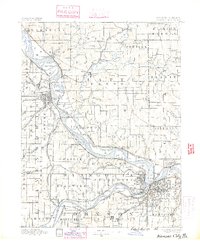 1890 Kansas City1890 Print · USGSThe Missouri River valley at the turn of the decade shows a booming rail-and-river economy centered on KANSAS CITY. Researchers can trace the early footprints of settlements like White Church, Lansing, and Smithville before modern expansion.2 unique versions available
 - 1894 Map of Kansas City
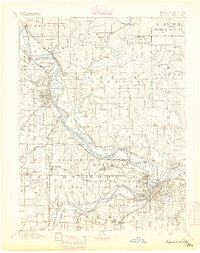 1894 Kansas City1894 Print · USGSThe Missouri River valley at the close of the nineteenth century was a bustling intersection of military life and frontier commerce. Genealogists can trace family roots through river towns like Weston and Parkville or locate early railroad hubs at Settles Station and Beverly Junction.14 unique versions available
 - 1894 Map of Independence
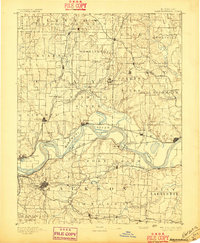 1894 Independence1894 Print · USGSThe river valley and rail corridors of western Missouri are captured in detail during the late nineteenth century. Researchers can trace the early layouts of Liberty and Independence alongside lost river features like Liberty Landing and Cooley Lake.5 unique versions available
 - 1914 Map of Smithville
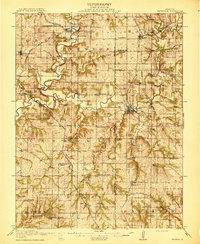 1914 Smithville1914 Print · USGSMissouri's northern river valleys are depicted here just before the Great War, showing a landscape of rail-dependent small towns and rural school districts. Genealogists can trace family footprints through numerous community landmarks like Paradise, Hixson Mill, and Mt. Zion School.4 unique versions available
 - 1924 Map of Polo
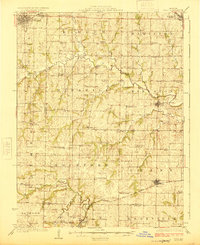 1924 Polo1924 Print · USGSCaldwell County rural life in the early twenties is centered around a dense network of school districts and small rail towns. Genealogists can trace family roots through dozens of local landmarks like Kendall Church, Yankee Ridge School, and the Stoner Bridge.2 unique versions available
 - 1925 Map of Gower
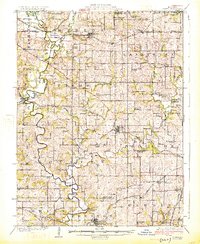 1925 Gower1925 Print · USGSClinton and Buchanan Counties at the mid-twenties are mapped here as a network of rail-side towns and small farm districts. Genealogists can locate dozens of rural landmarks like Matheys Mill, Blinkley Cem, and the many namesake schoolhouses such as Mc Gruhey School.3 unique versions available
 - 1925 Map of Plattsburg
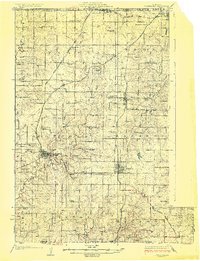 1925 Plattsburg1925 Print · USGSMid-1920s Clinton County is captured here at a peak of rural development, dominated by family farms and an extensive railroad network. Genealogists and historians can trace numerous country schools and churches like Log Church School and Smith Fork Church alongside the rail hubs of Plattsburg and Lathrop.4 unique versions available
 - 1936 Map of Kearney
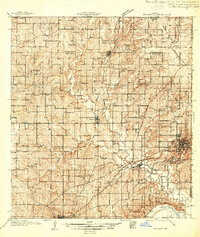 1936 Kearney1936 Print · USGSClay County at the height of the mid-thirties rural school era reveals a landscape of interconnected family farms and rail-stop towns. Researchers can trace ancestral locations through dozens of named landmarks like Mt Gilead Sch, Watkins Ch, and the original street grid of Kearney.
 - 1942 Map of Kearney, 1965 Print
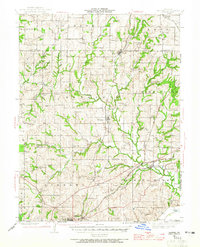 1942 Kearney1965 Print · USGSClay County at the onset of the 1940s is a landscape of established rail hubs and rural schoolhouses. Genealogists can trace family roots through dozens of local landmarks like Antioch Cem, Mt Gilead Sch, and the County Home.2 unique versions available
 - 1945 Map of Kearney
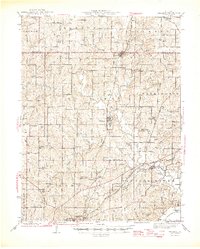 1945 Kearney1945 Print · USGSClay County farming communities thrive in the mid-1940s as rail lines connect rural outposts to the wider region. Genealogists can trace family footprints through dozens of local schools like Bodoc Sch and country churches such as Antioch Ch.2 unique versions available
 - 1950 Map of Kansas City
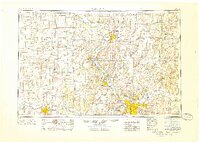 1950 Kansas City1950 Print · USGSMid-century Kansas and Missouri are captured here during a period of industrial growth and shifting transportation. Genealogists and historians can trace rail lines like the Wabash RR or locate ancestral homes near the Potawatomi Indian Reservation and Horton.
 - 1950 Map of Smithville
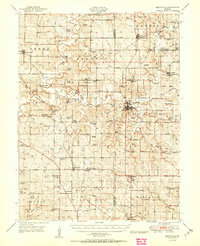 1950 Smithville1950 Print · USGSThe rural borderlands of Platte, Clay, and Clinton counties are shown here just after the war, defined by the winding Platte River and a network of small farm towns. Researchers can trace the locations of dozens of vanished schools and cemeteries, from the Masonic Cemetery to the South Gale School and the historic Covered Bridge.2 unique versions available
 - 1951 Map of Smithville
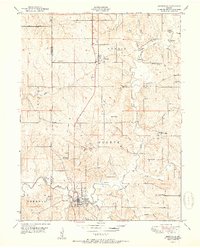 1951 Smithville1951 Print · USGSNorth of Kansas City in the early 1950s, this area shows a landscape of river-valley farms and small rural settlements. Researchers can locate numerous one-room schoolhouses like Rocky Point School and trace family-named landmarks such as Reed Cemetery and Rice Bridge.2 unique versions available
 - 1951 Map of Gower
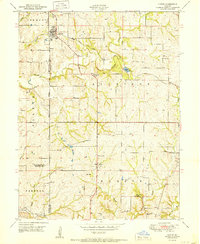 1951 Gower1951 Print · USGSGower and the surrounding Missouri townships appear here in the early fifties, showing a rural landscape organized by rail and stream. Genealogists can trace family names through landmarks like Allen Cem, Mt Carmel School, and Grayson.2 unique versions available
 - 1954 Map of Kansas City
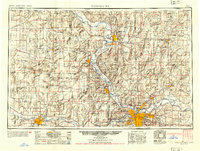 1954 Kansas City1954 Print · USGSThe Missouri-Kansas borderlands flourished in the post-war era as river commerce and rail networks converged at the Missouri River. Genealogists and historians can trace the foundations of Kansas City and smaller rural hubs like Hiawatha or Sabetha.
 - 1956 Map of Kansas City, 1967 Print
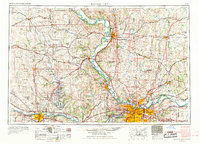 1956 Kansas City1967 Print · USGSThe Kansas-Missouri border region thrived during the mid-fifties, centered on the growing metropolitan cores and the busy river valleys. Researchers can trace the layout of significant government sites like Fort Leavenworth and the Lake City Army Ammunition Plant.4 unique versions available
 - 1957 Map of Lawson, 1958 Print
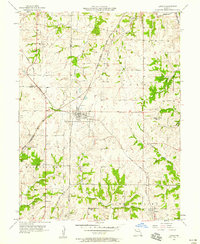 1957 Lawson1958 Print · USGSMid-century Lawson and Vibbard sit at the junction of two major rail lines as they cut through the tri-county corner of Clay, Clinton, and Ray. Family historians can locate rural landmarks like Canaan Hill Ch, Franklin Sch, and the Elmira Camp near the Crooked River.2 unique versions available
 - 1960 Map of Kansas City
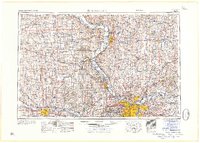 1960 Kansas City1960 Print · USGSMid-century Kansas and Missouri meet at the river forks, showing a sprawling rail-and-river economy during the 1950s growth era. Genealogists and researchers can trace tribal lands like the Kickapoo Indian Reservation or follow the early interstate corridors through Saint Joseph and Independence.3 unique versions available
 - 1961 Map of Smithville, 1962 Print
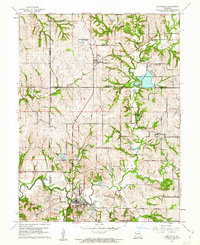 1961 Smithville1962 Print · USGSNorth of Kansas City in the early sixties, this area shows a landscape of river-bottom settlements and emerging wildlife management. Trace local genealogy and infrastructure through Reed Cem, the Old Railroad Grade, and the small communities of Mecca and Paradise.3 unique versions available
 - 1961 Map of Gower, 1962 Print
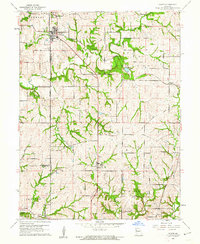 1961 Gower1962 Print · USGSClinton and Buchanan Counties come alive in the early sixties as rural crossroads and family homesteads define the landscape. Trace ancestral roots at Antioch Cem or follow the path of commerce along the Old Railroad Grade and Castile Creek.2 unique versions available
 - 1971 Map of Holt, 1973 Print
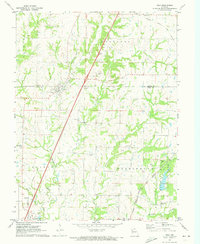 1971 Holt1973 Print · USGSCrossing the Clinton and Clay County border in the early seventies, this area shows a landscape of small farming communities and evolving rail lines. Genealogists can locate numerous family burial sites and rural landmarks like Antioch Cem, New Hope Ch, and Watkins State Park.
 - 1971 Map of Arley, 1973 Print
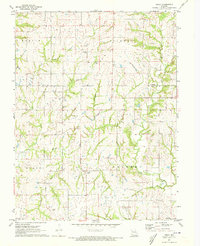 1971 Arley1973 Print · USGSClay and Clinton counties appear in the early 1970s as a landscape of rural hamlets and family farmsteads. Genealogists can trace decades of local history through numerous burial sites including Eberts, Mt Zion, and Fairview cemeteries.
 - 1971 Map of Hemple, 1973 Print
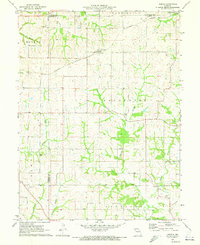 1971 Hemple1973 Print · USGSClinton and Buchanan counties are captured here in the early 1970s, showcasing a landscape of established farmsteads and rural townships. Researchers can trace family roots at Mt Zion Ch, Keller Cem, and along the Burlington Northern line.
 - 1978 Map of Lawson
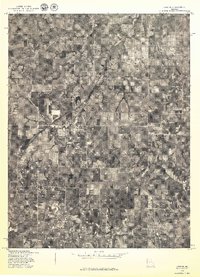 1978 Lawson1978 Print · USGSLawson and Vibbard are shown amidst the Missouri farm country during the late seventies, documented through detailed aerial imagery. Researchers can trace the mid-century layout of Lawson and identify the specific locations of rural homesteads near Vibbard.
 - 1978 Map of Gower
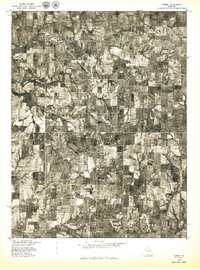 1978 Gower1978 Print · USGSGower and the surrounding Missouri farmlands are captured in the late seventies, showing the region's agricultural layout and rural road network. Researchers can trace land boundaries near Grayson or follow the meandering course of Castile Creek and the Little Platte.
Showing maps 1-25 of 85
Top cities of Clinton County
- Lathrop historical maps
- Plattsburg historical maps
- Gower historical maps
- Trimble historical maps
- Turney historical maps
- Grayson historical maps
Frequently asked questions
- What are the different types of historical maps available for Clinton County?
- What is the oldest map of Clinton County?
- Where can I purchase historical maps of Clinton County for my home or office?
- Where can I download high-res historical maps of Clinton County?
- Are there historical topographic maps available for Clinton County?
- Is there historical aerial imagery available for Clinton County?
- Where are historical maps of Clinton County sourced from?