1900s (20th Century) Maps of Dade County, Missouri
Explore 29 historic maps of Dade County from the 1900s (20th Century). These maps offer a rare glimpse into what life looked like during the 1900s — showing old roads, neighborhoods, homes, and landmarks that have changed or disappeared over time.
Whether you're researching your family's past, planning a metal detecting trip, or studying how Dade County's landscape evolved across the 1900s, these high-resolution maps are a powerful tool for exploring the history of this region.
- Focus on a specific era: All maps on this page are from the 1900s, giving you a focused view of this time period.
- See what’s changed: Compare century-old streets, trails, and buildings to today's modern landscape using overlays and satellite layers.
- Research with precision: Use these maps for genealogy, historical research, land use analysis, or educational projects.
- View, download, or print: Maps are fully viewable online in high resolution, and can be downloaded or printed for your own records.
Start exploring Dade County's history through authentic maps from the 1900s. This is your window into the past.
Dade County, MO maps
(29)- 1947 Map of Joplin, 1954 Print
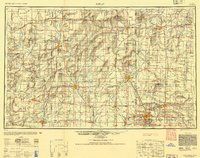 1947 Joplin1954 Print · USGSThe borderlands of Missouri, Kansas, and Oklahoma are shown here during the late 1940s, a period of heavy industrial and military activity. Researchers can trace the extensive Tri-State Mining District, the layout of Camp Crowder, and local landmarks like Mount Hope Cem.
 - 1949 Map of Joplin
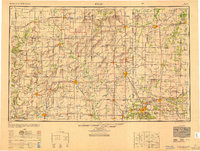 1949 Joplin1949 Print · USGSThe Kansas-Missouri borderlands thrive in the late 1940s, showing a robust network of railroad towns and river valleys. Researchers can trace historic rail lines like the Missouri Pacific RR and locate rural centers such as Chanute, Iola, and Fort Scott.
 - 1954 Map of Springfield
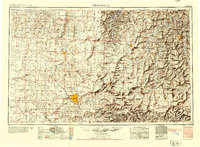 1954 Springfield1954 Print · USGSThe Missouri Ozarks are captured here during the post-war era, showing the expansion of Springfield and the surrounding river valleys. Genealogists and historians can trace local landmarks like Mount Comfort Cemetery and the Fort Leonard Wood military grounds.6 unique versions available
 - 1954 Map of Joplin, 1967 Print
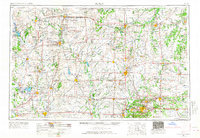 1954 Joplin1967 Print · USGSThe tri-state border region of Kansas, Missouri, and Oklahoma is captured here during a peak era of mid-century industrial and agricultural activity. Researchers can trace family history through dozens of rural cemeteries or locate landmarks like the Kansas Army Ammunition Plant and Pittsburg State University.3 unique versions available
 - 1955 Map of Dadeville, 1957 Print
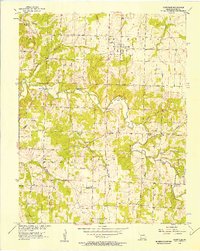 1955 Dadeville1957 Print · USGSDade County and Polk County are captured in the mid-1950s as a landscape of river-bottom farms and small rural congregations. Researchers can trace the heritage of Dadeville and locate historic markers like Hulston Mill and Logan Cem.2 unique versions available
 - 1956 Map of Ash Grove, 1957 Print
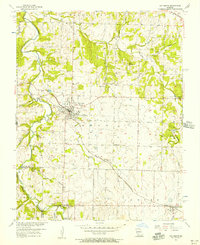 1956 Ash Grove1957 Print · USGSWestern Greene County in the mid-1950s is defined by the crossing of the St Louis San Francisco railroad and the winding Sac River. Genealogists can trace family footprints through sites like Hamilton Cem, Johns Chapel, and the established streets of Ash Grove.2 unique versions available
 - 1956 Map of Walnut Grove, 1957 Print
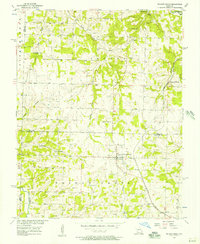 1956 Walnut Grove1957 Print · USGSWalnut Grove and the surrounding Missouri countryside are captured in the mid-fifties, during a time when rural life revolved around local churches and the railroad. Researchers can trace family roots at Green Lawn Cem, explore the old rail stop at Graydon Springs, or locate the Quarries at Phenix.2 unique versions available
 - 1956 Map of Kings Point, 1957 Print
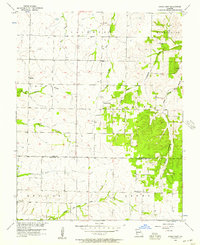 1956 Kings Point1957 Print · USGSThe rural borderlands of Dade and Lawrence counties come into focus during the mid-1950s. Genealogists and local historians can trace the early road networks connecting Meinert, Kings Point, and Round Grove, or locate the rural Salem Ch.
 - 1956 Map of Greenfield, 1957 Print
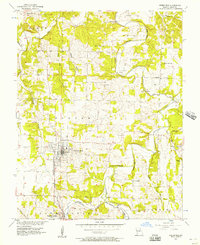 1956 Greenfield1957 Print · USGSMid-century Dade County centers on the busy trade hub of Greenfield as the rail-driven economy of South Greenfield takes shape to the south. Genealogists can trace family landmarks like Wetzel Cem, Carr Chapel, and the historic crossing at Fiddlers Ford.3 unique versions available
 - 1956 Map of Lockwood, 1957 Print
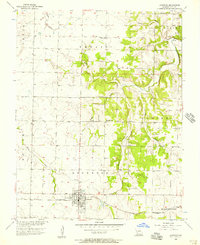 1956 Lockwood1957 Print · USGSThe Dade County prairie of the mid-fifties comes alive in this survey, showing the agricultural town of Lockwood and its rail connections. Genealogists can trace rural family landmarks like Mt Nebo Ch, Immanuel Cem, and the small settlement at Carson.
 - 1956 Map of Bona, 1957 Print
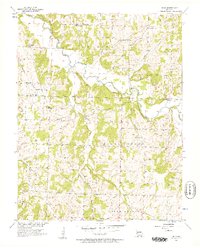 1956 Bona1957 Print · USGSNear the middle of the twentieth century, this portion of Dade County remained a landscape of riverside bluffs and tight-knit rural communities. Genealogists can trace family roots through numerous sites like Mt Carmel Ch, Fullington Cem, and Masters.3 unique versions available
 - 1956 Map of South Greenfield, 1957 Print
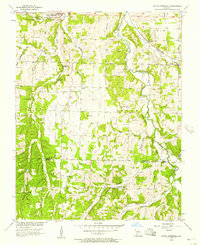 1956 South Greenfield1957 Print · USGSThe rural borderlands of Dade and Lawrence counties are shown here in the mid-fifties, centered on the railroad town of South Greenfield. Researchers can trace old family burial grounds like Daughtrey Cem and Merrick Cem or locate local landmarks like Dilday Mill and Carrico Caves.
 - 1956 Map of Cedarville, 1957 Print
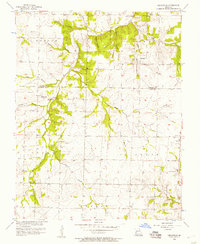 1956 Cedarville1957 Print · USGSThe borderlands of Cedar and Dade counties are captured here in the mid-1950s, showing a landscape defined by small farmsteads and creek-side settlements. Local historians can trace family locations near Cedarville, Omer, and several rural burial grounds like Hickory Grove Cem.
 - 1956 Map of Crisp, 1957 Print
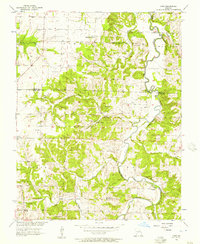 1956 Crisp1957 Print · USGSAcross the Cedar and Dade county line in the mid-fifties, this landscape reveals a network of river-bottom farms and rural crossroads. Researchers can locate remote burial sites like Ball Mound Cem and early community centers such as Crisp and Seybert.3 unique versions available
 - 1956 Map of Aldrich, 1957 Print
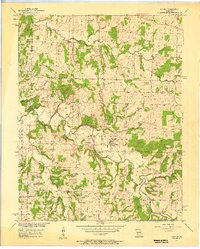 1956 Aldrich1957 Print · USGSThe river valleys of Polk and Dade Counties are shown here in the mid-1950s, centered on the Little Sac River. Local historians can trace a dense network of family landmarks and rural institutions, from Hubbard Cem to the Bear Creek Quarry.3 unique versions available
 - 1956 Map of Everton, 1957 Print
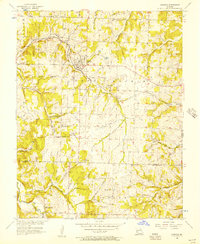 1956 Everton1957 Print · USGSEverton and the surrounding Rock Prairie uplands are captured here in the mid-fifties, showing the vital link between the St Louis San Francisco railroad and local agriculture. Researchers can trace rural life through sites like Hopewell Sch, Liberty Ch, and the Hood Cem.2 unique versions available
 - 1958 Map of Springfield
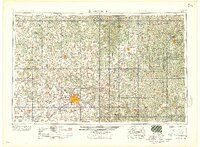 1958 Springfield1958 Print · USGSThe Missouri Ozarks are captured during the mid-century era of growth, centered on the bustling hub of Springfield. Genealogists and historians can trace family roots through numerous landmarks like Ebenezer Church, Stockton Cem, and the various county courthouses.
 - 1958 Map of Joplin
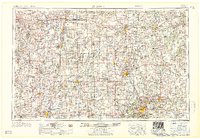 1958 Joplin1958 Print · USGSThe tri-state border region of Missouri, Kansas, and Oklahoma is shown during the late fifties, a time of heavy rail traffic and mining activity. Local historians can trace the industrial landscape through the Joplin & Pittsburg Ry or locate family sites like Zion Ch and Bender Mounds.
 - 1959 Map of Joplin
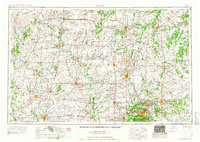 1959 Joplin1959 Print · USGSThe Tri-State region’s mining and rail-driven economy is on full display in the late fifties. Genealogists can locate Lead and Zinc Mines near Joplin, family markers at Oak Hill Cem, and military history at Camp Clark.
 - 1959 Map of Springfield
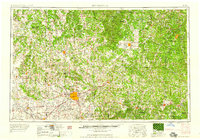 1959 Springfield1959 Print · USGSThe Missouri Ozarks are captured here during a decade of postwar growth and increasing highway connectivity. Researchers can trace the legacy of the St Louis-San Francisco RR and locate early sites in Springfield, Lebanon, and Mountain Grove.
 - 1962 Map of Jerico Springs, 1963 Print
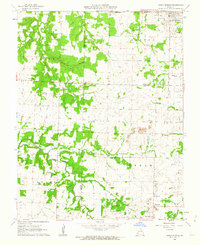 1962 Jerico Springs1963 Print · USGSThe rural borderlands of Cedar, Barton, and Dade Counties are captured here in the early sixties. Genealogists and local historians can locate family landmarks such as Round Prairie Sch, Greenfield Cem, and the church at Stony Point Ch.2 unique versions available
 - 1962 Map of Dudenville, 1963 Print
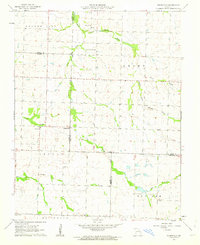 1962 Dudenville1963 Print · USGSSouthwest Missouri farmland and rural townships are captured here in the early 1960s at the junction of four counties. Genealogists and local historians can trace the foundations of Dudenville, the location of Unity Sch, and the grounds of Kistler Cem.2 unique versions available
 - 1962 Map of Golden City, 1964 Print
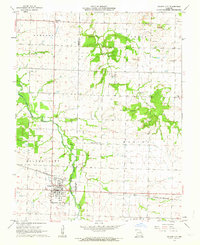 1962 Golden City1964 Print · USGSBarton and Dade counties come to life in the early sixties, showing a landscape defined by the Frisco railroad and the prairie. Trace family roots at Harlow-Wright Cem or explore the rural layout of Layneville and the industrial Strip Mines.
 - 1982 Map of Springfield, 1983 Print
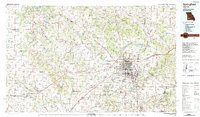 1982 Springfield1983 Print · USGSSpringfield and the surrounding Ozark plateau are captured in the early eighties as the region balanced urban growth with its agricultural roots. Genealogists and researchers can trace the locations of White Chapel, the State Sanatorium, and older rail stops like Brookline.
 - 1984 Map of Bolivar
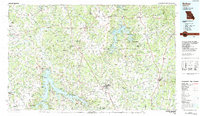 1984 Bolivar1984 Print · USGSWestern Missouri in the mid-eighties shows a landscape shaped by large-scale water management and rail commerce. Genealogists and historians can trace the development of towns like Bolivar and El Dorado Springs alongside the massive Stockton Lake.
Showing maps 1-25 of 29
Top cities of Dade County
- Greenfield historical maps
- Lockwood historical maps
- Everton historical maps
- Dadeville historical maps
- Pilgrim historical maps
- South Greenfield historical maps
See more
Frequently asked questions
- What are the different types of historical maps available for Dade County?
- What is the oldest map of Dade County?
- Where can I purchase historical maps of Dade County for my home or office?
- Where can I download high-res historical maps of Dade County?
- Are there historical topographic maps available for Dade County?
- Is there historical aerial imagery available for Dade County?
- Where are historical maps of Dade County sourced from?