1950s Maps of Howard County, Missouri
Explore 19 historic maps of Howard County from the 1950s. These maps offer a rare glimpse into what life looked like during the 1950s — showing old roads, neighborhoods, homes, and landmarks that have changed or disappeared over time.
Whether you're researching your family's past, planning a metal detecting trip, or studying how Howard County's landscape evolved across the 1950s, these high-resolution maps are a powerful tool for exploring the history of this region.
- Focus on a specific era: All maps on this page are from the 1950s, giving you a focused view of this time period.
- See what’s changed: Compare century-old streets, trails, and buildings to today's modern landscape using overlays and satellite layers.
- Research with precision: Use these maps for genealogy, historical research, land use analysis, or educational projects.
- View, download, or print: Maps are fully viewable online in high resolution, and can be downloaded or printed for your own records.
Start exploring Howard County's history through authentic maps from the 1950s. This is your window into the past.
Howard County, MO maps
(19)- 1952 Map of Rocheport, 1953 Print
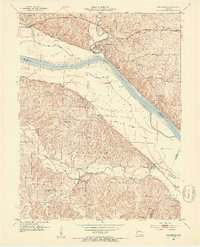 1952 Rocheport1953 Print · USGSThe river bluffs of Boone and Cooper County come alive in the early fifties, showing the vital junctions of the Missouri River and two major rail lines. Researchers can trace the layout of Rocheport, locate family sites like Gooch Mill, or find old rural landmarks like Highland Sch and Copp Chapel.4 unique versions available
 - 1952 Map of Boonville, 1953 Print
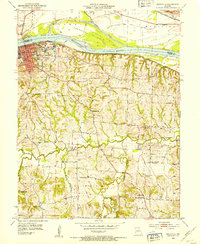 1952 Boonville1953 Print · USGSBoonville and the Missouri River valley are captured here in the early fifties during a period of shifting rural school populations. Researchers can trace institutional footprints like the Kemper Military Sch or find family history at Walnut Grove Cem and Clarks Fork.3 unique versions available
 - 1952 Map of New Franklin, 1953 Print
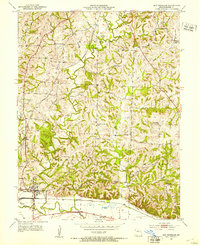 1952 New Franklin1953 Print · USGSHoward County's rail-and-river landscape comes alive in the early fifties, showing the transition from traditional rural schooling to a modernized infrastructure. Genealogists can trace family landmarks like Mt Zion Ch and schools including Spanish Needles Sch and Gray Sch.2 unique versions available
 - 1952 Map of Hilldale, 1953 Print
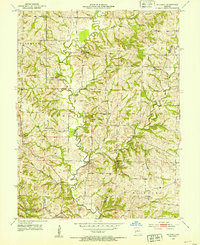 1952 Hilldale1953 Print · USGSThe rural borderlands of Howard and Boone counties are captured here in the early fifties, showing a landscape defined by winding creeks and a dense network of country schools. Researchers can trace local heritage through sites like Moniteau Chapel, Ricketts Cem, and the Union Sch house.2 unique versions available
 - 1953 Map of Moberly
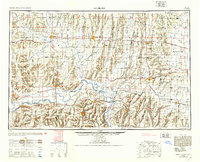 1953 Moberly1953 Print · USGSMid-century north-central Missouri is documented here as a bustling intersection of river commerce and heavy rail. Researchers can trace historic family-named landmarks and transport hubs from the Missouri River corridor to the rail yards of Moberly, Chillicothe, and Macon.
 - 1953 Map of Fayette, 1954 Print
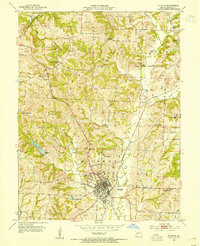 1953 Fayette1954 Print · USGSMid-century Howard County centered on the educational and cultural hub of Fayette. Local historians can trace a landscape of country schoolhouses and numerous family burial grounds like Walnut Ridge Cem and Pritchett Cem.3 unique versions available
 - 1953 Map of Billingsville, 1954 Print
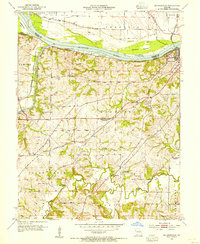 1953 Billingsville1954 Print · USGSMid-century Cooper County revolves around the convergence of the Missouri and Lamine rivers and a busy rail network. Genealogists can trace family footprints at Pheasant Hill Cem or locate rural landmarks like Billingsville Sch and Lamine.3 unique versions available
 - 1953 Map of Pilot Grove North, 1954 Print
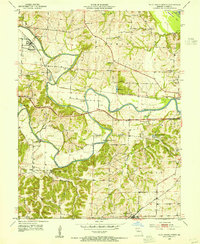 1953 Pilot Grove North1954 Print · USGSMid-century Cooper County centers on the convergence of the Lamine and Blackwater rivers during a time of rural transition. Genealogists can trace family sites like the Herndon Cem, St Martin Cem, and the now-abandoned Chouteau Sch (Abandoned).2 unique versions available
 - 1953 Map of Burton, 1954 Print
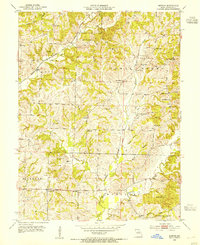 1953 Burton1954 Print · USGSMid-century Howard County is defined here by its network of rural schools and the Missouri Kansas and Texas rail line. Genealogists and local historians can trace family roots through numerous sites like the County Infirmary Cem, Log Chapel, and Punkin Center.3 unique versions available
 - 1953 Map of Renick, 1955 Print
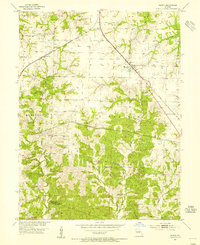 1953 Renick1955 Print · USGSMid-Missouri prairie life and rail history are captured here in the early fifties, centered on the Renick area. Researchers can trace genealogical sites like Hamilton Cem and the Wilson Sch, or follow the Wabash rail line through Harkes.3 unique versions available
 - 1953 Map of Higbee, 1955 Print
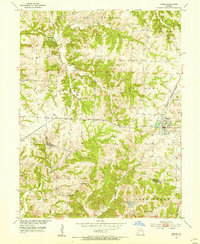 1953 Higbee1955 Print · USGSHigbee served as a busy railroad junction in the 1950s where two major lines intersected amidst the coal-bearing hills of Randolph County. Researchers can trace the industrial landscape through the Strip Mine and Mine Dump or locate family roots at Mt Ararat Ch and Bagby Cem.2 unique versions available
 - 1953 Map of Armstrong, 1955 Print
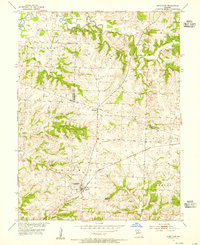 1953 Armstrong1955 Print · USGSHoward and Randolph counties come alive in the mid-1950s as the rail-driven economy of the Missouri interior is captured in fine detail. Genealogists can trace family footprints at Wesley Chapel Cem, Sharon Sch, and the busy rail hub of Armstrong.2 unique versions available
 - 1954 Map of Jefferson City
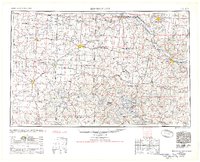 1954 Jefferson City1954 Print · USGSCentral Missouri in the early postwar years showcases a landscape defined by the winding Lake of the Ozarks and the state capital at Jefferson City. Researchers can trace the mid-century rail networks of the Missouri Pacific RR and locate rural communities like Tuscumbia, St Elizabeth, and St Anthony.2 unique versions available
 - 1954 Map of Moberly, 1969 Print
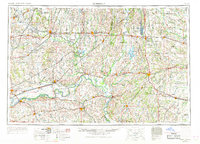 1954 Moberly1969 Print · USGSMid-century Missouri is captured here during a period of transition for its river towns and rail hubs. Genealogists and historians can trace the paths of the Wabash railroad through Moberly or explore the riverside layout of Lexington and Brunswick.3 unique versions available
 - 1955 Map of Jefferson City, 1967 Print
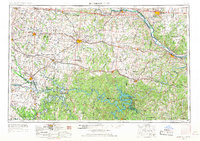 1955 Jefferson City1967 Print · USGSCentral Missouri in the mid-fifties is defined by the winding Missouri River and the expanding reach of Lake of the Ozarks. Researchers can trace the rail corridors of the Missouri Pacific or locate the early footprint of Whiteman AFB and Jefferson City.4 unique versions available
 - 1956 Map of Forest Green, 1957 Print
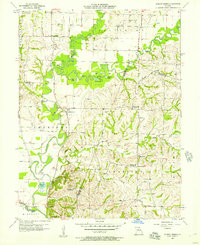 1956 Forest Green1957 Print · USGSMid-century Chariton County is defined here by the winding Little Chariton River and its sprawling network of rural schools and family cemeteries. Genealogists can trace sites like Lewis Mill, Nordmeyer Sch, and Marian Hill Ch.2 unique versions available
 - 1957 Map of Moberly
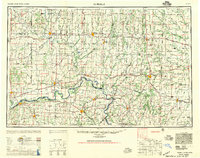 1957 Moberly1957 Print · USGSNorth-central Missouri in the late nineteen-forties and fifties remains a landscape defined by its great rivers and a dense network of steam and diesel rail lines. Genealogists and historians can trace the paths of the Wabash RR and Santa Fe RR through historic junctions like Moberly, Brookfield, and Macon.
 - 1958 Map of Jefferson City
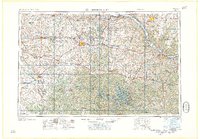 1958 Jefferson City1958 Print · USGSCentral Missouri in the late fifties shows a region transforming through the growth of Whiteman Air Force Base and the Lake of the Ozarks. Researchers can trace rail lines like the Missouri Pacific or find family roots at Enloe Cemetery and Mount Pleasant Cem.
 - 1959 Map of Jefferson City
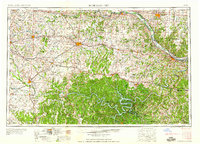 1959 Jefferson City1959 Print · USGSCentral Missouri is captured during the mid-fifties as the river economy and rail networks like the Missouri Pacific met the rise of the automobile. Local researchers can trace family landmarks and rural infrastructure from the Lake of the Ozarks up to Providence Cemetery and Knob Noster State Park.
End of results
Showing maps 1-19 of 19
Top cities of Howard County
- Fayette historical maps
- New Franklin historical maps
- Glasgow historical maps
- Armstrong historical maps
- Franklin historical maps
Frequently asked questions
- What are the different types of historical maps available for Howard County?
- What is the oldest map of Howard County?
- Where can I purchase historical maps of Howard County for my home or office?
- Where can I download high-res historical maps of Howard County?
- Are there historical topographic maps available for Howard County?
- Is there historical aerial imagery available for Howard County?
- Where are historical maps of Howard County sourced from?