Old Maps of Pemiscot County, Missouri
Explore 119 old maps of Pemiscot County, spanning from 1939 to today. These high-resolution historic maps reveal how streets, neighborhoods, landmarks, and natural features evolved over time — perfect for genealogy, metal detecting, research, and local history exploration.
What you can do with these maps:
- See how Pemiscot County changed over time: Compare historical maps to modern-day views to trace roads, homesites, rail lines & more.
- View detailed metadata: Each map includes creators, publishers, year, scale, and archive source.
- Overlay maps with satellite & LiDAR: Visualize the past alongside modern tools to explore terrain & human change.
- Trusted historical sources: Maps sourced from the USGS, Library of Congress, and other archives.
- Access maps your way: View online, download high-res files, or order prints for personal or research use.
Start exploring old maps of Pemiscot County to uncover forgotten places, hidden landmarks, and the deep history beneath your feet.
Pemiscot County, MO maps
(119)- 1939 Map of Portageville, 1941 Print
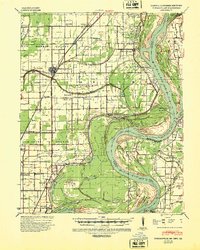 1939 Portageville1941 Print · USGSThe Missouri Bootheel meets the winding Mississippi River in the 1930s, showing a landscape defined by drainage bayous and new rail towns. Genealogists can locate family landmarks like Branham Cem and numerous rural schoolhouses including Walnut Grove Sch and Stanley Sch.2 unique versions available
 - 1939 Map of Caruthersville, 1943 Print
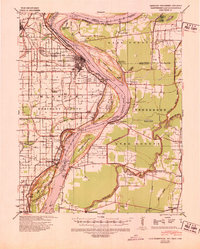 1939 Caruthersville1943 Print · USGSThe Missouri bootheel and Tennessee riverfront are documented here just before the Second World War, showing a landscape defined by the Mississippi's bends. Researchers can trace rural lineages through local landmarks like Mt Olive Ch & Sch, Mengelwood, and the many riverfront schools.2 unique versions available
 - 1939 Map of Blytheville, 1944 Print
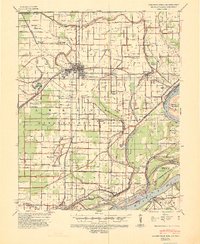 1939 Blytheville1944 Print · USGSMississippi County at the end of the Depression reveals a landscape of engineered drainage and thriving rail junctions. Genealogists and local historians can trace family locations near Blytheville, Cards Chapel & Cem, and the river landing at Ashport.
 - 1940 Map of Pascola, 1942 Print
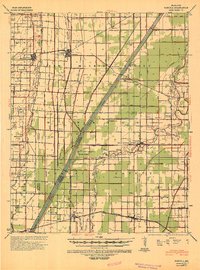 1940 Pascola1942 Print · USGSThe Missouri Bootheel is shown here during a period of massive land reclamation and rail-driven growth. Family historians can trace rural roots at Miller Sch, Mount Gilead Cem, and the timber-focused Lumber Yard in Gideon.
 - 1940 Map of Hayti, 1943 Print
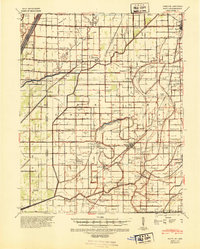 1940 Hayti1943 Print · USGSSoutheast Missouri’s fertile lowlands are captured here in the early 1940s, showing a landscape defined by drainage canals and rail-side commerce. Genealogists can trace family roots through numerous small schools and cemeteries, such as Cupp Cem and Gibson Sch.2 unique versions available
 - 1951 Map of Caruthersville, 1968 Print
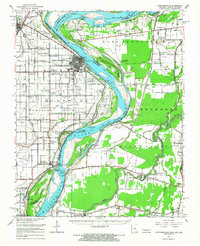 1951 Caruthersville1968 Print · USGSThe Missouri Bootheel meets the Tennessee bottomlands in the early fifties, revealing a landscape of river landings and levee-protected towns. Genealogists can trace family roots through sites like Needmore Cem & Ch, Indian Mound, and the old rail stops of the St Louis Southwestern.
 - 1955 Map of Pascola
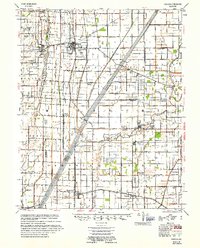 1955 Pascola1955 Print · USGSThe Missouri Bootheel in the mid-fifties reveals a landscape defined by an extensive drainage system and the St Louis San Francisco rail line. Researchers can trace rural life through sites like the Delmore Labor Home, Sumach Ch & Cem, and the Gideon Memorial Airport.
 - 1955 Map of Hayti
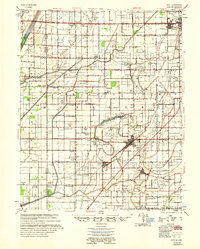 1955 Hayti1955 Print · USGSThe Missouri Bootheel comes into focus during the mid-fifties, showing a landscape defined by drainage ditches and rail-centered commerce. Researchers can find numerous rural landmarks like the Canady Switch Sch, Zion Rock Ch, and the County Farm Cem.
 - 1955 Map of Portageville
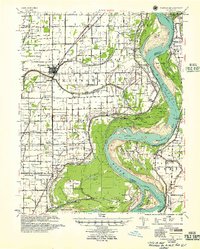 1955 Portageville1955 Print · USGSThe Missouri Bootheel and Tennessee borderlands are captured here in the mid-fifties, showing a landscape shaped by the Mississippi River. Researchers can trace old rural schoolhouses like LaFont Sch, family burial grounds such as Darnell Cem, and the rail-side growth of Portageville.
 - 1955 Map of Blytheville
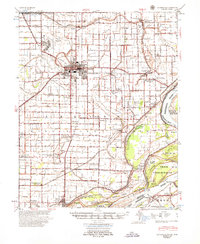 1955 Blytheville1955 Print · USGSMid-century Mississippi County, Arkansas, is shown here as a landscape of reclaimed delta land and bustling rail towns. Genealogists can trace family names through rural landmarks like Number Nine, Promised Land, and the O'Donald Bend Community.
 - 1956 Map of Dyersburg, 1960 Print
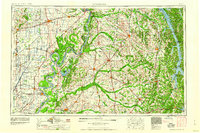 1956 Dyersburg1960 Print · USGSThe Four Rivers region comes alive in the mid-fifties, capturing the intricate borderlands of Tennessee, Kentucky, and Missouri. Genealogists and historians can trace the rail-and-river networks connecting Dyersburg, Caruthersville, and the shoreline of Reelfoot Lake.4 unique versions available
 - 1956 Map of Blytheville, 1964 Print
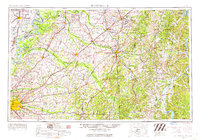 1956 Blytheville1964 Print · USGSWest Tennessee and the Arkansas Delta come alive in this mid-century survey of the river-and-rail corridor connecting Memphis to Jackson. Genealogists and historians can trace the rail lines of the Louisville and Nashville RR and locate landmarks like Western State Hospital or Fort Pillow State Prison Farm.2 unique versions available
 - 1957 Map of Caruthersville
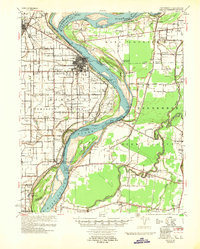 1957 Caruthersville1957 Print · USGSThe Mississippi River floodplain comes alive in the mid-1950s, detailing a landscape of revetments, dikes, and river landings. Genealogists can trace family roots through numerous rural landmarks like Speers Cem & Ch, Kinfolk Ridge, and Needmore.
 - 1959 Map of Blytheville
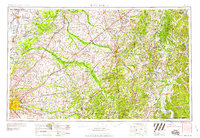 1959 Blytheville1959 Print · USGSWest Tennessee and Northeast Arkansas meet along the river in the late fifties, during a period of steady industrial and agricultural growth. Genealogists can trace the rail corridors of the Illinois Central through Jackson or explore landmarks like Shiloh National Military Park and Fort Pillow State Prison.
 - 1971 Map of Caruthersville SE, 1972 Print
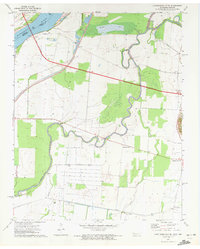 1971 Caruthersville SE1972 Print · USGSThe Mississippi River bottomlands of Dyer County come to life in this early 1970s survey of the Tennessee-Missouri border. Researchers can trace the rural landscape through family-centric hubs like Boothspoint, Mengelwood, and the Emmanuel Ch cemetery and church site.2 unique versions available
 - 1971 Map of Tennemo, 1972 Print
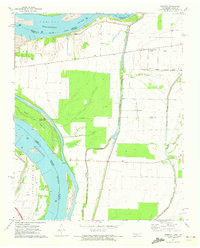 1971 Tennemo1972 Print · USGSThe Mississippi River bottoms of Lake County come into focus during the early 1970s, showing a landscape defined by levees and drainage bayous. Researchers can trace the layout of riverside hamlets like Tennemo and Owl Hoot, or locate the Cottonwood Ch near the Tennessee-Missouri border.2 unique versions available
 - 1971 Map of Caruthersville, 1973 Print
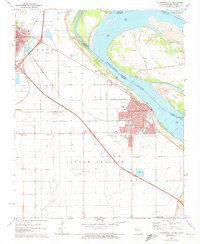 1971 Caruthersville1973 Print · USGSThe Mississippi River levee system and early interstate expansion define this riverfront area in the early seventies. Trace local genealogy and industry through Magnolia Cem, the Indian Mound, and the busy St Louis Southwestern rail lines.3 unique versions available
 - 1971 Map of Point Pleasant, 1973 Print
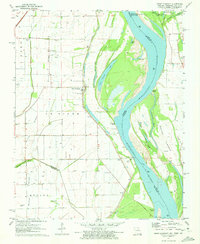 1971 Point Pleasant1973 Print · USGSThe Missouri-Tennessee borderlands in the early 1970s reveal a landscape of river-town life and family burial grounds along the Mississippi River. Researchers can trace local roots at Le Sieur Cem, Lily of the Valley Ch, and the ferry crossing at Linda.2 unique versions available
 - 1971 Map of Cottonwood Point, 1973 Print
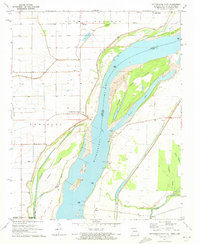 1971 Cottonwood Point1973 Print · USGSThe Missouri Bootheel and western Tennessee meet along the shifting banks of the Mississippi River in the early 1970s. Researchers can locate small communities like Cottonwood Point and Heloise, alongside family landmarks such as Taylor Cem and Riverside Ch.2 unique versions available
 - 1971 Map of Mooring, 1973 Print
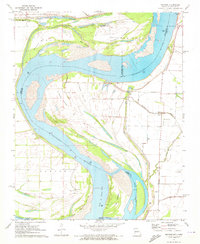 1971 Mooring1973 Print · USGSThe Mississippi River forms a complex boundary between Missouri and Tennessee in the early 1970s, carving a landscape of shifting towheads and chutes. Researchers can find historical river access points and family sites such as Burrus Landing, Mooring Cem, and Island No 13.2 unique versions available
 - 1971 Map of Portageville, 1973 Print
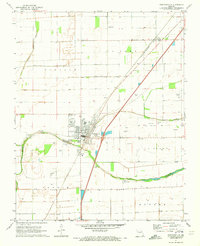 1971 Portageville1973 Print · USGSThe Missouri Bootheel landscape in the early 1970s shows the highly developed drainage and rail infrastructure of New Madrid County. Researchers can locate numerous family burial grounds like Meatte Cem and trace the paths of the St Louis-San Francisco railroad through Portageville and Jaywye.2 unique versions available
 - 1971 Map of Stanley, 1973 Print
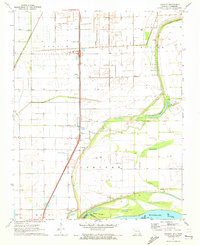 1971 Stanley1973 Print · USGSIn the early 1970s, this Mississippi River borderland shows a landscape of productive farm townships and riverside bayous. Researchers can locate family landmarks like Stancil Cem, Averill Cem, and the settlement of Concord.2 unique versions available
 - 1972 Map of Armorel, 1974 Print
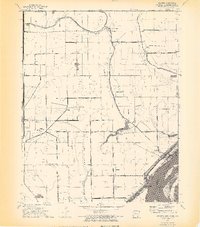 1972 Armorel1974 Print · USGSThe tri-state border region of Arkansas, Missouri, and Tennessee comes alive in this survey of the riverlands and drainage districts. Genealogists and local historians can trace family roots through rural landmarks like Number Nine, Promised Land, and New Mt Nebo Ch.4 unique versions available
 - 1972 Map of Blytheville, 1974 Print
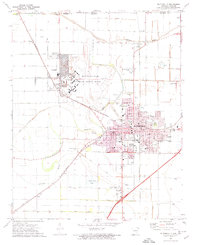 1972 Blytheville1974 Print · USGSBlytheville and the surrounding Delta farm country are captured here in the early seventies during the height of the Cold War. Genealogists and local historians can trace family locations near Mt Zion Cem, the massive Blytheville Air Force Base, and rural schools like Fairview Sch.2 unique versions available
 - 1973 Map of Caruthersville
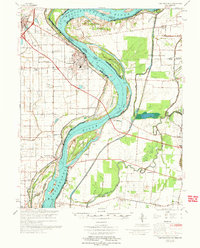 1973 Caruthersville1973 Print · USGSThe Missouri Bootheel meets the Tennessee state line in the early 1970s, where the Mississippi River winds past Caruthersville. Local historians can trace family roots through numerous sites like Little Prairie Cem, Marvin Chapel, and the community at Hayti.
Showing maps 1-25 of 119
Top cities of Pemiscot County
- Caruthersville historical maps
- Hayti historical maps
- Steele historical maps
- Hayti Heights historical maps
- Cooter historical maps
- Wardell historical maps
See more
Frequently asked questions
- What are the different types of historical maps available for Pemiscot County?
- What is the oldest map of Pemiscot County?
- Where can I purchase historical maps of Pemiscot County for my home or office?
- Where can I download high-res historical maps of Pemiscot County?
- Are there historical topographic maps available for Pemiscot County?
- Is there historical aerial imagery available for Pemiscot County?
- Where are historical maps of Pemiscot County sourced from?