Old Maps of Webster County, Missouri
Explore 103 old maps of Webster County, spanning from 1884 to today. These high-resolution historic maps reveal how streets, neighborhoods, landmarks, and natural features evolved over time — perfect for genealogy, metal detecting, research, and local history exploration.
What you can do with these maps:
- See how Webster County changed over time: Compare historical maps to modern-day views to trace roads, homesites, rail lines & more.
- View detailed metadata: Each map includes creators, publishers, year, scale, and archive source.
- Overlay maps with satellite & LiDAR: Visualize the past alongside modern tools to explore terrain & human change.
- Trusted historical sources: Maps sourced from the USGS, Library of Congress, and other archives.
- Access maps your way: View online, download high-res files, or order prints for personal or research use.
Start exploring old maps of Webster County to uncover forgotten places, hidden landmarks, and the deep history beneath your feet.
Webster County, MO maps
(103)- 1884 Map of Springfield
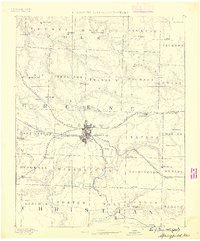 1884 Springfield1884 Print · USGSSpringfield emerged as a critical railroad junction in Southwest Missouri during the 1880s. Local researchers can trace the early layouts of Springfield, Willard, and Republic as they developed along the St. Louis and San Francisco Railroad.
 - 1886 Map of Springfield, 1896 Print
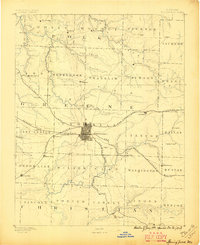 1886 Springfield1896 Print · USGSSouthwest Missouri thrived as a regional rail hub in the 1880s, centering on the growth of Greene and Christian counties. Researchers can trace early rural settlements and rail stops like Springfield, Fair Grove, and Republic before the turn of the century.5 unique versions available
 - 1937 Map of Ozark
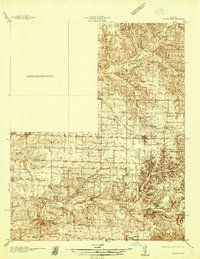 1937 Ozark1937 Print · USGSChristian and Greene Counties are captured here in the mid-1930s, showing a landscape of river-valley farms and small railroad towns. Genealogists can trace family names through dozens of rural landmarks like Roller Cemetery, Riverside Inn, and the Whiteoak Church.
 - 1939 Map of Fordland
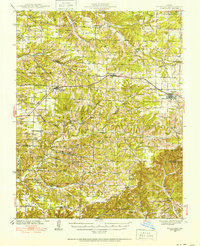 1939 Fordland1939 Print · USGSThe Ozark plateau in the late 1930s is revealed as a dense network of ridge-top rail towns and valley settlements. Genealogists can trace family roots through numerous schools and churches like Cave Spring Sch, Taylor Cem, and the community of Elkhead.2 unique versions available
 - 1942 Map of Fordland
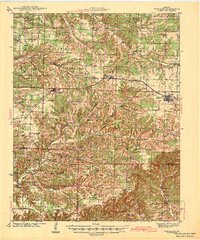 1942 Fordland1942 Print · USGSThe rural Ozark highlands of Webster and Christian Counties are captured here in the late 1930s, centered on the railroad corridor through Fordland and Seymour. Researchers can trace dozens of early school sites and churches, from Union Chapel to the McHaffie Sch.2 unique versions available
 - 1943 Map of Ozark, 1968 Print
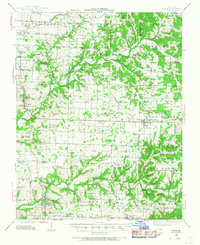 1943 Ozark1968 Print · USGSThe James River valley south of Springfield comes alive in the 1940s, showing a landscape defined by small settlements and the St Louis - San Francisco line. Genealogists can trace family roots at Holland Cem or locate old school sites like Blue Star Sch and Plummer Sch.
 - 1945 Map of Ozark
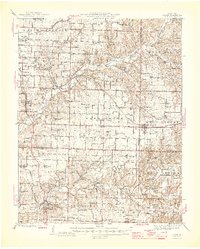 1945 Ozark1945 Print · USGSSouth of Springfield in the mid-1940s, this area shows a landscape transitioning from rural farmsteads to modern aviation hubs. Genealogists can trace family names at Holland Cem, Riverside Inn, and numerous school sites like Pedelo Sch.2 unique versions available
 - 1946 Map of Niangua, 1966 Print
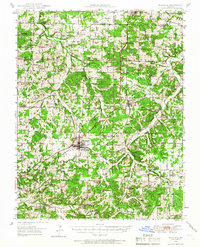 1946 Niangua1966 Print · USGSMid-century Webster County is shown here during a time when rural life centered on the St Louis-San Francisco rail line and local country schools. Genealogists can locate family landmarks such as Bumgardner Ford, Eighty Eight Sch, and Sparkle Brook Cem.
 - 1947 Map of Strafford, 1967 Print
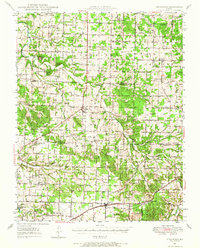 1947 Strafford1967 Print · USGSMissouri's Ozark plateau comes alive in the mid-forties, showing the rural school districts and crossroads towns of Greene and Dallas counties. Trace family roots at Mission Chapel, find the old roadbed of U. S. 66, or locate Tin Town.
 - 1948 Map of Niangua
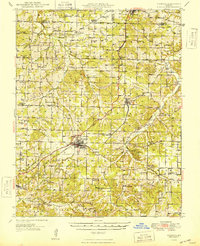 1948 Niangua1948 Print · USGSIn the late 1940s, Webster County was a landscape of small farming communities and river crossings. Trace the old rail line to Marshfield or find rural landmarks like Eighty Eight Sch, Mission Home Ch, and the crossings at Johnston Ford.2 unique versions available
 - 1948 Map of Strafford
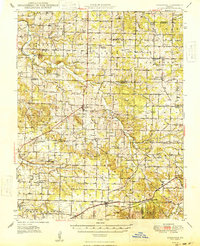 1948 Strafford1948 Print · USGSMid-century Greene and Webster Counties center on the rail-aligned town of Strafford and the rural crossroads of Fair Grove. Genealogists can locate family landmarks including Mullinx Cem, Hickory Barren Sch, and the old Whitlock Ch.2 unique versions available
 - 1951 Map of Mansfield NW, 1953 Print
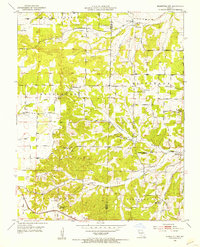 1951 Mansfield NW1953 Print · USGSThe Missouri Ozarks during the early fifties reveal a landscape of river-valley settlements and rural schoolhouses. Genealogists can trace family roots through landmarks like Antioch Ch, Waldo, and several legacy sites like Mt Olive Sch (Abandoned).
 - 1951 Map of Cedar Gap, 1953 Print
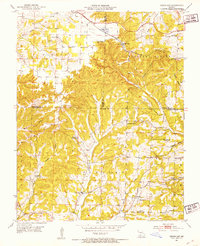 1951 Cedar Gap1953 Print · USGSThe Missouri Ozarks during the early fifties were defined by high-elevation rail stops and a fading network of rural school districts. Genealogists can trace family roots at Gentry Cem or locate the sites of Skylight Sch and the remote Mountain Side Sch.5 unique versions available
 - 1954 Map of Springfield
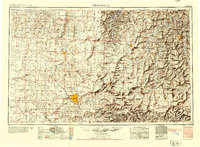 1954 Springfield1954 Print · USGSThe Missouri Ozarks are captured here during the post-war era, showing the expansion of Springfield and the surrounding river valleys. Genealogists and historians can trace local landmarks like Mount Comfort Cemetery and the Fort Leonard Wood military grounds.6 unique versions available
 - 1956 Map of Duncan, 1957 Print
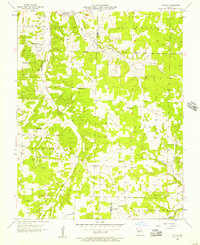 1956 Duncan1957 Print · USGSThe rural uplands of Wright and Webster counties are captured here in the mid-1950s, showing a landscape filled with small community centers. Genealogists can locate family-named sites like Peter Cem, Sunrise Sch, and the riverside Mt Zion Ch.2 unique versions available
 - 1956 Map of Rader, 1957 Print
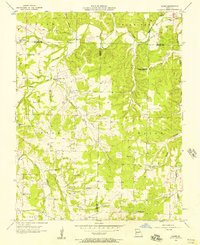 1956 Rader1957 Print · USGSCrossing the borders of Webster, Laclede, and Wright counties in the mid-1950s, this area shows a landscape of small schools and river-fed hollows. Genealogists can locate family landmarks like Rader, Amity Ch, and the now-abandoned Oak Grove Sch.2 unique versions available
 - 1958 Map of Springfield
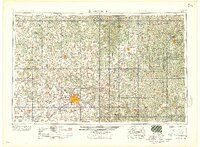 1958 Springfield1958 Print · USGSThe Missouri Ozarks are captured during the mid-century era of growth, centered on the bustling hub of Springfield. Genealogists and historians can trace family roots through numerous landmarks like Ebenezer Church, Stockton Cem, and the various county courthouses.
 - 1959 Map of Springfield
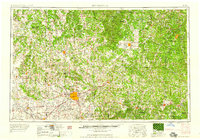 1959 Springfield1959 Print · USGSThe Missouri Ozarks are captured here during a decade of postwar growth and increasing highway connectivity. Researchers can trace the legacy of the St Louis-San Francisco RR and locate early sites in Springfield, Lebanon, and Mountain Grove.
 - 1970 Map of Rogersville, 1971 Print
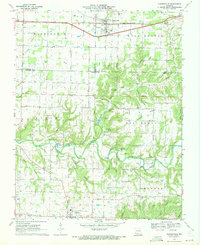 1970 Rogersville1971 Print · USGSRogersville and the surrounding Ozark townships are captured here at the end of the sixties as rural life centered on the railroad and local creeks. Researchers can trace family roots through numerous country burial grounds and churches like Holland Cem, Roller Cem, and Grace Gospel Ch.3 unique versions available
 - 1970 Map of Elkland, 1971 Print
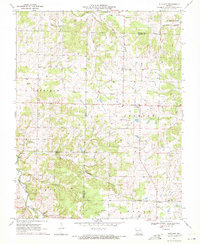 1970 Elkland1971 Print · USGSElkland and the surrounding Missouri countryside appear here in the early 1970s, at the intersection of Webster, Dallas, and Greene counties. Researchers can trace rural lineages through sites like the Elkland Sch, Union Mound Ch, and Stever Cem.
 - 1970 Map of Strafford, 1971 Print
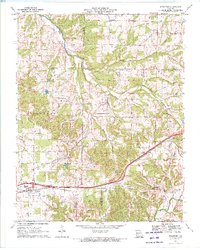 1970 Strafford1971 Print · USGSThe Strafford area in the early seventies shows a landscape shaped by the St. Louis - San Francisco railroad and the upper reaches of the James River. Researchers can trace rural church life and family history at Mt Calvary Ch, Caldwell Cem, and Epworth Ch.2 unique versions available
 - 1970 Map of Oak Grove Heights, 1971 Print
 1970 Oak Grove Heights1971 Print · USGSWebster County’s rural landscape is captured here in the early seventies, centered on Oak Grove Heights and the James River. Genealogists can locate family sites at Henderson Cem, Panther Valley Cem, and numerous country chapels.2 unique versions available
 - 1977 Map of Mansfield NW
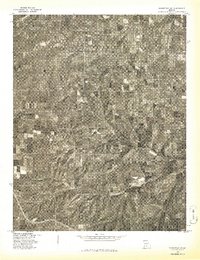 1977 Mansfield NW1977 Print · USGSThe Ozark plateau in the late seventies is revealed through detailed aerial imagery of the Webster County countryside. Local researchers can trace the course of the Gasconade River and locate the small rural community of Jericho.
 - 1977 Map of Cedar Gap
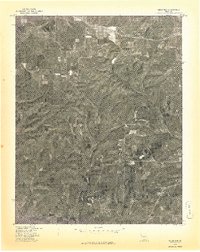 1977 Cedar Gap1977 Print · USGSThe Missouri Ozarks are shown in transition during the late seventies, documented through detailed aerial orthophotography. Trace the rural landscape around Cedar Gap and Mt Zion or follow the winding course of Bryant Creek.
 - 1977 Map of Duncan
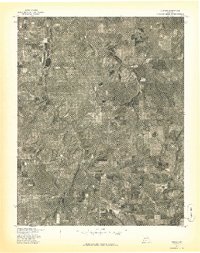 1977 Duncan1977 Print · USGSThe rural landscapes of Wright County are captured in this late 1970s aerial survey, showing the region's agricultural and timber patterns. Researchers can pinpoint the exact location of Duncan and trace the rural roads and woodlots as they appeared during this era.
Showing maps 1-25 of 103
Top cities of Webster County
- Marshfield historical maps
- Seymour historical maps
- Fordland historical maps
- Niangua historical maps
- Diggins historical maps
- Holman historical maps
Frequently asked questions
- What are the different types of historical maps available for Webster County?
- What is the oldest map of Webster County?
- Where can I purchase historical maps of Webster County for my home or office?
- Where can I download high-res historical maps of Webster County?
- Are there historical topographic maps available for Webster County?
- Is there historical aerial imagery available for Webster County?
- Where are historical maps of Webster County sourced from?