Old Maps of Iris, Montana
Explore 14 old maps of Iris, spanning from 1903 to today. These high-resolution historic maps reveal how streets, neighborhoods, landmarks, and natural features evolved over time — perfect for genealogy, metal detecting, research, and local history exploration.
What you can do with these maps:
- See how Iris changed over time: Compare historical maps to modern-day views to trace roads, homesites, rail lines & more.
- View detailed metadata: Each map includes creators, publishers, year, scale, and archive source.
- Overlay maps with satellite & LiDAR: Visualize the past alongside modern tools to explore terrain & human change.
- Trusted historical sources: Maps sourced from the USGS, Library of Congress, and other archives.
- Access maps your way: View online, download high-res files, or order prints for personal or research use.
Start exploring old maps of Iris to uncover forgotten places, hidden landmarks, and the deep history beneath your feet.
Iris, MT maps
(14)- 1903 Map of Bonner
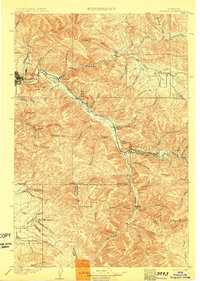 1903 Bonner1903 Print · USGSMissoula and the surrounding river canyons come to life in this turn-of-the-century survey during the height of early rail expansion. Trace the original path of the Northern Pacific through mountain passes and locate early settlements like Bonner, Potomac, and Clinton.4 unique versions available
 - 1947 Map of Butte, 1949 Print
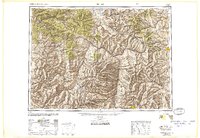 1947 Butte1949 Print · USGSWestern Montana at the peak of its rail-and-river era shows the vital connections between the mining and industrial centers of Butte and Helena. Researchers can trace the three major railroad lines serving mountain settlements like Garrison, Philipsburg, and Warm Springs.2 unique versions available
 - 1958 Map of Butte
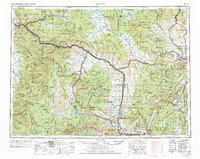 1958 Butte1958 Print · USGSWestern Montana's mining and rail corridors are captured in the late fifties, from the urban bustle of the Copper King cities to high mountain passes. Researchers can trace the path of the Milwaukee St Paul and Pacific through Deer Lodge and locate remote outposts like Potomac Post Office.5 unique versions available
 - 1959 Map of Ravenna, 1961 Print
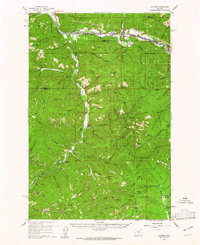 1959 Ravenna1961 Print · USGSIn the late 1950s, this mountainous border between Missoula and Granite Counties was a hub of river-and-rail transport. Researchers can trace the dual tracks of the Northern Pacific and Milwaukee Road, locating vanished stops like Nimrod and the old settlement at Quigley.2 unique versions available
 - 1960 Map of Butte
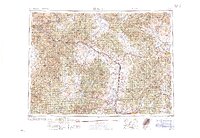 1960 Butte1960 Print · USGSWestern Montana at the dawn of the sixties is defined by its industrial mining hubs and the railroads that connect them. Genealogists and historians can trace the routes of the Milwaukee Road through Butte or locate smaller settlements like Southern Cross and Bearmouth.
 - 1962 Map of Butte
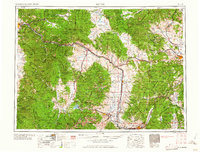 1962 Butte1962 Print · USGSWestern Montana in the early sixties remains a landscape of industrial muscle and high-mountain passes. Trace the rail lines of the Northern Pacific through Deer Lodge and the mining history around Anaconda and Philipsburg.
 - 1984 Map of Missoula East
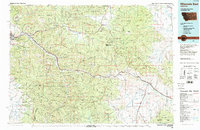 1984 Missoula East1984 Print · USGSThe Clark Fork valley and the Garnet Range are shown here in the mid-1980s as the region's timber and rail heritage remained prominent. Researchers can trace the Burlington Northern line and locate old mining sites like Garnet and the Copper Cliff Mine.
 - 1989 Map of Iris Point
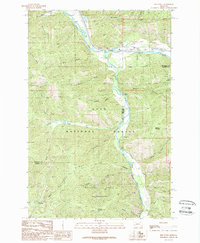 1989 Iris Point1989 Print · USGSThe Missoula and Granite county line meets along the river canyons of western Montana in the late eighties. Researchers can trace the wild reaches of the Welcome Creek Wilderness and locate landmarks like the Elliott Airstrip and Bonita FS Station.
 - 1999 Map of Iris Point, 2003 Print
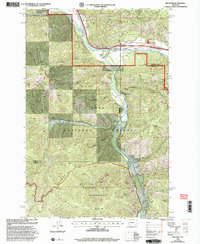 1999 Iris Point2003 Print · USGSNear the turn of the millennium, this Montana landscape highlights the confluence of the CLARK FORK and Rock Creek at the county line. Researchers can trace land use through the Bonita FS Workcenter, the Elliott Airstrip, and the Phelan Ranch.
 - 2011 Map of Iris Point, 2011 Print
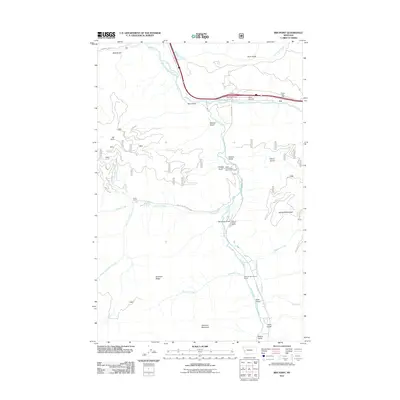 2011 Iris Point2011 Print · USGSThe Clark Fork and Rock Creek valleys come alive in this 2011 survey, showing the mix of travel corridors and mountain ranchlands. Genealogists and historians can trace family sites like Finlen Ranch, landmarks like Rock Creek Lodge, and the Elliot Airstrip.
 - 2014 Map of Iris Point, 2014 Print
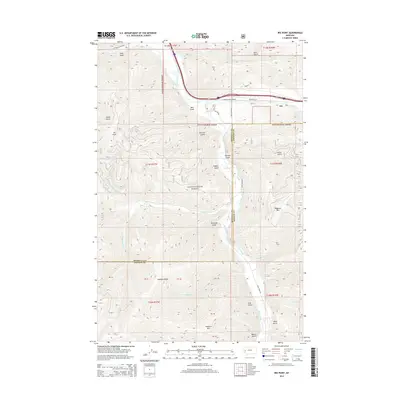 2014 Iris Point2014 Print · USGSMissoula and Granite counties meet among the high peaks of the Lolo National Forest in this 2014 survey. Researchers can trace the narrow development corridor near Iris or locate family-named landmarks like Solomon Mtn and Babcock Mtn.
 - 2017 Map of Iris Point, 2017 Print
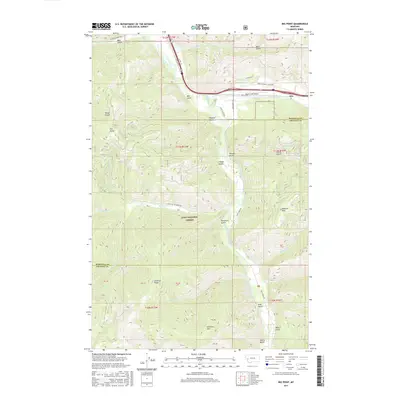 2017 Iris Point2017 Print · USGSThe mountain terrain of the Missoula and Granite county line is captured here in recent years, showing the settlement of Iris along the Clark Fork. Researchers can trace old mountain routes like Stage Station Rd and identify family-named landmarks such as Solomon Mtn and Babcock Mtn.
 - 2020 Map of Iris Point, 2020 Print
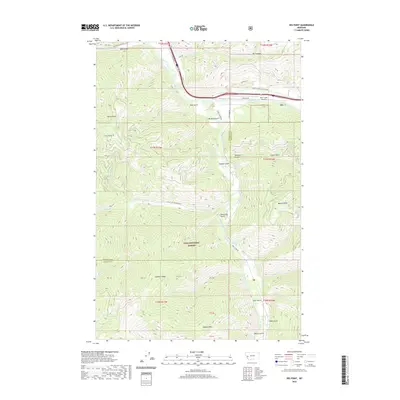 2020 Iris Point2020 Print · USGSNear the confluence of Rock Creek and the Clark Fork, this recent survey captures the modern landscape of the Lolo National Forest. Researchers can trace the local settlement of Iris and find landmarks like the Rock Creek Airport or the high peaks of Babcock Mtn.
 - 2024 Map of Iris Point, 2024 Print
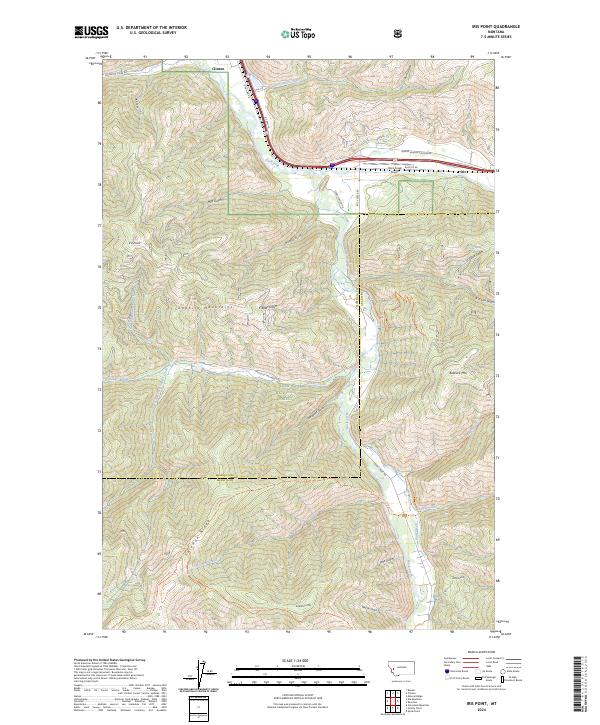 2024 Iris Point2024 Print · USGSThe confluence of the Clark Fork and Rock Creek is captured in this modern survey of the Montana high country. Researchers can trace the wild interior of the Welcome Creek Wilderness or locate the Rock Creek Airport near the settlement of Iris.
End of results
Showing maps 1-14 of 14
Frequently asked questions
- What are the different types of historical maps available for Iris?
- What is the oldest map of Iris?
- Where can I purchase historical maps of Iris for my home or office?
- Where can I download high-res historical maps of Iris?
- Are there historical topographic maps available for Iris?
- Is there historical aerial imagery available for Iris?
- Where are historical maps of Iris sourced from?