1950s Maps of Knox County, Nebraska
Explore 15 historic maps of Knox County from the 1950s. These maps offer a rare glimpse into what life looked like during the 1950s — showing old roads, neighborhoods, homes, and landmarks that have changed or disappeared over time.
Whether you're researching your family's past, planning a metal detecting trip, or studying how Knox County's landscape evolved across the 1950s, these high-resolution maps are a powerful tool for exploring the history of this region.
- Focus on a specific era: All maps on this page are from the 1950s, giving you a focused view of this time period.
- See what’s changed: Compare century-old streets, trails, and buildings to today's modern landscape using overlays and satellite layers.
- Research with precision: Use these maps for genealogy, historical research, land use analysis, or educational projects.
- View, download, or print: Maps are fully viewable online in high resolution, and can be downloaded or printed for your own records.
Start exploring Knox County's history through authentic maps from the 1950s. This is your window into the past.
Knox County, NE maps
(15)- 1950 Map of Niobrara, 1952 Print
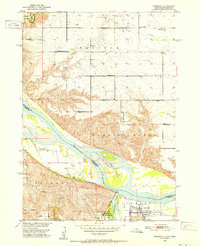 1950 Niobrara1952 Print · USGSThe Missouri and Niobrara rivers converge here in the mid-twentieth century, just as the town of Niobrara prepared for major changes. Genealogists can locate many rural landmarks including Norwegian Cem, Wagner Sch, and the Chicago and North Western rail line.2 unique versions available
 - 1950 Map of Verdel, 1952 Print
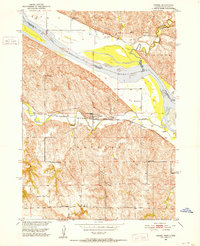 1950 Verdel1952 Print · USGSThe Missouri River borderlands of Knox County come to life in this mid-century survey of the Verdel area. Local historians can trace the paths of the Chicago and North Western railroad and locate rural landmarks like Clay Hill Sch or Cedar Hill Cem.4 unique versions available
 - 1950 Map of Verdigre NE, 1952 Print
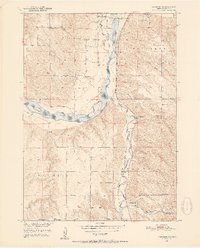 1950 Verdigre NE1952 Print · USGSKnox County was a land of valley farms and rural school districts during the early post-war years. Researchers can trace the Chicago and North Western rail line and locate community landmarks like St Johns Cem and Ponca Sch.3 unique versions available
 - 1950 Map of Pishelville, 1952 Print
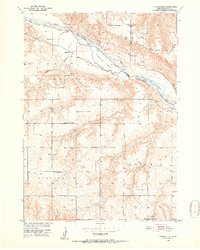 1950 Pishelville1952 Print · USGSKnox County, Nebraska, is seen here in the mid-twentieth century as the Missouri River Basin development program was underway. Local historians can trace the rural infrastructure of the day through several country schools like Stony Butte Sch and settlements including Pishelville and Dukeville.2 unique versions available
 - 1950 Map of Monowi, 1973 Print
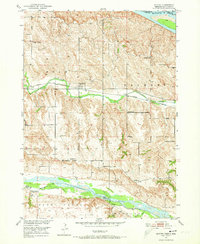 1950 Monowi1973 Print · USGSNortheastern Nebraska is captured in the mid-1950s at the meeting of the Missouri River and Niobrara River. Genealogists and local historians can locate family sites among numerous rural landmarks like Alford Cem, Monowi, and Masdon Sch.
 - 1952 Map of Monowi
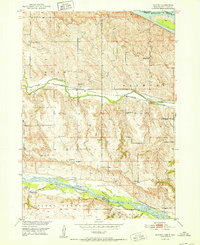 1952 Monowi1952 Print · USGSThe village of Monowi and the surrounding Nebraska-South Dakota borderlands are captured here in the early 1950s. Genealogists can trace family roots through numerous rural landmarks like Beulah Cem, Pleasant Hill Sch, and the Verdel Sch.2 unique versions available
 - 1952 Map of Dorsey
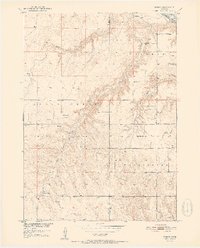 1952 Dorsey1952 Print · USGSThe border of Holt and Knox counties in the early fifties shows a landscape of creek-fed valleys and rural schoolhouses. Genealogists and local historians can locate early burial sites like Star Cemetery or trace the locations of the Old Mill School and the village of Dorsey.2 unique versions available
 - 1954 Map of Walnut, 1956 Print
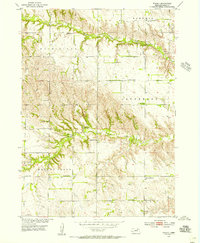 1954 Walnut1956 Print · USGSKnox County, Nebraska, is shown in the mid-1950s as a landscape of rural schoolhouses and prairie creek branches. Genealogists and historians can trace family roots at the Jelen Cem or locate former school sites like Oak Valley Sch and Cottonwood Grove Sch.2 unique versions available
 - 1954 Map of Verdigre, 1956 Print
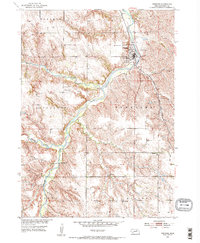 1954 Verdigre1956 Print · USGSKnox County settlement centers on the rail-and-river hub of Verdigre in the mid-1950s. Genealogists and researchers can trace local family landmarks and rural education sites such as St Wenceslaus Cem, Oak Valley Sch, and the Chicago and North Western rail line.2 unique versions available
 - 1954 Map of Star, 1956 Print
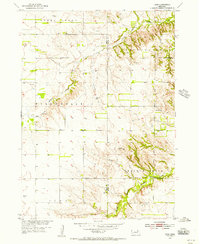 1954 Star1956 Print · USGSThe Holt and Knox county border comes alive in the mid-1950s, showing a landscape of remote ranching and rural education. Genealogists can trace family footprints at Grimton Cemetery and local schools like Cedar Corner Sch or Grimton Sch.2 unique versions available
 - 1955 Map of Sioux City, 1959 Print
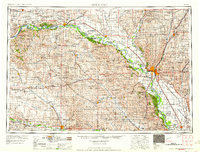 1955 Sioux City1959 Print · USGSThe Missouri River valley in the mid-fifties is captured here during a time of major engineering and social transition. Genealogists and historians can trace the foundations of Gavins Point Dam, tribal boundaries on the Santee Sioux Indian Reservation, and local landmarks like the Norfolk State Hospital.4 unique versions available
 - 1955 Map of O'Neill, 1974 Print
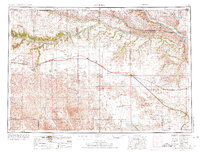 1955 O'Neill1974 Print · USGSNorth-central Nebraska in the 1950s reveals a vast cattle-ranching landscape transitioning from the Missouri River breaks to the iconic Sand Hills. Researchers can trace the path of the Chicago and North Western rail line and locate rural landmarks like the Dustin Post Office and St Johns Lake Ch.2 unique versions available
 - 1958 Map of Sioux City
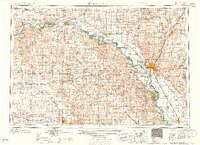 1958 Sioux City1958 Print · USGSThe Missouri River valley in the late fifties was a bustling intersection of tribal lands, rail corridors, and river towns. Genealogists can trace family roots through specific rural sites like Daisy Valley School, St Johns Church and School, and Yankton State Hospital.
 - 1959 Map of O'Neill
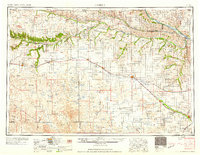 1959 O'Neill1959 Print · USGSNorth-central Nebraska in the late fifties is defined by the vast Sand Hills and the vital Chicago and North Western rail line. Genealogists and researchers can trace family roots through settlements like Atkinson, Bassett, and Stuart or follow the waters of the Niobrara River.2 unique versions available
 - 1959 Map of Sioux City
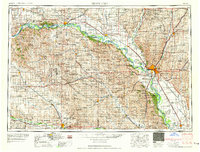 1959 Sioux City1959 Print · USGSThe tri-state region surrounding the Missouri River is captured here in the late fifties, showing the convergence of Nebraska, South Dakota, and Iowa. Researchers can trace rural lineages through numerous country schoolhouses like Cemetery School and the many numbered Washington School districts.
End of results
Showing maps 1-15 of 15
Top cities of Knox County
- Creighton historical maps
- Bloomfield historical maps
- Crofton historical maps
- Wausa historical maps
- Verdigre historical maps
- Niobrara historical maps
See more
Frequently asked questions
- What are the different types of historical maps available for Knox County?
- What is the oldest map of Knox County?
- Where can I purchase historical maps of Knox County for my home or office?
- Where can I download high-res historical maps of Knox County?
- Are there historical topographic maps available for Knox County?
- Is there historical aerial imagery available for Knox County?
- Where are historical maps of Knox County sourced from?