Old Maps of Kidderville, Colebrook for Genealogy
Trace your family roots with 16 historic maps of Kidderville. These high-res maps reveal old neighborhoods, homesites, landmarks, and streets — helping you uncover where your ancestors lived and how the area evolved over time.
- Explore historic neighborhoods: Identify where your relatives may have lived in the 1800s or 1900s.
- Compare maps over time: Trace the changes in streets, buildings, and landmarks for multi-generational research.
- Perfect for genealogy & ancestry research: Used by family historians and researchers to map out lineage and migration.
These maps are an incredible resource for exploring your personal connection to Kidderville's past.
Kidderville, Colebrook maps
(16)- 1930 Map of Dixville, 1954 Print
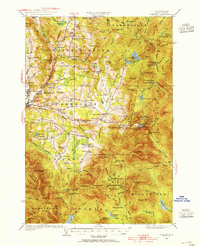 1930 Dixville1954 Print · USGSNorthern New Hampshire at the start of the 1930s reveals a landscape of isolated hill farms and small timber towns. Genealogists can locate family-named landmarks like Piper Hill Cem and numerous district schools including Cedar Brook Sch and Forbes Sch.5 unique versions available
 - 1933 Map of Dixville
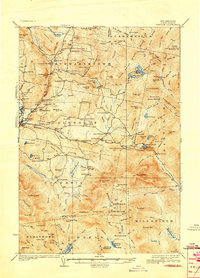 1933 Dixville1933 Print · USGSCoos County's rugged North Country is captured in the early 1930s, documenting a landscape of remote timber camps and hillside schoolhouses. Genealogists can trace family landmarks like the East Colebrook Ch, Bungy, and over a dozen named schools including Bear Rock Sch.2 unique versions available
 - 1934 Map of Dixville
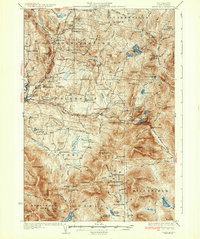 1934 Dixville1934 Print · USGSThe White Mountains of Coos County appear here in the early 1930s, showing a landscape defined by timber camps and rural school districts. Genealogists can trace family roots through landmarks like Stewartstown Hollow, East Columbia Ch, and several mountain camps including Carr Camp.2 unique versions available
 - 1950 Map of Lewiston
 1950 Lewiston1950 Print · USGSThe Maine and New Hampshire borderlands come alive in this post-war survey of the White Mountains and Androscoggin valley. Genealogists and historians can trace rail lines like the Maine Central Railroad and find high-altitude landmarks from Mount Washington to Bretton Woods.2 unique versions available
 - 1956 Map of Lewiston, 1975 Print
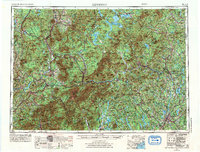 1956 Lewiston1975 Print · USGSThe Northern New England interior is documented here in the mid-fifties, from the industrial Androscoggin River to the high peaks of the White Mountains. Trace the Grand Trunk Railway through mountain passes or locate family landmarks near Sabbathday Lake and Bretton Woods.
 - 1961 Map of Lewiston
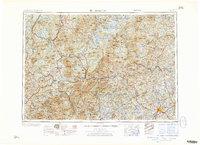 1961 Lewiston1961 Print · USGSWestern Maine and the White Mountains appear here during the early sixties, showing the industrial river towns and vast timberlands before the modern interstate era. Genealogists and historians can trace the Grand Trunk RR through Berlin or locate landmarks like Old Speck Mountain and Elephant Mountain.
 - 1962 Map of Lewiston
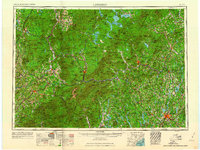 1962 Lewiston1962 Print · USGSThe industrial river valleys and high peaks of Maine and New Hampshire define the region in the early sixties. Trace the rail-and-river network from Lewiston to the White Mountains, passing through mill towns like Berlin and Rumford.
 - 1969 Map of Lewiston
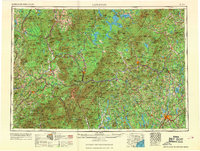 1969 Lewiston1969 Print · USGSThe northern New England highlands come into focus during the mid-fifties, showing the vital rail and river networks connecting industrial centers to the deep woods. Researchers can trace the path of the Grand Trunk RR or locate landmarks like Mt Washington and Rangeley Lake.
 - 1986 Map of Groveton
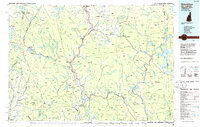 1986 Groveton1986 Print · USGSThe North Country's rugged borderlands come into focus in the mid-1980s, tracing the river-and-rail corridors of the Connecticut River valley. Genealogists and historians can locate family landmarks in North Stratford, Groveton, and Guildhall or trace the Canadian National RR.2 unique versions available
 - 1989 Map of Lovering Mountain
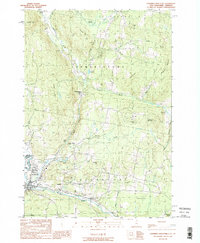 1989 Lovering Mountain1989 Print · USGSThe northern reaches of the Connecticut River valley are captured here in the late eighties as they cross from New Hampshire into Vermont. Researchers can trace local landmarks like Beaver Brook Falls, the Mohawk River, and the settlement of Stewartstown Hollow.2 unique versions available
 - 1996 Map of Lovering Mountain, 2000 Print
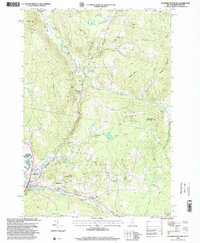 1996 Lovering Mountain2000 Print · USGSNorthern Coos County is shown in the mid-1990s as the regional landscape supported both forest management and recreation. Researchers can trace the layout of Colebrook, find the Fish Hatchery, and locate local landmarks such as Stewartstown Hollow or Beaver Brook Falls.
 - 2012 Map of Lovering Mountain, 2012 Print
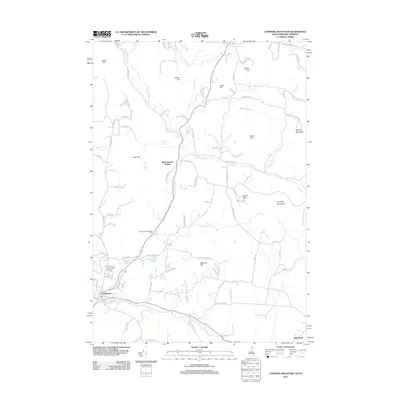 2012 Lovering Mountain2012 Print · USGSColebrook and the surrounding Coos County uplands are documented here in the early twenty-first century as they maintain their rural character. Genealogists and local historians can trace family-named landmarks and routes near Stewartstown Hollow, Ladd Pond, and Kidderville.
 - 2015 Map of Lovering Mountain, 2015 Print
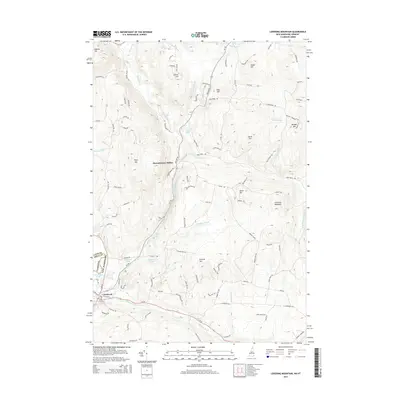 2015 Lovering Mountain2015 Print · USGSColebrook and the surrounding New Hampshire highlands are captured here in the mid-2010s, showing the town at the confluence of the Mohawk River and Connecticut River. Researchers can trace rural family-named landmarks like Dearth Hill, Kidder Hill, and Matthews Pond.
 - 2018 Map of Lovering Mountain, 2018 Print
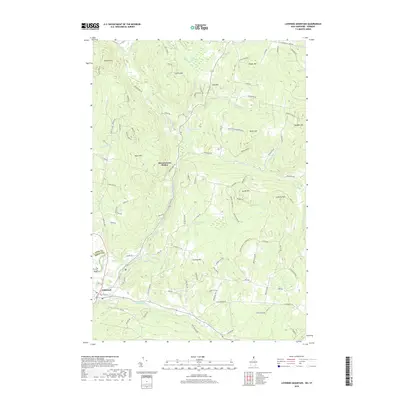 2018 Lovering Mountain2018 Print · USGSColebrook and the surrounding New Hampshire highlands are captured in this modern survey, showing the confluence of the rivers and the sprawl of family-named peaks. Genealogists can trace property access along Bishop Brook Rd or locate land near Stewartstown Hollow and Lombard Pond.
 - 2021 Map of Lovering Mountain, 2021 Print
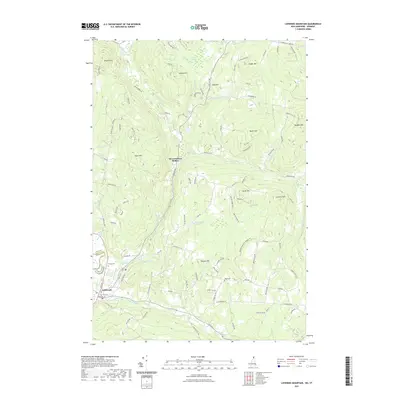 2021 Lovering Mountain2021 Print · USGSColebrook and Stewartstown Hollow are documented here in the early twenty-first century as they sit along the Mohawk River and the Vermont border. Local historians can locate Village Cemetery, trace the path of Beaver Brook Falls, and explore the high peaks of Lovering Mountain.
 - 2024 Map of Lovering Mountain, 2024 Print
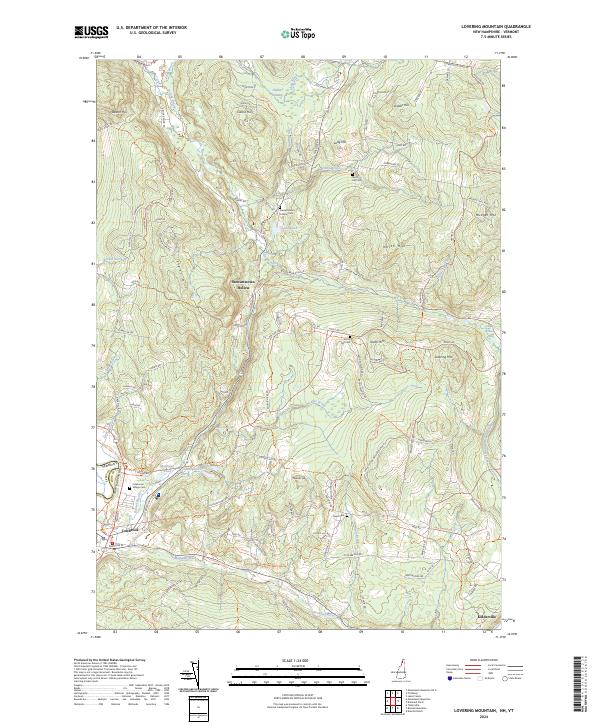 2024 Lovering Mountain2024 Print · USGSUpper Coos County is revealed in this contemporary survey as a landscape of timbered hills and small riverfront settlements near the Vermont border. Genealogists can locate several family-named landmarks and rural burial sites, including the North Hill Cem, Stewartstown Hollow, and Reed Cem.
End of results
Showing maps 1-16 of 16
Top cities near Kidderville
- Colebrook historical maps
- Stewartstown historical maps
- Pittsburg historical maps
- Stratford historical maps
- Columbia historical maps
- Stark historical maps
See more
Frequently asked questions
- What are the different types of historical maps available for Kidderville?
- What is the oldest map of Kidderville?
- Where can I purchase historical maps of Kidderville for my home or office?
- Where can I download high-res historical maps of Kidderville?
- Are there historical topographic maps available for Kidderville?
- Is there historical aerial imagery available for Kidderville?
- Where are historical maps of Kidderville sourced from?