Old Maps of Post Corner, West Windsor
Explore 21 old maps of Post Corner, spanning from 1888 to today. These high-resolution historic maps reveal how streets, neighborhoods, landmarks, and natural features evolved over time — perfect for genealogy, metal detecting, research, and local history exploration.
What you can do with these maps:
- See how Post Corner changed over time: Compare historical maps to modern-day views to trace roads, homesites, rail lines & more.
- View detailed metadata: Each map includes creators, publishers, year, scale, and archive source.
- Overlay maps with satellite & LiDAR: Visualize the past alongside modern tools to explore terrain & human change.
- Trusted historical sources: Maps sourced from the USGS, Library of Congress, and other archives.
- Access maps your way: View online, download high-res files, or order prints for personal or research use.
Start exploring old maps of Post Corner to uncover forgotten places, hidden landmarks, and the deep history beneath your feet.
Post Corner, West Windsor maps
(21)- 1888 Map of Princeton
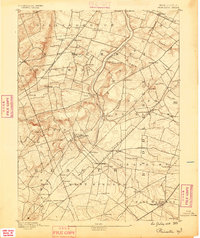 1888 Princeton1888 Print · USGSCentral New Jersey in the late nineteenth century is defined here by its critical canal and rail corridors connecting thriving agricultural villages. Genealogists and historians can trace family-named sites and early junctions like Grover's Mill, Griggstown, and the rail hub at Monmouth Junction.
 - 1894 Map of Princeton
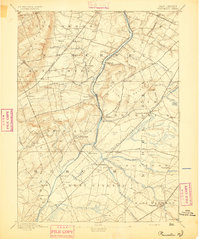 1894 Princeton1894 Print · USGSCentral New Jersey is captured here in the late nineteenth century as its river-and-canal economy transitioned to a powerhouse of rail travel. Genealogists and historians can trace the early footprints of Princeton, the industrial Delaware and Raritan Canal, and rural stops like Grover Mill.2 unique versions available
 - 1906 Map of Princeton
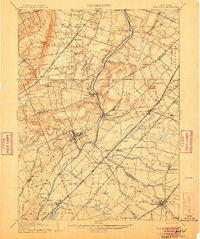 1906 Princeton1906 Print · USGSNew Jersey’s educational and transportation corridors are captured here in the early twentieth century, showing a landscape defined by canals and competing rail lines. Genealogists can trace family roots through settlements like Princeton, Rocky Hill, and Plainsboro.4 unique versions available
 - 1907 Map of Trenton
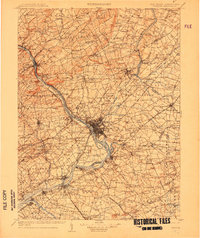 1907 Trenton1907 Print · USGSThe Delaware River valley hums with turn-of-the-century industry and transport as river canals and railroads converge between New Jersey and Pennsylvania. Genealogists and local historians can trace the footprint of the George School, find early post offices like Holland PO, or locate old mill sites such as Blackwells Mills.4 unique versions available
 - 1944 Map of Newark, 1971 Print
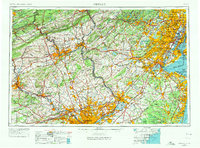 1944 Newark1971 Print · USGSThe industrial corridor from Philadelphia to New York was in a period of massive transition during the mid-forties. Genealogists and researchers can trace the rail lines of the Lehigh Valley RR, locate military installations like Picatinny Arsenal, and explore the early sprawl near Levittown.5 unique versions available
 - 1946 Map of Princeton, 1952 Print
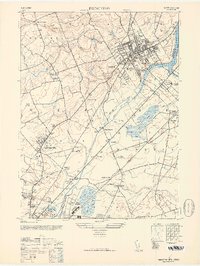 1946 Princeton1952 Print · USGSCentral New Jersey at the start of the post-war era reveals a landscape defined by its prestigious institutions and expanding rail corridors. Genealogists can locate family landmarks like Rosedale Chapel or trace the early grounds of the Lawrenceville School.
 - 1949 Map of Newark
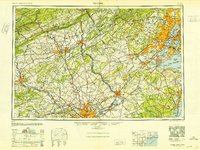 1949 Newark1949 Print · USGSThe industrial corridor between Philadelphia and New York comes alive in this post-war survey. Genealogists and historians can trace the massive rail networks of the Reading Railroad and locate major installations like Fort Dix or Picatinny Arsenal.2 unique versions available
 - 1952 Map of Princeton
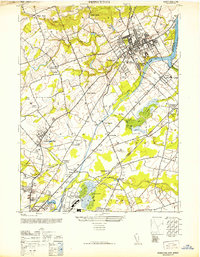 1952 Princeton1952 Print · USGSMid-century Central New Jersey shows a landscape shaped by academic institutions and the early growth of suburban hamlets. Genealogists and historians can trace Princeton University and the Lawrenceville School, or locate vanished industries like Maddocks Pottery Co.
 - 1954 Map of Princeton, 1956 Print
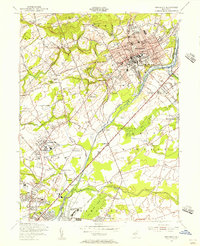 1954 Princeton1956 Print · USGSMid-century Princeton and Lawrenceville are captured here during a period of prestigious academic growth and steady infrastructure development. Genealogists and researchers can locate family-named landmarks and institutions like the Theological Seminary, Stony Brook Ch, and the Lawrenceville Cem.4 unique versions available
 - 1956 Map of Newark
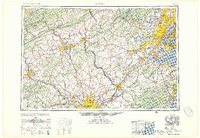 1956 Newark1956 Print · USGSThe industrial heart of the Mid-Atlantic is captured here at the dawn of the highway era, tracing the dense corridors between Newark and Philadelphia. Genealogists and local historians can map the rail networks of the Reading RR or locate mid-century military life at Fort Dix Military Reservation.2 unique versions available
 - 1957 Map of Newark
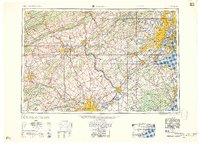 1957 Newark1957 Print · USGSThe industrial and military heart of the Mid-Atlantic is mapped during its post-war suburban boom. Genealogists and historians can trace the intricate rail corridors of the Reading Railroad and locate key landmarks from Princeton University to Fort Hancock.
 - 1960 Map of Newark
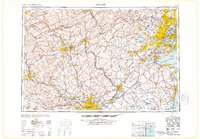 1960 Newark1960 Print · USGSThe industrial heart of the Mid-Atlantic is shown at mid-century, stretching from the dense urban centers of Newark and Philadelphia to the Blue Mountain ridges. Researchers can trace historic rail lines, coastal defenses at Fort Hancock, and the riverfront growth of Trenton and Easton.3 unique versions available
 - 1964 Map of Newark
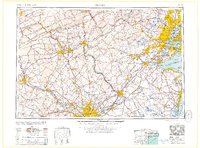 1964 Newark1964 Print · USGSGreater New Jersey and eastern Pennsylvania appear at the peak of their industrial and rail-centered development in the mid-sixties. Genealogists and historians can trace the paths of the Pennsylvania RR, identify mid-century landmarks like CAMP KILMER, or follow the Schuylkill River through READING.2 unique versions available
 - 1982 Map of Trenton, 1983 Print
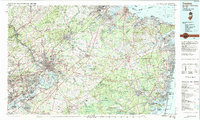 1982 Trenton1983 Print · USGSCentral New Jersey and the Delaware River valley are captured in the early eighties during a time of major highway expansion and suburban maturation. Researchers can trace the grounds of Princeton University, the historic Monmouth Battlefield, and the sprawling Fort Dix.
 - 1986 Map of Trenton, 1987 Print
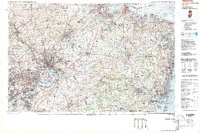 1986 Trenton1987 Print · USGSCentral New Jersey and the Delaware River valley are shown here during the mid-eighties, a period of dense suburban growth and military activity. Researchers can trace the sprawling grounds of the Fort Dix Military Reservation and the historic corridors of the Delaware & Raritan Canal State Park.
 - 1995 Map of Princeton, 2000 Print
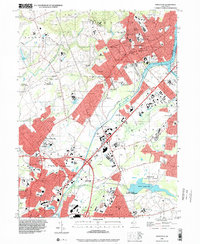 1995 Princeton2000 Print · USGSMid-century academic life and suburban growth converge in this mid-1990s look at the Mercer County corridor. Local historians can trace the legacy of educational landmarks like Princeton University or explore the canal-side history of Port Mercer and Penns Neck.
 - 2011 Map of Princeton, 2011 Print
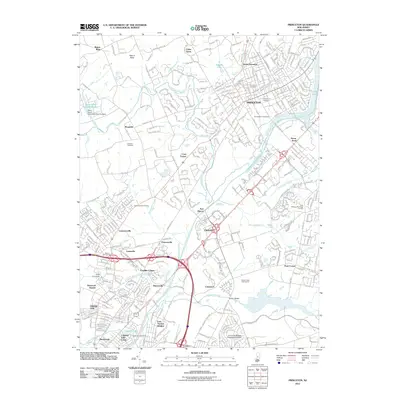 2011 Princeton2011 Print · USGSThe Princeton area of Mercer County is shown here in the early twenty-first century as a bustling hub of education and transit. Genealogists and historians can trace institutional sites like Princeton University and Rider University, or locate family plots in the Princeton Cemetery and Lawrenceville Cemetery.
 - 2014 Map of Princeton, 2014 Print
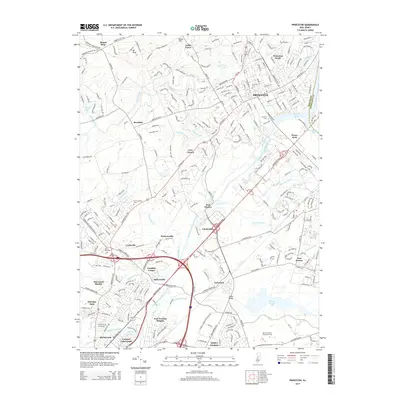 2014 Princeton2014 Print · USGSModern Princeton and Lawrence Township appear here amidst a dense network of universities and historic waterways. Genealogists and local historians can trace the grounds of Princeton Univ, locate graves at Princeton Cem, and follow the path of the Delaware and Raritan Canal.
 - 2016 Map of Princeton, 2016 Print
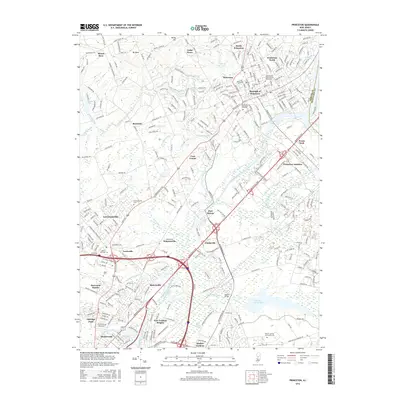 2016 Princeton2016 Print · USGSThe Princeton and Lawrenceville corridor in the mid-2010s shows a landscape defined by historic universities and the Delaware and Raritan Canal. Genealogists and local historians can trace sites like Princeton Cem, the Borough of Princeton, and the grounds of Rider Univ.
 - 2019 Map of Princeton, 2019 Print
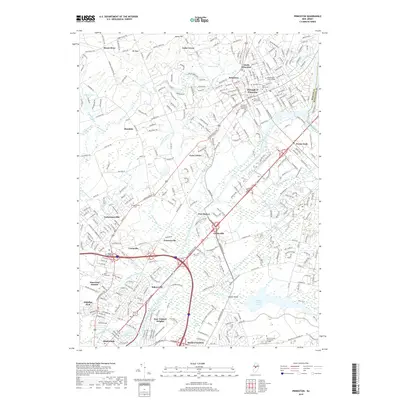 2019 Princeton2019 Print · USGSThe academic and canal-side landscapes of Mercer County are shown here in the late 2010s. Genealogists and historians can locate campuses like Princeton University and Rider University, alongside historic burial sites such as Princeton Cem and the Morris Hall Cem.
 - 2023 Map of Princeton, 2023 Print
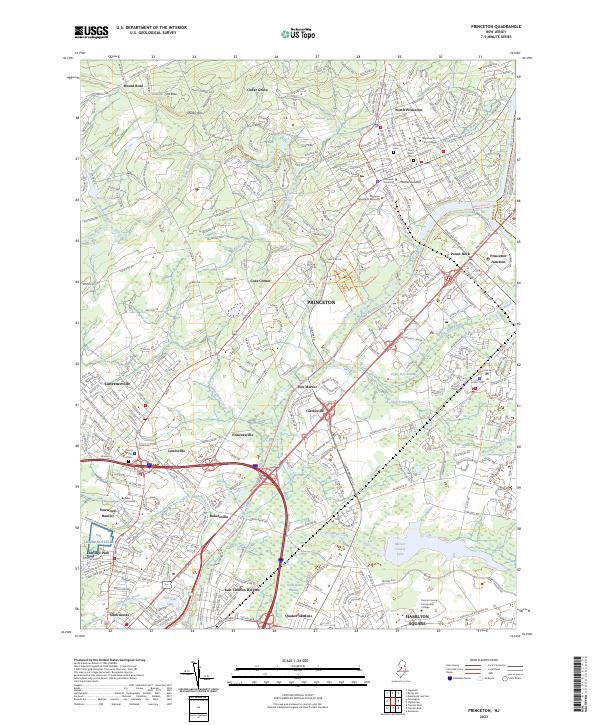 2023 Princeton2023 Print · USGSModern-day Princeton and its neighboring townships retain a dense layout of prestigious universities and colonial-era routes. Genealogists and historians can trace the grounds of Princeton University, find family records at Princeton Cem, or follow the path of the historic Delaware and Raritan Canal.
End of results
Showing maps 1-21 of 21
Top cities near Post Corner
- Edison historical maps
- Hamilton Township historical maps
- Trenton historical maps
- Franklin Township historical maps
- Jackson Township historical maps
- Levittown historical maps
See more
Frequently asked questions
- What are the different types of historical maps available for Post Corner?
- What is the oldest map of Post Corner?
- Where can I purchase historical maps of Post Corner for my home or office?
- Where can I download high-res historical maps of Post Corner?
- Are there historical topographic maps available for Post Corner?
- Is there historical aerial imagery available for Post Corner?
- Where are historical maps of Post Corner sourced from?