1950s Maps of Los Alamos, New Mexico
Explore 7 historic maps of Los Alamos from the 1950s. These maps offer a rare glimpse into what life looked like during the 1950s — showing old roads, neighborhoods, homes, and landmarks that have changed or disappeared over time.
Whether you're researching your family's past, planning a metal detecting trip, or studying how Los Alamos's landscape evolved across the 1950s, these high-resolution maps are a powerful tool for exploring the history of this region.
- Focus on a specific era: All maps on this page are from the 1950s, giving you a focused view of this time period.
- See what’s changed: Compare century-old streets, trails, and buildings to today's modern landscape using overlays and satellite layers.
- Research with precision: Use these maps for genealogy, historical research, land use analysis, or educational projects.
- View, download, or print: Maps are fully viewable online in high resolution, and can be downloaded or printed for your own records.
Start exploring Los Alamos's history through authentic maps from the 1950s. This is your window into the past.
Los Alamos, NM maps
(7)- 1952 Map of White Rock, 1954 Print
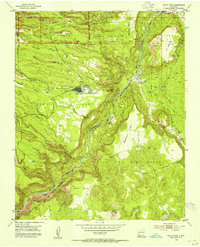 1952 White Rock1954 Print · USGSThe high mesas of Los Alamos and Santa Fe counties are captured here in the early fifties, documenting the remote canyon systems and early utility networks. Genealogists and historians can trace land grant boundaries and find markers of early industry like the Old Railroad Grade and Totavi.3 unique versions available
 - 1952 Map of Frijoles, 1954 Print
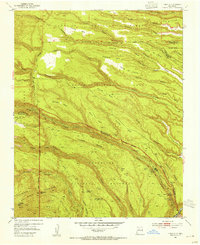 1952 Frijoles1954 Print · USGSThe Pajarito Plateau's high mesas and deep canyons are shown in the early fifties, a time when these archaeological landscapes were under federal stewardship. Trace the ancient paths of the Stone Lions Trail to reach the Pueblo of the Stone Lions and the Ceremonial Cave.3 unique versions available
 - 1952 Map of Puye, 1954 Print
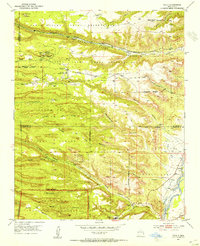 1952 Puye1954 Print · USGSThe Pajarito Plateau in the early fifties reveals a landscape of deep canyons and ancient heritage. Researchers can locate archaeological sites like the Cliff Dwellings at Puye or trace the early industrial footprint of the General Pumice Mine.4 unique versions available
 - 1952 Map of Guaje Mountain, 1954 Print
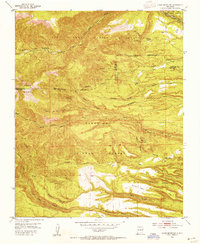 1952 Guaje Mountain1954 Print · USGSLos Alamos and the surrounding high desert mesas are captured here in the early fifties, documenting a landscape of deep canyons and tribal lands. Researchers can trace the Quemazon Trail, locate ancient Pueblo Ruins, and study the boundaries of the Santa Clara Pueblo Grant.3 unique versions available
 - 1953 Map of Frijoles, 1958 Print
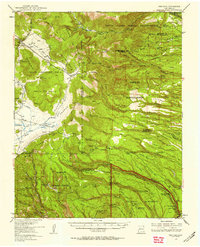 1953 Frijoles1958 Print · USGSThe Pajarito Plateau was a landscape of deep canyons and volcanic mesas in the years following the war. Genealogists and historians can trace the mining remnants at Bland, ancestral Pueblo Ruins, and early homesteads like the Evans Griffin Place.3 unique versions available
 - 1953 Map of Espanola, 1958 Print
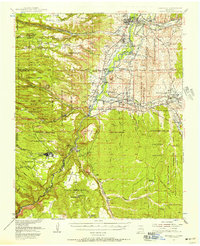 1953 Espanola1958 Print · USGSNorthern New Mexico in the early fifties shows a landscape of deep canyons and ancestral Pueblo lands along the RIO GRANDE. Genealogists and historians can trace family-named sites like Evans Ranch or locate ancient Cliff Dwellings and the Old Railroad Grade.3 unique versions available
 - 1958 Map of Albuquerque
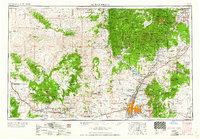 1958 Albuquerque1958 Print · USGSAlbuquerque and the surrounding high desert are captured here during a period of massive federal expansion and postwar growth. Researchers can trace the development of Kirtland Air Force Base, find ancestral homes in Pueblo de Santa Ana, or locate industrial sites like the Jackpile Mine.
End of results
Showing maps 1-7 of 7
Top cities near Los Alamos
Frequently asked questions
- What are the different types of historical maps available for Los Alamos?
- What is the oldest map of Los Alamos?
- Where can I purchase historical maps of Los Alamos for my home or office?
- Where can I download high-res historical maps of Los Alamos?
- Are there historical topographic maps available for Los Alamos?
- Is there historical aerial imagery available for Los Alamos?
- Where are historical maps of Los Alamos sourced from?