1900s (20th Century) Maps of Fort Covington Center, Fort Covington
Explore 10 historic maps of Fort Covington Center from the 1900s (20th Century). These maps offer a rare glimpse into what life looked like during the 1900s — showing old roads, neighborhoods, homes, and landmarks that have changed or disappeared over time.
Whether you're researching your family's past, planning a metal detecting trip, or studying how Fort Covington Center's landscape evolved across the 1900s, these high-resolution maps are a powerful tool for exploring the history of this region.
- Focus on a specific era: All maps on this page are from the 1900s, giving you a focused view of this time period.
- See what’s changed: Compare century-old streets, trails, and buildings to today's modern landscape using overlays and satellite layers.
- Research with precision: Use these maps for genealogy, historical research, land use analysis, or educational projects.
- View, download, or print: Maps are fully viewable online in high resolution, and can be downloaded or printed for your own records.
Start exploring Fort Covington Center's history through authentic maps from the 1900s. This is your window into the past.
Fort Covington Center, Fort Covington maps
(10)- 1915 Map of Malone, 1957 Print
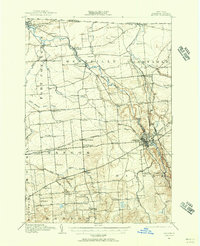 1915 Malone1957 Print · USGSFranklin County at the onset of the Great War reveals a landscape defined by industrial rail junctions and a dense network of district schools. Genealogists can trace family roots through numerous rural school sites and landmarks like the County Almshouse, Malone Junction, and Fort Covington.2 unique versions available
 - 1917 Map of Malone
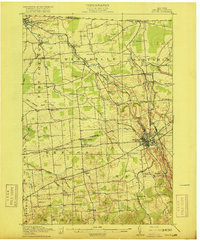 1917 Malone1917 Print · USGSNorthern New York's borderlands are captured here during the height of the steam-rail era, centered on the busy junction at Malone. Genealogists and local historians can trace family locations near dozens of rural schoolhouses or along the Rutland RR and Salmon River.5 unique versions available
 - 1948 Map of Ogdensburg, 1973 Print
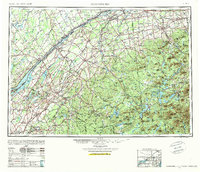 1948 Ogdensburg1973 Print · USGSThe international border along the St Lawrence River comes to life in the late 1940s, showing the vital rail and water connections between New York and Ontario. Researchers can trace the grounds of St Lawrence University, the massive Camp Drum military reservation, and the historic Rideau River and Canal.2 unique versions available
 - 1951 Map of Ogdensburg
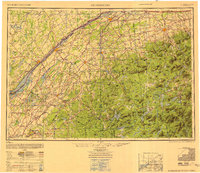 1951 Ogdensburg1951 Print · USGSThe St. Lawrence frontier and the North Country are captured here during the post-war era, from the river ports to the high Adirondacks. Genealogists and historians can trace the rail-and-river economy through Ogdensburg, the Rutland rail lines, and Potsdam.
 - 1953 Map of Ogdensburg
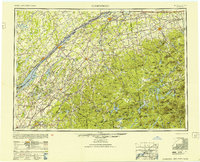 1953 Ogdensburg1953 Print · USGSThe North Country and St. Lawrence Valley are shown here in the early fifties, just as the region’s rail-and-river economy remained in full swing. Genealogists and historians can trace family-named corners and rural hubs along the Rutland railroad or locate heritage sites near Ogdensburg, Potsdam, and the St Regis Indian Reservation.
 - 1961 Map of Ogdensburg
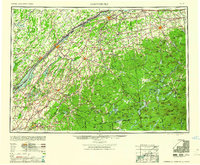 1961 Ogdensburg1961 Print · USGSThe St. Lawrence valley and the Adirondack high country meet in this early sixties survey during a peak era for rail and river commerce. Genealogists and historians can trace the paths of the New York Central railroad through remote settlements like Wanakena, Conifer, and Piercefield.
 - 1964 Map of Ft. Covington, 1965 Print
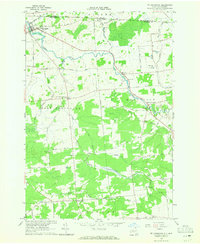 1964 Ft. Covington1965 Print · USGSNear the international border in the mid-1960s, this area of Franklin County shows a landscape of river-bend settlements and rural townships. Researchers can trace family roots through numerous burial sites like Elmwood Cem and Coal Hill Cem, or locate old homesteads near Cooks Corners.2 unique versions available
 - 1985 Map of Massena
 1985 Massena1985 Print · USGSNorthern New York at the mid-eighties shows a landscape of river-driven industry and high mountain wilderness along the Canadian border. Researchers can trace the legacy of iron working and milling in Brasher Iron Works or follow the Raquette River through Massena and Potsdam.
 - 1993 Map of Fort Covington, 1995 Print
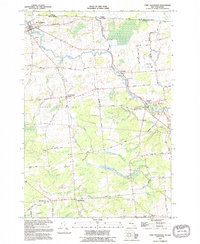 1993 Fort Covington1995 Print · USGSFranklin County's northern borderlands are shown here in the 1990s as the river-fed communities of Ft Covington and Westville continue their long history. Genealogists can trace family sites at Maple Hill Cem, Wylie Cem, and along Cushman Road.
 - 1994 Map of Massena
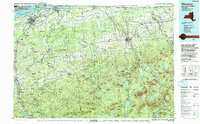 1994 Massena1994 Print · USGSThe St. Lawrence River valley and northern Adirondacks meet in the mid-1990s, revealing a landscape of international shipping, rail corridors, and dense state forests. Genealogists and historians can trace the foundations of Massena, the St Regis Indian Reservation, and small hamlets like Brasher Iron Works.
End of results
Showing maps 1-10 of 10
Top cities near Fort Covington Center
- Malone historical maps
- Malone historical maps
- Moira historical maps
- Brasher historical maps
- Bangor historical maps
- Westville historical maps
See more
Frequently asked questions
- What are the different types of historical maps available for Fort Covington Center?
- What is the oldest map of Fort Covington Center?
- Where can I purchase historical maps of Fort Covington Center for my home or office?
- Where can I download high-res historical maps of Fort Covington Center?
- Are there historical topographic maps available for Fort Covington Center?
- Is there historical aerial imagery available for Fort Covington Center?
- Where are historical maps of Fort Covington Center sourced from?