Old Maps of Johnstown, New York for Academic Research
Study the evolution of Johnstown with 57 high-resolution historic maps. Whether you're teaching, researching, or modeling changes in land use, these maps provide essential visual documentation of urban, environmental, and geographic change.
- Analyze long-term change: Track patterns in development, transportation, and natural features.
- Ideal for environmental or urban studies: Support academic projects with primary historical map data.
- Use in the classroom or lab: Educators and researchers rely on these maps to bring historical context to life.
These maps are a powerful tool for teaching, research, and visualizing how Johnstown has changed over the decades.
Johnstown, NY maps
(57)- 1896 Map of Fonda
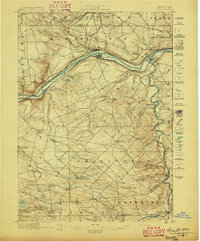 1896 Fonda1896 Print · USGSThe Mohawk Valley was a technological corridor in the 1890s, defined by the convergence of major rail lines and the Erie Canal. Genealogists and historians can trace the old post offices and hamlet life at Yatesville Randall P.O., Auriesville, and Rural Grove.
 - 1898 Map of Fonda
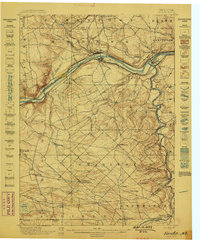 1898 Fonda1898 Print · USGSThe Mohawk Valley at the close of the 19th century was a powerhouse of transit and industry. Genealogists and historians can trace the bustling Erie Canal corridor through Fonda, the upland reaches of Charleston, and the path of the West Shore R. R.
 - 1901 Map of Lassellsville, 1959 Print
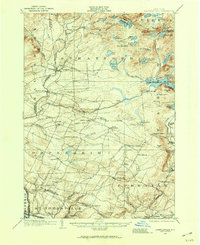 1901 Lassellsville1959 Print · USGSFulton and Montgomery Counties come alive in this turn-of-the-century survey of the Mohawk Valley and southern Adirondacks. Genealogists and researchers can pinpoint family holdings near Irish Settlement, the industry of Newkirk Mills, and the rails of the N. Y. C. and H. R. R. R.
 - 1902 Map of Fonda
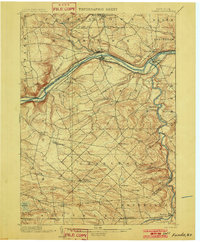 1902 Fonda1902 Print · USGSThe Mohawk Valley at the close of the nineteenth century reveals a critical junction of the Erie Canal and major railroads. Genealogists and historians can trace old homesteads and local centers like Auriesville, Sammonsville, and the remote Charleston Four Corners.8 unique versions available
 - 1903 Map of Gloversville
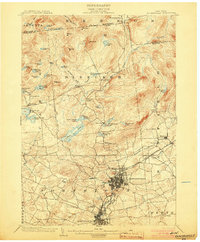 1903 Gloversville1903 Print · USGSGloversville and Johnstown anchor this turn-of-the-century survey as the region's industrial heart, surrounded by the growing Adirondack resort and timber lands. Genealogists and historians can trace the Electric R.R. or locate historic markers like the Battle Monument and old hamlets like Bleecker Center.8 unique versions available
 - 1903 Map of Lassellsville
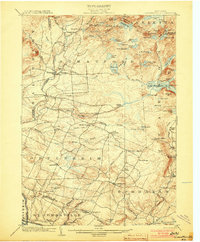 1903 Lassellsville1903 Print · USGSFulton County at the start of the century shows a landscape of upland mill sites and busy valley railroads. Genealogists can trace family names at Irish Settlement, Fical Corners, and the mill sites at Newkirk Mills.6 unique versions available
 - 1943 Map of Gloversville
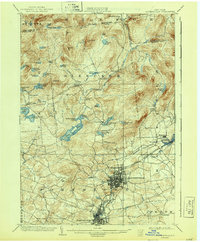 1943 Gloversville1943 Print · USGSGloversville and Johnstown serve as the industrial anchors of this Adirondack foothills region during the early twentieth century. Genealogists and historians can trace the paths of the Electric R. R. and locate family landmarks like Kingsboro, Bleecker, and the Battle Monument.
 - 1944 Map of Tribes Hill, 1959 Print
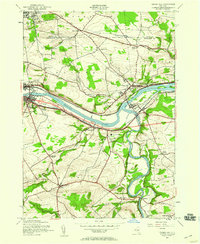 1944 Tribes Hill1959 Print · USGSThe Mohawk Valley's transition into the interstate era is documented here as the new thruway cuts across traditional canal and rail corridors. Genealogists and local historians can trace family-named sites like Wycoff Cem, Switzer Hill, and the Cadaughrity Sch.2 unique versions available
 - 1944 Map of Randall, 1959 Print
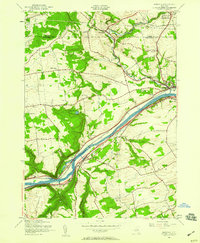 1944 Randall1959 Print · USGSThe Mohawk Valley's vital transportation corridor is captured here in the mid-1940s, showing the early integration of the Thruway alongside historic water and rail routes. Genealogists can trace family names at Sammons Cem, Winnie Sch, and the Tekakwitha Friary.3 unique versions available
 - 1945 Map of Lassellsville, 1964 Print
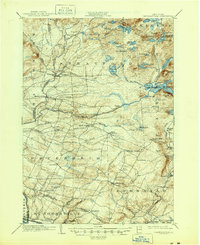 1945 Lassellsville1964 Print · USGSFulton County and the southern Adirondack fringe are captured here just after the turn of the century, showing a landscape of small mill towns and isolated highland settlements. Researchers can trace family-named crossroads like Fical Corners and vanished industrial sites at Glasgow Mills or Newkirk Mills.
 - 1945 Map of Lassellsville, 1964 Print
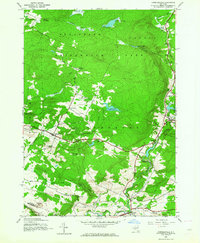 1945 Lassellsville1964 Print · USGSFulton and Montgomery Counties appear at the close of the Second World War as a landscape of rural hamlets and creek-side industry. Genealogists can trace family footprints at Dempster Corners, Miles School, and the Christman Cem.3 unique versions available
 - 1945 Map of Gloversville, 1966 Print
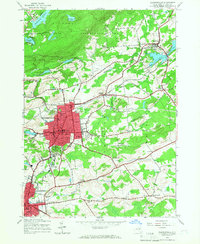 1945 Gloversville1966 Print · USGSGloversville and Johnstown are shown in high detail during the mid-forties, capturing the industrial and civic heart of Fulton County. Researchers can trace family roots at St Patricks Cem, locate the old County Home, or find vanished schoolhouses like Hale Mills School.
 - 1946 Map of Randall
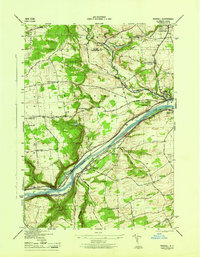 1946 Randall1946 Print · USGSThe Mohawk Valley in the mid-1940s displays a landscape shaped by centuries of transport, from the river and rails to the canal system. Researchers can trace ancestral sites like Sammons Cem, the Tekakwitha Friary, and several rural schoolhouses.
 - 1946 Map of Gloversville
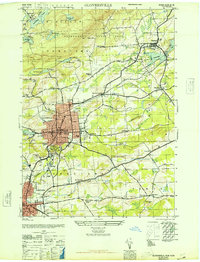 1946 Gloversville1946 Print · USGSFulton County industrial centers and rural outskirts are captured here just after the war. Local historians can trace the F J & G RR through Gloversville, find family plots at Prospect Hill Cem, or locate rural landmarks like Dennies Crossing.
 - 1946 Map of Peck Lake
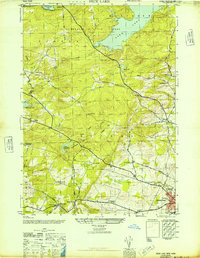 1946 Peck Lake1946 Print · USGSFulton County settlements and the southern Adirondacks are captured here in the years following the war. Researchers can trace the rural networks around Peck Lake, locating family burial sites like Boshart Cem and early schools including Clip Hill Sch.
 - 1946 Map of Tribes Hill
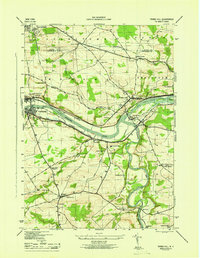 1946 Tribes Hill1946 Print · USGSThe Mohawk Valley in the mid-1940s reveals a landscape shaped by centuries of transit and settlement along the water. Researchers can trace the path of the Abandoned Erie Canal or find family landmarks like the Wycoff Cem and Cadaughrity Sch.
 - 1946 Map of Lassellsville
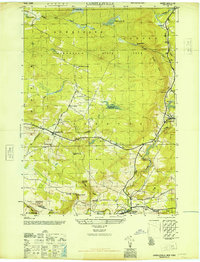 1946 Lassellsville1946 Print · USGSFulton County at the close of the war reveals a landscape of small hamlets and family-named landmarks tied to the Adirondack foothills. Researchers can trace ancestral locations at Fical Cem, the vanished Miles School, or the old industrial site at Glasgow Mills.
 - 1948 Map of Binghamton, 1980 Print
 1948 Binghamton1980 Print · USGSCentral New York and the Southern Tier thrive in the late 1940s as a hub of rail traffic and mountain industry. Researchers can trace historic transit lines like the Erie Railroad through Binghamton or find old valley settlements near Oneonta and Delhi.
 - 1950 Map of Binghamton
 1950 Binghamton1950 Print · USGSBinghamton and the surrounding Southern Tier are shown in the mid-century era, highlighting the intricate rail and river networks that drove local industry. Researchers can trace the path of the Erie Railroad and locate landmarks from Otsego Lake to Sidney Mountain.2 unique versions available
 - 1950 Map of Utica, 1951 Print
 1950 Utica1951 Print · USGSCentral New York in the post-war era showcases the industrial Mohawk Valley and the pristine Adirondack interior. Researchers can trace transportation networks like the New York Central Railroad and find early Cold War sites such as Griffiss Air Force Base.
 - 1957 Map of Utica
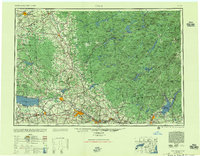 1957 Utica1957 Print · USGSCentral New York and the Adirondack foothills are captured here in the mid-fifties, showing a landscape defined by the Mohawk River corridor and the growing highway system. Genealogists and researchers can trace the rail lines of the New York Central and locate communities from Lowville to Gloversville.
 - 1958 Map of Binghamton
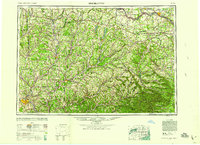 1958 Binghamton1958 Print · USGSCentral New York in the late fifties was a network of manufacturing cities and river valleys connected by vital rail lines. Genealogists and historians can trace family roots in Oneonta, Norwich, and Cooperstown or locate long-standing farms along Schoharie Creek.
 - 1962 Map of Peck Lake
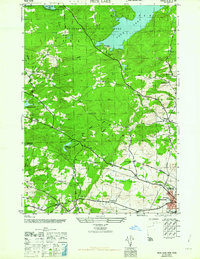 1962 Peck Lake1962 Print · USGSFulton County’s southern Adirondack foothills were well-established rural communities by the mid-1940s. Genealogists and local historians can trace family sites like Kecks Center Cem or follow the old Turnpike Road to the Wemple Sch.
 - 1962 Map of Utica
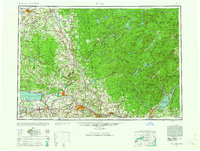 1962 Utica1962 Print · USGSCentral New York and the Adirondack wilderness are captured here during the mid-century era of highway and industrial expansion. Genealogists and historians can trace the development of the New York State Thruway and local rail lines connecting Utica, Rome, and Gloversville.3 unique versions available
 - 1963 Map of Gloversville
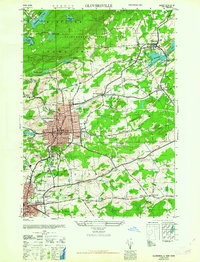 1963 Gloversville1963 Print · USGSGloversville and Johnstown stand at the height of their industrial era, linked by the Fonda Johnstown and Gloversville RR. Researchers can trace family roots at Fern Dale Cem or locate old neighborhood landmarks like Lexington Sch and the Littauer Hospital.
Showing maps 1-25 of 57
Top cities near Johnstown
- Amsterdam historical maps
- Gloversville historical maps
- Johnstown historical maps
- Mayfield historical maps
- Duanesburg historical maps
- Amsterdam historical maps
See more
Top neighborhoods of Johnstown
- Hale Mills historical maps
- Berkshire historical maps
- Smiths Corners historical maps
- Dennies Crossing historical maps
- West Bush historical maps
- Meco historical maps
See more
Frequently asked questions
- What are the different types of historical maps available for Johnstown?
- What is the oldest map of Johnstown?
- Where can I purchase historical maps of Johnstown for my home or office?
- Where can I download high-res historical maps of Johnstown?
- Are there historical topographic maps available for Johnstown?
- Is there historical aerial imagery available for Johnstown?
- Where are historical maps of Johnstown sourced from?