Old Maps of Little Falls, New York for Hiking & Exploration
Hike through history with 46 historic maps of Little Falls. Explore old trails, ghost towns, and forgotten backroads — perfect for outdoor adventurers and local explorers.
- Rediscover forgotten places: Map out old mining camps, roads, and footpaths that no longer exist on modern maps.
- Layer with modern tools: Combine with LiDAR or satellite views to plan hikes through historical terrain.
- Made for exploration: Popular among hikers, overlanders, and local history lovers.
Use these maps to find adventure and explore the hidden past of Little Falls.
Little Falls, NY maps
(46)- 1900 Map of Little Falls
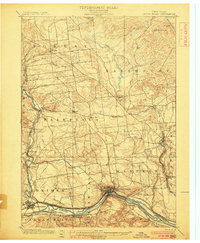 1900 Little Falls1900 Print · USGSThe Mohawk River valley serves as a bustling industrial artery at the turn of the century, dominated by canal and rail traffic. Genealogists can trace the early footprints of Little Falls, find the County House, or locate vanished stops like Ingham Mills Sta.
 - 1903 Map of Richfield Springs
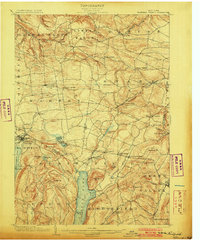 1903 Richfield Springs1903 Print · USGSThe northern Otsego County landscape at the turn of the century shows a bustling rural economy centered around the headwaters of the Susquehanna. Researchers can trace the early Steamboat Route on Otsego Lake and explore rail-era depots like Richfield Springs and Cherry Valley.6 unique versions available
 - 1903 Map of Little Falls
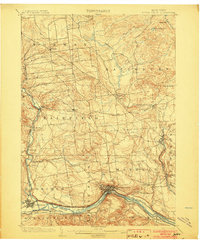 1903 Little Falls1903 Print · USGSThe Mohawk Valley was a bustling corridor of industry and transit at the turn of the century, where the river met a network of canals and railroads. Genealogists and historians can trace the foundations of Little Falls, find the historic site of Fort Herkimer, and locate rural landmarks like the County House.6 unique versions available
 - 1939 Map of Little Falls
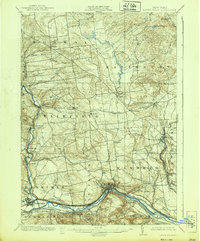 1939 Little Falls1939 Print · USGSThe Mohawk Valley was a bustling corridor of rail and water transport just before the mid-century, centered on the narrow gorge at Little Falls. Genealogists and historians can trace the paths of the Adirondack Division railroad and historic sites like Fort Herkimer and Indian Castle.
 - 1943 Map of Jordanville, 1954 Print
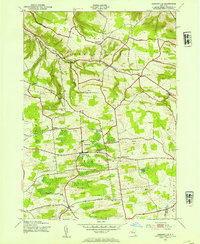 1943 Jordanville1954 Print · USGSHerkimer County's agricultural uplands and spiritual centers are frozen in time during the early 1940s. Genealogists can trace local roots through several family burial grounds like Heath Cem or locate the historic Holy Trinity Monastery near Jordanville.2 unique versions available
 - 1943 Map of Herkimer, 1960 Print
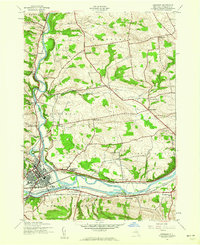 1943 Herkimer1960 Print · USGSHerkimer and the Mohawk Valley are captured in the mid-1940s, showing the vital intersection of the Barge Canal and industrial rail lines. Genealogists can locate numerous country schoolhouses like Shells Bush Sch and family landmarks such as Dillenbeck Corners or Fort Herkimer.2 unique versions available
 - 1943 Map of Little Falls, 1960 Print
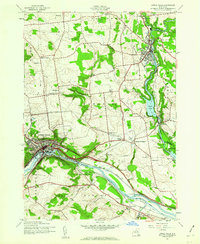 1943 Little Falls1960 Print · USGSThe Mohawk Valley at the height of the Second World War shows a landscape defined by the Barge Canal and industrial hubs like Little Falls. Trace family roots at the Fink-Van Valkenburg Cem or locate rural landmarks like Yellow Ch.2 unique versions available
 - 1943 Map of Van Hornesville, 1960 Print
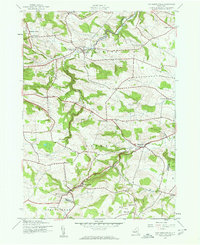 1943 Van Hornesville1960 Print · USGSThe rural landscape of Herkimer County is captured here in the mid-1940s, showing a dense network of country schoolhouses and crossroads. Researchers can trace ancestral locations like Wrights Corners, find old burials at Pumpkin Hook Cem, or locate the State Fish Hatchery.2 unique versions available
 - 1945 Map of Jordanville
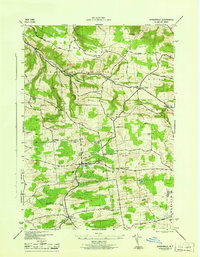 1945 Jordanville1945 Print · USGSUpper New York state during the mid-forties reveals a landscape of upland farms and monastic tradition. Genealogists can trace family lines through numerous rural sites like Highland Cem, School No 6, and the landmark Holy Trinity Monastery.
 - 1945 Map of Herkimer
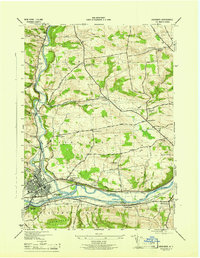 1945 Herkimer1945 Print · USGSThe Mohawk River valley during the mid-forties was a hub of canal and rail activity connecting Herkimer and Little Falls. Genealogists and local historians can trace rural school districts like Shells Bush Sch and find the site of Fort Herkimer or the County Home.
 - 1945 Map of Van Hornesville
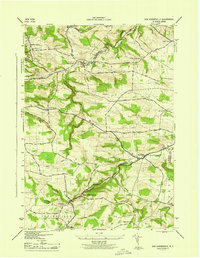 1945 Van Hornesville1945 Print · USGSThe rural hills of Herkimer County appear here in the mid-1940s, showing a landscape of small farming hamlets and creek-side settlements. Researchers can locate family landmarks like Pumpkin Hook Cem, the State Fish Hatchery, and several local schools including Frog City School.
 - 1946 Map of Little Falls
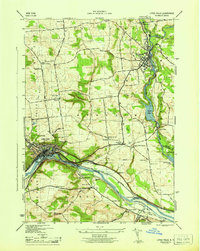 1946 Little Falls1946 Print · USGSHerkimer County at mid-century reveals a landscape defined by the Mohawk River and the busy Barge Canal. Researchers can trace the heritage of local hamlets like Ingham Mills and Dolgeville or locate ancestral sites at Yellow Ch and St Marys Cem.
 - 1948 Map of Binghamton, 1980 Print
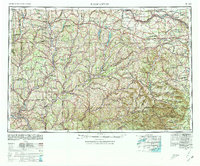 1948 Binghamton1980 Print · USGSCentral New York and the Southern Tier thrive in the late 1940s as a hub of rail traffic and mountain industry. Researchers can trace historic transit lines like the Erie Railroad through Binghamton or find old valley settlements near Oneonta and Delhi.
 - 1949 Map of Herkimer
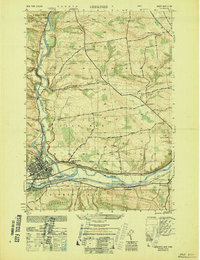 1949 Herkimer1949 Print · USGSThe Mohawk Valley in the late 1940s is captured here, showing the critical intersection of the Barge Canal and the New York Central railroad. Genealogists and local historians can trace family roots through numerous district schools like Locust Grove Sch and Stone House School, or locate ancestral plots at Shells Bush Cem.
 - 1949 Map of Little Falls
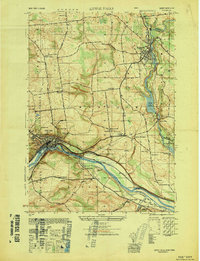 1949 Little Falls1949 Print · USGSThe Mohawk River valley during the late 1940s reveals a bustling landscape of rail and water transport. Trace family roots at St Marys Cem or locate old rural landmarks like Ingham Mills, Indian Castle Ch, and Five Mile Dam.
 - 1949 Map of Little Falls
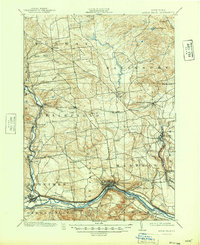 1949 Little Falls1949 Print · USGSHerkimer County's industrial heartland is captured here at mid-century, showcasing the vital Mohawk Valley transit corridor. Researchers can trace the path of the Erie Canal, the Barge Canal, and early rail stops like Ingham Mills Sta. and Dolgeville.
 - 1950 Map of Binghamton
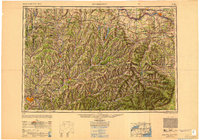 1950 Binghamton1950 Print · USGSBinghamton and the surrounding Southern Tier are shown in the mid-century era, highlighting the intricate rail and river networks that drove local industry. Researchers can trace the path of the Erie Railroad and locate landmarks from Otsego Lake to Sidney Mountain.2 unique versions available
 - 1950 Map of Utica, 1951 Print
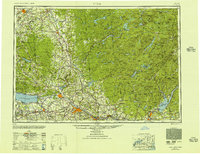 1950 Utica1951 Print · USGSCentral New York in the post-war era showcases the industrial Mohawk Valley and the pristine Adirondack interior. Researchers can trace transportation networks like the New York Central Railroad and find early Cold War sites such as Griffiss Air Force Base.
 - 1957 Map of Utica
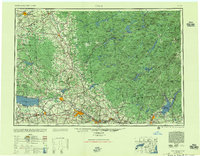 1957 Utica1957 Print · USGSCentral New York and the Adirondack foothills are captured here in the mid-fifties, showing a landscape defined by the Mohawk River corridor and the growing highway system. Genealogists and researchers can trace the rail lines of the New York Central and locate communities from Lowville to Gloversville.
 - 1958 Map of Binghamton
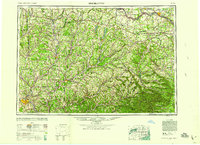 1958 Binghamton1958 Print · USGSCentral New York in the late fifties was a network of manufacturing cities and river valleys connected by vital rail lines. Genealogists and historians can trace family roots in Oneonta, Norwich, and Cooperstown or locate long-standing farms along Schoharie Creek.
 - 1962 Map of Utica
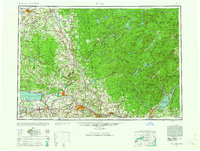 1962 Utica1962 Print · USGSCentral New York and the Adirondack wilderness are captured here during the mid-century era of highway and industrial expansion. Genealogists and historians can trace the development of the New York State Thruway and local rail lines connecting Utica, Rome, and Gloversville.3 unique versions available
 - 1963 Map of Binghamton
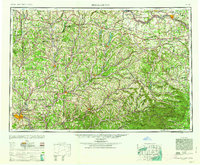 1963 Binghamton1963 Print · USGSThe Southern Tier and Catskill peaks are shown in the early sixties as new reservoirs reshaped the valleys. Trace historic rail corridors like the Erie Lackawanna RR and explore lakeside settlements such as Cooperstown and Oneonta.
 - 1964 Map of Utica
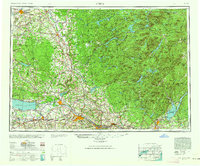 1964 Utica1964 Print · USGSCentral New York and the high wilderness of the Adirondacks are captured here during the post-war era of infrastructure expansion. Researchers can trace the development of the New York State Thruway alongside historic corridors like the Oneida Lake (Barge Canal Route) and the N. Y. Central railroad.
 - 1967 Map of Utica
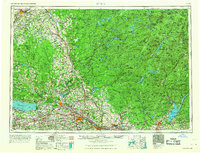 1967 Utica1967 Print · USGSCentral New York's industrial Mohawk Valley meets the Adirondack wilderness in the 1960s, showing the region's transition from manufacturing hubs to state-managed parklands. Trace historic settlements and sites like Griffiss Air Force Base, Colgate University, and the Lyons Falls Paper Mill.
 - 1985 Map of Gloversville, 1986 Print
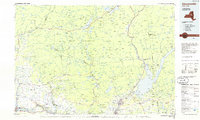 1985 Gloversville1986 Print · USGSThe southern Adirondacks meet the Mohawk Valley industrial corridor during the mid-eighties, showcasing a landscape of high-country lakes and riverside manufacturing towns. Trace the historical alignment of the Erie Canal and Conrail lines or locate landmarks like the Herkimer Home State Historic Site.2 unique versions available
Showing maps 1-25 of 46
Top cities near Little Falls
- German Flatts historical maps
- Herkimer historical maps
- Ilion historical maps
- Herkimer historical maps
- Frankfort historical maps
- Little Falls historical maps
See more
Top neighborhoods of Little Falls
Frequently asked questions
- What are the different types of historical maps available for Little Falls?
- What is the oldest map of Little Falls?
- Where can I purchase historical maps of Little Falls for my home or office?
- Where can I download high-res historical maps of Little Falls?
- Are there historical topographic maps available for Little Falls?
- Is there historical aerial imagery available for Little Falls?
- Where are historical maps of Little Falls sourced from?