Old Maps of Cicero, New York for Genealogy
Trace your family roots with 69 historic maps of Cicero. These high-res maps reveal old neighborhoods, homesites, landmarks, and streets — helping you uncover where your ancestors lived and how the area evolved over time.
- Explore historic neighborhoods: Identify where your relatives may have lived in the 1800s or 1900s.
- Compare maps over time: Trace the changes in streets, buildings, and landmarks for multi-generational research.
- Perfect for genealogy & ancestry research: Used by family historians and researchers to map out lineage and migration.
These maps are an incredible resource for exploring your personal connection to Cicero's past.
Cicero, NY maps
(69)- 1895 Map of Chittenango
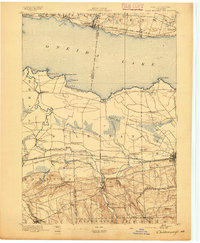 1895 Chittenango1895 Print · USGSMadison County and the southern shores of Oneida Lake are shown here at the height of the canal and rail era. Researchers can trace the path of the Erie Canal through Chittenango and Canastota or locate vanished sites like Fyler Settlement.
 - 1895 Map of Syracuse
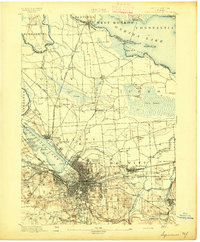 1895 Syracuse1895 Print · USGSSyracuse and the surrounding canal country are captured here in the late nineteenth century as the region thrived on salt production and rail traffic. Trace the vanished industrial Salt Sheds, the historic Erie Canal, and landmarks like the State Fair Grounds.
 - 1898 Map of Syracuse
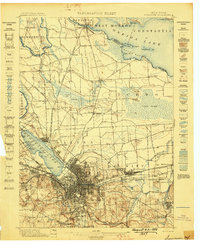 1898 Syracuse1898 Print · USGSSyracuse was a burgeoning railroad and canal junction at the end of the nineteenth century, surrounded by thriving villages and salt works. Genealogists and historians can trace family-named sites and vanished industrial works near the Salt Sheds, Cicero Swamp, and Fayetteville.10 unique versions available
 - 1898 Map of Chittenango
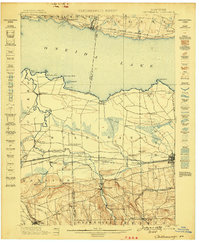 1898 Chittenango1898 Print · USGSThe northern shore of Oneida Lake and the bustling Erie Canal corridor are captured here during the peak of New York's rail expansion. Researchers can trace the original canal path through Chittenango or locate vanished stops along the West Shore R. R. and Elmira and Cortland Br.
 - 1902 Map of Chittenango
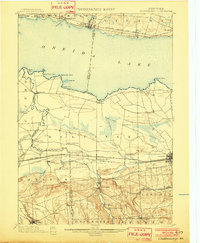 1902 Chittenango1902 Print · USGSMadison and Onondaga Counties are shown at a peak of rail and canal activity in the early 1900s. Genealogists and historians can trace the path of the Erie Canal through Canastota or locate smaller locales like Fyler Settlement and Quality Hill.7 unique versions available
 - 1938 Map of Syracuse East
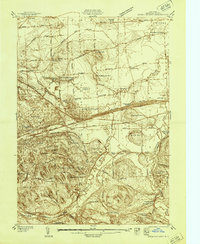 1938 Syracuse East1938 Print · USGSOnondaga County in the late 1930s shows a landscape of rail yards and growing suburban hamlets. Researchers can trace the industrial footprint of the New York Central Yards or locate local landmarks like the Orphans Home and St Marys Cemetery.2 unique versions available
 - 1939 Map of Syracuse West
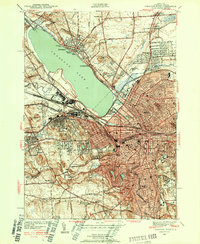 1939 Syracuse West1939 Print · USGSSyracuse and its surrounding townships show the height of the pre-war industrial era as the city expands toward the shores of Onondaga Lake. Genealogists and historians can trace the foundations of the community through the Erie Canal (Abandoned), the Salt Museum, and Syracuse University.3 unique versions available
 - 1940 Map of Brewerton
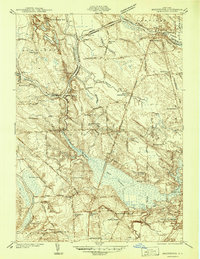 1940 Brewerton1940 Print · USGSThe northern reaches of Onondaga County are captured here just before the war, centered on the historic Oneida River and canal systems. Researchers can trace the era's rural infrastructure through Woodard Sta, the Peat Swamp, and old landmarks like Morgan Ch.
 - 1940 Map of Cicero, 1957 Print
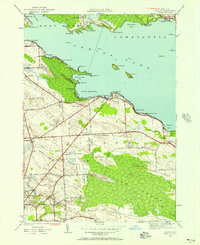 1940 Cicero1957 Print · USGSOneida Lake’s southern shoreline was still largely rural and agricultural in the years before the war. Genealogists and local historians can trace family-named landmarks and early district schools like Van Anthrup Sch and the Cobblestone Sch.
 - 1941 Map of Cleveland
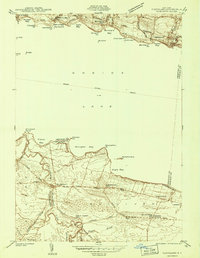 1941 Cleveland1941 Print · USGSOneida Lake’s central waters and the surrounding shorelines are captured here in the early 1940s, highlighting a landscape of rail-connected villages and rural school districts. Genealogists can locate family landmarks like Smith Ridge Cem or trace the path of the New York Ontario and Western RR through Bernhard Bay.2 unique versions available
 - 1943 Map of Syracuse East
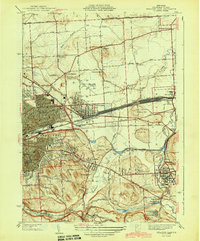 1943 Syracuse East1943 Print · USGSEastern Onondaga County during the mid-forties shows the industrial height of the rail and canal era. Genealogists and researchers can trace local landmarks like the Orphans Home, St Marys Cemetery, and the freight Yards at Minoa.2 unique versions available
 - 1943 Map of Brewerton
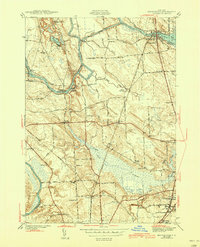 1943 Brewerton1943 Print · USGSDuring the early 1940s, the rural landscape between Oneida Lake and North Syracuse was a network of small hamlets and water-based transit. Genealogists can trace family footprints at Dutch Settlement, find old schoolhouses like Baker Sch, or locate the Pine Plains Cem.2 unique versions available
 - 1943 Map of Manlius
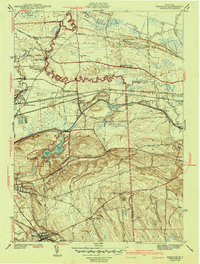 1943 Manlius1943 Print · USGSOnondaga County in the early 1940s reveals a landscape where historic waterways meet modern rail and air infrastructure. Researchers can trace the paths of the Old Erie Canal, locate the Manlius Academy, and explore rural sites like Fyler Settlement.2 unique versions available
 - 1944 Map of Cleveland
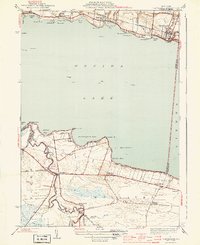 1944 Cleveland1944 Print · USGSOneida Lake's northern and southern shores are captured here during the mid-1940s, showing a landscape defined by the railroad and the canal. Genealogists can trace family roots through school locations like Bushnell Sch and early road networks including Bull Street and Lagrange Road.2 unique versions available
 - 1944 Map of Cicero
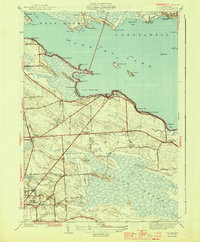 1944 Cicero1944 Print · USGSOnondaga County in the early 1940s shows a landscape of lakeside retreats and rural schoolhouses along the southern shore of Oneida Lake. Genealogists can trace family footprints at Cicero Center Cem and locate vanished local landmarks like Stone Arabia Sch and Toad Harbor.2 unique versions available
 - 1947 Map of Syracuse West
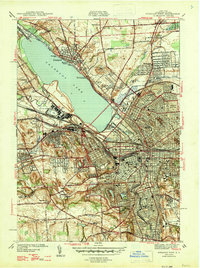 1947 Syracuse West1947 Print · USGSSyracuse and its northern suburbs are shown here in the mid-1940s, revealing a landscape defined by Onondaga Lake and the railroads. Genealogists and historians can trace the early layout of Solvay, Liverpool, and Mattydale, or locate local landmarks like the State Fairgrounds and Pitcher Hill Sch.2 unique versions available
 - 1950 Map of Utica, 1951 Print
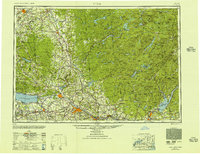 1950 Utica1951 Print · USGSCentral New York in the post-war era showcases the industrial Mohawk Valley and the pristine Adirondack interior. Researchers can trace transportation networks like the New York Central Railroad and find early Cold War sites such as Griffiss Air Force Base.
 - 1951 Map of Cleveland
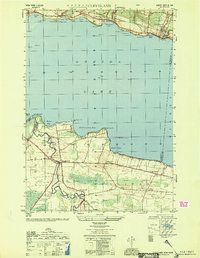 1951 Cleveland1951 Print · USGSOneida Lake and its northern shoreline villages are captured here in the early fifties, showing the region's transition into a modern transportation hub. Genealogists and local historians can trace the foundations of Cleveland, Bridgeport, and Constantia, alongside landmarks like Dakin Bay Sch and the Barge Canal Route.
 - 1957 Map of Utica
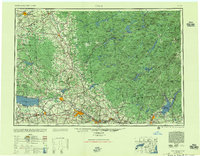 1957 Utica1957 Print · USGSCentral New York and the Adirondack foothills are captured here in the mid-fifties, showing a landscape defined by the Mohawk River corridor and the growing highway system. Genealogists and researchers can trace the rail lines of the New York Central and locate communities from Lowville to Gloversville.
 - 1957 Map of Cleveland, 1959 Print
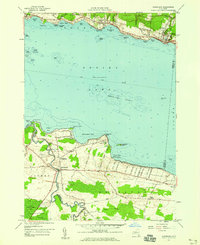 1957 Cleveland1959 Print · USGSOneida Lake’s southern and northern shores are captured in the late 1950s, showing the established communities of Cleveland and Bridgeport. Genealogists can trace family footprints near St Marys Ch, Bridgeport Central Sch, and the Cornell Univ Biological Field Sta.2 unique versions available
 - 1957 Map of Cicero, 1959 Print
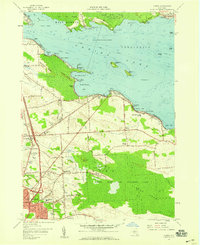 1957 Cicero1959 Print · USGSNorthern Onondaga County enters a period of rapid suburban growth in the late fifties as residential streets expand toward the lake. Researchers can trace family sites from North Syracuse to the rural Cicero Center, including the Cicero Center Cem and Thompson Rd Ch.2 unique versions available
 - 1957 Map of Syracuse East, 1959 Print
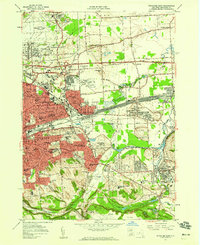 1957 Syracuse East1959 Print · USGSThe Syracuse suburbs and industrial corridors are captured during the peak of mid-century growth. Trace the rail-and-canal economy from the DeWitt Yards to the Erie Canal, alongside Syracuse University and the emerging Carrier Circle.4 unique versions available
 - 1957 Map of Manlius, 1959 Print
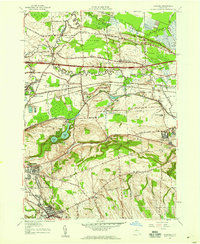 1957 Manlius1959 Print · USGSCentral New York is captured here during the mid-century suburban expansion across the Onondaga and Madison county line. You can trace the remnants of the Old Erie Canal alongside the New York State Thruway and find vanished local landmarks like Bennett Airport and Fyler Settlement.2 unique versions available
 - 1957 Map of Brewerton, 1959 Print
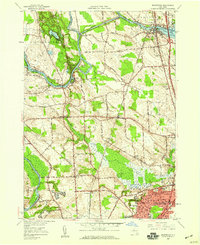 1957 Brewerton1959 Print · USGSCentral New York's river-and-canal landscape is captured here in the late fifties, showing the expanding settlements of Clay and North Syracuse. Researchers can trace old property boundaries and local landmarks like the Pine Plains Cem, Hayes Airfield, and the New York Central rail line.2 unique versions available
 - 1958 Map of Syracuse West, 1960 Print
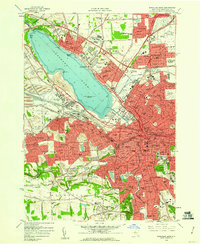 1958 Syracuse West1960 Print · USGSSyracuse and Onondaga Lake are seen here in the late fifties as suburban expansion reached communities like Fairmount and Mattydale. Researchers can trace the industrial footprint of Solvay, locate old family plots at Loomis Hill Cem, or find the Salt Museum and historic Fort Ste Marie De Ganidentaha.2 unique versions available
Showing maps 1-25 of 69
Top cities near Cicero
- Syracuse historical maps
- Clay historical maps
- Manlius historical maps
- Salina historical maps
- DeWitt historical maps
- De Witt historical maps
See more
Top neighborhoods of Cicero
- Cicero Center historical maps
- Sandy Bay historical maps
- Forest Beach historical maps
- Lower South Bay historical maps
- Brown Center historical maps
- Kraus Landing historical maps
Frequently asked questions
- What are the different types of historical maps available for Cicero?
- What is the oldest map of Cicero?
- Where can I purchase historical maps of Cicero for my home or office?
- Where can I download high-res historical maps of Cicero?
- Are there historical topographic maps available for Cicero?
- Is there historical aerial imagery available for Cicero?
- Where are historical maps of Cicero sourced from?