Old Maps of Montgomery, New York for Academic Research
Study the evolution of Montgomery with 54 high-resolution historic maps. Whether you're teaching, researching, or modeling changes in land use, these maps provide essential visual documentation of urban, environmental, and geographic change.
- Analyze long-term change: Track patterns in development, transportation, and natural features.
- Ideal for environmental or urban studies: Support academic projects with primary historical map data.
- Use in the classroom or lab: Educators and researchers rely on these maps to bring historical context to life.
These maps are a powerful tool for teaching, research, and visualizing how Montgomery has changed over the decades.
Montgomery, NY maps
(54)- 1902 Map of Schunemunk
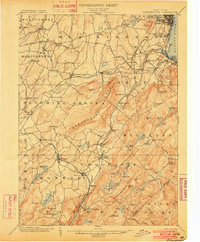 1902 Schunemunk1902 Print · USGSOrange County at the turn of the century shows a landscape defined by the rise of the railroad and the enduring presence of the Highlands. Genealogists and historians can trace old homesteads and industrial sites like Bull Mine, Oxford Depot, and the riverfront at Cornwall Landing.10 unique versions available
 - 1903 Map of Newburg
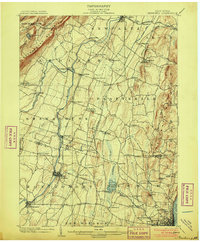 1903 Newburg1903 Print · USGSThe Hudson Valley was entering a period of rapid industrial and rail expansion when this survey was conducted. Researchers can trace the path of the New England RR, find local landmarks like the Powder Works, and locate old hamlets such as Ganahgote and Leptondale.10 unique versions available
 - 1904 Map of Ellenville, 1956 Print
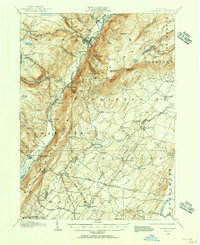 1904 Ellenville1956 Print · USGSThe Shawangunk Mountains and Wallkill Valley are captured here at the start of the twentieth century, showing a landscape of high ridges and industrial valleys. Researchers can trace the D. & H. Canal (Abandoned), the New York Ontario and Western RR, and historic centers like Ellenville or Wurtsboro.
 - 1906 Map of Ellenville
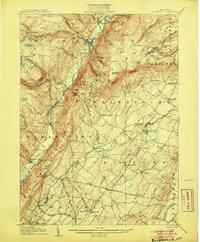 1906 Ellenville1906 Print · USGSThe Shawangunk ridge and Mamakating Hollow are captured here in the early 1900s, showing the region's shift from canal to rail transport. Genealogists can locate family homes and landmarks across Ellenville, Cragsmoor, and Wurtsboro, or trace the Delaware and Hudson Canal.7 unique versions available
 - 1906 Map of Goshen, 1959 Print
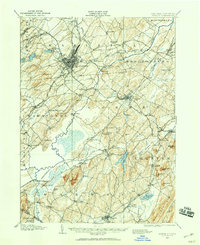 1906 Goshen1959 Print · USGSOrange County at the start of the twentieth century was a vital junction of rail lines and dairy country. Genealogists and historians can trace the early footprints of Middletown and Goshen, alongside smaller junctions like Campbell Hall and Pine Island.2 unique versions available
 - 1908 Map of Goshen
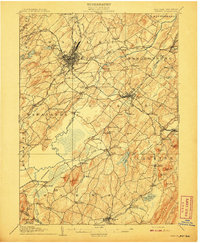 1908 Goshen1908 Print · USGSOrange County's agricultural and railroad heartland is captured here in the early 1900s as a complex web of small villages and connecting lines. Genealogists and historians can trace family locations near Middletown, the rural Wisner PO, or the lowlands of Pellets Island.6 unique versions available
 - 1930 Map of Schunemunk
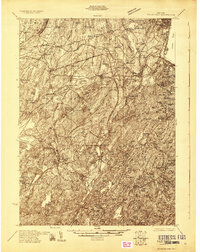 1930 Schunemunk1930 Print · USGSOrange County's rail and river landscapes come into sharp focus during the late Prohibition era. Researchers can trace historic district schoolhouses like Elmwood No. 6 School and the critical junction points of the ERIE RR near Vails Gate Junction.3 unique versions available
 - 1935 Map of Schunemunk
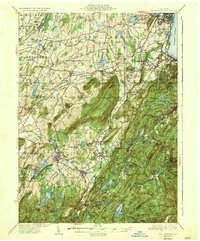 1935 Schunemunk1935 Print · USGSOrange County in the mid-1930s is a crossroads of heavy rail and Hudson River commerce. Genealogists and historians can trace defunct rail sidings, old school sites like Quaker Hill Sch, and industrial landmarks from Bull Mine to Firthcliffe.4 unique versions available
 - 1938 Map of Goshen
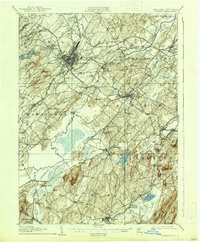 1938 Goshen1938 Print · USGSOrange County was a vital rail and agricultural corridor during the early twentieth century. Researchers can trace the path of the Erie RR through Middletown and explore long-standing farming communities like Florida and Orange Farm.
 - 1942 Map of Goshen, 1956 Print
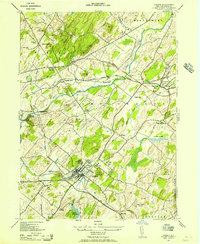 1942 Goshen1956 Print · USGSOrange County's agricultural and rail infrastructure is well-defined in the early 1940s as local hubs like Goshen and Campbell Hall expand. Genealogists and researchers can locate landmarks like Bordens Dairy, Blessed Sacrament Academy, and the Wallkill Cemetery.
 - 1942 Map of Walden, 1958 Print
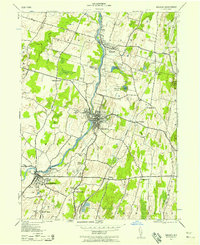 1942 Walden1958 Print · USGSOrange County's Wallkill Valley at the height of the war era reveals a landscape of riverside industry and family-owned dairy farms. Genealogists and local historians can trace legacy sites like the Borden Estate, Montgomery Worsted Mills, and Goodwill Church.
 - 1943 Map of Goshen
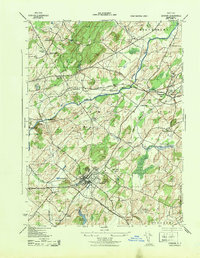 1943 Goshen1943 Print · USGSOrange County's agricultural and rail infrastructure is captured here during the Second World War as the region supported local industry and institutions. Genealogists can locate family landmarks like Bordens Dairy, the Sara Wells Airport, and schools such as Our Lady of the Blessed Sacrament Academy.
 - 1943 Map of Walden
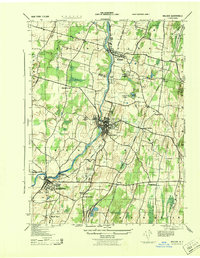 1943 Walden1943 Print · USGSOrange County's riverfront villages and dairy heritage are captured here in the early 1940s. Genealogists can locate family landmarks like the Borden Estate or St Marys Cemetery, while tracing the paths of the Wallkill Valley Branch railroad.
 - 1943 Map of Pinebush, 1944 Print
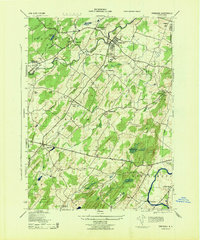 1943 Pinebush1944 Print · USGSThe rural borderlands of Orange and Ulster counties come alive in the 1940s, anchored by the rail hub at Pinebush. Genealogists can trace family homesteads like C. Judson and M. Durnin or locate landmarks like the Brimstone School and Hopewell Cemetery.
 - 1946 Map of Goshen
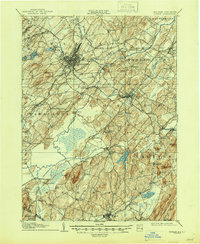 1946 Goshen1946 Print · USGSOrange County was a bustling crossroads of the Erie RR and several other lines during the early twentieth century. Genealogists and local historians can trace family-named hills and vanished rail stops from Pellets Island to Van Burenville and Stony Ford.
 - 1946 Map of Newburgh, 1964 Print
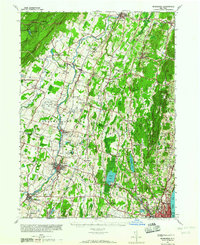 1946 Newburgh1964 Print · USGSMid-Hudson Valley life in the mid-forties is captured here, showing the region as it transitioned from a rural agricultural economy to a postwar industrial hub. Genealogists and local historians can locate dozens of small schools and cemeteries, from the New Paltz Cemetery to the Montgomery Worsted Mills.
 - 1947 Map of Newburgh North
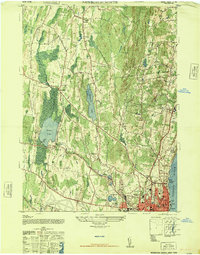 1947 Newburgh North1947 Print · USGSMid-century Orange County comes alive along the western Hudson at a time when river transport and rural schoolhouses defined the landscape. Genealogists can trace family names through the Plattekill School and Savilton, or locate landmarks like Pine Point Casino.
 - 1950 Map of Scranton, 1952 Print
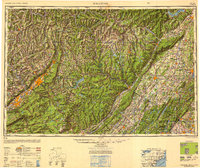 1950 Scranton1952 Print · USGSMid-century Northeast Pennsylvania and the Hudson Valley come alive in this survey of the tri-state region. Genealogists and historians can trace the dense rail networks of the Erie RR and DL&W RR between industrial hubs like Scranton and Wilkes-Barre.
 - 1953 Map of Scranton
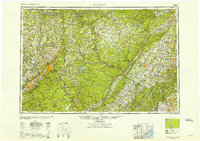 1953 Scranton1953 Print · USGSNortheastern Pennsylvania and the Catskills are shown in great detail during the early fifties, a time when rail lines and river valleys dictated the region's growth. Genealogists and historians can trace the industrial hearts of Scranton and Wilkes-Barre or locate remote landmarks like High Point and Lake Wallenpaupack.
 - 1956 Map of Pine Bush, 1958 Print
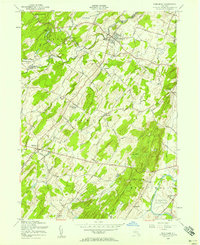 1956 Pine Bush1958 Print · USGSIn the mid-1950s, this area of the Hudson Valley maintained a rural character defined by the Erie RR and small valley settlements. Researchers can trace family history through sites like Howell Cem, St Pauls Ch, and the hamlet of Ulsterville.3 unique versions available
 - 1957 Map of Walden, 1958 Print
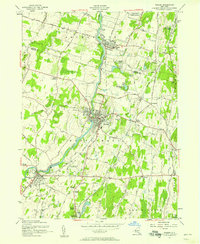 1957 Walden1958 Print · USGSOrange County's mid-century river valley comes alive in this survey of the river-and-rail corridor between Walden and Montgomery. Genealogists can trace family sites at Wallkill Valley Cemetery and Goodwill Ch, or explore the massive Maybrook Yards rail infrastructure.2 unique versions available
 - 1957 Map of Maybrook, 1959 Print
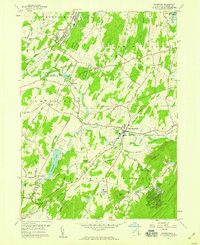 1957 Maybrook1959 Print · USGSMid-century Orange County is defined here by its busy rail junctions and rolling hills south of the Newburgh area. Genealogists can trace family names through numerous sites like Sears Cem and St Davids Cem or locate the sprawling Stewart AF Base grounds.4 unique versions available
 - 1957 Map of Newburgh, 1959 Print
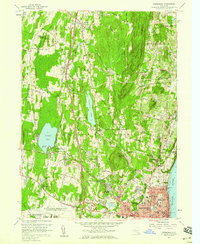 1957 Newburgh1959 Print · USGSMid-century Newburgh and its western hinterlands are caught here just as the Thruway began reshaping the Hudson Valley. Local historians can trace established landmarks like the Pine Pt Casino on Orange Lake or genealogy details at Belknap Cem.4 unique versions available
 - 1957 Map of Goshen, 1959 Print
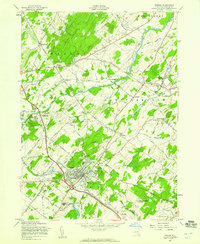 1957 Goshen1959 Print · USGSOrange County in the late fifties remains a landscape of harness racing tracks and quiet rural hamlets connected by the Erie Railroad. You can trace the village layout of Goshen or find ancestral sites like St Johns Cem and the Blessed Sacrament Academy.3 unique versions available
 - 1959 Map of Scranton
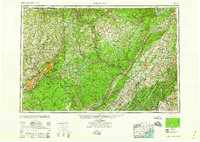 1959 Scranton1959 Print · USGSThe northern coalfields and the Hudson Valley meet in this mid-century survey of the Pennsylvania and New York borderlands. Genealogists and historians can trace the intricate rail networks of the Erie Railroad and the vast waters of Lake Wallenpaupack.2 unique versions available
Showing maps 1-25 of 54
Top cities near Montgomery
- Palm Tree historical maps
- Kiryas Joel historical maps
- Warwick historical maps
- Newburgh historical maps
- Wallkill historical maps
- Middletown historical maps
See more
Top neighborhoods of Montgomery
- Scotts Corners historical maps
- Berea historical maps
- Coldenham historical maps
- East Walden historical maps
- Fox Hill Bruderhof historical maps
- Kaisertown historical maps
See more
Frequently asked questions
- What are the different types of historical maps available for Montgomery?
- What is the oldest map of Montgomery?
- Where can I purchase historical maps of Montgomery for my home or office?
- Where can I download high-res historical maps of Montgomery?
- Are there historical topographic maps available for Montgomery?
- Is there historical aerial imagery available for Montgomery?
- Where are historical maps of Montgomery sourced from?