Old Maps of Patterson, New York for Genealogy
Trace your family roots with 48 historic maps of Patterson. These high-res maps reveal old neighborhoods, homesites, landmarks, and streets — helping you uncover where your ancestors lived and how the area evolved over time.
- Explore historic neighborhoods: Identify where your relatives may have lived in the 1800s or 1900s.
- Compare maps over time: Trace the changes in streets, buildings, and landmarks for multi-generational research.
- Perfect for genealogy & ancestry research: Used by family historians and researchers to map out lineage and migration.
These maps are an incredible resource for exploring your personal connection to Patterson's past.
Patterson, NY maps
(48)- 1892 Map of Carmel
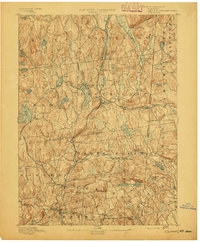 1892 Carmel1892 Print · USGSThe Putnam and Westchester borderlands are captured here in the late 1800s, showcasing a landscape of critical rail junctions and expanding reservoirs. Genealogists and historians can trace family-named sites like Coles Mills and Towner, or follow the industrial activity at the Tilly Foster Mine.
 - 1893 Map of Carmel
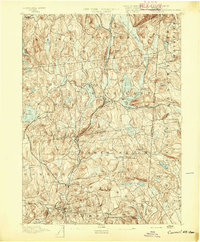 1893 Carmel1893 Print · USGSLower New York and western Connecticut appear here in the final decade of the nineteenth century, as the Croton watershed was being engineered for the city. Genealogists and historians can trace rail lines like the Mahopac Branch and find local landmarks such as the Tilly Foster Mine and Somers Center.
 - 1893 Map of Clove
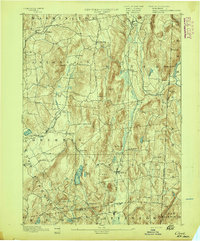 1893 Clove1893 Print · USGSDutchess County and the Connecticut border come to life in the 1890s, when iron furnaces and rural depots still defined the landscape. Trace the tracks of the Columbia and Clove R.R. and find old family landmarks like Crouse Store and Moore Mill.
 - 1894 Map of Clove
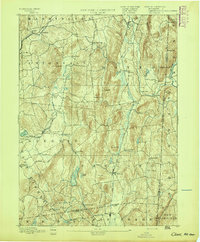 1894 Clove1894 Print · USGSDutchess County at the close of the nineteenth century was a land of steep ridges and vital rail corridors. Genealogists and local historians can trace family locations near Dover Furnace, Clove Valley, and rural landmarks like Crouse Store.
 - 1894 Map of Carmel
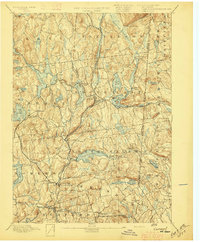 1894 Carmel1894 Print · USGSLower New York and western Connecticut appear here in the late nineteenth century as the Croton watershed was being heavily reshaped. Researchers can trace the early footprints of Brewster, the depths of the Tilly Foster Mine, and the original rail paths of the Mahopac Branch.8 unique versions available
 - 1898 Map of Clove
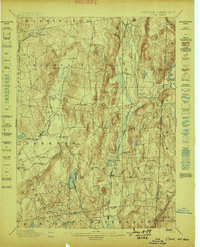 1898 Clove1898 Print · USGSDutchess County and the Connecticut borderlands are captured here in the late nineteenth century as railroads fueled the growth of valley towns. Genealogists and historians can trace family locations in Verbank Village, Stormville, and near landmarks like Bulls Bridge.
 - 1901 Map of Clove
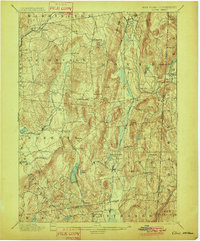 1901 Clove1901 Print · USGSDutchess County and the Connecticut borderlands are captured here at the close of the nineteenth century as the rail corridors began to shape local commerce. Genealogists can trace family holdings and old junctions from Dover Plains to Stormville and Moores Mill.11 unique versions available
 - 1928 Map of Carmel
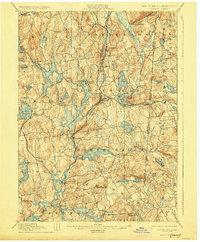 1928 Carmel1928 Print · USGSNear the New York and Connecticut border during the late 1920s, this landscape shows a network of massive reservoirs built to serve the city. Genealogists and historians can trace rail-era developments like the New York and Harlem RR and locate sites such as the Tilly Foster Mine and Farmers Mills.5 unique versions available
 - 1943 Map of Brewster, 1956 Print
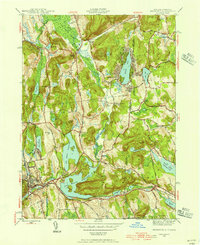 1943 Brewster1956 Print · USGSThe New York and Connecticut borderlands appear here in the 1940s, showcasing a landscape defined by the Croton Watershed's massive reservoirs. Researchers can trace ancestral locations from Sodom to Milltown, or locate landmarks like Big Elm Sch and Beaver Bog Ch.2 unique versions available
 - 1943 Map of Lake Carmel, 1958 Print
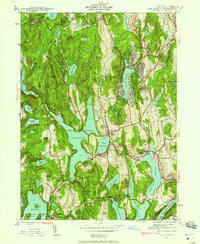 1943 Lake Carmel1958 Print · USGSPutnam County in the 1940s is defined by its massive reservoirs and the growth of lakeside communities like Lake Carmel. Researchers can trace old family lineages through the Raymond Hill Cem or locate industrial sites like the Tilly Foster Mine.
 - 1944 Map of Lake Carmel
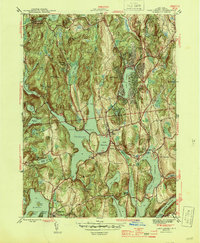 1944 Lake Carmel1944 Print · USGSPutnam County during the mid-1940s shows a landscape of deep reservoirs and rising recreational retreats. Genealogists and historians can trace the foundations of the area at Tilly Foster Mine, the Drew Seminary, and Raymond Hill Cem.2 unique versions available
 - 1945 Map of Pawling, 1956 Print
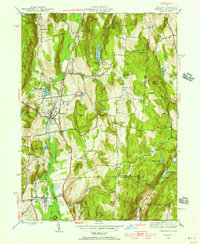 1945 Pawling1956 Print · USGSDutchess County at the close of the Second World War reveals a landscape of high ridges and significant wetlands along the New York-Connecticut border. Genealogists and local historians can trace legacy landmarks including the Quaker Hill Meeting House, the village of Pawling, and the vast expanse of The Great Swamp.2 unique versions available
 - 1946 Map of Brewster
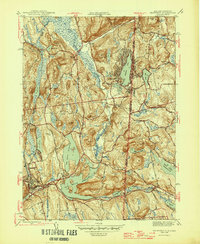 1946 Brewster1946 Print · USGSThe New York and Connecticut state line is defined by massive reservoirs and rural crossroads in the mid-forties. Genealogists can trace family legacies through Union Cem, Big Elm Sch, and the uniquely named settlement of Sodom.2 unique versions available
 - 1947 Map of Pawling
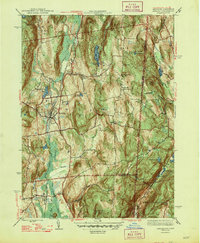 1947 Pawling1947 Print · USGSDutchess County at the edge of Connecticut was a landscape of highland ridges and river valleys in the late 1940s. Genealogists can locate family landmarks such as Hurd Sch, Akins Corners, and the historic Quaker Hill Meeting House.2 unique versions available
 - 1947 Map of Hartford, 1955 Print
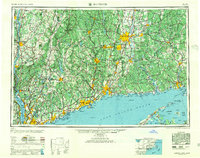 1947 Hartford1955 Print · USGSSouthern New England and the Hudson Valley are shown in detail during the post-war expansion era. Genealogists and researchers can trace local landmarks from the State Capitol and Yale University to the Stratford Lighthouse and Woodlawn Cem.2 unique versions available
 - 1948 Map of Poughquag
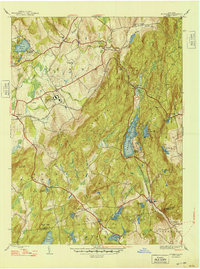 1948 Poughquag1948 Print · USGSDutchess and Putnam counties are captured here in the late 1940s, showing the early path of the Appalachian Trail through the New York highlands. Researchers can trace the massive Disciplinary Barracks at Green Haven and old schoolhouses like Gardner Hollow Sch.2 unique versions available
 - 1948 Map of Hartford
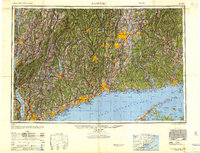 1948 Hartford1948 Print · USGSSouthern New England is captured here in the late 1940s, showcasing a landscape of thriving industrial cities and developing parkways. Genealogists and historians can trace the rail networks of the New York New Haven and Hartford RR or locate coastal defense sites like Fort Terry and Camp Shanks.2 unique versions available
 - 1958 Map of Pawling, 1960 Print
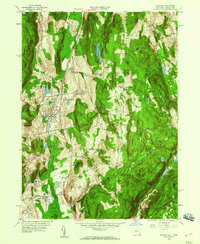 1958 Pawling1960 Print · USGSDutchess County and eastern Connecticut are mapped here in the late fifties, showing the region as the Harlem Valley railroad corridor remained central to local life. Genealogists can trace family landmarks and schools like Trinity-Pawling Sch, the Meeting House on Quaker Hill, and old junctions at Hurd Corners.4 unique versions available
 - 1958 Map of Brewster, 1960 Print
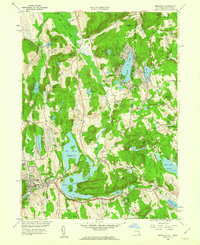 1958 Brewster1960 Print · USGSThe New York and Connecticut borderlands come alive in the late fifties as rail lines and new highways intersect among the Croton reservoirs. Genealogists and historians can trace old community ties in Sodom, Milltown, and the lakeside homes around Putnam Lake.5 unique versions available
 - 1960 Map of Poughquag, 1961 Print
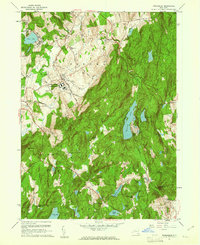 1960 Poughquag1961 Print · USGSDutchess and Putnam counties are captured in the early 1960s, showing a landscape defined by institutional landmarks and summer retreats. Genealogists and hikers can trace the Appalachian Trail past Whaley Lake or locate family plots at Beekman Cem.4 unique versions available
 - 1960 Map of Lake Carmel, 1962 Print
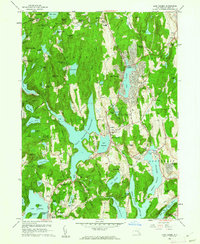 1960 Lake Carmel1962 Print · USGSPutnam County in the early sixties reveals a landscape of expanding residential tracts and massive water works. Genealogists can trace family roots through Raymond Hill Cem, the Towner Sch, or the small settlement of Farmers Mills.4 unique versions available
 - 1961 Map of Hartford
 1961 Hartford1961 Print · USGSSouthern New England and the Hudson Valley are shown here in the mid-fifties, capturing a landscape of booming coastal cities and interior hill towns. Researchers can trace the legacy of the New York New Haven and Hartford rail corridor and find strategic sites like Camp Shanks and Fort Michie.
 - 1962 Map of Hartford, 1971 Print
 1962 Hartford1971 Print · USGSSouthern New England and the Hudson Valley are shown in the early sixties, as suburban growth reached into the foothills. Trace the path of the New York New Haven & Hartford RR and find landmarks like Camp Nathan Hale and Gillette Castle State Park.3 unique versions available
 - 1965 Map of Hartford
 1965 Hartford1965 Print · USGSSouthern New England and the Hudson Valley are shown here during the mid-sixties expansion of the Interstate era. Trace the path of the New York New Haven & Hartford RR or locate historic landmarks like West Point Military Reservation and the Merritt Parkway.2 unique versions available
 - 1985 Map of Waterbury, 1986 Print
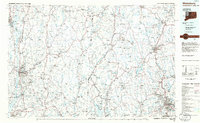 1985 Waterbury1986 Print · USGSThe Western Connecticut highlands and the Hudson Valley are captured in the mid-1980s, showing a landscape of deep forests and industrial river towns. Genealogists can trace family connections from Waterbury up through Litchfield and Torrington, while exploring the vast Barkhamsted Reservoir and Candlewood Lake basins.
Showing maps 1-25 of 48
Top cities near Patterson
- Danbury historical maps
- Yorktown historical maps
- Carmel historical maps
- East Fishkill historical maps
- Wappinger historical maps
- Ridgebury historical maps
See more
Top neighborhoods of Patterson
- Putnam Lake historical maps
- West Patterson historical maps
- Haines Corners historical maps
- Field Corners historical maps
- Steinbeck Corners historical maps
- Towners historical maps
Frequently asked questions
- What are the different types of historical maps available for Patterson?
- What is the oldest map of Patterson?
- Where can I purchase historical maps of Patterson for my home or office?
- Where can I download high-res historical maps of Patterson?
- Are there historical topographic maps available for Patterson?
- Is there historical aerial imagery available for Patterson?
- Where are historical maps of Patterson sourced from?