1960s Maps of Wake County, North Carolina
Explore 17 historic maps of Wake County from the 1960s. These maps offer a rare glimpse into what life looked like during the 1960s — showing old roads, neighborhoods, homes, and landmarks that have changed or disappeared over time.
Whether you're researching your family's past, planning a metal detecting trip, or studying how Wake County's landscape evolved across the 1960s, these high-resolution maps are a powerful tool for exploring the history of this region.
- Focus on a specific era: All maps on this page are from the 1960s, giving you a focused view of this time period.
- See what’s changed: Compare century-old streets, trails, and buildings to today's modern landscape using overlays and satellite layers.
- Research with precision: Use these maps for genealogy, historical research, land use analysis, or educational projects.
- View, download, or print: Maps are fully viewable online in high resolution, and can be downloaded or printed for your own records.
Start exploring Wake County's history through authentic maps from the 1960s. This is your window into the past.
Wake County, NC maps
(17)- 1962 Map of Greensboro
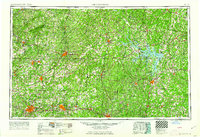 1962 Greensboro1962 Print · USGSThe Piedmont region along the Virginia and North Carolina border comes alive in the early 1960s, showing a landscape defined by industry and new reservoirs. Trace the path of the Virginian RR or explore the early development of Greensboro and Durham.
 - 1964 Map of Lake Wheeler, 1965 Print
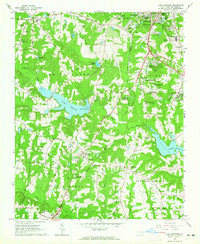 1964 Lake Wheeler1965 Print · USGSWake County south of the capital city shows a mix of rapid suburban growth and deep-rooted rural history during the mid-sixties. Genealogists and local historians can trace family sites like Franklin Cem alongside landmarks such as Yates Millpond and McCullers Crossroads.5 unique versions available
 - 1964 Map of Garner, 1965 Print
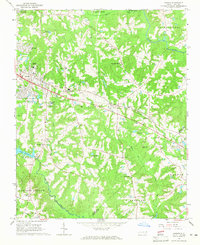 1964 Garner1965 Print · USGSGarner and the surrounding townships of Wake County are shown in the mid-sixties as the rail-side communities began to expand. Researchers can locate family landmarks and rural hubs like Hayes Chapel, Rand Cem, and the State Agriculture Experiment Station near Clayton.4 unique versions available
 - 1964 Map of Selma, 1965 Print
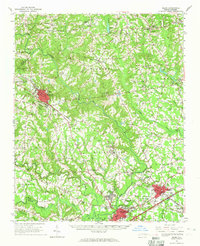 1964 Selma1965 Print · USGSEastern Johnston County flourished as a rail and river hub in the mid-sixties, dominated by the crossing of the Neuse River. Researchers can trace old family sites and crossroads from Archers Lodge to Pine Level, including the Harrison High Sch and Branch Chapel.
 - 1964 Map of Angier, 1965 Print
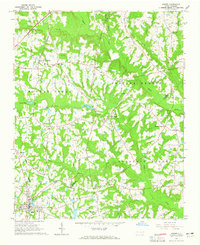 1964 Angier1965 Print · USGSAngier and the surrounding tobacco-farming country appear here in the mid-1960s at the junction of three counties. Genealogists and researchers can trace local family roots through numerous cemeteries and country churches like St Ann Ch, Fellowship Ch, and Ogburn Crossroads.3 unique versions available
 - 1964 Map of Clayton, 1965 Print
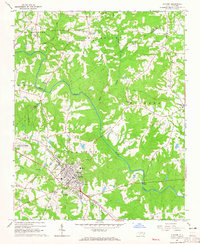 1964 Clayton1965 Print · USGSThe Neuse River valley in Johnston and Wake Counties is captured here in the mid-1960s, showing the early expansion of the Clayton area. Researchers can locate numerous family burial sites like Stephenson Cem and rural centers such as Archers Lodge and Shotwell.3 unique versions available
 - 1964 Map of Edmondson, 1965 Print
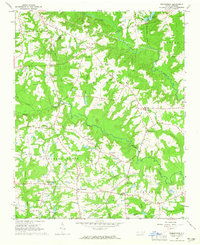 1964 Edmondson1965 Print · USGSJohnston County in the early sixties was a landscape of crossroads communities and family-run mills. Genealogists can locate specific family landmarks such as Penny Cem, trace the waters near McGee Mill, and find vanished gathering spots like Drug Store.3 unique versions available
 - 1964 Map of Garner, 1965 Print
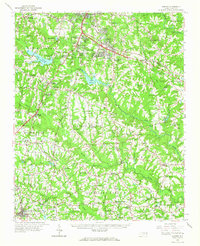 1964 Garner1965 Print · USGSThe rural landscapes south of Raleigh were transitioning from farm to suburb in the mid-sixties. Researchers can trace family roots at numerous country churches like Wooten Chapel Ch or locate sites such as McCullers, Willow Springs, and the historic McGee Mill.
 - 1966 Map of Greensboro
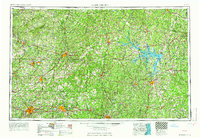 1966 Greensboro1966 Print · USGSThe North Carolina and Virginia Piedmont thrives during the mid-sixties, showcasing a landscape of textile hubs and expanding river reservoirs. Researchers can trace the rail corridors of the Southern Railway, find local landmarks like Elon College, or locate the extensive Camp Butner Military Reservation.
 - 1967 Map of Knightdale, 1972 Print
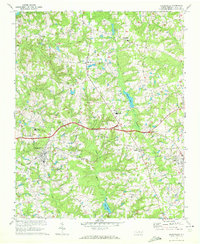 1967 Knightdale1972 Print · USGSEastern Wake County comes into focus in the mid-1960s, showing the rural character and emerging infrastructure between the capital and the coastal plain. Genealogists and local historians can trace family locations near Lizard Lick, Eagle Rock, and Hephzibah Ch.4 unique versions available
 - 1967 Map of Rolesville, 1972 Print
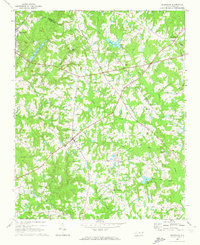 1967 Rolesville1972 Print · USGSWake County and Franklin County are captured in the late sixties as traditional agricultural crossroads begin to meet modern utility. Genealogists and local historians can trace family roots through Rolesville Cem or locate old community centers like Fowlers Crossroads and Harris Crossroads.3 unique versions available
 - 1967 Map of Wake Forest, 1972 Print
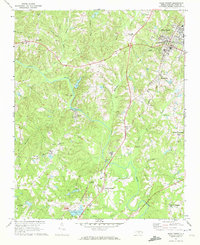 1967 Wake Forest1972 Print · USGSNorthern Wake County in the late sixties shows a landscape of growing crossroads and river communities centered around Wake Forest. Genealogists can locate family landmarks at Stony Hill Ch, Forestville, and the historic Southeastern Theological Seminary campus.6 unique versions available
 - 1967 Map of Bayleaf, 1972 Print
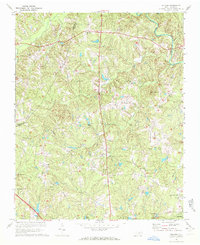 1967 Bayleaf1972 Print · USGSNorthern Wake County appears here in the late sixties, just before the rapid suburban growth of Raleigh began to transform these rural communities. Researchers can trace family sites near Wake-Minster, find the Soapstone Quarry, and locate old landmarks like Six Forks and Hickory Grove Ch.4 unique versions available
 - 1968 Map of Bunn West, 1972 Print
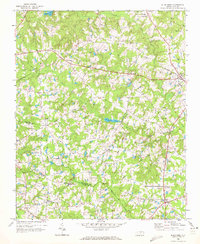 1968 Bunn West1972 Print · USGSThe Franklin and Wake county line in the late sixties reveals a landscape of small farming communities and country crossroads. Genealogists can trace family names through landmarks like Union Gospel Tabernacle or the rural settlements of Pearces and New Hope.2 unique versions available
 - 1968 Map of Raleigh West, 1972 Print
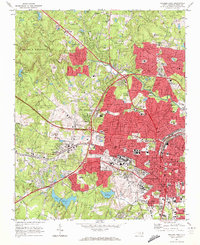 1968 Raleigh West1972 Print · USGSRaleigh in the late sixties reveals a city in rapid transition between its traditional downtown core and expanding suburban neighborhoods. Genealogists and historians can trace institutional landmarks like North Carolina State University alongside local settlements like Method and Asbury.6 unique versions available
 - 1968 Map of Raleigh East, 1972 Print
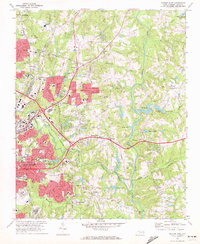 1968 Raleigh East1972 Print · USGSThe eastern expansion of Raleigh in the late sixties reveals a city emerging into the countryside near Milburnie and New Hope. Genealogists and historians can trace institutional sites like St Augustines College or local landmarks like Millbrook High Sch and Pet Crossroads.4 unique versions available
 - 1968 Map of Zebulon, 1972 Print
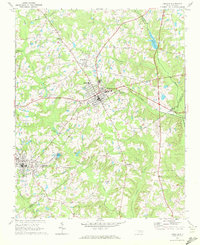 1968 Zebulon1972 Print · USGSThe eastern edges of Wake County meet Franklin and Nash in the late sixties, where small-town industry revolves around the rail lines. Local historians can trace family ties at St. Mathews Church or explore the origins of Lizard Lick and Wakefield.3 unique versions available
End of results
Showing maps 1-17 of 17
Top cities of Wake County
- Raleigh historical maps
- Cary historical maps
- Apex historical maps
- Wake Forest historical maps
- Fuquay-Varina historical maps
- Garner historical maps
See more
Frequently asked questions
- What are the different types of historical maps available for Wake County?
- What is the oldest map of Wake County?
- Where can I purchase historical maps of Wake County for my home or office?
- Where can I download high-res historical maps of Wake County?
- Are there historical topographic maps available for Wake County?
- Is there historical aerial imagery available for Wake County?
- Where are historical maps of Wake County sourced from?