1970s Maps of Wake County, North Carolina
Explore 11 historic maps of Wake County from the 1970s. These maps offer a rare glimpse into what life looked like during the 1970s — showing old roads, neighborhoods, homes, and landmarks that have changed or disappeared over time.
Whether you're researching your family's past, planning a metal detecting trip, or studying how Wake County's landscape evolved across the 1970s, these high-resolution maps are a powerful tool for exploring the history of this region.
- Focus on a specific era: All maps on this page are from the 1970s, giving you a focused view of this time period.
- See what’s changed: Compare century-old streets, trails, and buildings to today's modern landscape using overlays and satellite layers.
- Research with precision: Use these maps for genealogy, historical research, land use analysis, or educational projects.
- View, download, or print: Maps are fully viewable online in high resolution, and can be downloaded or printed for your own records.
Start exploring Wake County's history through authentic maps from the 1970s. This is your window into the past.
Wake County, NC maps
(11)- 1973 Map of Cary, 1975 Print
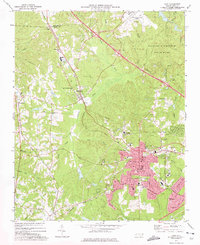 1973 Cary1975 Print · USGSCary and its neighboring communities are shown during a decade of growth as the Research Triangle region expanded in the early seventies. Genealogists and historians can locate family landmarks such as Hill Crest Cem, Christa Sanctified Holy Ch, and the rural crossing at Morrisville.5 unique versions available
 - 1973 Map of Green Level, 1975 Print
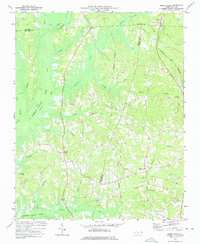 1973 Green Level1975 Print · USGSThe North Carolina Piedmont is captured here during the mid-seventies, showing the early stages of Lake B Everett Jordan. Researchers can trace old family landmarks and community hubs like Green Level, Marthas Chapel, and O'Kellys Ch.2 unique versions available
 - 1973 Map of Northeast Durham, 1975 Print
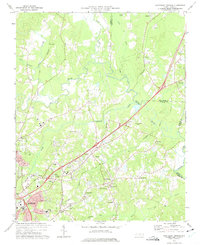 1973 Northeast Durham1975 Print · USGSNortheast of Durham in the early seventies, the landscape was defined by the merging of the Eno and Neuse rivers. Genealogists can trace family names at Oak Grove Memorial Gardens or locate rural landmarks like Gorman, Fairntosh, and Union Chapel.4 unique versions available
 - 1973 Map of Southeast Durham, 1982 Print
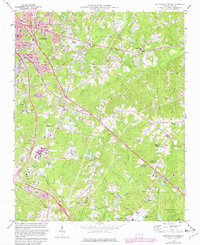 1973 Southeast Durham1982 Print · USGSSoutheast Durham and the Research Triangle transition from rural communities to a regional hub during the early seventies. Genealogists and researchers can locate family burial sites at Woodlawn Memorial Park and trace early crossroads like Bethesda and Nelson.2 unique versions available
 - 1974 Map of Apex, 1977 Print
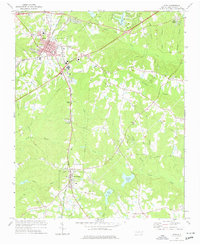 1974 Apex1977 Print · USGSWake County rail and rural life are at a crossroads in the mid-seventies, centered on the busy junction at Apex. Trace the paths of the Durham and Southern railroad through Feltonville and Holly Springs or locate St Marys Ch and Shelba Airport.5 unique versions available
 - 1974 Map of Fuquay-Varina, 1977 Print
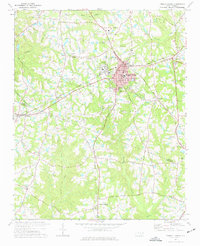 1974 Fuquay-Varina1977 Print · USGSThe intersection of the Durham and Norfolk Southern rail lines defines the Wake and Harnett county border in the mid-1970s. Local historians can trace the foundations of Fuquay-Varina and outlying communities like Chalybeate Springs, Wilbon, and Rawls.3 unique versions available
 - 1974 Map of New Hill, 1977 Print
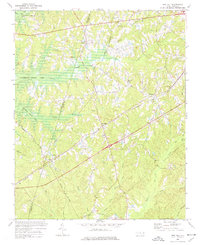 1974 New Hill1977 Print · USGSWake County was undergoing significant landscape changes in the 1970s as new water projects and rail lines intersected. Genealogists and local historians can trace family locations near Olive Chapel, Friendship, and the Pleasant Plains Sch before the rising waters of B Everett Jordan Lake altered the terrain.4 unique versions available
 - 1974 Map of Creedmoor, 1977 Print
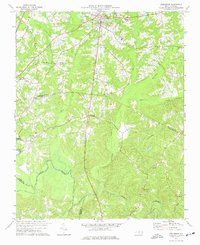 1974 Creedmoor1977 Print · USGSGranville and Wake Counties are shown during the mid-seventies, centered on the transit and agricultural hub of Creedmoor. Genealogists and historians can locate rural landmarks like New Light Ch, Sandy Plain, and the Seaboard Coast Line Railroad.6 unique versions available
 - 1974 Map of Cokesbury, 1977 Print
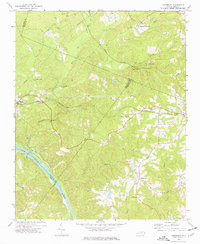 1974 Cokesbury1977 Print · USGSHarnett and Wake counties show a landscape of rural crossroads and river drainage during the mid-seventies. Trace the Norfolk Southern rail corridor or locate family landmarks like Prince Chapel and the Buckhorn Dam.4 unique versions available
 - 1978 Map of Franklinton
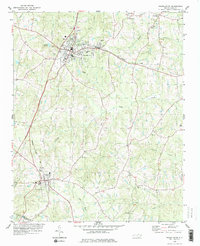 1978 Franklinton1978 Print · USGSFranklin County in the late seventies reveals a landscape shaped by the rail corridor connecting Franklinton and Youngsville. Researchers can trace rural lineages through numerous country churches like Oak Level Ch and family landmarks at Mitchiners Crossroads.2 unique versions available
 - 1978 Map of Grissom
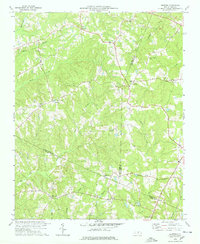 1978 Grissom1978 Print · USGSThe intersection of Granville, Wake, and Franklin counties comes into focus in the late 1970s, showing a rural landscape defined by creek-side settlements. Genealogists can trace family roots through numerous small churches and cemeteries like Kinchen Chapel, Marys Chapel, and Purnell.2 unique versions available
End of results
Showing maps 1-11 of 11
Top cities of Wake County
- Raleigh historical maps
- Cary historical maps
- Apex historical maps
- Wake Forest historical maps
- Fuquay-Varina historical maps
- Garner historical maps
See more
Frequently asked questions
- What are the different types of historical maps available for Wake County?
- What is the oldest map of Wake County?
- Where can I purchase historical maps of Wake County for my home or office?
- Where can I download high-res historical maps of Wake County?
- Are there historical topographic maps available for Wake County?
- Is there historical aerial imagery available for Wake County?
- Where are historical maps of Wake County sourced from?