1990s Maps of Wake County, North Carolina
Explore 25 historic maps of Wake County from the 1990s. These maps offer a rare glimpse into what life looked like during the 1990s — showing old roads, neighborhoods, homes, and landmarks that have changed or disappeared over time.
Whether you're researching your family's past, planning a metal detecting trip, or studying how Wake County's landscape evolved across the 1990s, these high-resolution maps are a powerful tool for exploring the history of this region.
- Focus on a specific era: All maps on this page are from the 1990s, giving you a focused view of this time period.
- See what’s changed: Compare century-old streets, trails, and buildings to today's modern landscape using overlays and satellite layers.
- Research with precision: Use these maps for genealogy, historical research, land use analysis, or educational projects.
- View, download, or print: Maps are fully viewable online in high resolution, and can be downloaded or printed for your own records.
Start exploring Wake County's history through authentic maps from the 1990s. This is your window into the past.
Wake County, NC maps
(25)- 1990 Map of Raleigh, 1991 Print
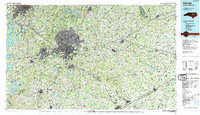 1990 Raleigh1991 Print · USGSGreater Raleigh and the Research Triangle entered a period of significant suburban growth during the 1990s. Researchers can trace the development of towns like Fuquay-Varina and Wake Forest or locate landmarks such as the State Prison and Harris Reservoir.2 unique versions available
 - 1991 Map of Henderson
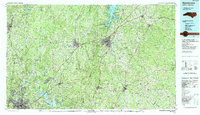 1991 Henderson1991 Print · USGSThe northern Piedmont and Virginia borderlands come into focus in the early nineties, showing a landscape defined by major reservoirs and growing towns. Trace the rail-and-road connections between Oxford, Henderson, and Durham while exploring the developing shores of Falls Lake.2 unique versions available
 - 1993 Map of Raleigh East, 1998 Print
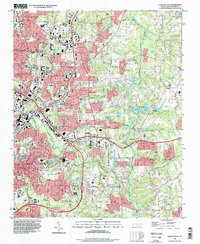 1993 Raleigh East1998 Print · USGSThe eastern edges of Raleigh and the growing community of Knightdale meet in the 1990s as residential subdivisions spread through the Neuse river valley. Researchers can trace the development of older settlements like Millbrook and Milburnie alongside landmarks like St Augustines College.
 - 1993 Map of Angier, 1998 Print
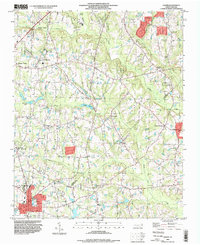 1993 Angier1998 Print · USGSThe borderlands of Wake, Johnston, and Harnett counties are shown here in the 1990s as the area transition toward modern growth. Genealogists can locate family landmarks like Wooten Chapel Cem, Sandy Grove Ch, and the Triple W Air Park.
 - 1993 Map of Northeast Durham, 1998 Print
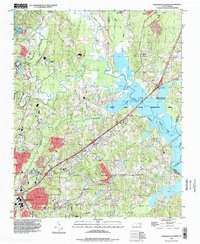 1993 Northeast Durham1998 Print · USGSThe Durham and Granville county line area comes into focus in the early nineties as the Neuse River basin transforms into a recreation hub. Genealogists and local historians can trace family-named sites like Fairntosh, Gorman, and the Oak Grove Mem Gardens Cem.
 - 1993 Map of Southeast Durham, 1998 Print
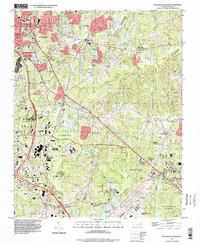 1993 Southeast Durham1998 Print · USGSThe corridor between Durham and Raleigh is captured here in the early nineties during a period of significant suburban and industrial growth. Researchers can trace the development of Research Triangle Park and locate local landmarks like Lynn Crossroads, Southern High Sch, and Woodlawn Memorial Park Cemetery.
 - 1993 Map of Edmondson, 1999 Print
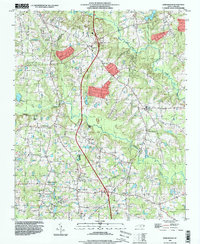 1993 Edmondson1999 Print · USGSJohnston County in the early nineties shows a landscape of traditional crossroads and family farms adapting to modern highway growth. Genealogists can locate numerous family burial sites like Penny Cem and Honeycutt Cem, or trace the rural economy at McGee Mill and Edmondson.
 - 1993 Map of Green Level, 1999 Print
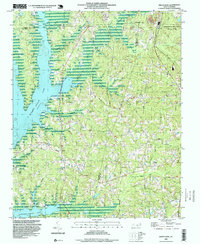 1993 Green Level1999 Print · USGSIn the early 1990s, the shores of B Everett Jordan Lake met a rural landscape of country churches and small crossroads. Researchers can trace family history through numerous landmarks including Martha Chapel, Mt Pisgah Ch, and the settlement of Green Level.
 - 1993 Map of Bayleaf, 1999 Print
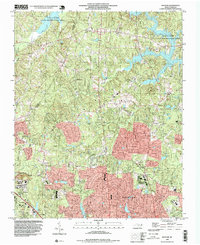 1993 Bayleaf1999 Print · USGSNorth of Raleigh in the early nineties, this survey captures a landscape transforming from rural hills to suburban communities. Researchers can trace the growth of Leesville and Bayleaf or locate family-named landmarks like Union Grove Ch and New Bethel Ch.
 - 1993 Map of Wake Forest, 1999 Print
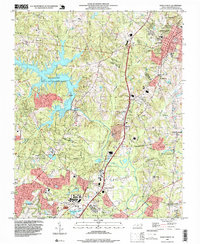 1993 Wake Forest1999 Print · USGSThe area surrounding Wake Forest and northern Raleigh is shown here as suburban expansion met rural crossroads in the early nineties. Researchers can trace family-named landmarks like Walkers Crossroads and local centers including Mt Pleasant Ch.
 - 1993 Map of New Hill, 1999 Print
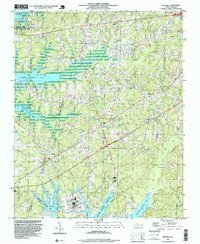 1993 New Hill1999 Print · USGSWake and Chatham counties are shown during a period of transition in the early nineties, as large reservoirs reshaped the traditional rural landscape. Researchers can trace historic communities like Bonsal and Friendship alongside landmarks like Olive Chapel and the Power Plant.
 - 1993 Map of Lake Wheeler, 1999 Print
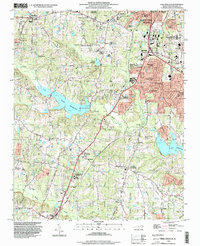 1993 Lake Wheeler1999 Print · USGSWake County's southern expansion is captured here as suburban growth reaches toward Lake Wheeler and Lake Benson. Genealogists and historians can trace family roots through the numerous family cemeteries like Stephens Cem and historic sites such as Yates Millpond.
 - 1993 Map of Cary, 1999 Print
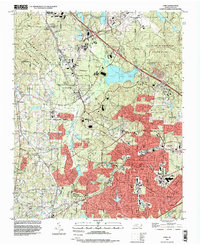 1993 Cary1999 Print · USGSThe Research Triangle is shown in its era of peak expansion, transitioning from quiet rural communities to a major regional hub. Genealogists and historians can trace local landmarks like Shiloh Ch, Carpenter, and the old Durham and Southern rail line.
 - 1993 Map of Rolesville, 1999 Print
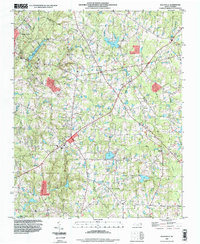 1993 Rolesville1999 Print · USGSWake County and Franklin County show a landscape of traditional crossroads and developing reservoirs in the 1990s. Genealogists and local historians can trace rural family legacies at Mitchell Cem, Corinth United Ch, and the historic Mitchell Millpond.
 - 1993 Map of Fuquay-Varina, 1999 Print
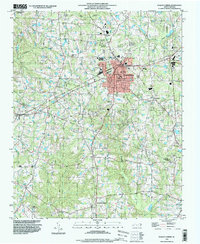 1993 Fuquay-Varina1999 Print · USGSSouthern Wake County is captured in the early nineties as the communities of Fuquay-Varina and Holly Springs began their modern expansion. Genealogists and local historians can locate rural landmarks like Chalybeate Springs, Rawls, and Greenlawn Memorial Gardens.
 - 1993 Map of Knightdale, 1999 Print
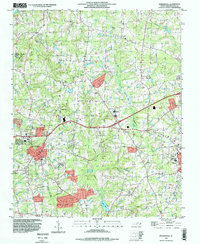 1993 Knightdale1999 Print · USGSWake County's rural and suburban interface comes into focus in the 1990s, highlighting the established town centers and surrounding crossroads. Local historians can trace the foundations of the community through Lizard Lick, Lake Myra, and the Wendell-Knightdale Airport.
 - 1993 Map of Raleigh West, 1999 Print
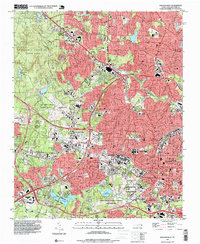 1993 Raleigh West1999 Print · USGSRaleigh and Cary are shown during a period of rapid westward expansion in the early nineties. Researchers can trace the layout of North Carolina State University and find historic landmarks like the State Capitol and Dorothea Dix State Hospital.
 - 1993 Map of Clayton, 1999 Print
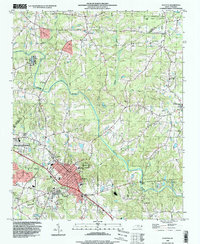 1993 Clayton1999 Print · USGSMid-century Johnston and Wake counties come alive here, showing the river-and-rail economy as it stood before modern suburban expansion. Genealogists can trace family roots through numerous local landmarks, from Cooper High Sch to the quiet Stephenson Cem and Clydes Chapel.
 - 1993 Map of Cokesbury, 1999 Print
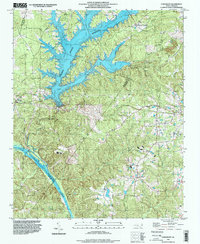 1993 Cokesbury1999 Print · USGSHarnett and Wake counties meet in this 1990s landscape, where the rising waters of a major reservoir reach into rural crossroads. Researchers can trace family sites near Hollemans Crossroads, Prince Chapel, and the historic Cokesbury Ch.
 - 1993 Map of Apex, 1999 Print
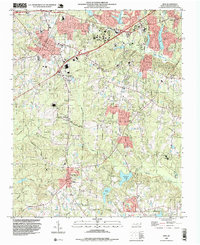 1993 Apex1999 Print · USGSThis survey of western Wake County records the growth of Apex and Holly Springs during the mid-1990s expansion. Genealogists and researchers can trace family roots at Felton Grove Ch, Matthew Chapel, and the community of Feltonville.
 - 1993 Map of Garner, 1999 Print
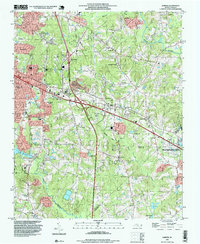 1993 Garner1999 Print · USGSWake County undergoes a period of rapid suburban expansion in the 1990s as the suburbs of the state capital extend southward. Genealogists and historians can trace numerous family landmarks like Mitchiner Cem and Sauls Cem or the local roots of Auburn and Emerald Village.
 - 1998 Map of Bunn West, 2000 Print
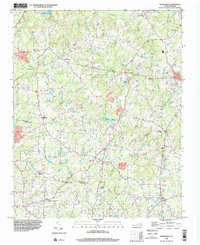 1998 Bunn West2000 Print · USGSFranklin and Wake counties at the end of the century reflect a landscape of deep-rooted rural communities and traditional land use. Genealogists and historians can trace family locations near Hopkins, locate rural landmarks like Phelps Chapel, or follow the Old Railroad Grade.
 - 1998 Map of Creedmoor, 2000 Print
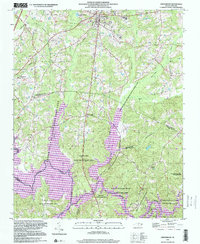 1998 Creedmoor2000 Print · USGSIn the late nineties, the area surrounding Creedmoor shows a landscape balancing small-town life with massive conservation tracts. Genealogists and historians can trace rail-side settlements like Northside and old community landmarks like New Light Ch and Ledge Rock.
 - 1999 Map of Zebulon, 2000 Print
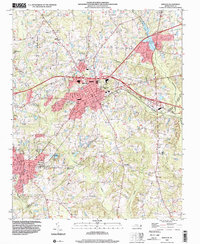 1999 Zebulon2000 Print · USGSZebulon and Wendell were thriving hubs in eastern Wake County at the turn of the millennium. Researchers can trace the layout of regional schools like Wakelon High School and locate rural landmarks such as Lizard Lick and Earpsboro.
 - 1999 Map of Northeast Durham, 2003 Print
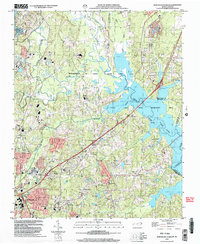 1999 Northeast Durham2003 Print · USGSThe outskirts of Durham and the newly established recreation areas around Falls Lake are captured here at the end of the century. Trace the growth of communities like Gorman and locate family landmarks including Oak Grove Mem Gardens Cem and Union Chapel.
End of results
Showing maps 1-25 of 25
Top cities of Wake County
- Raleigh historical maps
- Cary historical maps
- Apex historical maps
- Wake Forest historical maps
- Fuquay-Varina historical maps
- Garner historical maps
See more
Frequently asked questions
- What are the different types of historical maps available for Wake County?
- What is the oldest map of Wake County?
- Where can I purchase historical maps of Wake County for my home or office?
- Where can I download high-res historical maps of Wake County?
- Are there historical topographic maps available for Wake County?
- Is there historical aerial imagery available for Wake County?
- Where are historical maps of Wake County sourced from?