Old Maps of Lignite, North Dakota for Metal Detecting
Plan your next treasure hunt with 16 historic maps of Lignite. Find old homesites, ghost towns, trails, and gathering spots that may be lost to time — perfect for identifying promising metal detecting locations.
- Locate forgotten sites: Uncover places like long-lost settlements, abandoned rail lines, or gathering spots.
- Plan better hunts: Use map overlays combined with LiDAR or satellite views to narrow in on historically rich areas.
- Made for detectorists: Thousands of hobbyists use these maps to discover relics, coins, and hidden history.
Use these historic maps to boost your research and find new opportunities beneath the surface of Lignite.
Lignite, ND maps
(16)- 1949 Map of Rennie Lake
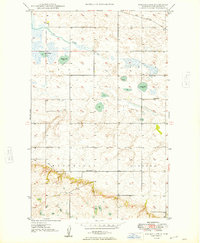 1949 Rennie Lake1949 Print · USGSNorthwestern North Dakota's prairie landscape is captured here in the late Forties, showing the intersection of rail transit and rural education. You can trace the Great Northern rail line past local landmarks like Scandia Sch and Rennie Lake.
 - 1949 Map of Portal
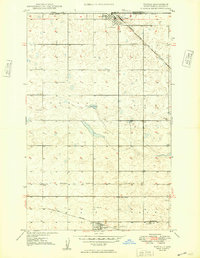 1949 Portal1949 Print · USGSThe border country of Burke County comes into focus just after the war as Portal and Lignite thrive along the railroad lines. Genealogists can trace family footprints through numerous local landmarks, including the St. Marys Cem, Scontia Sch, and the Norwegian Cem.
 - 1950 Map of Portal
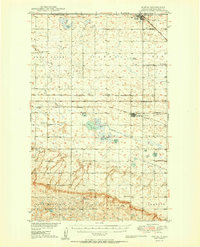 1950 Portal1950 Print · USGSThe international border at Portal and the surrounding coalfields of Burke County are captured here at mid-century. Genealogists can trace family roots through numerous country churches and ethnic burial sites like the Swedish Cem and Norwegian Cem.2 unique versions available
 - 1953 Map of Williston, 1968 Print
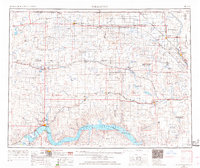 1953 Williston1968 Print · USGSThe North Dakota high plains meet the waters of Sakakawea Lake in this mid-century survey of the northern borderlands. Trace the rail-and-ranch economy through sites like Anderson Sky Ranch, Sevenmile Corner, and the strip mines near Columbus.2 unique versions available
 - 1957 Map of Williston
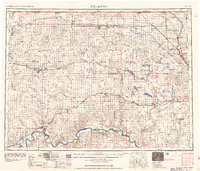 1957 Williston1957 Print · USGSNorthwestern North Dakota is shown here during the mid-fifties, dominated by the sweeping plains and the Missouri River valley. Genealogists and local historians can trace the paths of the Great Northern railroad through Williston, Tioga, and Ray, or locate early industry like the coal strip mines near Lignite.
 - 1982 Map of Kenmare
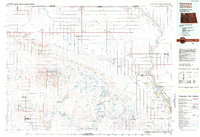 1982 Kenmare1982 Print · USGSThe high plains of northwestern North Dakota meet the Canadian border in the early 1980s, an era defined by energy production and prairie conservation. Genealogists and historians can trace the rail corridors of the Soo Line through towns like Bowbells, Flaxton, and the border crossing at Portal.
 - 2011 Map of Rennie Lake, 2011 Print
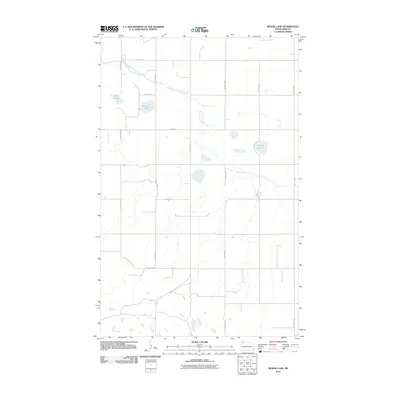 2011 Rennie Lake2011 Print · USGSBurke County during the early 2000s remains defined by its prairie hydrology and strict agricultural grid. Researchers can trace the path of the East Branch Short Creek and locate landmarks like Rennie Lake or the wetlands of Black Slough.
 - 2011 Map of Portal, 2011 Print
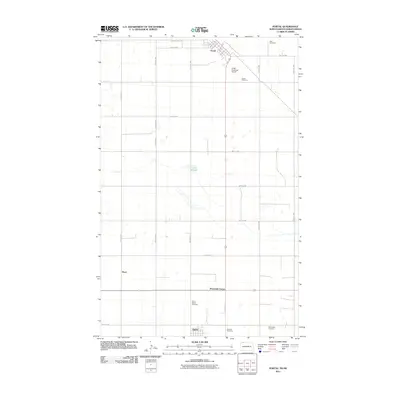 2011 Portal2011 Print · USGSThe international border between North Dakota and Saskatchewan comes into focus in the early 21st century at the gateway of Portal. Genealogists and local historians can trace family ties at the Norwegian Cemetery, Swedish Cemetery, or the small settlement of Lignite.
 - 2014 Map of Rennie Lake, 2014 Print
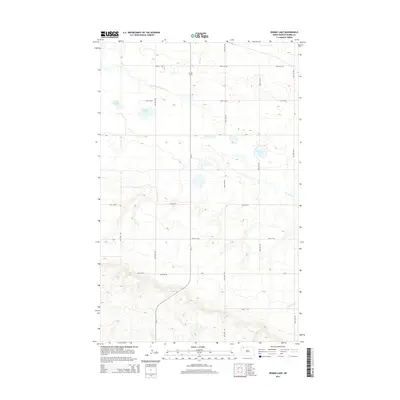 2014 Rennie Lake2014 Print · USGSBurke County in the early twenty-first century remains a landscape of prairie potholes and rigid section-line roads. Genealogists and researchers can trace local land patterns along Township Rd or identify water features like Black Slough and Rennie Lake.
 - 2014 Map of Portal, 2014 Print
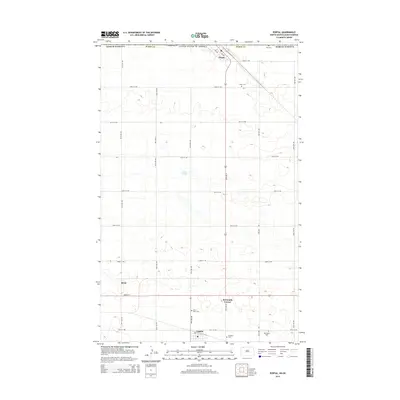 2014 Portal2014 Print · USGSThis northwestern North Dakota landscape at the Canadian border shows a region defined by its small towns and pioneer roots. Researchers can trace family history at Saint Marys Cem or Swedish Cem, and locate early settlements like Portal, Lignite, and Rival.
 - 2017 Map of Rennie Lake, 2017 Print
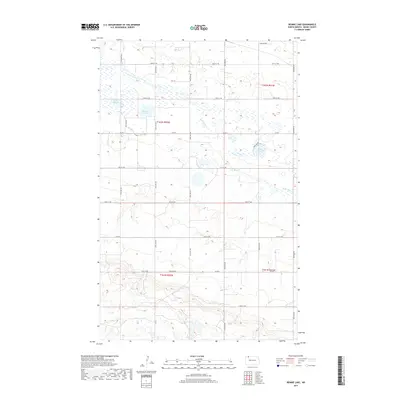 2017 Rennie Lake2017 Print · USGSBurke County’s glaciated landscape is shown here during the mid-2010s, capturing a remote region of prairie potholes and farm roads. Genealogists and researchers can trace local water landmarks like Rennie Lake, Black Slough, and the path of E Br Short Cr.
 - 2017 Map of Portal, 2017 Print
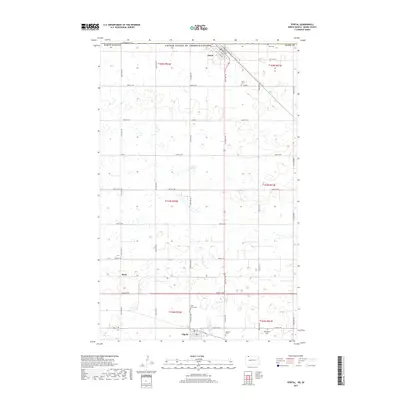 2017 Portal2017 Print · USGSNorth Dakota's northern border country is captured here during a time of modern agricultural stability and quiet rural heritage. Genealogists can trace family connections at Saint Marys Cem or Norwegian Cem near the towns of Portal and Lignite.
 - 2020 Map of Portal, 2020 Print
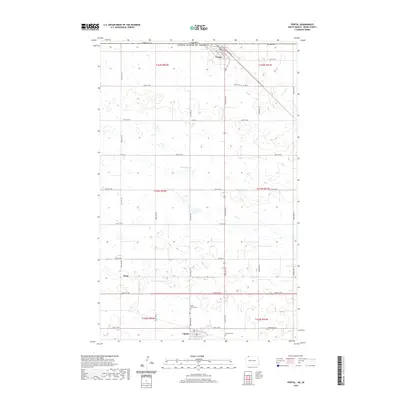 2020 Portal2020 Print · USGSThe international border at Portal and the nearby town of Lignite are shown here as they appeared in 2020. Local researchers can trace family roots through numerous burial grounds like Saint Marys Cem, Bethany Cem, and Norwegian Cem.
 - 2020 Map of Rennie Lake, 2020 Print
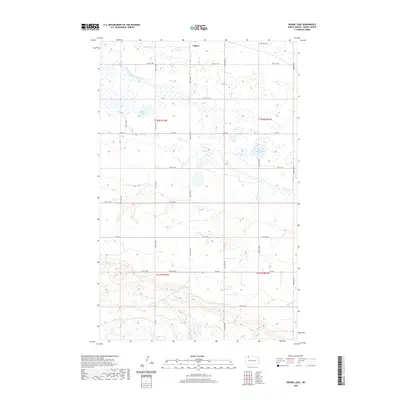 2020 Rennie Lake2020 Print · USGSThe rural landscape around Lignite is captured here during the early twenty-first century, showcasing the intersection of prairie wetlands and agricultural industry. Researchers can trace the drainage of East Branch Short Creek and locate property boundaries along Co Rd 4 and Rennie Lake.
 - 2024 Map of Rennie Lake, 2024 Print
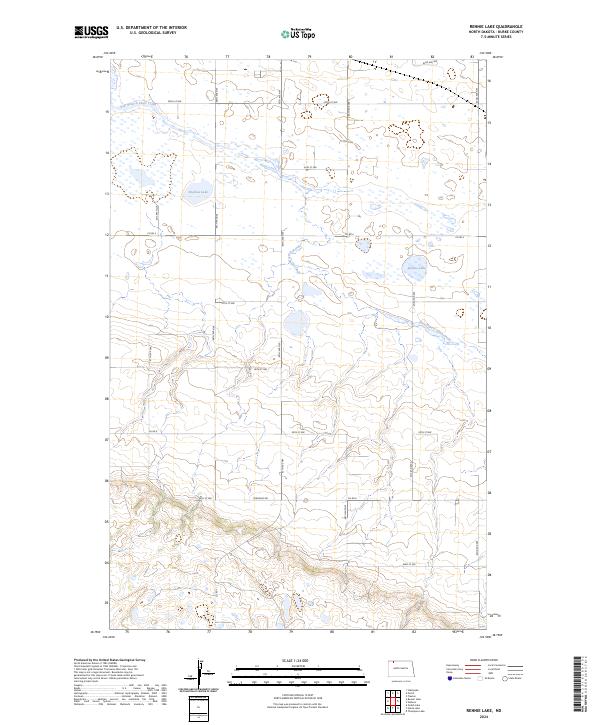 2024 Rennie Lake2024 Print · USGSNorthwestern North Dakota's prairie pothole region is mapped here in the early 2020s, showing a landscape defined by conservation and agriculture. Genealogists and land researchers can trace property boundaries and rural access via Co Rd 8 near Rennie Lake and the Burke County Waterfowl Production Area.
 - 2024 Map of Portal, 2024 Print
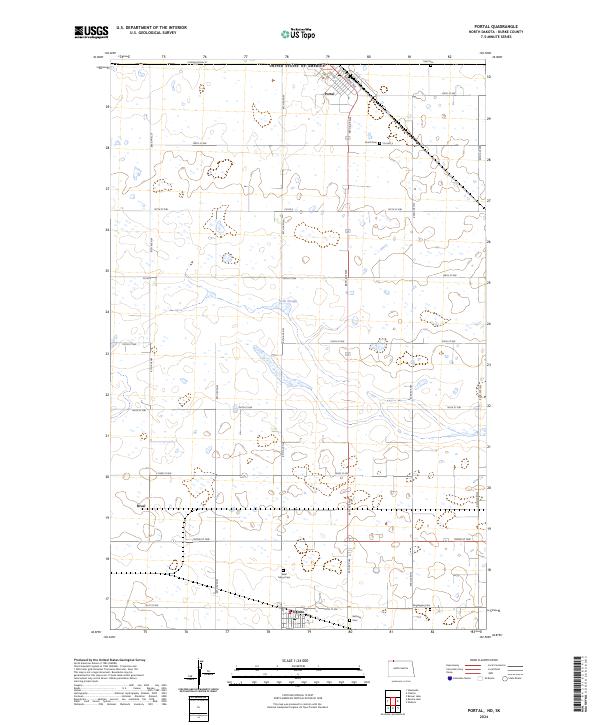 2024 Portal2024 Print · USGSThe North Dakota borderlands come into focus in this contemporary survey of the international gateway at Portal. Researchers can trace the legacy of early prairie settlers through sites like Saint Marys Cem and the rail-side settlements of Rival and Lignite.
End of results
Showing maps 1-16 of 16
Top cities near Lignite
Frequently asked questions
- What are the different types of historical maps available for Lignite?
- What is the oldest map of Lignite?
- Where can I purchase historical maps of Lignite for my home or office?
- Where can I download high-res historical maps of Lignite?
- Are there historical topographic maps available for Lignite?
- Is there historical aerial imagery available for Lignite?
- Where are historical maps of Lignite sourced from?