Old Maps of Union, North Dakota for Academic Research
Study the evolution of Union with 11 high-resolution historic maps. Whether you're teaching, researching, or modeling changes in land use, these maps provide essential visual documentation of urban, environmental, and geographic change.
- Analyze long-term change: Track patterns in development, transportation, and natural features.
- Ideal for environmental or urban studies: Support academic projects with primary historical map data.
- Use in the classroom or lab: Educators and researchers rely on these maps to bring historical context to life.
These maps are a powerful tool for teaching, research, and visualizing how Union has changed over the decades.
Union, ND maps
(11)- 1952 Map of Thief River Falls, 1967 Print
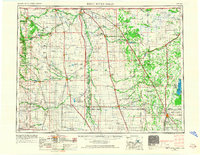 1952 Thief River Falls1967 Print · USGSThe Red River Valley's agricultural and conservation landscape is captured in the mid-1950s, detailing a web of rail lines and international border crossings. Researchers can trace family roots in towns like Thief River Falls, locate the State School for Blind, and survey landmarks like the Agassiz National Wildlife Refuge.2 unique versions available
 - 1956 Map of Thief River Falls
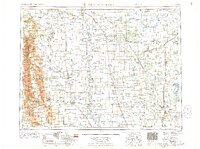 1956 Thief River Falls1956 Print · USGSThe Red River Valley in the mid-1950s is captured here as a sprawling network of rail corridors and wildlife refuges along the Canadian border. Trace the vanished transport routes of the Dismantled railroad and Abandoned railroad or locate local landmarks like the Herrick Elevator and State School for Blind.
 - 1957 Map of Thief River Falls
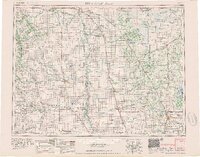 1957 Thief River Falls1957 Print · USGSThe Red River Valley in the mid-fifties is captured here as a thriving network of rail towns and conservation lands. Genealogists and historians can trace family roots through settlements like Grafton, Pembina, and Hallock, or locate landmarks such as the State School for Blind and the Great Northern RR corridor.
 - 1967 Map of Thief River Falls
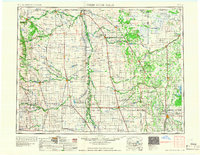 1967 Thief River Falls1967 Print · USGSThe Red River Valley and the international border come alive in the 1960s, showing a landscape shaped by major rail lines and river commerce. Genealogists and historians can trace the paths of the Great Northern and Soo Line through towns like Thief River Falls, Grafton, and Hallock.
 - 1972 Map of Union, 1975 Print
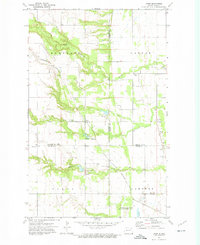 1972 Union1975 Print · USGSNortheastern North Dakota in the early seventies reveals a landscape of tri-county intersections and quiet prairie settlements. Genealogists can locate family landmarks like the Langemo Pioneer Cem, Pioneer Ch, and the rural community of Union.
 - 1985 Map of Cavalier
 1985 Cavalier1985 Print · USGSThe Red River Valley and the international border meet in this mid-1980s look at the drainage and rail networks of Northeast North Dakota. Trace the paths of the Burlington Northern and Soo Line through border towns like Neche, Pembina, and Noyes.2 unique versions available
 - 2011 Map of Union, 2011 Print
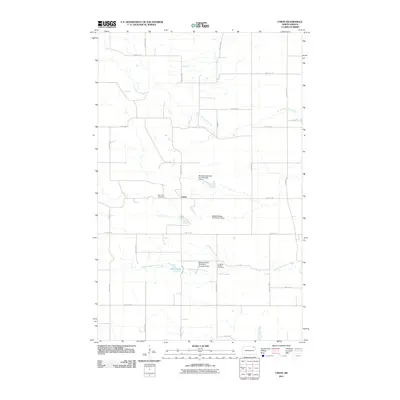 2011 Union2011 Print · USGSCavalier County is shown here in the early twenty-first century, centered on the small settlement of Union and its rural road network. Genealogists can locate family sites such as the West Zion Cemetery and Langemo Pioneer Cemetery along the Middle Branch Park River.
 - 2014 Map of Union, 2014 Print
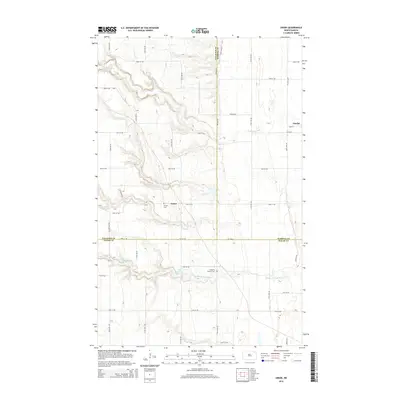 2014 Union2014 Print · USGSNortheastern North Dakota's agricultural heartland is documented here at the convergence of three counties. Genealogists and local historians can locate the W Zion Cem near Union, the Langemo Pioneer Cem, and tracing the courses of the N Br Park River.
 - 2017 Map of Union, 2017 Print
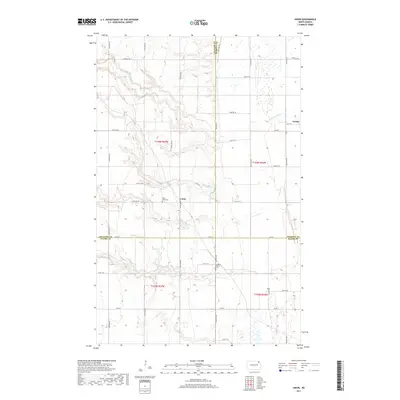 2017 Union2017 Print · USGSNorth Dakota's rural heartland is surveyed here in the late 2010s at the meeting point of Cavalier, Pembina, and Walsh counties. Genealogists and local historians can locate the Langemo Pioneer Cem, West Zion Cem, and the settlement at Union.
 - 2020 Map of Union, 2020 Print
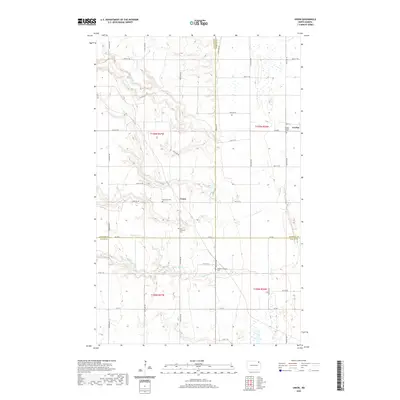 2020 Union2020 Print · USGSNortheastern North Dakota prairie land is mapped here at the crossroads of three counties during the early twenty-first century. Researchers can locate several historic burial sites like Gardar Pioneer Cem and West Zion Cem near the N Br Park River.
 - 2024 Map of Union, 2024 Print
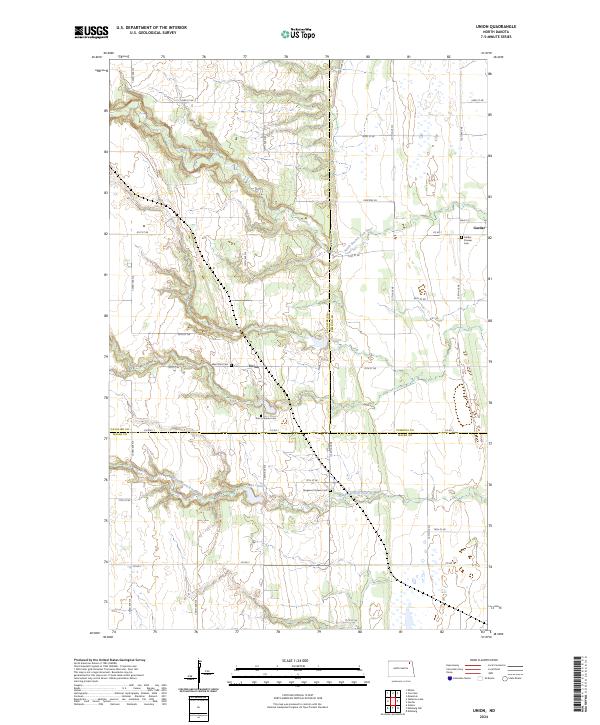 2024 Union2024 Print · USGSThe rural borderlands of Cavalier, Pembina, and Walsh Counties are shown here in modern detail, preserving the grid of early North Dakota settlements. Genealogists can trace family roots through several dedicated burial sites, including the Gardar Pioneer Cem, West Zion Cem, and Langemo Pioneer Cem.
End of results
Showing maps 1-11 of 11
Top cities near Union
- Park River historical maps
- Edinburg historical maps
- Akra Township historical maps
- Adams historical maps
- Osnabrock historical maps
- Mountain historical maps
See more
Frequently asked questions
- What are the different types of historical maps available for Union?
- What is the oldest map of Union?
- Where can I purchase historical maps of Union for my home or office?
- Where can I download high-res historical maps of Union?
- Are there historical topographic maps available for Union?
- Is there historical aerial imagery available for Union?
- Where are historical maps of Union sourced from?