Old Maps of Golden Valley County, North Dakota for Academic Research
Study the evolution of Golden Valley County with 214 high-resolution historic maps. Whether you're teaching, researching, or modeling changes in land use, these maps provide essential visual documentation of urban, environmental, and geographic change.
- Analyze long-term change: Track patterns in development, transportation, and natural features.
- Ideal for environmental or urban studies: Support academic projects with primary historical map data.
- Use in the classroom or lab: Educators and researchers rely on these maps to bring historical context to life.
These maps are a powerful tool for teaching, research, and visualizing how Golden Valley County has changed over the decades.
Golden Valley County, ND maps
(214)- 1909 Map of Glendive
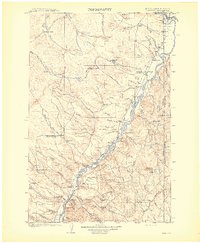 1909 Glendive1909 Print · USGSThe confluence of the Missouri and Yellowstone rivers in the first decade of the twentieth century shows a region of scattered ranches and emerging river towns. Genealogists can trace family landmarks like Cavanaughs Ranch or Nortons Ranch and find early resource sites like the Coal Mine.
 - 1953 Map of Miles City, 1966 Print
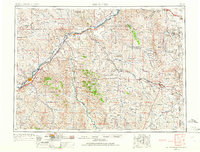 1953 Miles City1966 Print · USGSEastern Montana and the North Dakota borderlands come alive in this mid-century survey of the Yellowstone River valley. Genealogists and historians can trace the rural network of the era through sites like Fertile Prairie School, St Johns Church, and the rail lines serving Ismay and Plevna.4 unique versions available
 - 1953 Map of Dickinson, 1968 Print
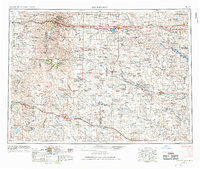 1953 Dickinson1968 Print · USGSWestern North Dakota in the fifties remains a landscape of rail-linked prairie towns and rugged badlands. Trace the local impact of the Northern Pacific railroad through Dickinson or locate early rural landmarks like Rainy Butte Church and Boys Ranch.2 unique versions available
 - 1953 Map of Watford City, 1968 Print
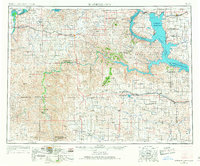 1953 Watford City1968 Print · USGSNorth Dakota's badlands and the Missouri River basin are captured here during the 1950s and 60s as the Garrison Dam changed the landscape. Researchers can trace old rail lines like the Great Northern or find rural outposts such as Grassy Butte and Halliday.3 unique versions available
 - 1954 Map of Glendive, 1967 Print
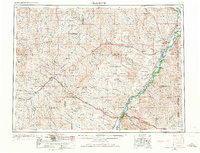 1954 Glendive1967 Print · USGSEastern Montana at mid-century shows a landscape of river-valley commerce and remote prairie ranching. Researchers can trace the legacy of rural education and transport through sites like Prairie Elk School, the Great Northern rail lines, and Circle.2 unique versions available
 - 1957 Map of Dickinson
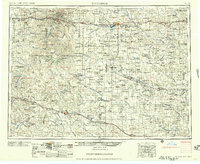 1957 Dickinson1957 Print · USGSSouthwestern North Dakota in the mid-fifties is a landscape of coal mining and tight-knit rural school districts. Genealogists can trace family footprints through numerous country schools like Fisher School and parish churches like St Stephens.
 - 1957 Map of Miles City
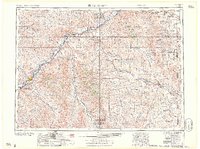 1957 Miles City1957 Print · USGSEastern Montana and the North Dakota borderlands come alive in the mid-fifties as the rail and ranching economy peaks along the Yellowstone River. Genealogists and historians can trace numerous rural landmarks like St Phillips Church, Fertile Prairie School, and the Ostendorf Ranch.
 - 1957 Map of Glendive
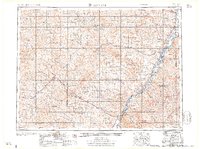 1957 Glendive1957 Print · USGSEastern Montana in the mid-1950s is defined by its deep river valleys and a sprawling network of rural school districts. You can trace the path of the Great Northern railroad and locate vanished local landmarks like Breezy Flat School and Newton Junction.
 - 1957 Map of Watford City
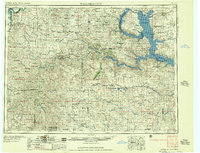 1957 Watford City1957 Print · USGSWestern North Dakota's landscape is captured here during the mid-fifties as the Missouri River valley undergoes massive change following the creation of Garrison Reservoir. Genealogists and historians can trace dozens of rural schools like Divide School and early settlements such as Arnegard and Grassy Butte.
 - 1958 Map of Miles City
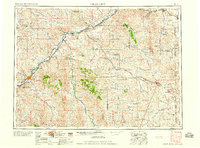 1958 Miles City1958 Print · USGSEastern Montana ranching and rail life are documented here during the late fifties, centered on the confluence of the Yellowstone River and Powder River. Researchers can trace rural school locations like St Phillips Church and Chimney Creek School alongside dozens of named family ranches.
 - 1958 Map of Glendive
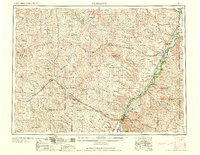 1958 Glendive1958 Print · USGSEastern Montana and the North Dakota borderlands come alive in the late fifties, showing the agricultural heart of the Yellowstone valley. Trace the legacy of rural education through Kimmel School and Ridgelawn School or locate rail hubs in Glendive and Sidney.
 - 1967 Map of Watford City
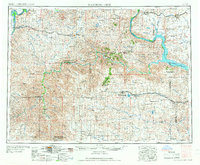 1967 Watford City1967 Print · USGSWestern North Dakota is captured during a period of landscape transformation as the Missouri River valley was reshaped by the new Garrison Reservoir. Genealogists and local historians can trace the foundations of Watford City, find the Elkhorn Ranch Site, or locate rural landmarks like Ziner Butte and Grassy Butte.
 - 1970 Map of Eagle Draw, 1972 Print
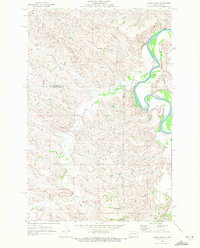 1970 Eagle Draw1972 Print · USGSNorthwestern North Dakota's badlands terrain is captured here at the start of the 1970s where three counties meet. Genealogists and researchers can trace drainage systems like Beaver Creek and Morgan Draw alongside the meandering Little Missouri River.
 - 1970 Map of Medora, 1973 Print
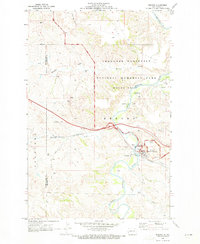 1970 Medora1973 Print · USGSMedora and the surrounding badlands are captured here during the early seventies as the region balanced its ranching roots with growing tourism. Researchers can trace the legacy of the Marquis de Mores at the Chateau de Mores or locate the Medora Cem and the winding Little Missouri River.
 - 1974 Map of Hootowl Creek West, 1977 Print
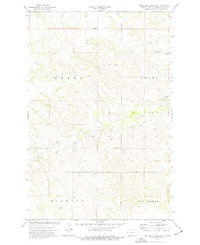 1974 Hootowl Creek West1977 Print · USGSGolden Valley County's western plains are captured here in the mid-seventies, showing a landscape defined by water and ranching. Genealogists and historians can trace the boundaries of Henry and Pearl or locate landmarks like the Flowing Well and Gravel Pit.
 - 1974 Map of Trotters SE, 1977 Print
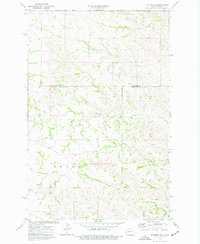 1974 Trotters SE1977 Print · USGSThe high plains of the North Dakota borderlands were meticulously documented during the mid-1970s, showing the complex drainage of McKenzie and Golden Valley counties. Researchers can trace the winding paths of Porcupine Creek and Beaver Creek or locate isolated industrial markers like the Drill Hole near Dietz Draw.
 - 1974 Map of West Twin Butte, 1977 Print
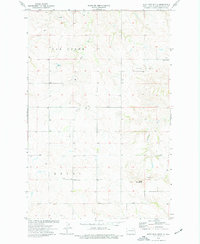 1974 West Twin Butte1977 Print · USGSGolden Valley County in the mid-1970s shows a landscape of high buttes and drainage basins before modern oil development. Genealogists and local historians can locate Plain View Cem, the Westerheim Sch, and early excavations like the Scoria Pit.
 - 1974 Map of Trotters, 1977 Print
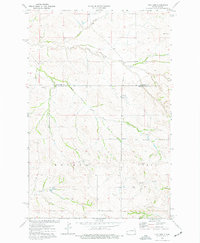 1974 Trotters1977 Print · USGSThe western North Dakota badlands of Golden Valley and McKenzie counties are captured here in the mid-1970s. Local researchers can locate the South Side Cemetery, the central Townhall, and several scoria pits near the settlement of Trotters.
 - 1974 Map of Skaar, 1977 Print
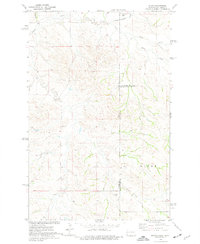 1974 Skaar1977 Print · USGSThe Montana and North Dakota borderlands come into focus in the mid-1970s, showing a landscape shaped by creek drainage and scoria mining. Researchers can trace the rural settlement of Skaar and local extraction sites like the Scoria Pits near Henry Creek.
 - 1974 Map of Roosevelt Creek West, 1977 Print
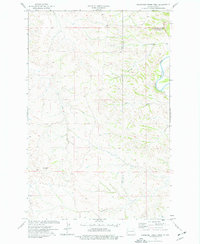 1974 Roosevelt Creek West1977 Print · USGSThe Badlands of Golden Valley and Billings County are captured here in the mid-1970s, featuring the iconic Elkhorn Ranch Site. Trace the rugged drainage of the Little Missouri River and landmarks like Cooks Peak.
 - 1974 Map of Odland Dam, 1977 Print
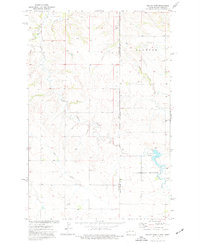 1974 Odland Dam1977 Print · USGSThe North Dakota-Montana borderlands come into focus in the mid-seventies, showing a landscape defined by the Little Beaver Creek drainage. Researchers can locate the Odland Dam, the Elmwood community Townhall, and local industrial Scoria Pits.
 - 1974 Map of Odland Dam NE, 1977 Print
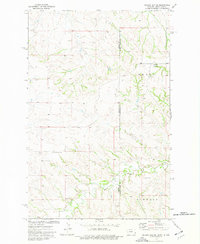 1974 Odland Dam NE1977 Print · USGSThe high plains along the Montana-North Dakota border come alive in this mid-seventies survey. Genealogists and local historians can locate rural landmarks like Arvid Sch and Blue Mountain Cem among the drainages of Dry Beaver Creek.
 - 1974 Map of Hootowl Creek SW, 1977 Print
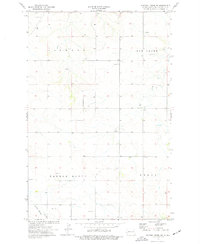 1974 Hootowl Creek SW1977 Print · USGSGolden Valley County in the mid-seventies is documented here during a period of quiet ranching and resource extraction. Genealogists and local historians can trace the topography of Elmwood and locate landmarks like the Townhall and Saddle Butte.
 - 1974 Map of Wannagan Creek West, 1977 Print
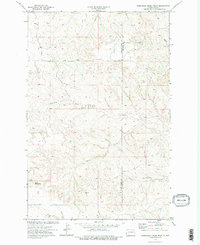 1974 Wannagan Creek West1977 Print · USGSThe North Dakota high plains of the mid-1970s are captured here along the border of Golden Valley and Billings counties. Researchers can trace the drainages of Wannagan Creek and Winter Creek or locate landmarks like East Twin Butte.2 unique versions available
 - 1974 Map of Hootowl Creek East, 1977 Print
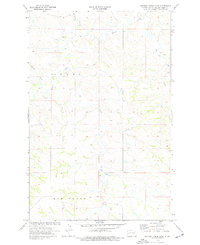 1974 Hootowl Creek East1977 Print · USGSGolden Valley County's rural townships are captured here in the mid-1970s, showcasing a landscape defined by its intricate drainage basins. Researchers can trace the meandering paths of Hootowl Creek, locate Bell Lake, or identify local landmarks like the Gravel Pit.
Showing maps 1-25 of 214
Top cities of Golden Valley County
Frequently asked questions
- What are the different types of historical maps available for Golden Valley County?
- What is the oldest map of Golden Valley County?
- Where can I purchase historical maps of Golden Valley County for my home or office?
- Where can I download high-res historical maps of Golden Valley County?
- Are there historical topographic maps available for Golden Valley County?
- Is there historical aerial imagery available for Golden Valley County?
- Where are historical maps of Golden Valley County sourced from?